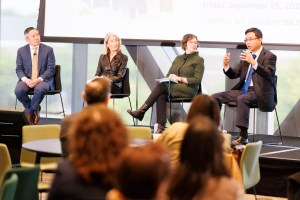
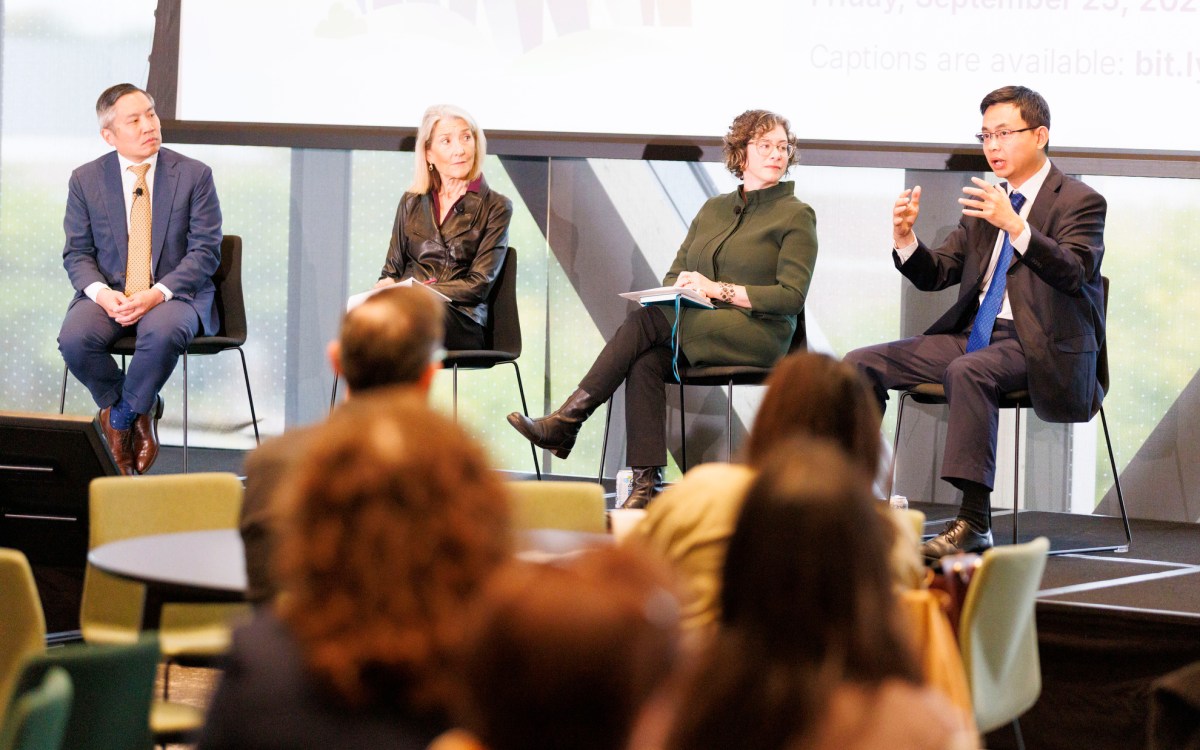
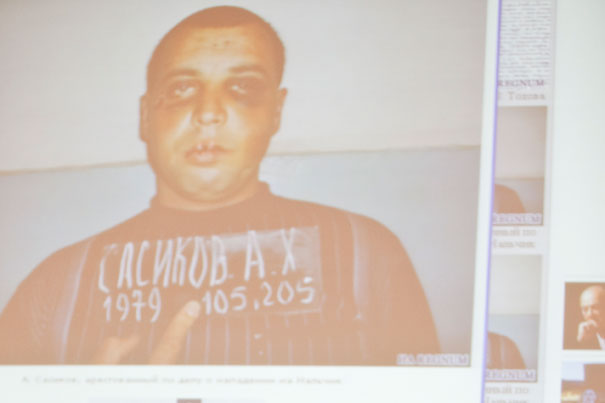
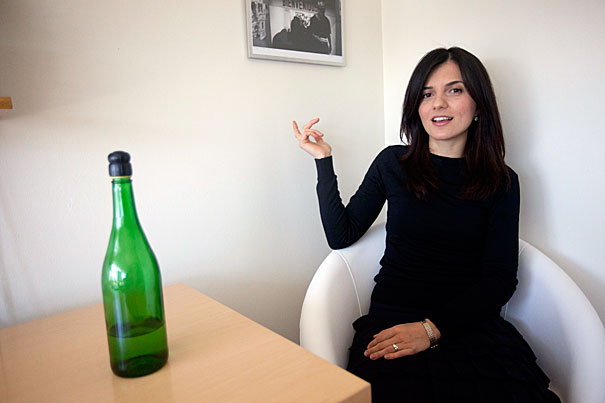
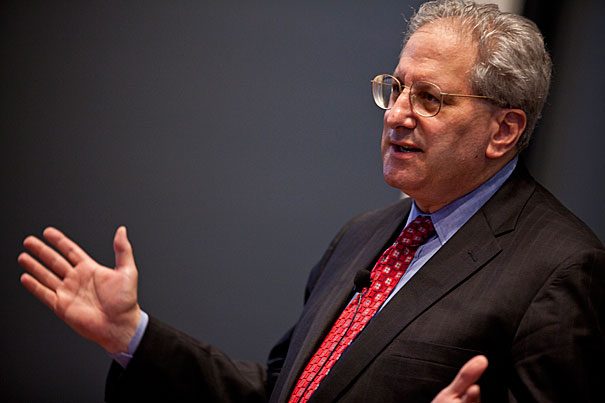
In an afternoon discussion at the Berkman Center for Internet & Society, investigative journalists from around the world discussed the challenges of reaching a wider audience.
Not every child in America has the opportunity to attend Fourth of July celebrations, but those that do are prone to be more politically engaged and associate more closely with the Republican Party than their peers, concludes a Harvard Kennedy School study.
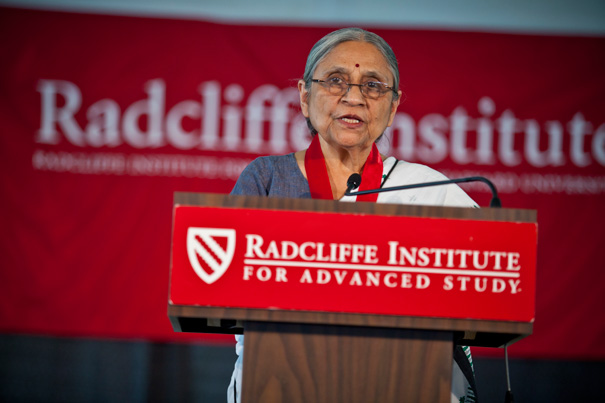
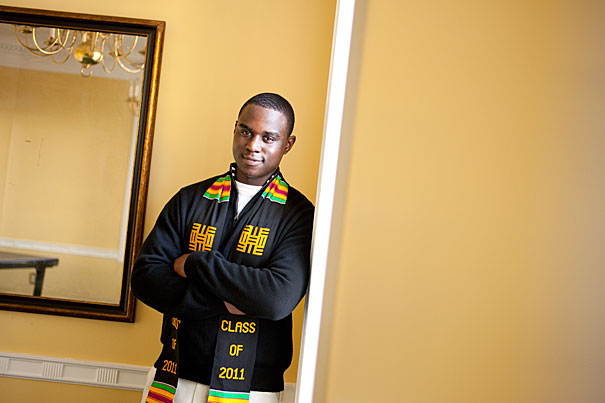
President of Liberia, Ellen Johnson Sirleaf, speaks at Harvard’s 2011 Commencement afternoon exercises at history Tercentenary Theater on May 26, 2011.
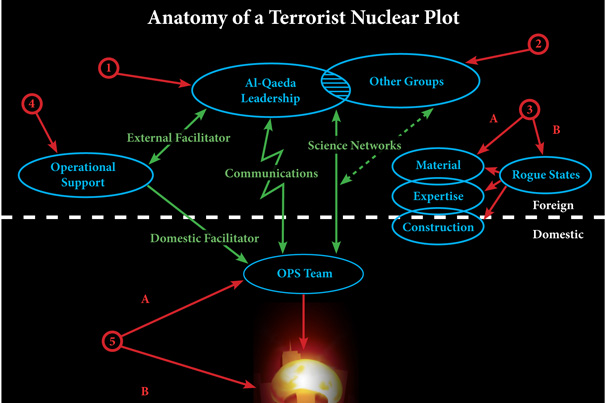
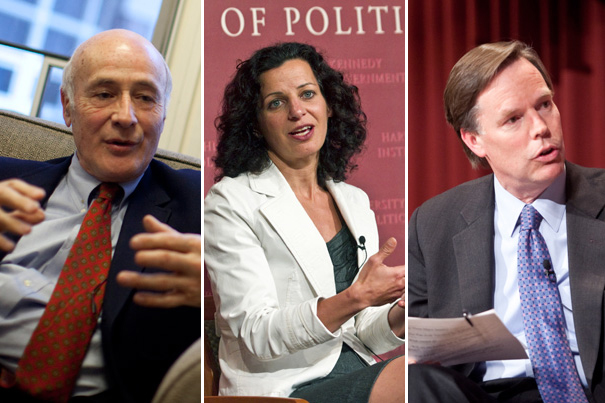
Joint U.S.-Russian assessment, produced in part through Harvard Kennedy School, warns of ongoing threat from nuclear terror, and says quick action is needed to avoid attack.
Drawing on their experience as young educators and designers, students from two very different disciplines joined forces to create fresh concepts for daily learning.
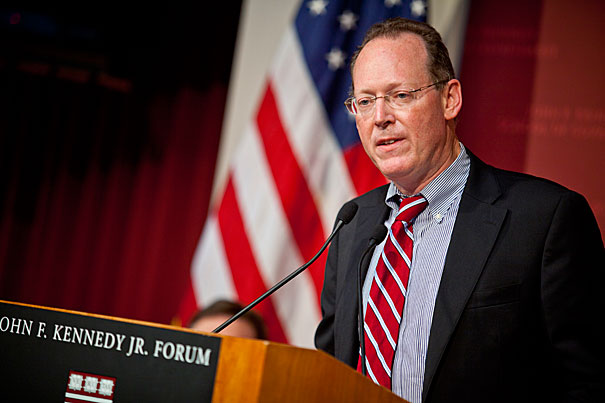
“The road from policy development to implementation is usually long and rocky, one that must be trod with companions,” Paul Farmer, University Professor and co-founder of Partners In Health, told Harvard Kennedy School graduates on May 25.
Scholars gather at the Harvard Kennedy School for a seminar on the current challenges in avoiding nuclear war — and to marvel at just how drastically the nuclear threat has morphed in the two decades since the Cold War ended and the Soviet Union collapsed.
Harvard Business School has long known that many of its graduates found companies. But in the wake of Wall Street’s recent meltdown — and at a time when starting a new venture has become far easier — campus culture is embracing entrepreneurship in a big way.
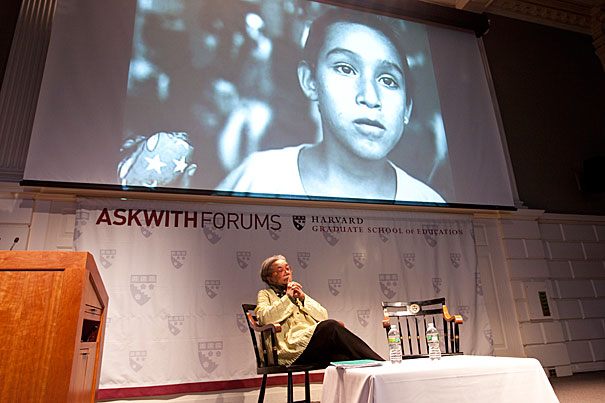
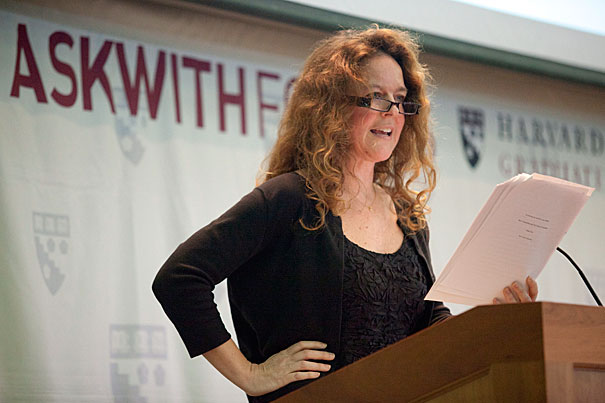
In an Askwith Forum address, longtime children’s advocate Marian Wright Edelman said there are still many reasons to be alarmed at the grim landscape facing many African-American and Latino children, with 80 percent reaching high school without reading proficiency.
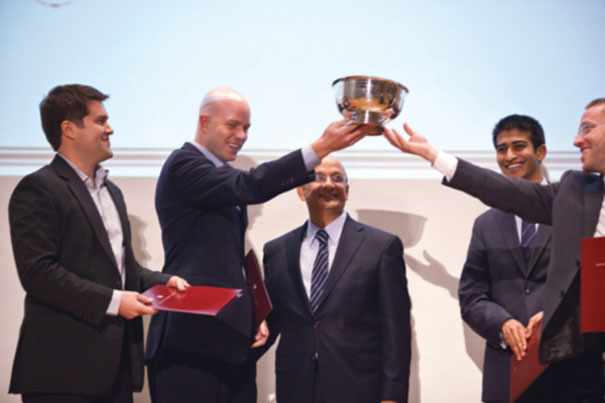
BOSS Medical Working with Johns Hopkins researchers and physicians, M.B.A. students Romish Badani and Derek Poppinga have developed a minimally invasive device to extract bone grafts. If approved by the…
Harvard President Drew Faust announced grants to six faculty members who are designing new international experiences for undergraduates, from new summer school programs in Kenya to studies in global health to other programs in Italy, Argentina, and Germany.
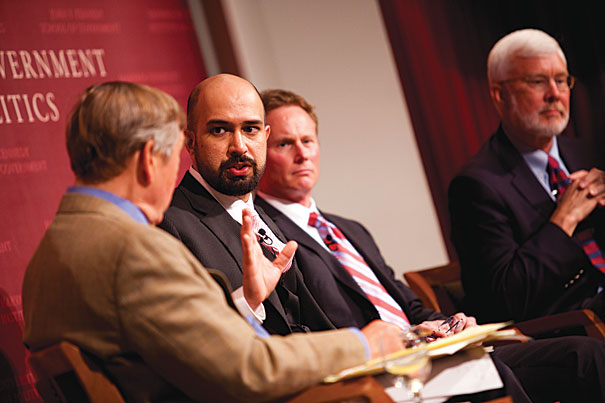
What did Pakistani officials know about the whereabouts of Osama bin Laden and when did they know it? Were they complicit — or dumb? Or smart at playing dumb? Those questions were analyzed by a panel of foreign policy experts on Wednesday (May 4) at Harvard Kennedy School.
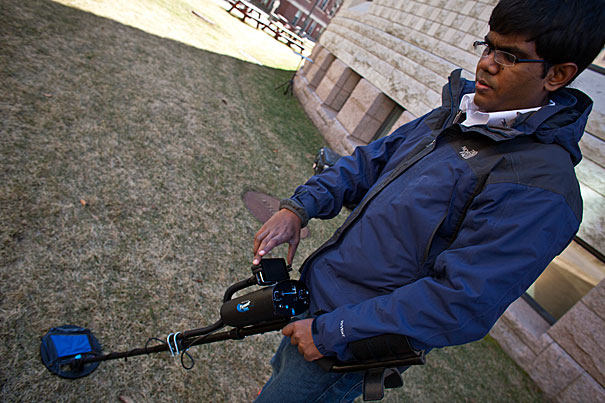
Computer scientists at the Harvard School of Engineering and Applied Sciences have designed an elegant system that assists humanitarian mine hunters by augmenting the information from their metal detectors.
Harvard foreign policy experts say the death of Osama bin Laden is a blow to al-Qaeda, and a sign of the vitality and persistence of U.S. anti-terror expertise. But it will also renew the debate over U.S.-Pakistan ties and may even set the stage for a season of reprisals against American interests.
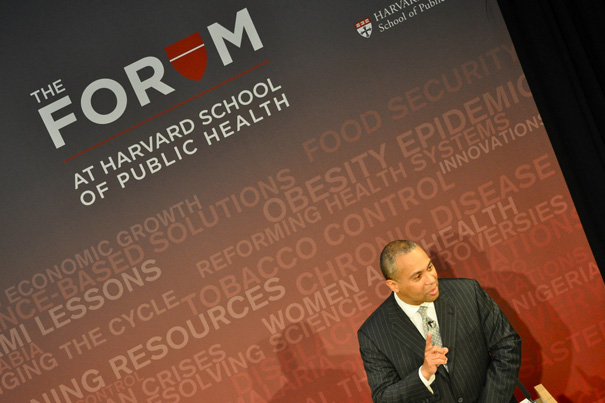
Massachusetts Gov. Deval Patrick defended Massachusetts’ health care reforms, saying during an appearance at The Forum at Harvard School of Public Health that they’ve successfully extended coverage to 98 percent of state residents.
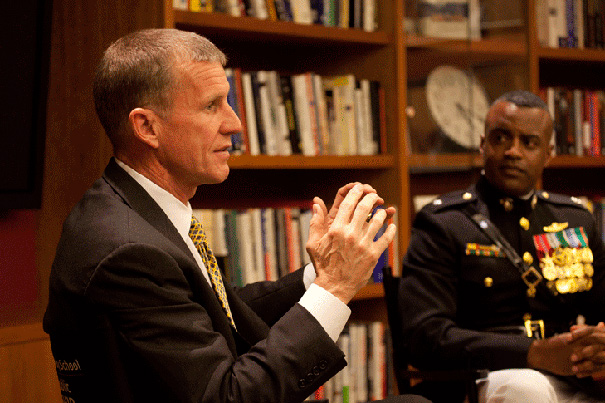
A panel discussion that included some of the top leaders in American homeland security and the military pondered the nation’s readiness for unexpected disasters.
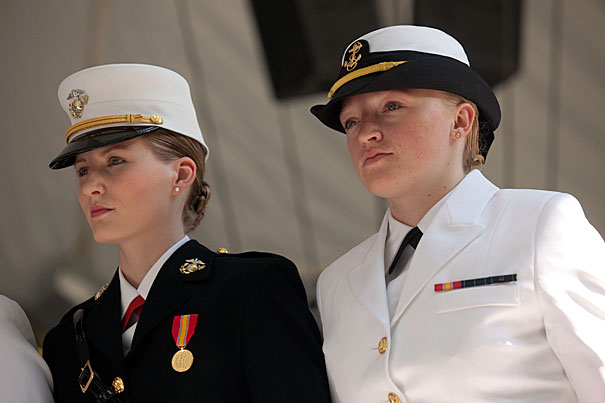
In what is believed to be the largest gathering of uniformed students at the University since Winston Churchill spoke on campus in 1943, more than 170 Harvard veterans from all the service branches gathered at Cambridge’s Sheraton Commander Hotel April 25 for a dinner honoring students who have served in Afghanistan and Iraq.
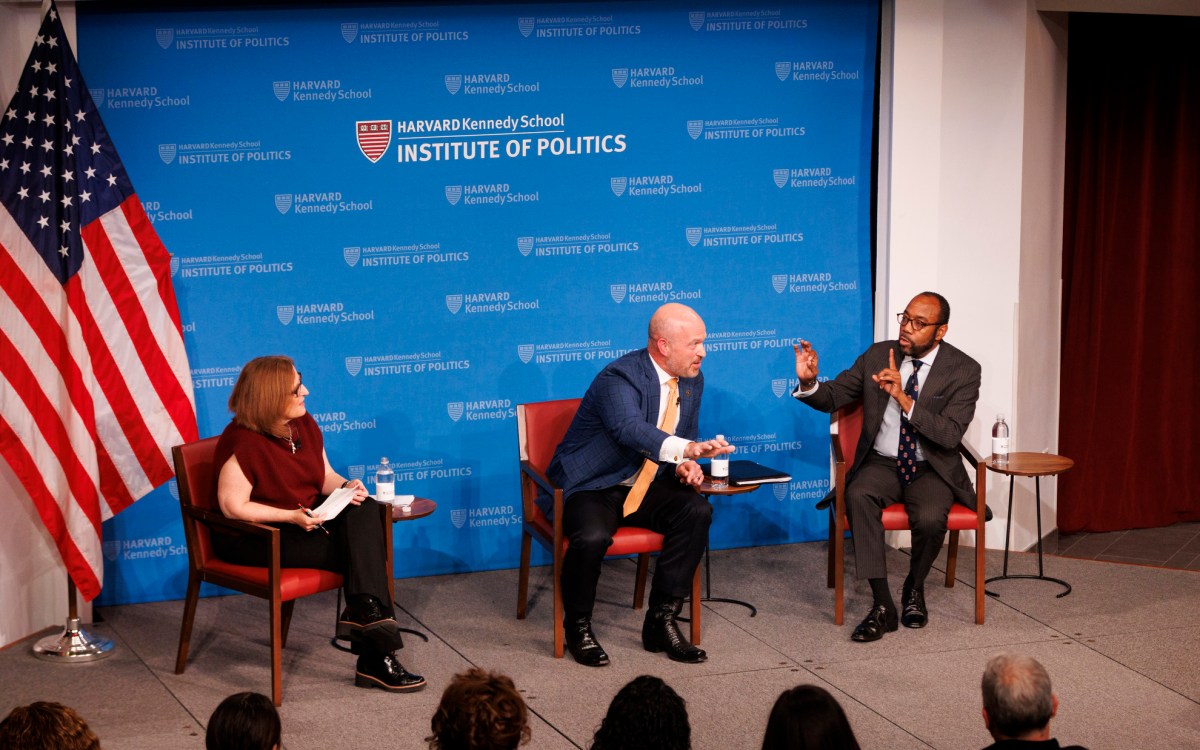
During an appearance at the Institute of Politics at Harvard Kennedy School, tea party leaders said they hope to see their movement propel election of their eventual presidential candidate in 2012.
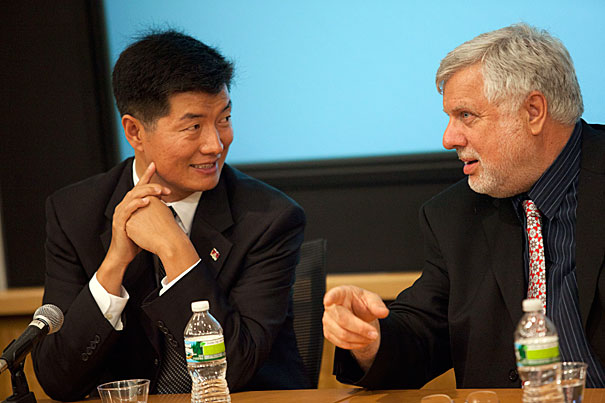
Lobsang Sangay, a Harvard Law School graduate, wins office of Kalon Tripa, or Tibetan prime minister, of the government in exile. Earlier this week, he spoke at Harvard.
Two Harvard researchers say that new U.S. residents, most of whom are young and nonwhite, reflect not just policy challenges, but an immense reservoir of social potential.
Joseph Sellers, a lead attorney in the class action suit against Wal-Mart Stores, discussed the background of the workplace discrimination case and his experience arguing it before the Supreme Court.
Based on years of interviews with teenage boys, author and Harvard graduate Niobe Way examines the intimate nature of close friendships between young and early adolescent boys.
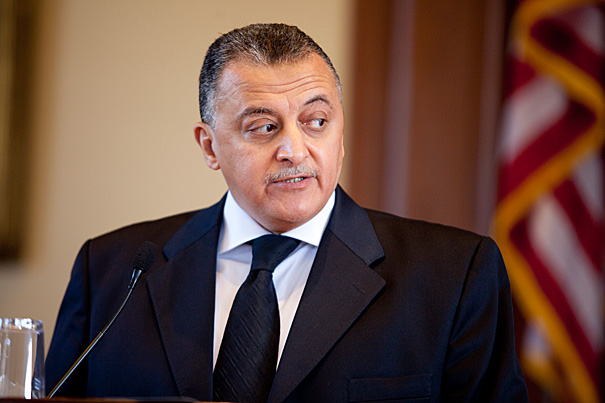
Though a street revolution in Egypt succeeded against long odds, the country faces the harsh reality of forging a new social contract for governance. Not even the deputy chief justice of the Supreme Constitutional Court of Egypt, who spoke at Harvard Law School April 14, could predict that Egypt will successfully make the transition to a stable, participatory democracy.

 Featured series