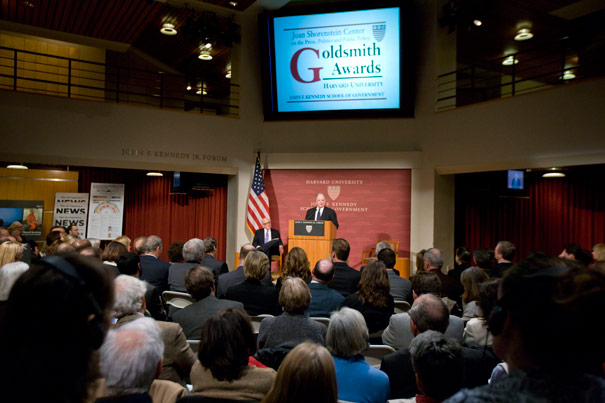
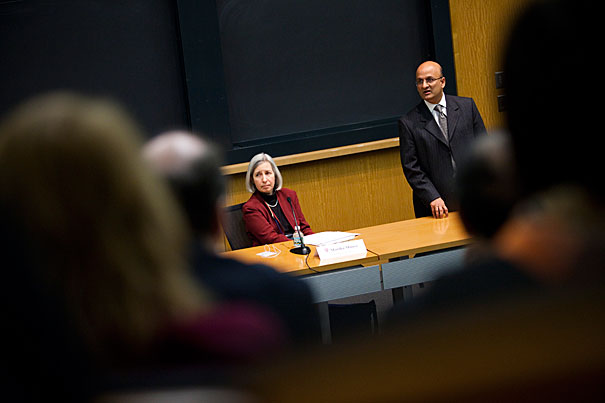
New York Times op-ed columnist Frank Rich ’71 receives the Goldsmith Career Award and suggests good days are still ahead for significant, game-changing journalism.
The tiny African nation of Lesotho is among those hardest hit by the raging twin epidemics of ADIS and tuberculosis. Harvard faculty members are advising the government and helping to revamp clinics and treat patients in the far-flung mountain regions of this poor country.
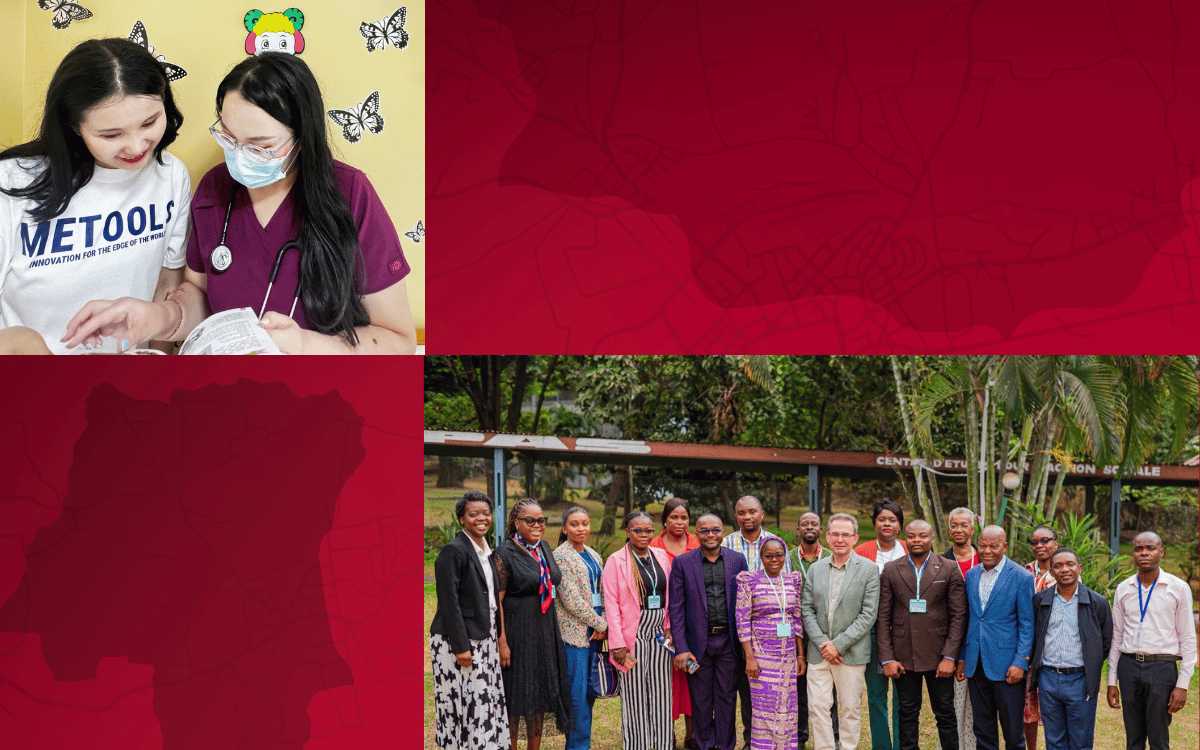
Researchers from the Harvard Humanitarian Initiative have been working in the Democratic Republic of the Congo for several years examining the roots of the violence against women that has plagued this war-torn region.
One of the continent’s richest nations, South Africa also has one of the world’s highest HIV infection rates and is home to the world’s biggest population of HIV-infected people, an estimated 5.5 million.
Researchers from the Harvard Humanitarian Initiative have been working in the Democratic Republic of the Congo for several years examining the roots of the violence against women that has plagued this war-torn region.
The tiny African nation of Lesotho is among those hardest hit by the raging twin epidemics of AIDS and tuberculosis. Harvard faculty members are advising the government and helping to revamp clinics and treat patients in the far-flung mountain regions of this poor country.
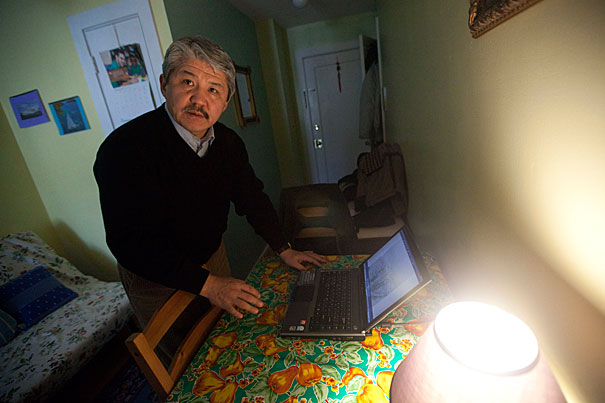
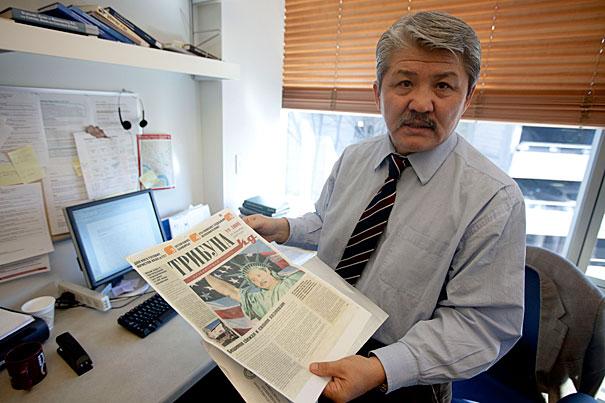
Historian Baktybek Beshimov, a former diplomat and parliamentarian, fled political unrest in his homeland to research and write in Harvard’s Scholars at Risk program.
The Scholars at Risk network is made up of 194 universities in 23 countries, and based at New York University. It was founded in 1999 by University of Chicago legal scholar Jacqueline Bhabha, who now is the Jeremiah Smith Jr. Lecturer in Law at Harvard Law School and the University adviser on human rights education.
The Harvard community has reached out to help Chile recover from last year’s earthquake, with efforts ranging from students working on reconstruction during winter break to an upcoming planning meeting involving Harvard faculty members and President Drew Faust.
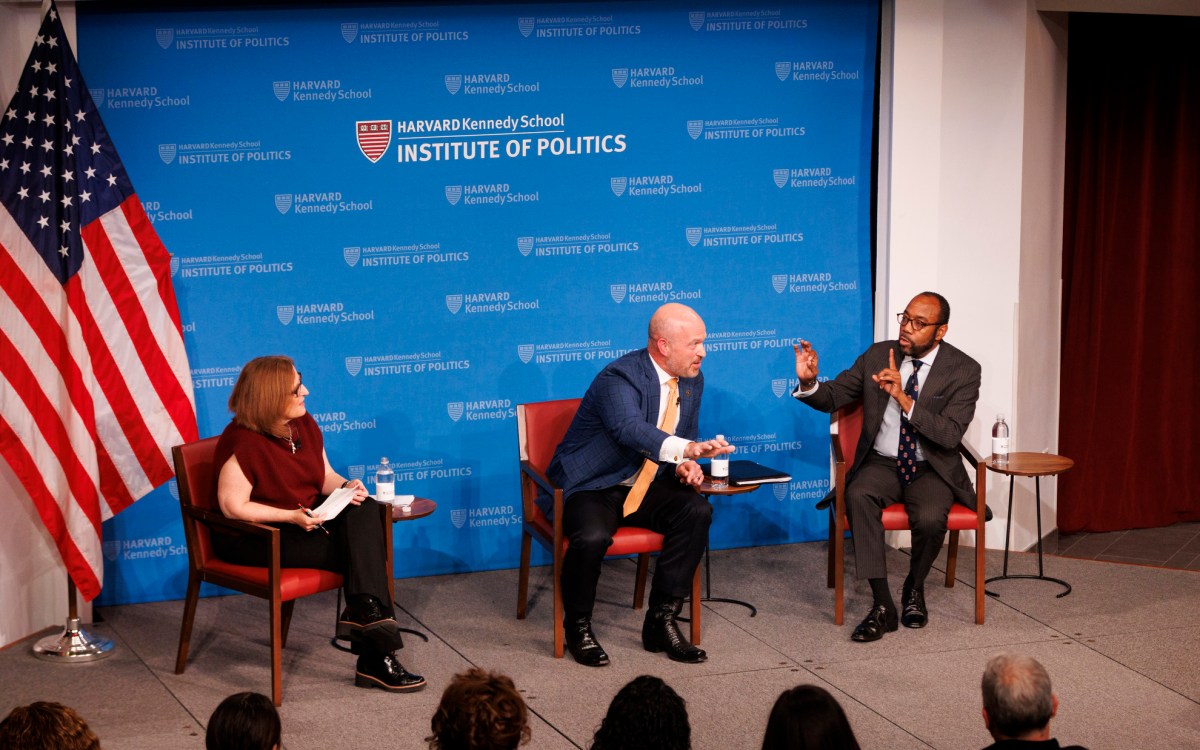
During remarks Thursday (Feb. 24) at the Harvard Kennedy School, House Majority Leader Eric Cantor portrayed the United States as a “fiscal train wreck” and sketched the stark choices that Republicans consider necessary to fuel the nation’s economic engine.
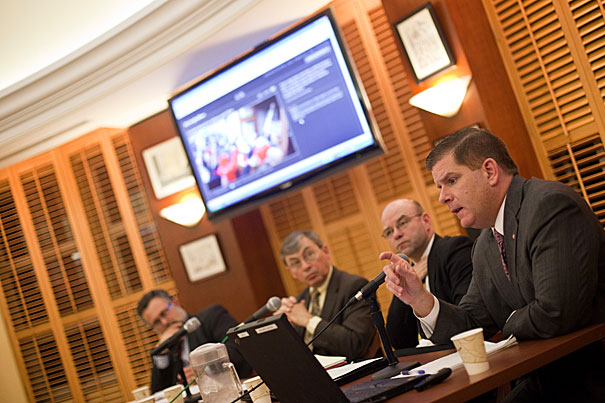
As anti-union sentiment sweeps state governments around the country, recent success stories in Massachusetts could hold the keys to improving public unions’ image, local leaders said at Harvard Kennedy School.
Researchers from the Harvard Humanitarian Initiative have been working in the Democratic Republic of the Congo for several years examining the roots of the violence against women that has plagued this war-torn region.
Researchers from the Harvard Humanitarian Initiative have been working in the Democratic Republic of the Congo for several years examining the roots of the violence against women that has plagued this war-torn region.
Though there are signs that the Botswana AIDS epidemic is slowing, the disease remains the top cause of death in the southern African nation. HIV infection rates are down nationwide to 24 percent, while life expectancy, which had fallen from 64 in 1990 to 40, rose to 50 in 1997.
The recent floods and drought experienced by Australia are extreme expressions of a naturally fluctuating water cycle that has been moderated with engineering and which the introduction of market reforms recently has made more efficient.
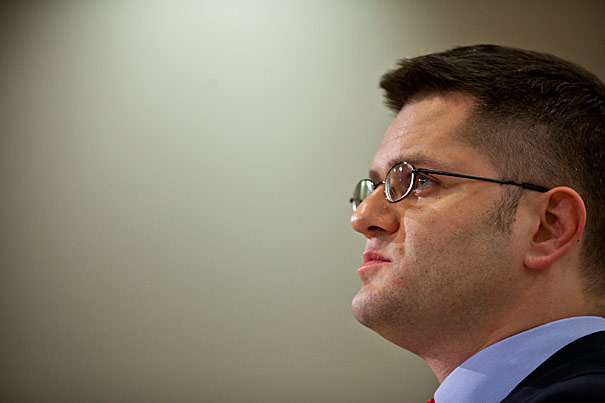
Serbian Minister of Foreign Affairs H.E. Vuk Jeremic, Harvard Kennedy School alumnus and former Kokklais Fellow, affirmed his nation’s determination to maintain Serbian sovereignty over Kosovo and to join the European Union in a talk at the Harvard Kennedy School on Feb. 17.
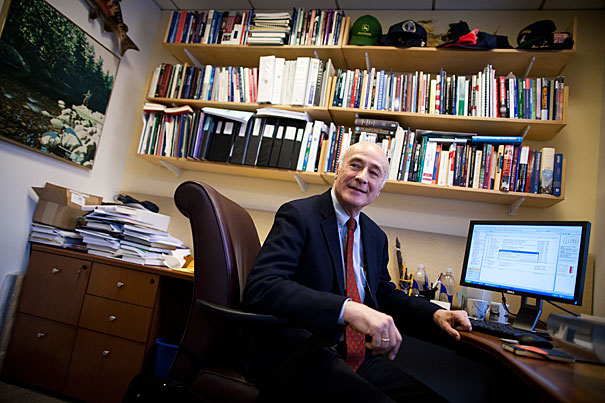
Joseph Nye staked his career on the idea that power on the world stage means more than just military might. In the information age, the former Harvard Kennedy School dean argues, the United States needs to learn that lesson more than ever.
The field of genomics, after revolutionizing crime fighting through DNA testing, is likely to shake the political landscape, says Jennifer Hochschild, who is researching its implications in Washington, D.C.
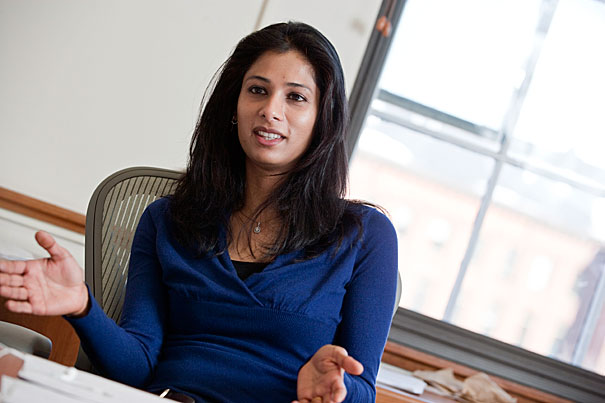
Gita Gopinath, Harvard’s newest tenured professor of economics, uses complex mathematics to model the financial world, but she also hunts for clues in real-world data.
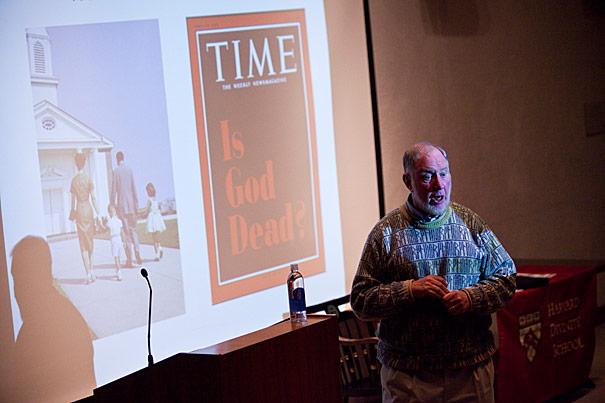
Americans are a God-fearing people, but we increasingly identify as nonreligious, according to Harvard political scientist Robert Putnam. Putnam shed light on “the rise of the nones” and other findings from his new book, “American Grace,” in a talk at Harvard Divinity School on Feb. 15.
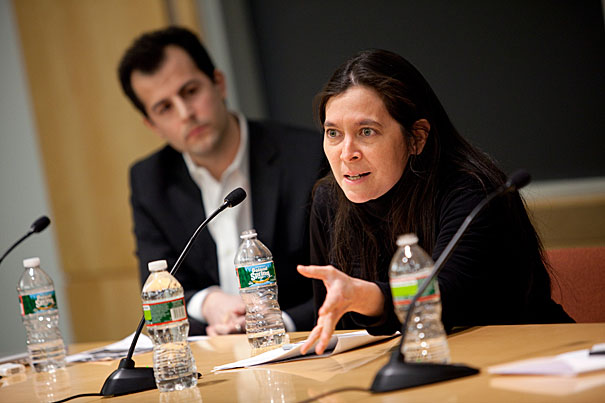
The first of a series of campuswide dialogues on teaching and learning called “Conversations@FAS: Redefining Teaching and Learning for the 21st Century,” featured A.R.T. Artistic Director Diane Paulus; Christopher Winship, the Diker-Tishman Professor of Sociology; and David Malan, lecturer on computer science.
Harvard Kennedy School faculty members and scholars offer their varied perspectives on the situation in Egypt via a website that is being updated regularly.
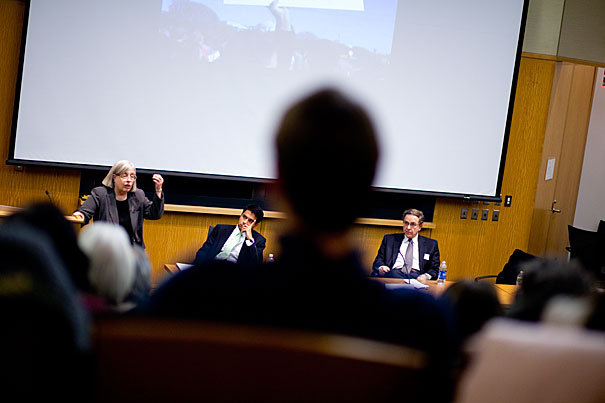
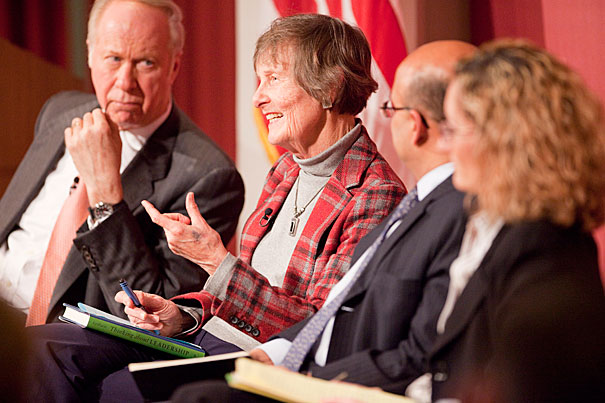
Do leaders need competence, character, or both? And can such traits be taught? On Feb. 7, Harvard experts gathered to discuss the University’s role in fostering leaders in business, education, and the public sector in honor of Harvard Corporation member Nan Keohane’s new book, “Thinking About Leadership.”
A diverse Harvard community celebrated Interfaith Awareness Week during a moving ceremony at the Memorial Church on Monday (Feb. 7) evening, remembering the life and message of the late Martin Luther King Jr.
Harvard is one of the world’s most international universities, with students and faculty from around the world. Overseas research and study abroad opportunities abound.
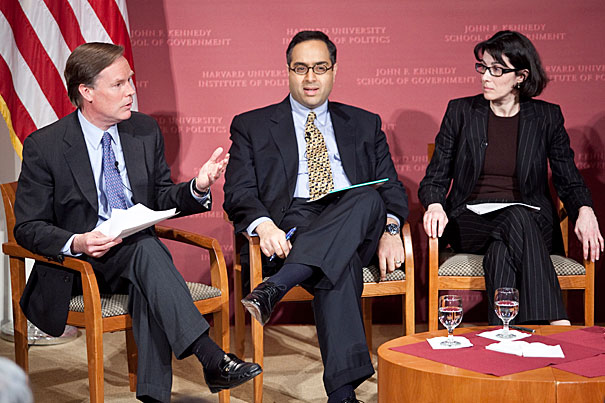
The protests that have rocked the Arab world in recent weeks have left many observers wondering if the region’s citizens will achieve self-government after decades of dictatorial rule. As Egyptians continued to demonstrate, a crowd flocked to the John F. Kennedy Jr. Forum at the Institute of Politics Feb. 3 to hear several Harvard analysts’ views on the wave of pro-democratic protests.

 Featured series