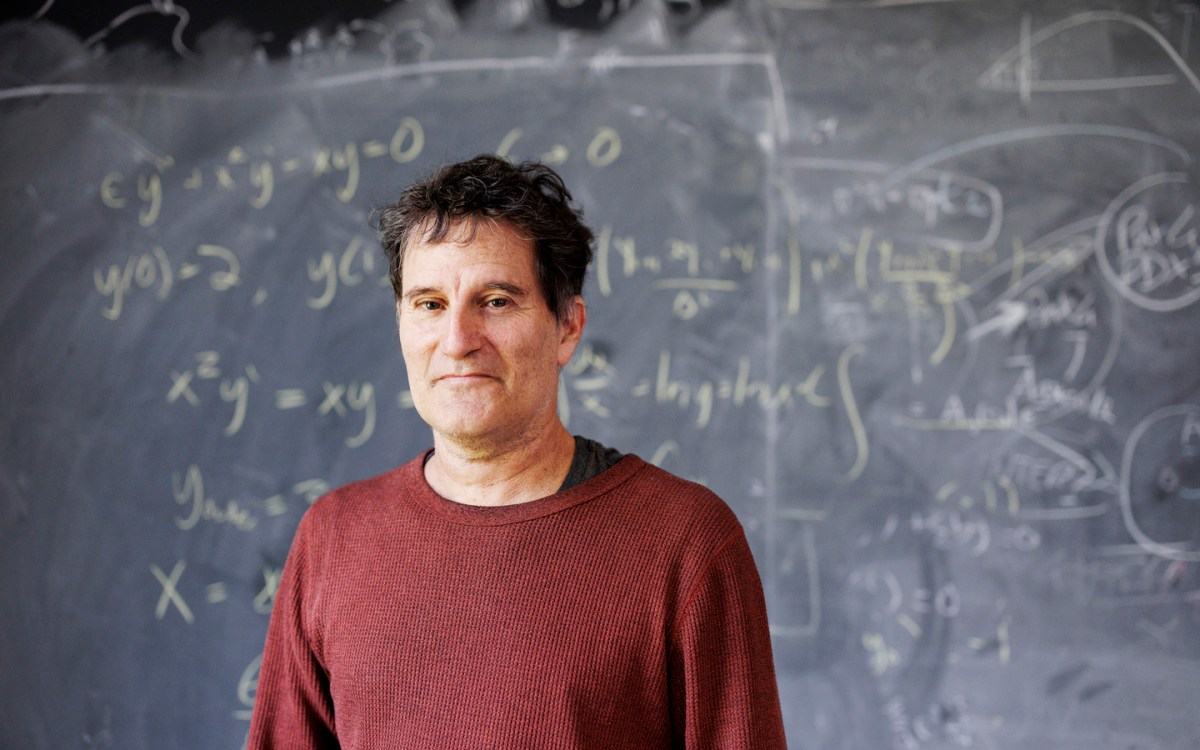
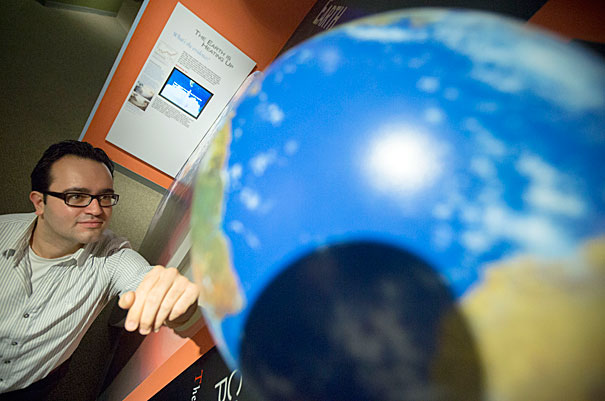
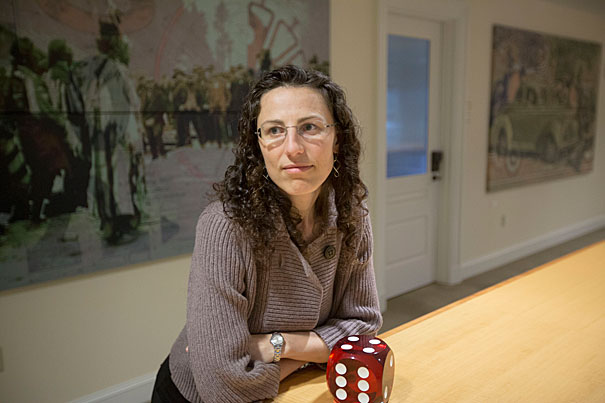
From the violence of Jupiter’s Great Red Spot to Earth’s own extreme weather, Ziff Environmental Fellow Pedram Hassanzadeh is investigating atmospheric vortices, those swirling air masses that make the weather go — and sometimes make it stop.
A new book by the Harvard China Project examines air pollution and greenhouse gas emissions in the world’s largest nation, and uses both science and economics to propose possible solutions.
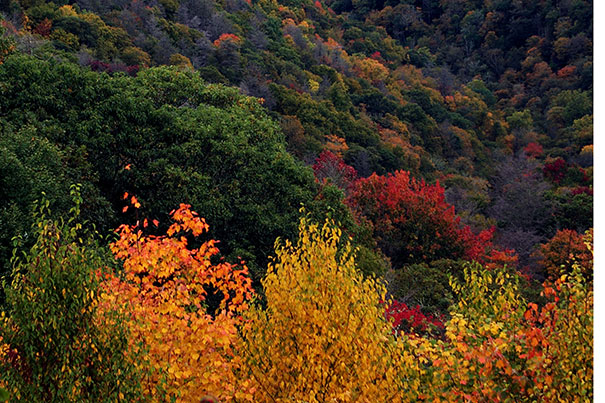
Harvard Forest researchers, together with state officials and representatives of conservation groups, are proposing a Massachusetts forest plan that increases both conservation and logging, while carefully focusing development to conserve as many large tracts as possible.
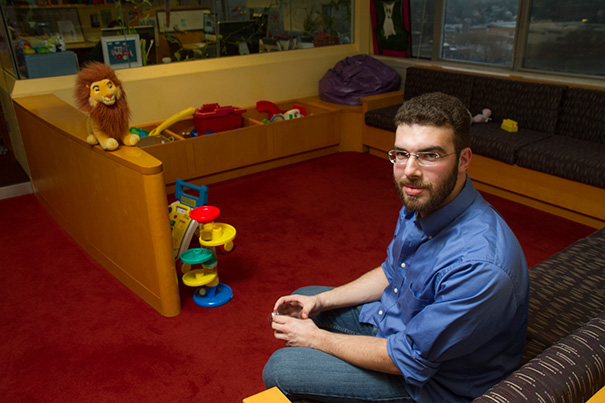
Though it has been embraced by everyone from advocates for arts education to parents hoping to encourage their kids to stick with piano lessons, two new studies conducted by Harvard researchers show no effect of music training on the cognitive abilities of young children.
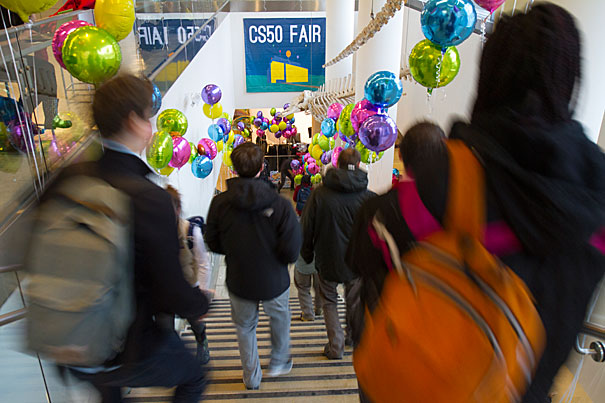
From a “Bad Basketball” fantasy league to software that helps partygoers communicate with DJs, students at Harvard’s introductory computer science course created a wide array of programs on display during the annual fair.
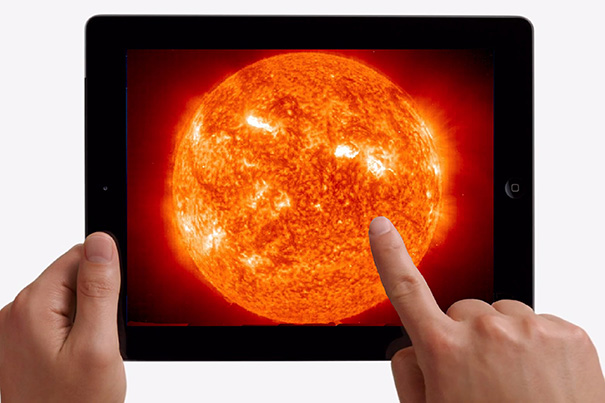
A new study by researchers at the Harvard-Smithsonian Center for Astrophysics shows that students grasp the unimaginable emptiness of space more effectively when they use iPads to explore 3-D simulations of the universe, compared with traditional classroom instruction.
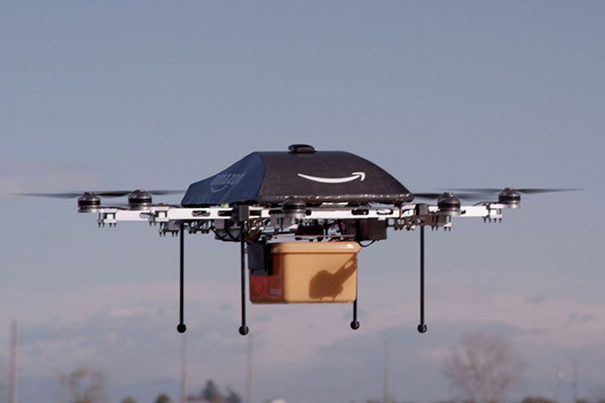
Harvard engineering Professor Robert Wood lends his perspective to Amazon’s proposal to start a flying drone delivery service within a few years. His verdict is that FAA regulations and liability concerns will likely be bigger hurdles than the technology.
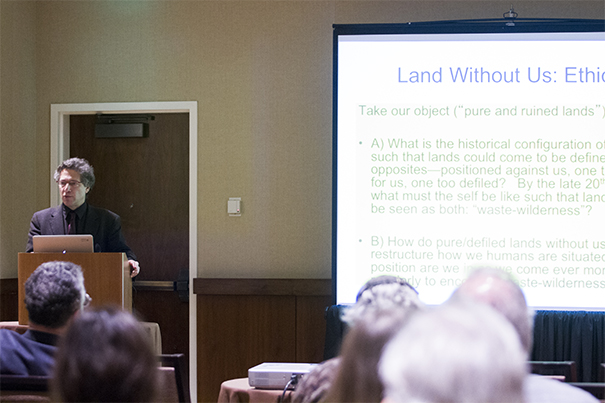
Harvard faculty and graduate students lectured, organized, and moderated in big ways throughout a four-day annual meeting in Boston of the History of Science Society.
Emissions of methane from fossil fuel extraction and refining activities in the United States are nearly five times higher than previous estimates, according to researchers at Harvard University and seven other institutions.
Professor Joshua Greene talks about his new book, “Moral Tribes: Emotion, Reason, and the Gap Between Us and Them.” What makes an issue like abortion or Israeli-Palestinian relations seem insurmountable, he said, can be chalked up, in part, to brain wiring.
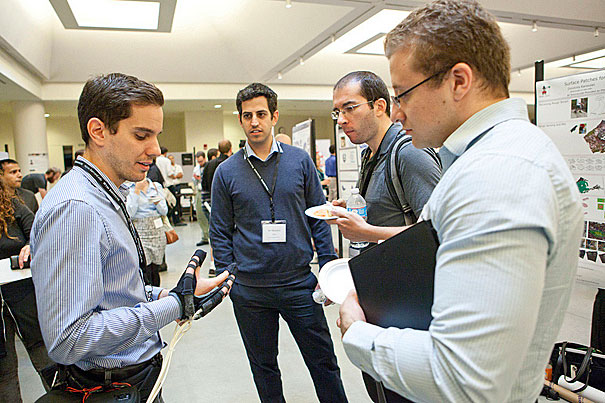
The Google Glass and Warrior Web projects highlight the annual Radcliffe Science Symposium, which focused on the integration of technology with “smart clothes.”
Representatives from some 195 nations have converged on Warsaw this week for a two-week meeting focused on climate change expected to lay the groundwork for the next international climate agreement. The Gazette spoke with climate policy expert Robert Stavins of the Kennedy School to understand what’s expected from the session.
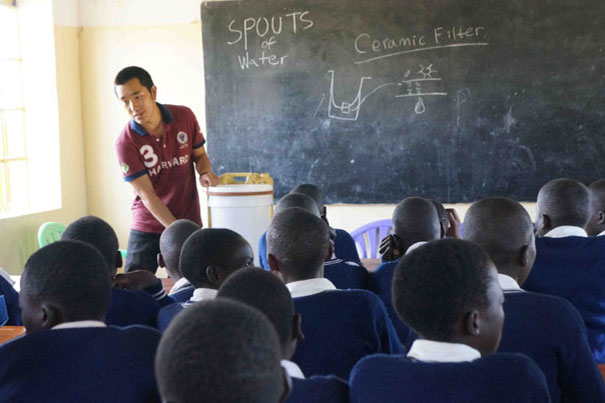
When Kathy Ku ’13 proposed to build a water-filter factory in Uganda for $15,000 last year, her contacts advised her to double her budget. If all goes to plan, by next August Ku and her classmates will have created a fully functional and self-sustaining water-filter factory, supplying clean water at half the cost of imported filters.
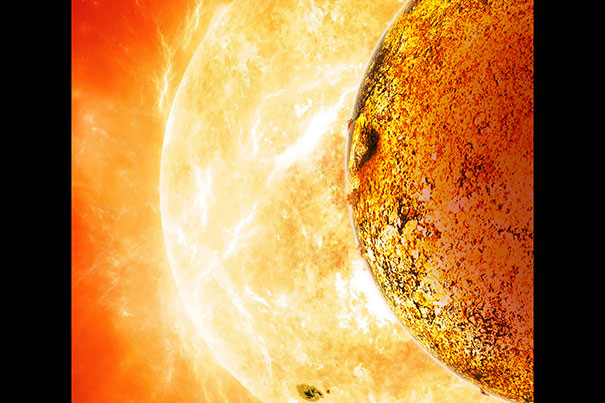
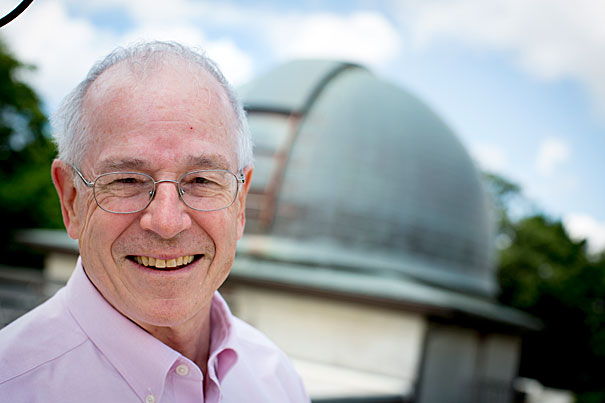
Kepler-78b is a planet that shouldn’t exist. “This planet is a complete mystery,” said astronomer David Latham of the Harvard-Smithsonian Center for Astrophysics (CfA). “We don’t know how it formed or how it got to where it is today. What we do know is that it’s not going to last forever.”
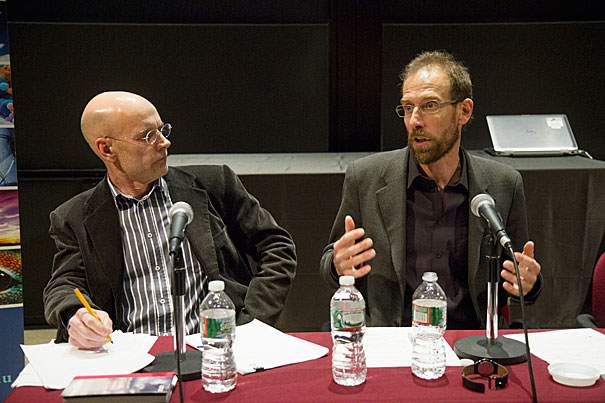
Scholars on opposite sides of geoengineering debated the climate change strategy’s potential — pitfalls and benefits — this week at the Science Center.
Radcliffe Fellow Tadashi Tokieda is creating and using simple toys whose sometimes surprising behavior both illustrates scientific concepts and causes even experienced scientists to scratch their heads trying to figure out what’s happening.
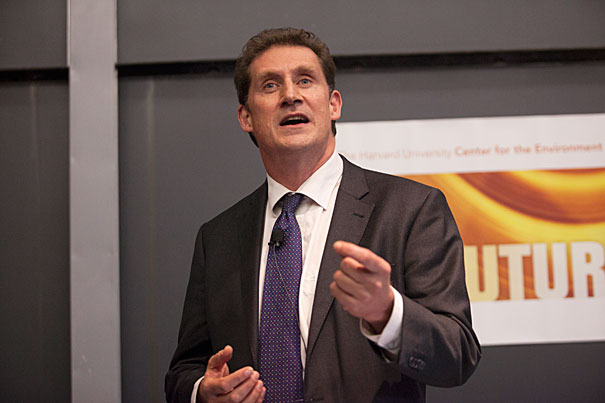
Clean economic growth is not just a pipe dream — it happened in Ireland between 1990 and 2010, when emissions dropped 10 percent even as the country’s economy grew 265 percent, the leader of that country’s Green Party said in a Harvard talk.
Jon Kabat-Zinn, a professor of medicine emeritus at the University of Massachusetts Medical School and a pioneer in applying mindfulness to the field of medicine, discussed how the concept can be integrated into K-12 education.
A new study found that middle school teachers can have a real impact not only on students’ short-term educations, but on whether they attend college and on the size of their future paychecks.
Thirty-eight of the United States’ national parks are experiencing “accidental fertilization” at or above a critical threshold for ecological damage, according to a study led by Harvard University researchers and published in the journal Atmospheric Chemistry and Physics.
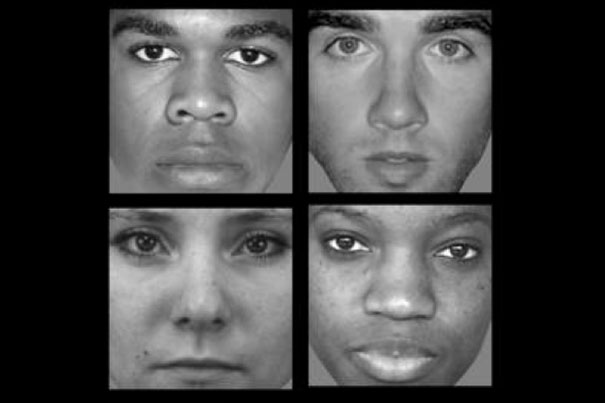
Using scans of the brain, Harvard researchers show that patterns of neural activity change when people look at black and white faces, and male and female faces.
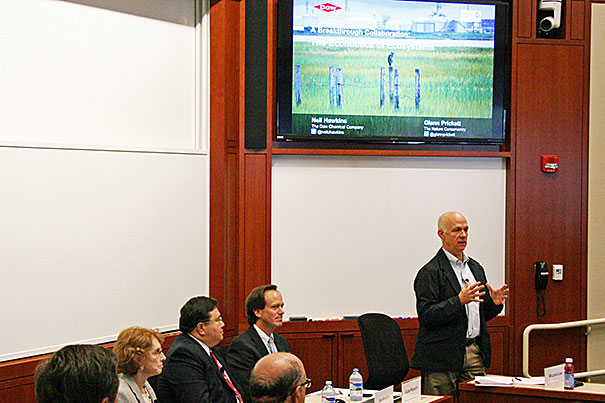
An unusual collaboration between the Nature Conservancy and Dow Chemical Co. led to their receiving the Roy Family Award for Environmental Partnership.
Scientists at the Harvard-Smithsonian Center for Astrophysics are drafting the target list for NASA’s next planet-finding telescope, the orbiting Transiting Exoplanet Survey Satellite, or TESS, which will search the Earth’s galactic neighborhood for planets that might support life.
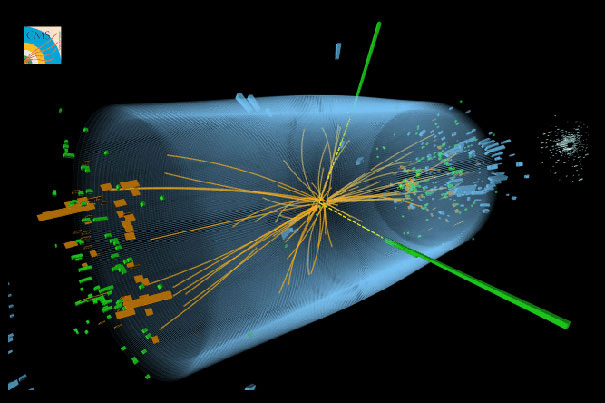
Following the announcement of the 2013 Nobel Prize in physics, Harvard faculty who participated in the search for the Higgs boson said they were honored to have played a role in the discovery of the particle that proved theoretical predictions correct.
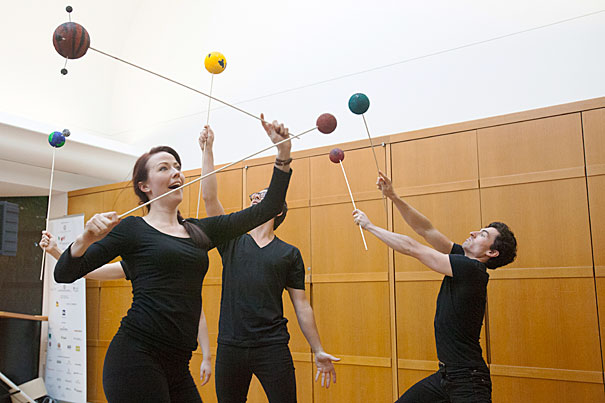
Some four centuries after Galileo observed spots on the surface of the sun, historians, musicians and actors came together at Harvard on Oct. 4 for an all-day conference to celebrate his discovery.
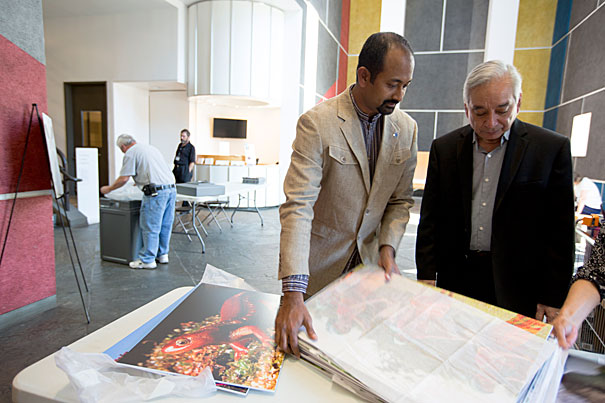
Can science and art join forces to conserve one of the world’s richest natural areas? UMass Boston biology professor Kamal Bawa and photographer Sandesh Kadur, a National Geographic emerging explorer, have joined forces to create a richly illustrated, scientifically accurate account of biodiversity in the Himalayas.

 Featured series