Featured series

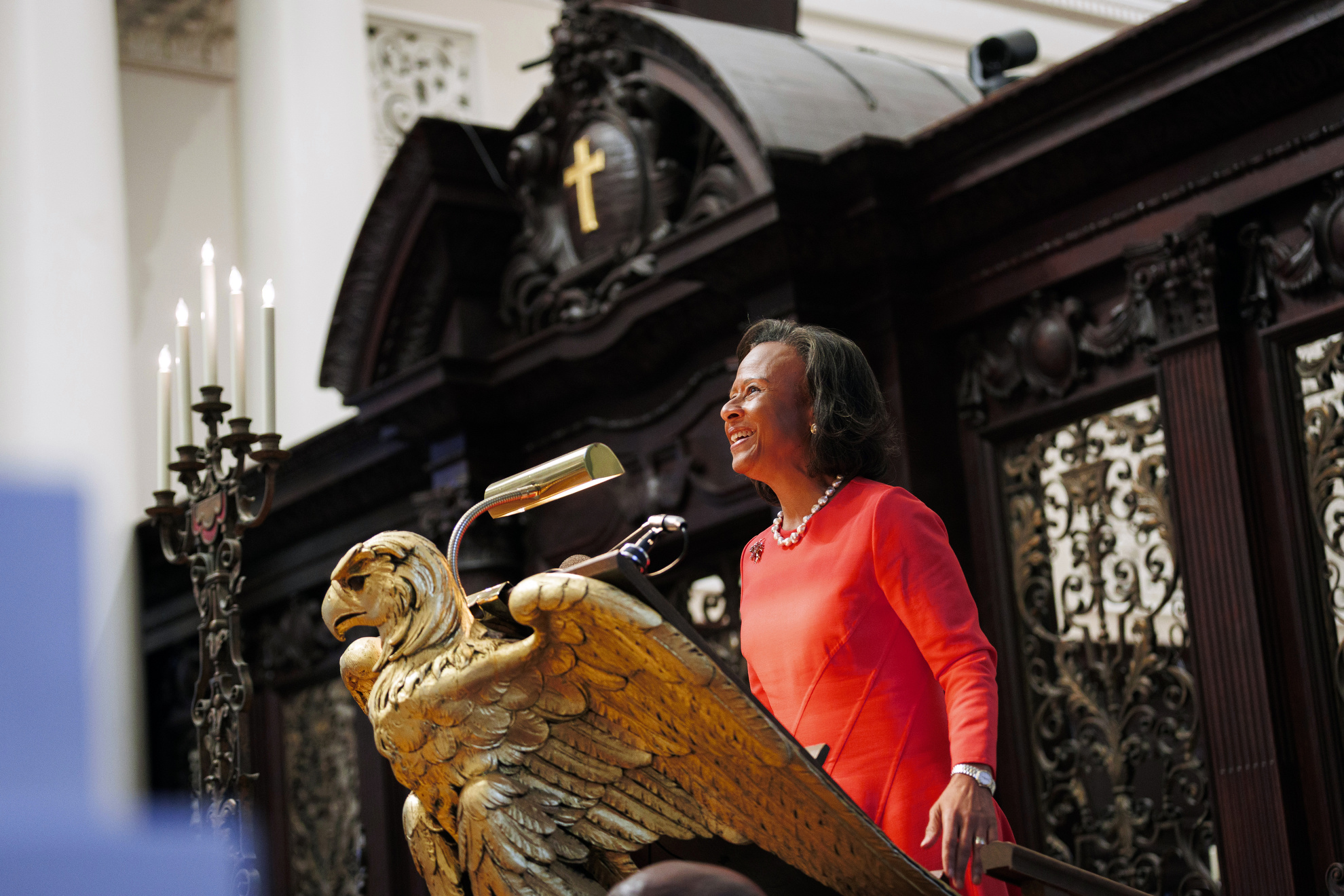
Paula Johnson.
Photos by Stephanie Mitchell/Harvard Staff Photographer
Campus & Community
The idea of a university
MLK Lecture honoree argues goal should prepare students for jobs, and to be responsible, principled citizens
In 1947, Martin Luther King Jr., then an 18-year-old Morehouse College student, wrote an article in the campus newspaper arguing that education should be about more than just developing the intellectual skills needed to get students ready for careers. It should shape character to ensure they pursue worthy goals as individuals and as part of society.
The nation’s universities and colleges lately are missing the mark, said Paula Johnson, Wellesley College president and this year’s honoree of the Dr. Martin Luther King Jr. Commemorative Lecture.
“I have been president of Wellesley College for just over a decade,” said Johnson ’80, M.D. ’84, M.P.H. ’85, in her address Thursday evening in Memorial Church. “In those tumultuous years, I have come to see the hard truth of how we are falling short of our responsibility to prepare students to be the citizens our country needs. I have witnessed the growing discomfort of students and faculty with sharing their views. I have observed the consequences of a focus on service without a corresponding emphasis on citizenship or civic purpose.”
Drawing on King’s words and legacy, Johnson urged university and college leaders to honor “the higher purpose Dr. King saw in education.” For King, the goal of true education was “intelligence plus character,” she said.
“For many, higher education has become an economic endeavor in terms of a return on an investment, an exercise of gaining knowledge for the purpose of personal gain,” said Johnson.
“The purpose of education is not to gain knowledge alone, but to teach students to form judgment with empathy and to imbue them with a sense of higher responsibility to our democracy.”
Paula Johnson
“The purpose of education is not to gain knowledge alone, but to teach students to form judgment with empathy and to imbue them with a sense of higher responsibility to our democracy. In an age of rapid technological advances and political fragmentation, I see this as an urgent need.”
To fulfill that purpose, Johnson advocated for the restoration of three principles: fostering moral and ethical development of character, reasserting the central importance of history, and exposing students to real encounters across difference.
“College is an opportunity for students to discover what they believe, based in knowledge and their lived experience, what they owe each other, and what they owe people beyond their communities,” said Johnson. “A strong education teaches us that all facets of life have a history, and learning that history changes how we understand ourselves, and how we understand our responsibilities to each other. That is the education we owe our students.”
A pioneering physician scientist, public health leader, and educator, Johnson spoke at the fifth MLK Lecture commemorating the 1962 speech King gave at Harvard on the future of integration.
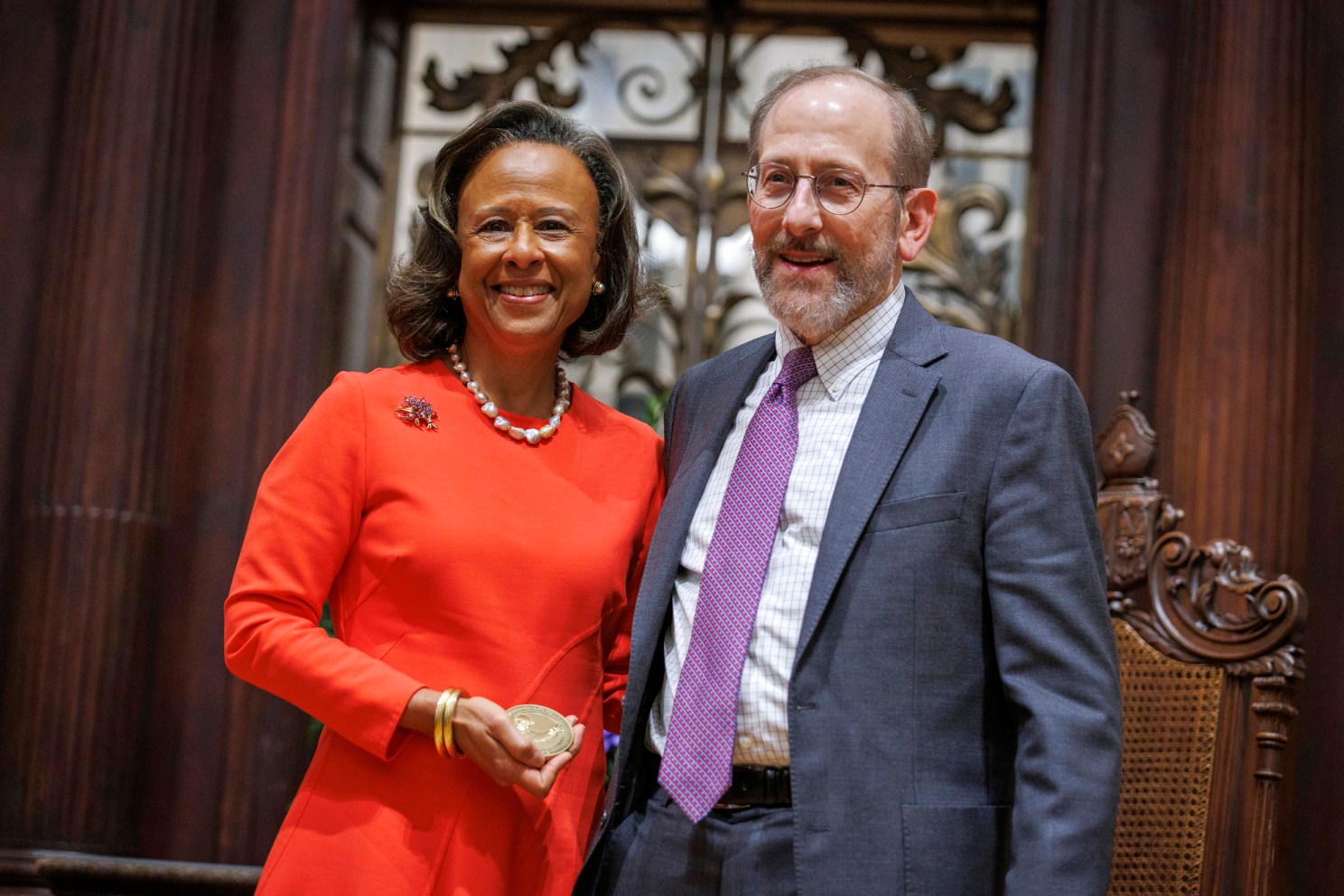
Johnson receives the MLK Jr. Commemorative Lecture Award from Harvard President Alan Garber.
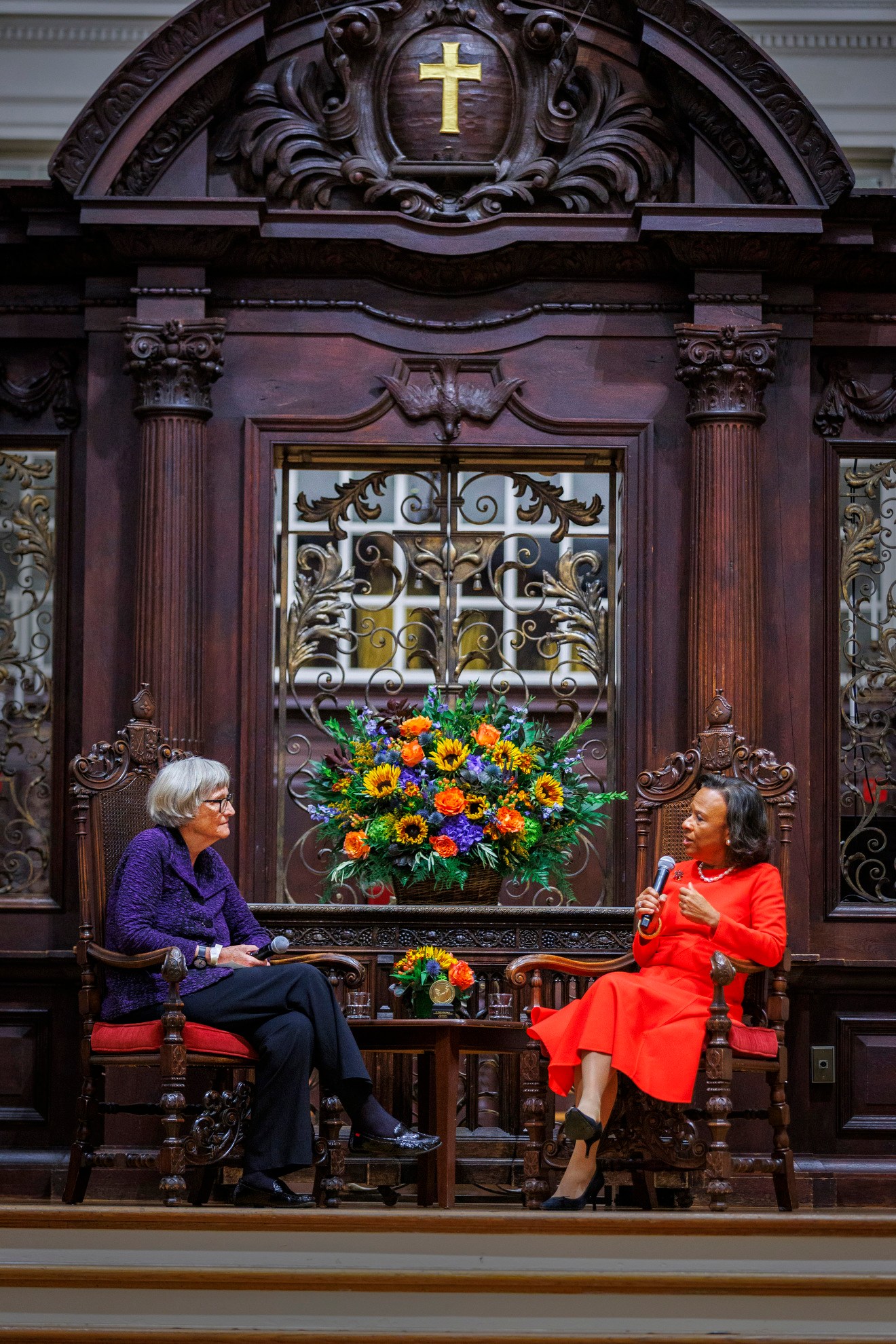
Former Harvard President Drew Faust and Johnson speak during the event.
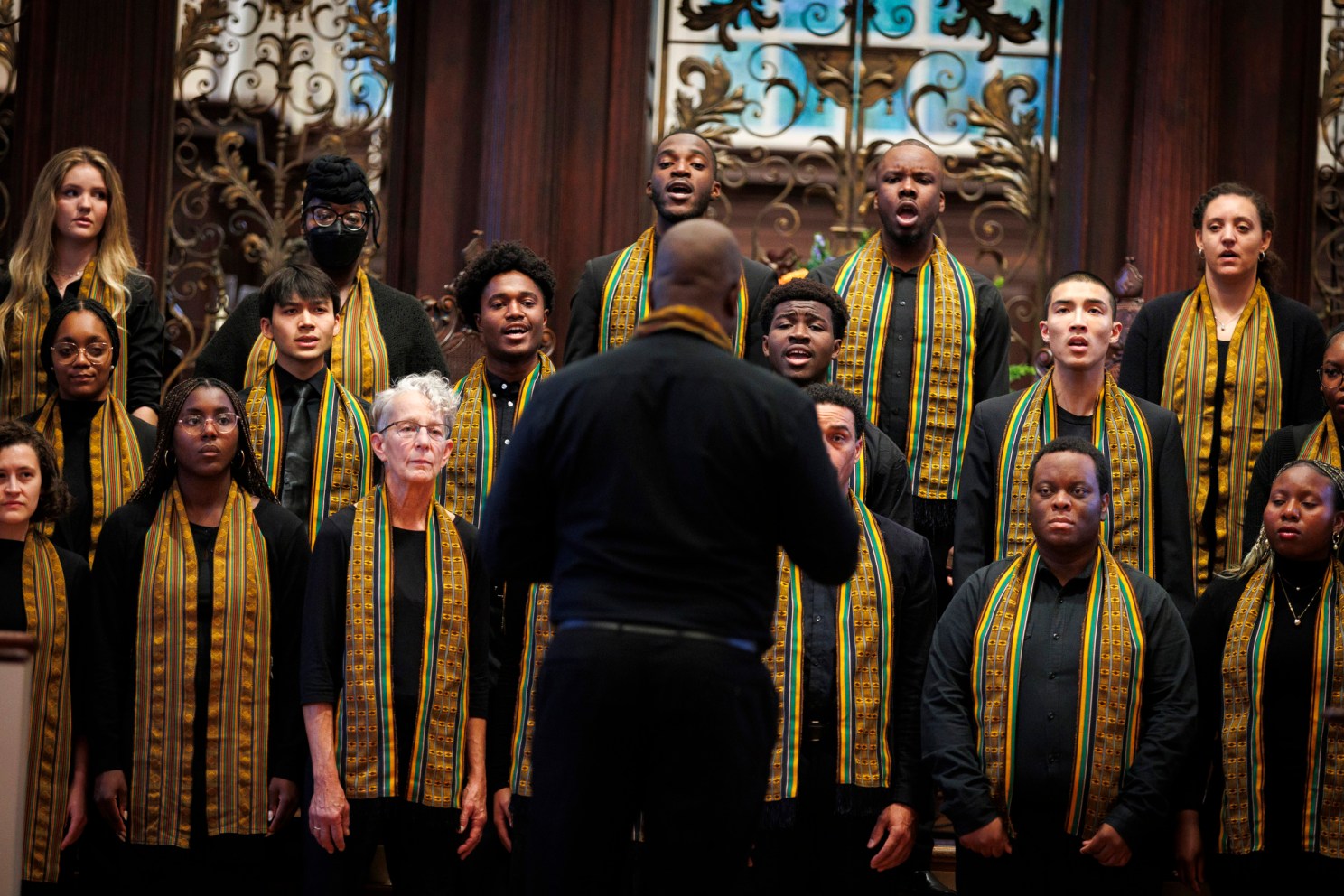
The Kuumba Singers perform.

Attendees packed Memorial Church for the ceremony.
Organized by Community and Campus Life, the annual presidential event honors individuals for their contributions to advancing King’s ideals of justice and equality.
Past honorees include Freeman A. Hrabowski III, president emeritus of the University of Maryland, Baltimore County; Loretta Lynch, former U.S. attorney general; Sherrilyn Ifill, president and director-counsel emeritus of the NAACP Legal Defense Fund, and Darren Walker, president of the Ford Foundation.
Harvard President Alan Garber described Johnson as “a daughter of Harvard, a beloved educator and an inspiring leader” in presenting her the award.
“President Paula Johnson, who has been my friend and an inspiration for more than four decades, is the best hopes of this University realized: a visionary who has brought her talents to bear on everything she does, a scholar who has expanded her capacities across a lifetime of meaningful and valuable work, a leader who has made the world better through her efforts,” said Garber.
Before becoming Wellesley president, Johnson was the Grayce A. Young Family Professor of Medicine in Women’s Health at Harvard Medical School and professor of epidemiology at the Harvard T. H. Chan School of Public Health.
She was also the chief of the Division of Women’s Health and founded and served as the inaugural executive director of the Mary Horrigan Connors Center for Women’s Health at Brigham and Women’s Hospital.
The evening’s events included a moderated discussion between Johnson and Drew Gilpin Faust, Harvard president emerita and Arthur Kingsley Porter University Research Professor.
The two spoke about King’s legacy and also noted their similar journeys as women who rose to the top of their professions and became distinguished scholars and university presidents.
“Harvard didn’t expect to see the two of us sitting up here,” said Faust, prompting applause from the audience.
Born and raised in Brooklyn, Johnson was part of the first Harvard-Radcliffe class to admit men and women in equal numbers. In 1990, Johnson was the first Black American in the history of Brigham and Women’s Hospital to be chosen as chief medical resident.
Faust, who served as Harvard president from 2007 to 2018, was the University’s first female president.
At one point Faust asked Johnson how higher education could meet King’s call to educate future generations of engaged and ethical citizens.
Johnson admitted there is work to do, but, “We don’t have a choice.”