
 Featured series


Tag: Cancer
-
Health
Affordable cancer treatments available
Report reveals that readily available and affordable cancer prevention, treatment, and pain relief interventions could decrease deaths and improve the lives of millions in developing countries.
-
Health
Disrupting a cancer gene
Scientists at Harvard-affiliated Dana-Farber Cancer Institute have successfully disrupted the function of a cancer gene involved in the formation of most human tumors by tampering with the gene’s “on” switch and growth signals, rather than targeting the gene itself.
-
Health
Cancer stem cells made, not born
In cancer, tumors aren’t uniform: they are more like complex societies, each with a unique balance of cancer cell types playing different roles. Understanding this “social structure” of tumors is critical for treatment decisions in the clinic because different cell types may be sensitive to different drugs.

-
Health
Grant backs study of cancer-obesity link
The Harvard School of Public Health has been awarded a five-year, $10 million grant from the National Cancer Institute for a new research center to study the relationship between obesity and cancer.
-
Health
When to alter cancer screenings
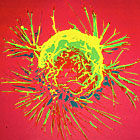
Not only is it important for physicians to be fully informed about any cancer in their patients’ family histories, but a massive new study led by a Harvard researcher at Massachusetts General Hospital (MGH) and a University of California scientist indicates that it is important to update that history whenever there are contemporaneous changes in…
-
Health
Finding ovarian cancer’s vulnerabilities
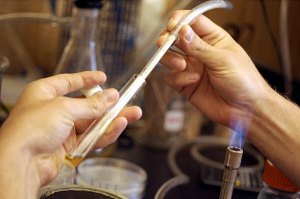
In their largest and most comprehensive effort to date, researchers from the Broad Institute of Harvard and MIT and Dana-Farber Cancer Institute, a Harvard affiliate, examined cells from more than 100 tumors, including 25 ovarian cancer tumors, to unearth the genes upon which cancers depend. They call it Project Achilles.
-
Campus & Community
Three researchers named Runyon Fellows
The Damon Runyon Cancer Research Foundation, a nonprofit organization focused on supporting innovative early career researchers, has named 18 new Damon Runyon Fellows, including three from Harvard.
-
Health
Where there’s smoke, there’s ire
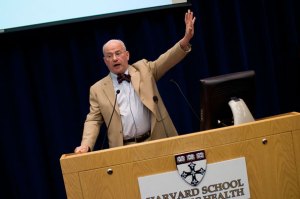
Speakers at a Harvard School of Public Health conference on smoking hailed the late Sen. Edward M. Kennedy’s work to give the Food and Drug Administration new regulatory power over tobacco products and said, if wielded properly, it could prove a key weapon for better health.
-
Health
How ovarian cancer spreads
Harvard Medical School researchers find that ovarian cancer cells use mechanical force to move through tissue and colonize additional organs.

-
Health
Increasing odds for survival
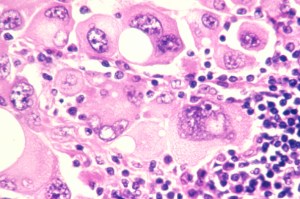
A duo of drugs, each targeting a prime survival strategy of tumors, can be safely administered and is potentially more effective than either drug alone for advanced, inoperable melanomas, according to a phase 1 clinical trial led by Harvard investigators at the Dana-Farber Cancer Institute.
-
Campus & Community
It was a very good year
With its 360th Commencement, another chapter in Harvard’s history draws to a close, as marked by highlights from this year. Reinstallation of ROTC, ongoing innovation in science and humanities, and Wynton Marsalis at Harvard top off some of the year’s historical benchmarks.

-
Campus & Community
Making an art of science
Graduating senior Kevin Shee threw himself into Harvard’s dance scene after arriving as a freshman, but he leaves after nourishing a second love — science — that will take him to a research career after graduation.

-
Health
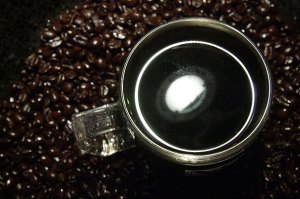
Coffee tied to lower prostate cancer risk
Men who regularly drink coffee appear to have a lower risk of developing a lethal form of prostate cancer, according to a new study led by Harvard School of Public Health researchers.
-
Health
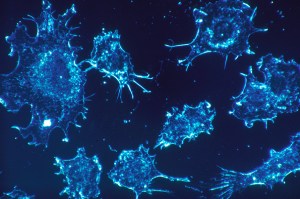
Cancer cells’ survival kit
Harvard-affiliated scientists at Dana-Farber Cancer Institute have discovered new details of how cancer cells escape from tumor suppression mechanisms that normally prevent these damaged cells from multiplying.
-
Campus & Community
Harvard rallies against cancer
Now through April 8, team up with other Harvard faculty and staff members to shut out cancer through Harvard Community Gifts.

-
Health
Multiple myeloma genome unveiled
Harvard scientists have unveiled the most comprehensive picture to date of the full genetic blueprint of multiple myeloma, a form of blood cancer.
-
Health
Dilemmas of destiny
As genetic testing and its offspring — personalized medicine — have matured, patients and doctors have become entangled in such issues as how to best share at-risk information, access treatment options, and weigh decisions about threats to the young and unborn. And sometimes these issues mushroom, becoming quandaries for society as a whole.

-
Health
Beyond DNA
On a day when Harvard celebrated the accomplishments of the Human Genome Project, the Radcliffe Institute hosted a scientist whose work focuses not just on DNA, but on the mechanisms that control its expression.

-
Campus & Community
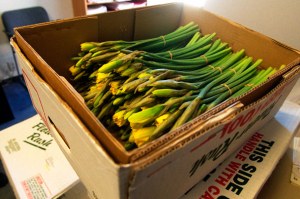
Daffodil Days are here again
Members of the Harvard community are invited to purchase fresh bouquets of daffodils for $10 to support the research and programs of the American Cancer Society. The deadline to order is March 1.
-
Campus & Community
BIDMC’s Pandolfi to receive cancer research award
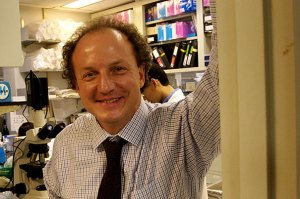
Cancer geneticist Pier Paolo Pandolfi at Harvard-affiliated Beth Israel Deaconess Medical Center is the recipient of the 2011 Pezcoller Foundation-AACR International Award for Cancer Research.
-
Campus & Community
Deadline looms for two HMS fellowships
Two fellowships in Harvard Medical School’s media fellowship program are open for applications from reporters.
-
Campus & Community
Gregory Verdine wins prize for cancer research
Gregory Verdine has won the 2011 American Association for Cancer Research Award for Outstanding Achievement in Chemistry in Cancer Research.

-
Health
Sick to death
Harvard School of Public Health researchers are mounting a major study of chronic disease in four African nations, which organizers hope will provide a foundation for understanding and treating chronic ailments like heart disease, diabetes, and cancer.

-
Health
The rise of chronic disease
Heart disease, diabetes, and other chronic diseases are becoming enormous problems in the developing world and need more attention even as the challenge of fighting infectious diseases like AIDS shows no sign of abating, according to Institute of Medicine President Harvey Fineberg.

-
Health
Targeting lung cancer
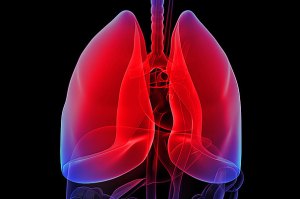
An initial study of a new treatment for a form of lung cancer seems so promising it has been jumped from Phase 1 to Phase 3 clinical trials.
-
Health
When ‘watch and wait’ works best
Harvard researchers have found that as many as 50 percent of young girls treated for germ cell ovarian tumors might be spared chemotherapy using a “watch and wait” strategy to determine if the follow-up treatment is needed.

-
Health
It all adds up
New mathematical modeling by scientists from Harvard and other institutions reinforces the view of cancer as a complex culmination of many mutations.

-
Health
Poised for progress
A discovery by scientists at Harvard-affiliated Dana-Farber Cancer Institute may lead to an effective way of operating the immune system’s internal “control panel,” improving therapies for a variety of diseases.
-
Nation & World
Urgent matters
According to a paper to be published online in the Lancet on Aug. 16, the international community must discard the notion that cancer is a “disease of the rich” and approach it as a global priority.
