
 Featured series

Tag: Cancer
-
Campus & Community
Six Harvard affiliates receive Damon Runyon fellowships
Six Harvard affiliates have been named recipients of fellowships by the Damon Runyon Cancer Research Foundation, a nonprofit organization focused on supporting exceptional early-career researchers and innovative cancer research.
-
Health
Using nanotechnology to improve a cancer treatment
Harvard and Brigham and Women’s Hospital researchers have devised a method that may allow clinicians to use higher doses of a powerful chemotherapy drug that has been limited because it is toxic not only to tumors but to patients’ kidneys.
-
Health
Improving a cancer drug
Researchers, led by Harvard Medical School Assistant Professor Shiladitya Sengupta, have devised a way to improve a low-cost, effective cancer drug, cisplatin, whose use has been limited by its toxicity.
-
Health
New drug extends life of melanoma patients
A therapy that multiplies the effect of a natural disease-fighting antibody has extended the lives of patients with metastatic melanoma in a large, international clinical trial.
-
Campus & Community
Bench pressing for a cure
On May 3, more than 250 Harvard athletes from 18 varsity teams took the Palmer-Dixon Gymnasium by storm for the second annual Bench Press for Breast Cancer Challenge, pumping iron and raising greenbacks for the Susan G. Komen for the Cure.

-
Campus & Community
Evening with Champions
With her spotlight purring like an old projector, Linda Yao ’10 used a steady hand to follow the cast of famed figure skaters as they shaved graceful ribbons into the ice during “An Evening with Champions.”

-
Arts & Culture
Peering into gearworks of FDA
Daniel Carpenter’s new book, “Reputation and Power: Organizational Image and Pharmaceutical Regulation at the FDA,” probes the workings of a crucial federal safety agency that often is either lionized or demonized.
-
Nation & World
Sumner M. Redstone donates $1M
Harvard University today (April 23) announced that Sumner M. Redstone has contributed $1 million to be used by Harvard College and Harvard Law School. This contribution by Redstone, a graduate of both Schools, will establish scholarships for 20 Redstone Scholars to attend Harvard College for the 2010–11 academic year.

-
Campus & Community
Diabetes drug tied to reduced breast cancer risk
Women who have used the diabetes drug metformin for more than five years may have a lower risk of breast cancer than diabetic women on other treatments, a new study finds…
-
Campus & Community
Radiation use may raise adult cancer risk
NEW YORK — Women’s risk of developing breast cancer may increase as much as 20-fold if they were treated with chest radiation for malignancies as children or young adults, according to an analysis of studies… In the second study on lifespan, Jennifer Yeh, a research fellow at Harvard School of Public Health, developed a mathematical…
-
Health
Childhood cancer survivors may face shortened lifespan, study reveals
Although more children today are surviving cancer than ever before, young patients successfully treated in the 1970s and 80s may live a decade less, on average, than the general population, according to a study by Harvard researchers at Dana-Farber Cancer Institute and the Harvard School of Public Health. Depending on the type of cancer, the…
-
Health
Treatment resistance in some cancer cells may be reversible
The ability of cancer cells to resist treatment with either targeted drug therapies or traditional chemotherapy may, in some cases, result from a transient state of reversible drug “tolerance.” In a paper that will appear in the journal Cell and is being released early online, Harvard researchers at the Massachusetts General Hospital (MGH) Cancer Center…
-
Health
“Good” cells can go “bad” in a “bad neighborhood”
Normal.dotm 0 0 1 375 2142 Harvard University 17 4 2630 12.0 0 false 18 pt 18 pt 0 0 false false false The general theory of cancer development holds that malignancies occur because of the presence of certain genetic elements within the affected cells. But a new study by Harvard researchers at Massachusetts General…
-
Campus & Community
Second opinions, anywhere
Rwanda has 10 million people, but no cancer specialists. A recent collaboration between a Waltham medical information company and a Harvard University research institute aims to reduce such professional isolation – and to learn from the medical knowledge and resourcefulness of doctors in the developing world.
-
Campus & Community
Stem Cell Experiment Reverses Aging In Rare Disease
The team at Children’s Hospital Boston and the Harvard Stem Cell Institute were working with a new type of cell called induced pluripotent stem cells or iPS cells, which closely resemble embryonic stem cells but are made from ordinary skin cells…
-
Health
The hunt for healthy answers
JoAnn Manson leads a nationwide study to assess whether vitamin D and omega-3 fatty acids can boost immunity and protect against ailments from heart disease to cancer.
-
Campus & Community
Daffodil Days in full bloom
At Harvard, the month of February brings the promise of spring with the kick-off of Daffodil Days, a University-wide effort to raise funds to support the fight against cancer.

-
Health
Genes linked to breast cancer drug resistance
Harvard researchers at the Dana-Farber Cancer Institute have discovered a “gene activity signature” that predicts a high risk of cancer recurrence in some breast tumors that have been treated with commonly used chemotherapy drugs. Despite their resistance to drugs of the anthracycline class, the breast cancers bearing this gene signature probably still will be vulnerable…
-
Health
Want to live well?
Harvard faculty members from a range of fields give tips on how to live healthy.

-
Health
Cancer vaccine success
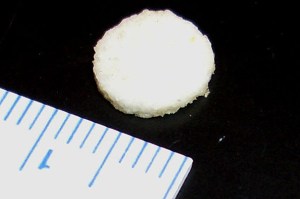
A cancer vaccine carried into the body on a carefully engineered, fingernail-sized implant is the first to successfully eliminate tumors in mammals, scientists report this week (Nov. 25) in the journal Science Translational Medicine.
-
Health
First cancer vaccine to eliminate tumors in mice
A cancer vaccine carried into the body on a carefully engineered, fingernail-sized implant is the first to successfully eliminate tumors in mammals, a team of Harvard bioengineers and biologists report today in the journal Science Translational Medicine. The new approach uses plastic disks impregnated with tumor-specific antigens and implanted under the skin to reprogram the…
-
Health
Researchers ‘NOTCH’ a victory in war on cancer
Normal 0 0 1 819 4673 38 9 5738 11.1282 0 0 0 Scientists have devised an innovative way to disarm a key protein considered to be “undruggable,” meaning that all previous efforts to develop a drug against it have failed. Their discovery, published in today’s edition of the journal Nature, lays the foundation for…
-
Health
Darkness with the light
Adult survivors of childhood cancer have an increased risk of suicidal thoughts, even decades after their cancer treatments have ended, according to a study led by Harvard researchers at Dana-Farber Cancer Institute (DFCI). The researchers report in the Journal of Clinical Oncology that nearly 8 percent of childhood cancer survivors said they have experienced suicidal…
-
Campus & Community
A Cancer Visible To The Naked Eye, But Doctors Aren’t Looking
“We were very, very surprised,” Geller recalls. “About three-quarters of them were never trained in the skin cancer exam, and more than half never once practiced the examination during their primary care residency.” Geller, who’s a senior research scientist at the Harvard School of Public Health, says those high levels of inexperience are really worrisome.…
-
Campus & Community
Study Finds Pro and Cons to Prostate Surgeries
People intuitively think that a minimally invasive approach has fewer complications, even in the absence of data,” said Dr. Jim C. Hu, the study’s lead author, who is director of urologic robotic and minimally invasive surgery at Brigham and Women’s Hospital in Boston.
-
Campus & Community
U.S. study shows mammograms save lives
“The most effective method for women to avoid death from breast cancer is to have regular mammographic screening,” Dr. Blake Cady of Cambridge Hospital Breast Center and Harvard Medical School in Massachusetts told reporters in a telephone briefing…
-
Campus & Community
Telomerase work wins Szostak Nobel Prize in medicine
Jack W. Szostak, a genetics professor at Harvard Medical School and Harvard-affiliated Massachusetts General Hospital (MGH), has won the 2009 Nobel Prize in physiology or medicine for work on cellular structures called telomeres, which protect chromosomes from degradation.

-
Campus & Community
Aspirin Can Prevent Colon Cancer in High-Risk Group, Study Says
The Harvard study suggested aspirin could prevent tumors from growing by inhibiting Cox-2, an enzyme that may play a role in the initial growth of a tumor.
-
Campus & Community
Diabetes Medication May Get New Life as Cancer Treatment
A national tax of 1 cent per ounce of soda and other sugary drinks could stem the United States’ obesity epidemic, while generating $14.9 billion the first year alone, health experts say.