Featured series


Tag: Cancer
-
Campus & Community
Partners, from grade school to Medical School
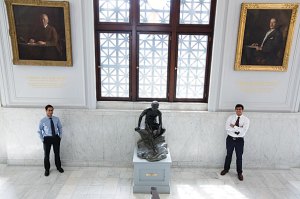
Fraternal twins Rosh and Roshan Sethi have shared much of their lives, including at Yale as undergraduates and sharing an apartment while enrolled at Harvard Medical School. Now preparing to graduate, they’re anticipating diverging careers, with Roshan exploring radiation oncology and Rosh head and neck surgery.
-
Health
Solving the problem of shape-shifters
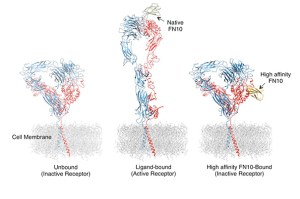
Investigators at Harvard-affiliated Massachusetts General Hospital (MGH) may have found a way to solve a problem that has plagued ligand-mimicking integrin inhibitors, a group of drugs that have the potential to treat conditions ranging from heart attacks to cancer metastasis.
-
Health
Fighting disease on a global scale
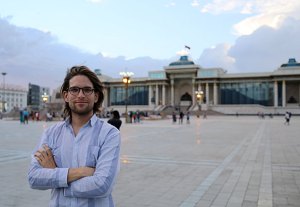
The idea that the wave of diabetes, heart disease, and cancer breaking over the world is largely the result of wealth and inactivity is not only wrong, it’s counterproductive, says a Harvard research fellow who recently founded a nonprofit organization to fight disease.
-
Health
A tiny, time-released treatment
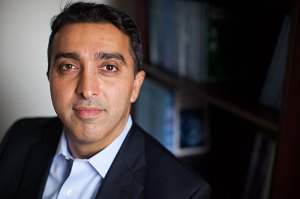
Targeted nanotherapy is the wave of the medical future, according to Omid Farokhzad, a Harvard Medical School and Brigham and Women’s Hospital researcher who has two nanoparticle-based therapies in clinical trials and a slew of ideas for new ways to put the tiny capsules to work for human health.
-
Health
Cancer vaccine begins Phase I clinical trials
A cross-disciplinary team of Harvard scientists, engineers, and clinicians announced Sept. 6 that they have begun a Phase I clinical trial of an implantable vaccine to treat melanoma, the most lethal form of skin cancer.

-
Health
New plan of attack in cancer fight
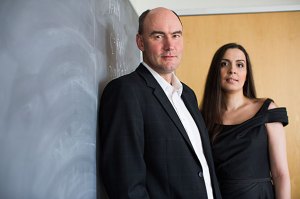
Harvard Professor Martin Nowak and Ivana Bozic, a postdoctoral fellow in mathematics, show that, under certain conditions, using two drugs in a “targeted therapy” — a treatment approach designed to interrupt cancer’s ability to grow and spread — could effectively cure nearly all cancers.
-
Campus & Community
Postdoc wins Runyon Fellowship
Michael A. Cianfrocco, a postdoctoral fellow in molecular and cellular biology, has been named a fellow by the Damon Runyon Cancer Research Foundation.
-
Health
Developing cancer drugs
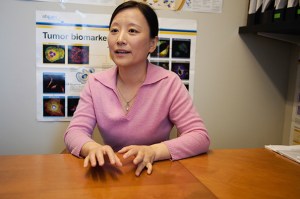
Harvard Stem Cell Institute researchers have identified in the most aggressive forms of cancer a gene known to regulate embryonic stem cell self-renewal, beginning a creative search for a drug that can block its activity.
-
Nation & World
Cantor: Fund medical research
U.S. Rep. Eric I. Cantor, the House majority leader, embraced immigration reform, education changes, and medical research funding during a speech at the Harvard Kennedy School.

-
Health
Fighting a global menace
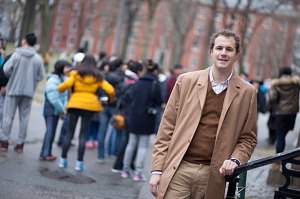
Students at the Harvard School of Public Health are joining forces to draw attention to World Cancer Day on Feb. 4, organizing a symposium of experts to talk about the problem and collecting signatures for a declaration of cancer-related global health priorities.
-
Health
Extra chemo could be answer
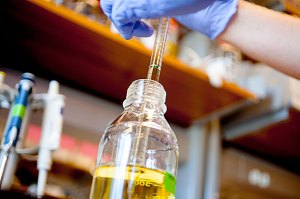
Researchers have found that young patients with an aggressive form of leukemia who are likely to relapse after chemotherapy treatment can significantly reduce those odds by receiving additional courses of chemotherapy.
-
Health
The narrative of cancer
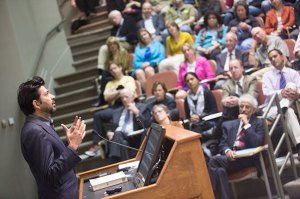
Medical experts are coming to see cancer not as a disease of cells or even of genes, but as an “organismal disease,” Siddhartha Mukherjee, author of the Pulitzer Prize–winning cancer history “The Emperor of All Maladies,” told a Harvard Medical School audience on Oct. 11.
-
Health
CYCLOPS genes an Achilles’ heel in tumors?
Researchers at Harvard-affiliated Dana-Farber Cancer Institute and the Broad Institute of Harvard and MIT used new technology to explore a 19-year-old theory, discovering what may be an Achilles’ heel for cancer cells: essential genes disrupted in the process of becoming cancerous that can be attacked further with drug therapy.

-
Science & Tech
Concerns about climate change, health
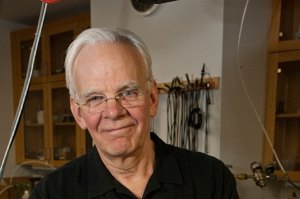
A team of researchers led by James G. Anderson, the Philip S. Weld Professor of Atmospheric Chemistry, warns that a newly discovered connection between climate change and depletion of the ozone layer over the U.S. could allow more damaging ultraviolet (UV) radiation to reach the Earth’s surface, leading to increased incidence of skin cancer.
-
Health
Cancer care comes to Rwanda
Paul Farmer, chair of Harvard Medical School’s Department of Global Health and Social Medicine and co-founder of Partners In Health, announced the opening of Butaro Cancer Center of Excellence, which will serve as the first national cancer referral facility in rural Rwanda.

-
Health
Transforming cancer treatment
Professor Martin Nowak is one of several co-authors of a paper, published in Nature on June 28,that outlines a new approach to cancer treatment that could make many cancers manageable, if not curable, by overcoming resistance to certain drug treatments.

-
Health
When skin cancer cells resist drug treatment
Harvard researchers have found that although tailored drugs can eradicate melanoma cells in the lab, they often produce only partial, temporary responses in patients. Researchers have now learned that normal cells that reside within the tumor, part of the tumor microenvironment, may supply factors that help cancer cells grow and survive despite the presence of…

-
Campus & Community
HMS, Dana-Farber scientists receive 2012 Alpert Prize
HMS faculty Kenneth Anderson, Paul Richardson, and Alfred Goldberg are three of four researchers being honored for their research and development of a pioneering cancer drug.
-
Campus & Community
A time was had by all
A fond look back at the memorable events of Harvard’s 375th year.
-
Campus & Community
Harvard staffers, faculty raise $11,700
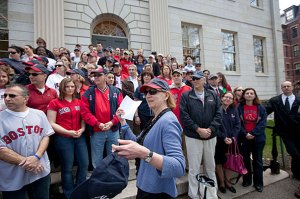
Red Sox-themed fundraiser nets $11,700 for the Jimmy Fund.
-
Campus & Community
AACR honors Alan D’Andrea
The American Association for Cancer Research (AACR) presented Alan D. D’Andrea with the 52nd Annual AACR G.H.A. Clowes Memorial Award for his work in understanding cancer survival and progression.
-
Health
Size matters in drug delivery
A new study led by researchers at the Harvard School of Engineering and Applied Sciences and Massachusetts General Hospital has found that normalizing blood vessels within tumors, which improves the delivery of standard chemotherapy drugs, can actually block the delivery of larger nanotherapy molecules.

-
Campus & Community
Bunches of support
Harvard’s 25th annual Daffodil Days campaign to help raise money for the American Cancer Society is under way through March 1, with gifts scheduled for delivery on March 19.

-
Health
Triumphs against smallpox, polio, AIDS
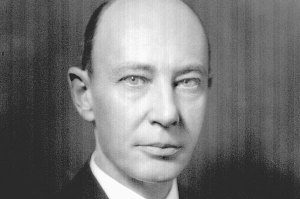
Harvard researchers have been at the forefront of many battles against devastating diseases, leading pivotal breakthroughs against scourges from 1800 to the present.
-
Health
Tumor cells can prevent tumor spread
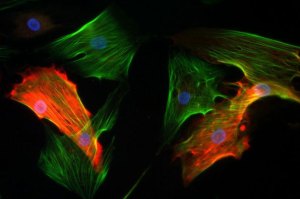
A new study from Harvard-affiliated Beth Israel Deaconess Medical Center finds that a group of little-explored cells in the tumor microenvironment likely serves as an important gatekeeper against cancer progression and metastasis.
-
Health
Harvard professors partner in unique approach
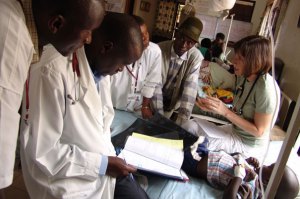
The first-of-its-kind strategy is credited for curing at least five of 10 children at a rural Rwandan hospital; two others are in remission while receiving chemotherapy, and three children have died. The long-distance team approach was designed by Harvard Medical School instructor in medicine Sara Stulac, director of pediatrics for Partners In Health.
-
Health
A data bank to battle cancer
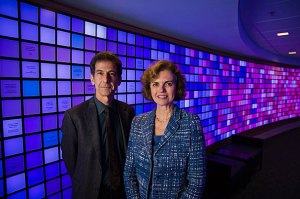
Researchers at Brigham and Women’s Hospital and the Dana-Farber Cancer Institute are collaborating on a massive, long-term effort to collect and analyze tumor tissue from 10,000 cancer patients annually. The researchers hope the data will enable them to understand better how tumors behave, while providing opportunities to test new therapies.
-
Health
Relief for stem cell transplant patients
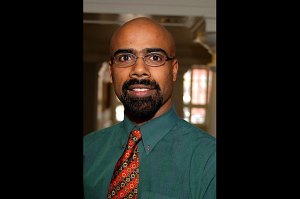
In a study that seems to pivot on a paradox, scientists at Harvard-affiliated Dana-Farber Cancer Institute have used an immune system stimulant as an immune system suppressor to treat a common, often debilitating side effect of donor stem cell transplantation in cancer patients. The effect, in some cases, was profound.
-
Health
Cancer clues from another species
Researchers have decoded the genome of an unlikely ally in the fight against cancer and aging, the naked mole rat, to find clues on why it resists the disease and lives 10 times as long as ordinary mice.

-
Health
Survival strategy of cancer cells
A new study led by a scientific team at Beth Israel Deaconess Medical Center and Harvard Medical School has uncovered another key mechanism that cancer cells use as part of their survival strategy — and once again it seems that they are using an enzyme called PKM2 to their advantage.