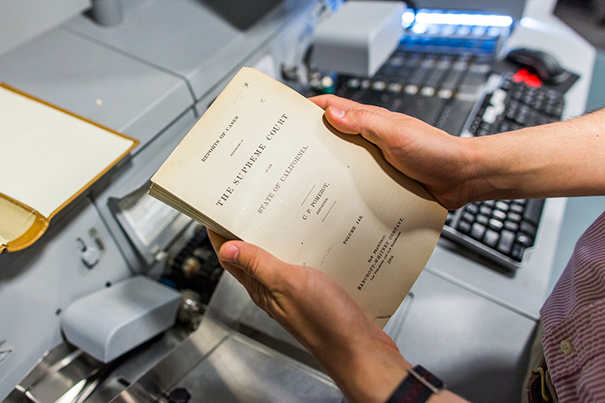
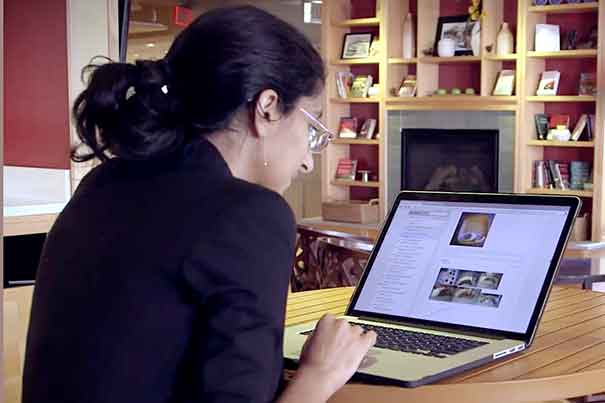
A collaboration between Harvard Law School and Ravel Law has created a program called “Free the Law,” which will make American law open and publicly available to anyone with Internet access for the first time in history.
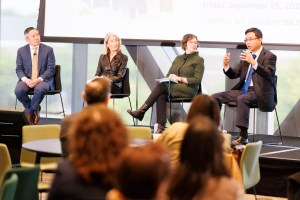
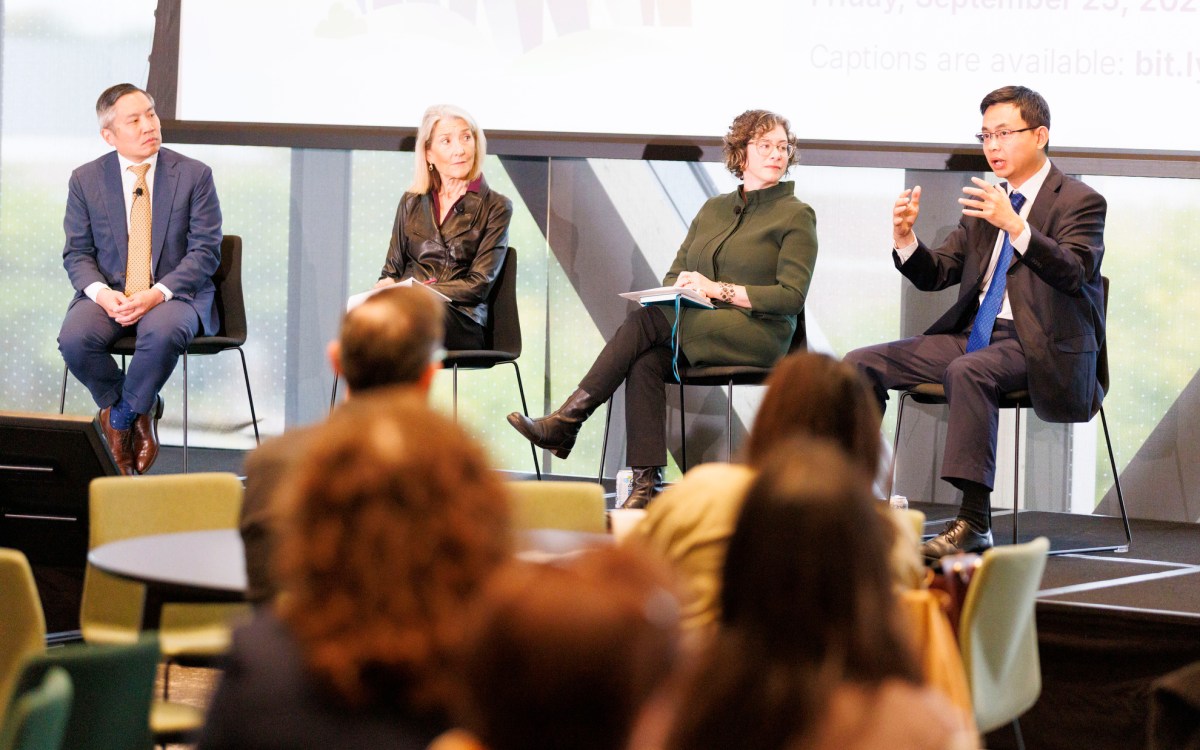
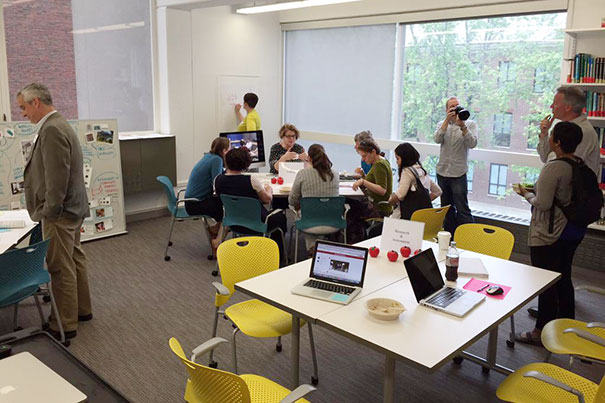
A conference on future universities suggested that building them successfully will require meeting campus needs, online connections, and community concerns.
A new photo exhibit at Harvard Law School depicts the Syrian government’s brutality toward civilians, organizers say, and raises calls for legal and political remedies.
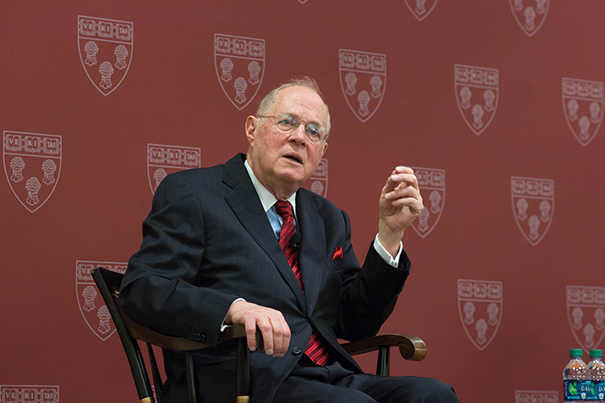
During an appearance at Harvard Law School, U.S. Supreme Court Justice Anthony Kennedy criticized the shortcomings of the American prison system, citing its “ongoing injustice.”
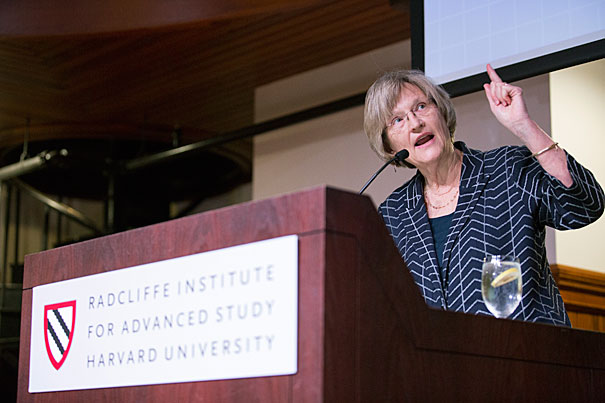
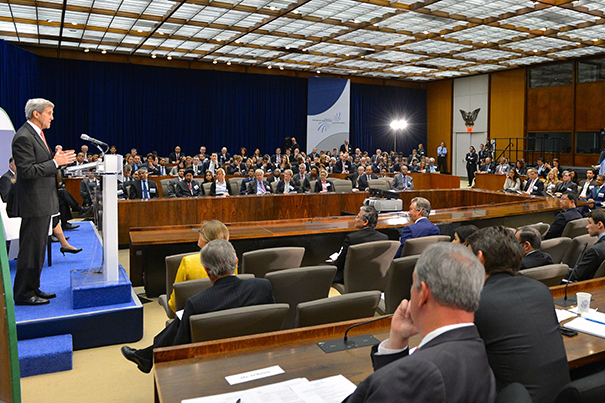
At a State Department forum, Harvard President Drew Faust says that universities have a responsibility to play a key role in developing solutions to climate-change issues.
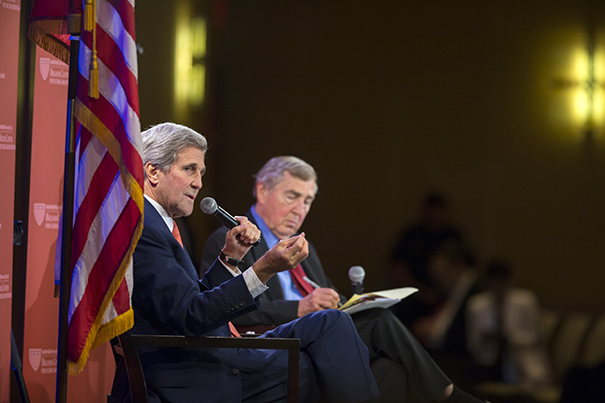
Secretary of State John Kerry discussed the array of foreign policy challenges facing the United States, speaking with the Harvard Kennedy School’s Graham Allison.
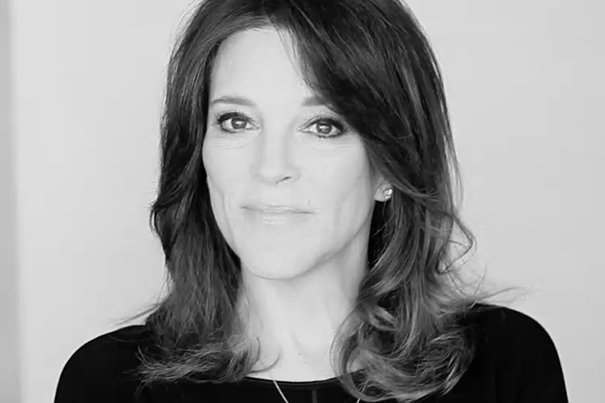
Marianne Williamson, the internationally acclaimed spiritual leader, will discuss the moral evolution of America, starting from its founding, in her talk “On Consciousness, Spirituality, and Politics in America” at Harvard Divinity School on Oct. 14.
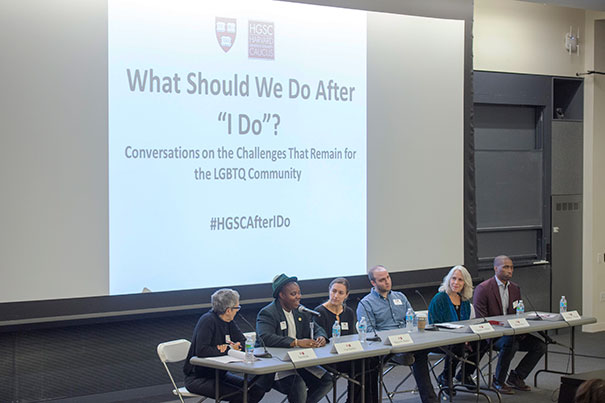
“What Should We Do After ‘I Do’?: Conversations on the Challenges that Remain for the LGBTQ Community” focused on the future of a diverse movement. The conference was co-sponsored by the Harvard Gender & Sexuality Caucus and the Harvard Alumni Association.
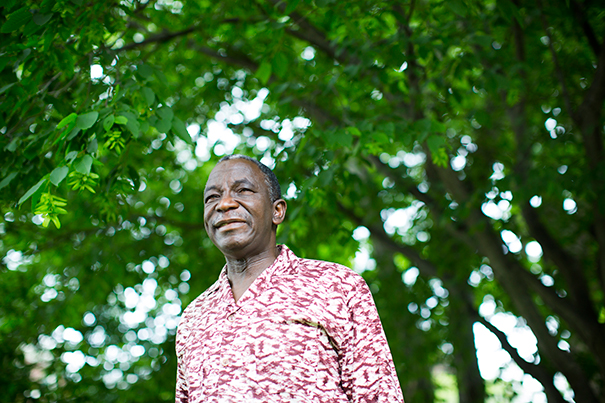
Though larger religions have made big inroads, African spirituality, a belief system based in openness and adaptation, endures, says Harvard religion professor Jacob Olupona.
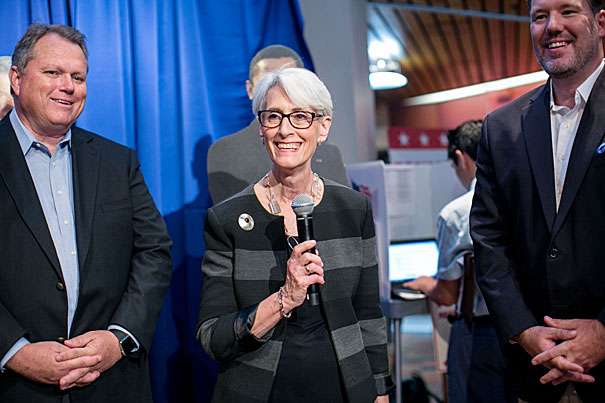
Former Ambassador Wendy Sherman, who led the U.S. negotiating team that struck the landmark nuclear agreement with Iran, reflects on her work and what it takes to succeed in the field of high-stakes diplomacy.
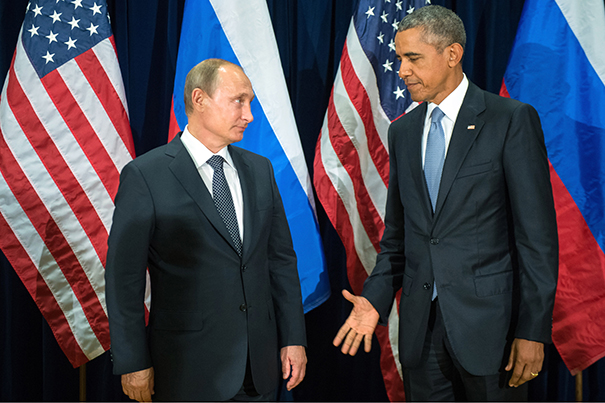
Retired Brigadier Gen. Kevin Ryan, now at the Harvard Kennedy School’s Belfer Center for Science and International Affairs, assesses the implications of Russia’s incursion into Syria.
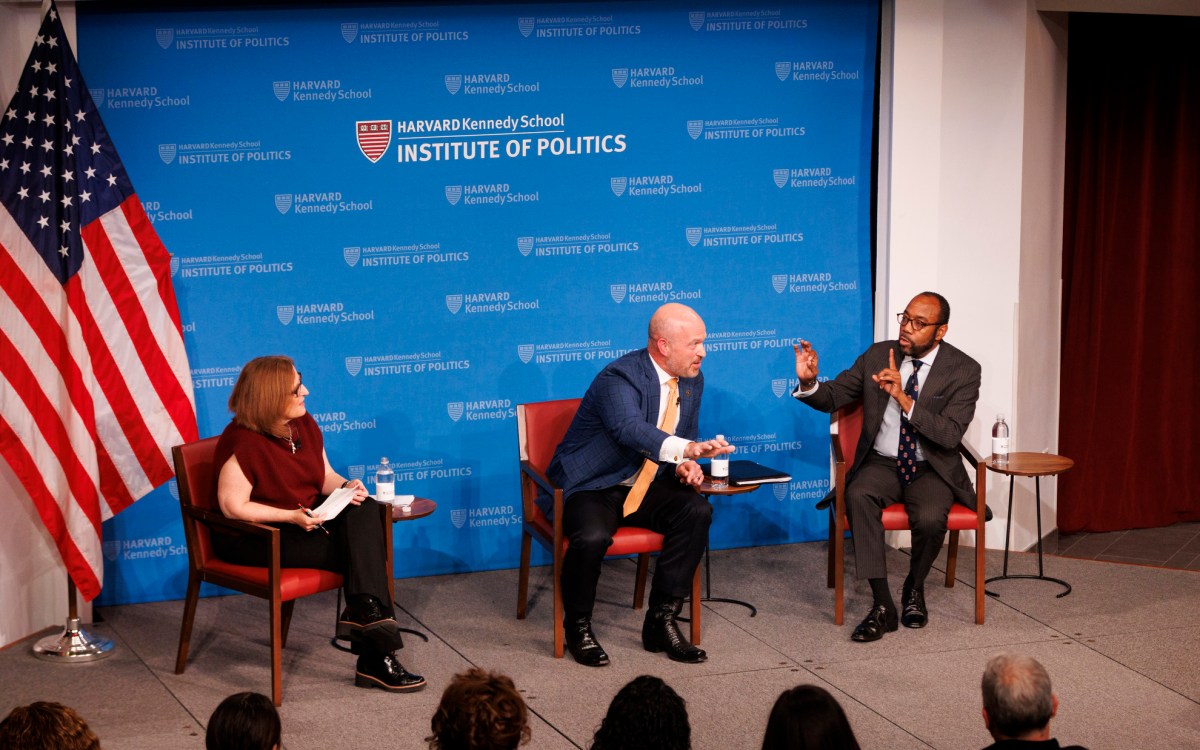
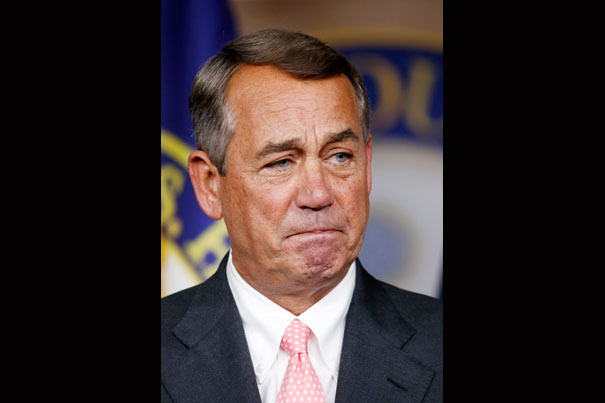
Douglas Heye, a former top communications official with the GOP and now a fall fellow at the Harvard Kennedy School’s Institute of Politics, discusses the turmoil within the Republican Party following House Speaker John Boehner’s abrupt retirement announcement.
Increasingly, says a report by Harvard Law School’s Program on International Law and Armed Conflict, doctors can be charged for giving medical care to alleged terrorists.
Harvard EdCast interviews Dale Russakoff, author of “The Prize.” The Washington Post reporter, who looked at the troubled education reform story of Newark, N.J., reflected on what can be learned from its failure to provide system-wide reform.
U.S. immigrants today are assimilating as quickly or quicker than past generations of immigrants, according to a study by the National Academies of Sciences, Engineering, and Medicine.
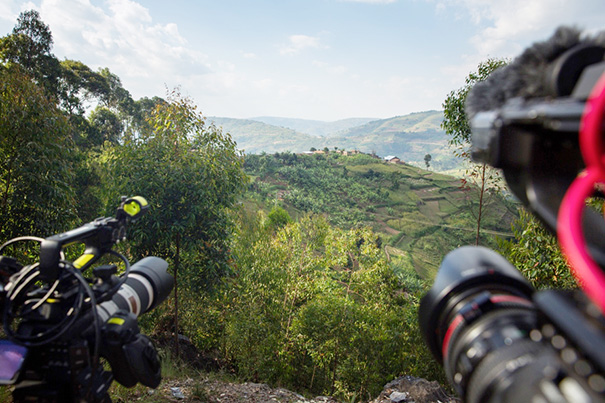
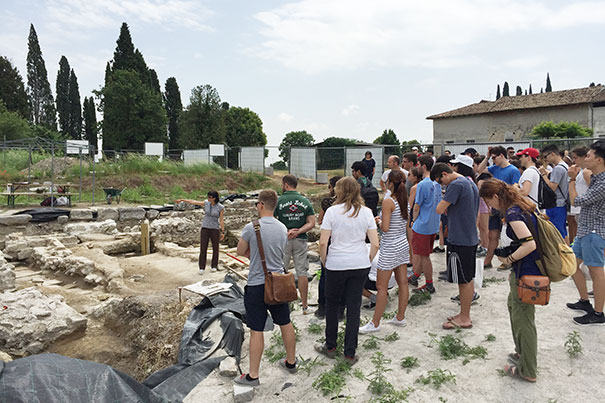
As MOOCs grow in influence and sophistication, they’re no longer simply reimagined in a Harvard classroom or even in a nearby studio. Recently, transforming a residential course — going digital via HarvardX — included filming in far-flung Rwanda and Haiti.
As Congress prepares to vote on a deal to limit Iran’s nuclear program, Harvard Kennedy School experts consider its merits and shortcomings and look to what’s next.

 Featured series