Scholar says DOJ’s Sullivan claim is a weak one, adding: ‘There can’t be a federal interest in ensuring that the right partisan candidate wins.’
Christina Pazzanese
Harvard Staff Writer
7 min read
The Department of Justice took the unusual step Thursday of pre-emptively suing Alaska election officials to prevent certification of the Nov. 3 election over concerns that voters might get confused between the two U.S. Senate candidates named Daniel Sullivan on the ballot, tainting the result.
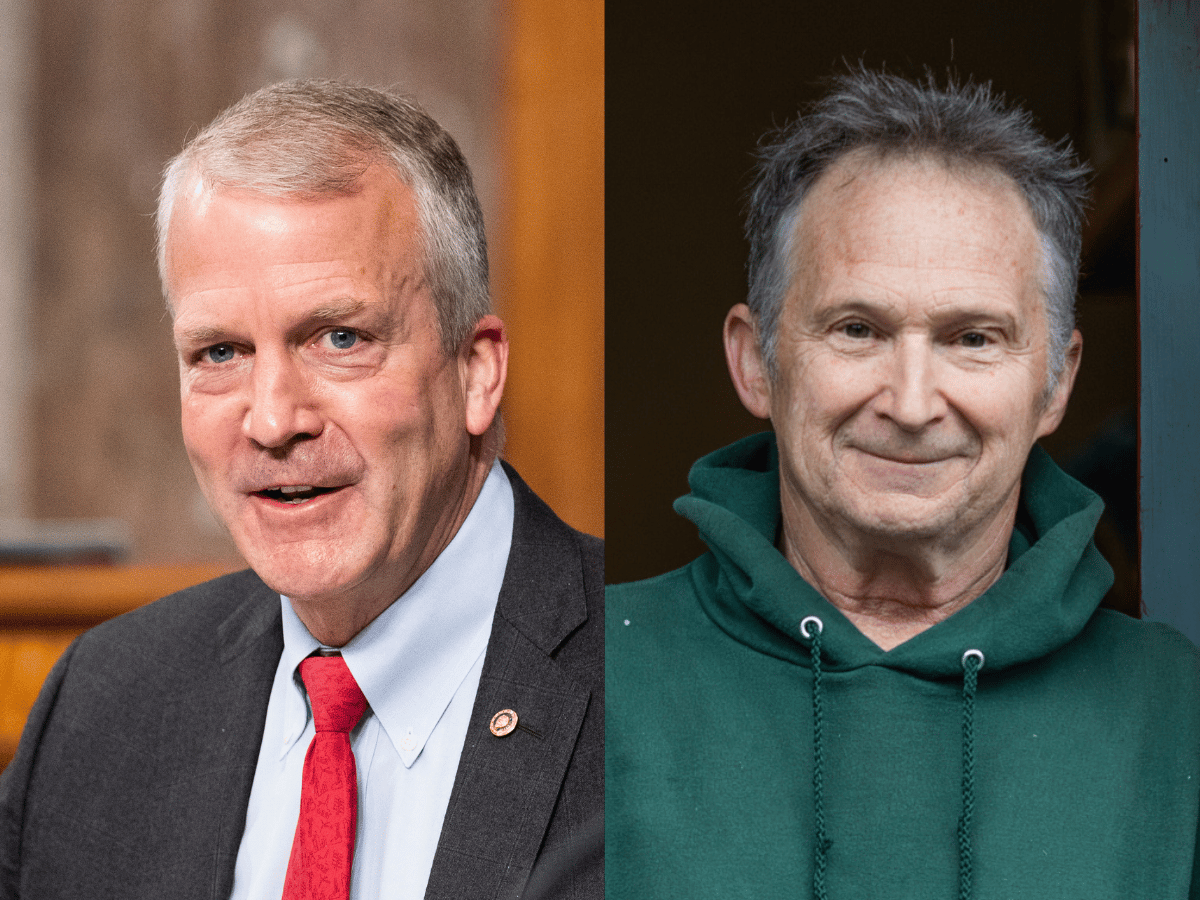
Plans for Alaska’s ranked-choice election call for Senator Dan S. Sullivan to be identified on ballots as a registered Republican and incumbent, and Daniel J. Sullivan Jr. to be listed without a party affiliation. The Democratic candidate is Mary Peltola, who says the DOJ has no legal basis to contest Alaska’s ballot design or candidate qualifications.
Alaska’s election results “may be impacted by voter confusion if: (1) Senator Sullivan does not win the election; and (2) had all votes cast for Daniel J. Sullivan been cast instead for Senator Sullivan and Alaska’s rank-choice process played out accordingly, Senator Sullivan would have won the election,” the DOJ said in its filing.
Alaska’s Supreme Court ruled in June that both Sullivans could appear on the ballot. On Monday, Alaska officials filed a motion in federal court seeking dismissal of the DOJ lawsuit.
In this edited conversation, Nicholas Stephanopoulos, Kirkland & Ellis Professor of Law at Harvard Law School and a scholar of election law, evaluates the DOJ suit and what it suggests about the possibility of legal challenges to the midterm results.
Harvard Gazette: Does this lawsuit have legal merit?
Nicholas Stephanopoulos: I think the complaint has zero legal merit and is one of the weakest lawsuits that I can ever remember seeing.
The DOJ invoked the National Voter Registration Act (NVRA), which is exclusively a law about voter registration. The lawsuit has nothing to do with voter registration. There’s no allegation that anybody is improperly registered in Alaska; there’s no claim that Alaska isn’t in compliance with the NVRA’s requirements for voter registration. Instead, the DOJ found a provision in the preamble to the NVRA that mentions “election integrity.”
“I think the complaint has zero legal merit and is one of the weakest lawsuits that I can ever remember seeing.”
Nicholas Stephanopoulos
Any law student knows that you need a cause of action to file a complaint. General language in a preamble is not what creates a cause of action. It’s preposterous to argue that this random snippet in the preamble somehow entitles the DOJ or anybody else to sue over concerns about election integrity.
Alaska’s highest court decided the voter confusion question. What powers does the federal government have to compel state election officials to disregard that ruling?
It’s a federal election for the position of U.S. Senate and so, federal elections are under the joint regulatory control of both state legislatures and Congress. The general rule is that states have the freedom to regulate federal elections as they want, but if Congress wants to step in, Congress can override contrary state regulations.
So, in principle, Congress could have passed a law saying that Congress is concerned about confusing ballots in federal elections, and there have to be certain rules when you have candidates with similar names in federal elections.
It’s just that Congress hasn’t done that and certainly hasn’t done it through a statute about voter registration like the NVRA. And so, in the absence of Congress having acted, the Alaska court’s word should be the final word on this. There’s no relevant federal law. It’s exclusively a matter of state law whether to allow this or not.
Have there been cases in other states in which the federal government intervened in a state election seeking anticipatory relief that A) no one has asked for and B) before any wrongdoing has been documented?
To me the fundamental problem is the lack of a relevant federal legal claim. But then, there are a million other problems. One is that this is being done right before an election. The U.S. Supreme Court has been adamant that federal courts have no role to play in changing electoral rules right before an election.
Another problem is that it’s all speculative. If there’s some problem down the road, we could have a post-election lawsuit — but in state court, not federal court, presumably.
And then, it’s unclear what the federal interest here is. The fact that the lawsuit says if the Daniel J. Sullivan wins only then should the election be set aside. The federal government is not supposed to be a partisan entity. There can’t be a federal interest in ensuring that the right partisan candidate wins.
What if the voters of Alaska prefer Daniel J. Sullivan? They’re entitled to vote for whoever they want. And so, the federal interest here, I think, is nonexistent. And then the remedy they’re asking for — setting aside a whole election while some kind of indeterminate investigation happens — is also utterly radical and novel.
Attorney General Todd Blanche has said that there may be other “scenarios” in which the DOJ could intervene in the election, though he declined to identify them. What might those be?
They may file all kinds of other, obviously flawed lawsuits. After having filed this one in Alaska and another equally flawed lawsuit in California, they very well may sue in all kinds of places. I think they’ll get rejected by courts in all kinds of places.
“The DOJ has carefully limited litigation authorities. They’re entitled to sue under the Voting Rights Act, under certain statutes. But they don’t have a general authority to litigate whenever they think there’s some sort of federal electoral problem.”
Nicholas Stephanopoulos
There is no general role for the DOJ to swoop in and complain about minor electoral irregularities around the country. That’s never been something they’ve done. The DOJ has carefully limited litigation authorities. They’re entitled to sue under the Voting Rights Act, under certain statutes. But they don’t have a general authority to litigate whenever they think there’s some sort of federal electoral problem.
If DOJ succeeds in Alaska or gets other states to block certification of results, what implications does that have for Congress in January?
When candidates clearly win, and then, through ridiculous legal arguments, are prevented from being certified, that’s how you’re a banana republic. You’re not actually a democracy if things like that are happening.
I don’t think those are very plausible scenarios because the federal courts are largely professional enough not to accept these kinds of undemocratic and illegal actions. But the scenarios where any of this works are scenarios where our basic democracy is breaking down.
Could legitimate winners be prevented from taking office while courts across the U.S. hear certification lawsuits?
That would require some relief from a federal court, and I don’t think the federal court is going to give them any relief. They can sue in all 50 states and have exactly zero impact on all 50 states if they’re bringing claims as weak as the Alaska one.
States might be very happy to prevent some number of Democratic House candidates who win to be certified, or if a Democratic Senate or governor candidate wins election in Texas or Ohio or Iowa. There are plenty of states with unified Republican governments that might be electing a lot of Democrats. In very close elections, if there are plausible state grounds for challenge, it wouldn’t shock me to see some state-level problems.
So, the election won’t necessarily be settled once we get past Nov. 3? Not at all. There certainly could be litigation.

 Featured series