Featured series


Tag: Genetics
-
Science & Tech
Life’s Frankenstein monster beginnings
The evolution of the first building blocks on Earth may have been messier than previously thought, likening it to the mishmash creation of Frankenstein’s monster.

-
Science & Tech
The evolution of flightless birds
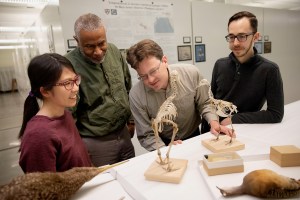
Based on an analysis of the genomes of more than a dozen flightless birds, including an extinct moa, a team led by Harvard researchers found that while different species show wide variety in the protein-coding portions of their genomes, they appear to turn to the same regulatory pathways when evolving flight loss.
-
Science & Tech
DNA reveals we are all genetic mutts
Geneticist David Reich discusses DNA findings that show how migration shaped Europe and southern Asia, and that “No population is, or ever could be, pure.”
-
Science & Tech
Twins in space
To understand the strain that space flight places on the body, NASA-affiliated researcher Brinda Rana has been examining the molecular changes in the twin astronauts Scott and Mark Kelly for five years.

-
Health
Study identifies hundreds of genetic ‘switches’ that affect height
Researchers discovered hundreds of genetic “switches” that influence height, then performed tests that demonstrated how one such switch altered the function of a key gene involved in height difference.
-
Science & Tech
History under the microscope
Researchers delivered lectures on recent findings to launch the Max Planck-Harvard Research Center for the Archaeoscience of the Ancient Mediterranean.
-
Health
RNA errors linked to ALS and dementia
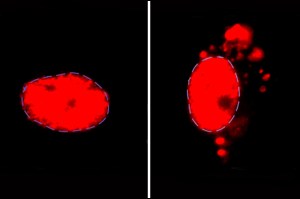
A new Harvard Medical School study shows how malfunctioning RNA may lead to ALS and a form of dementia.
-
Health
Mom, dad set in their ways? Maybe it’s not their fault
Research led by Hopi Hoekstra breaks new ground by uncovering links between the activity of specific genes and parenting differences across species
-
Science & Tech
Why sing to baby? If you don’t, you’ll starve
A new study suggests that infant-directed song evolved as a way for parents to signal to children that their needs were being met, while leaving time for other tasks, like food foraging or caring for other offspring.

-
Campus & Community
Geneticist Stephen J. Elledge wins Breakthrough Prize
Harvard Medical School geneticist Stephen Elledge won the 2017 Breakthrough Prize for unraveling the mechanism by which cells sense DNA damage and initiate self-repair.
-
Campus & Community
‘If you’re not failing, you’re probably not trying as hard as you could be’
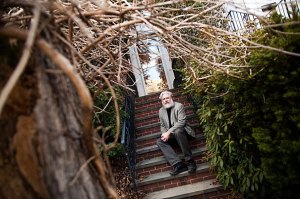
Interview with geneticist George Church as part of the Experience series.
-
Campus & Community
Doubling up at Harvard
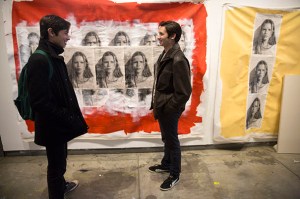
Harvard staff photographers interviewed four sets of twins currently enrolled as undergraduates at Harvard College, to gain a glimpse into these unusual relationships.
-
Science & Tech
For groups in conflict, genes matter
Visiting professor Sasha Kimel examined whether information about genetic links can influence groups in conflict.

-
Campus & Community
Faculty elected to National Academy of Sciences
Five Harvard faculty members were elected to the National Academy of Arts and Sciences.
-
Campus & Community
Kleckner receives Thomas Hunt Morgan Medal
Nancy Kleckner, the Herchel Smith Professor of Molecular Biology, has been awarded the Thomas Hunt Morgan Medal by the Genetics Society of America in recognition of her many significant contributions to our understanding of chromosomes and the mechanisms of inheritance.

-
Health
History as mosh pit
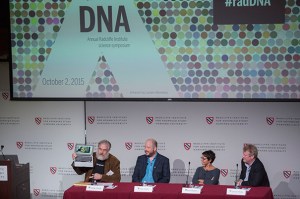
Today’s discoveries in DNA technology are as exciting as another era’s moon missions, opening avenues of scientific inquiry and invigorating even longstanding fields, speakers at a Radcliffe science symposium on DNA said.
-
Health
Improved accuracy in genome editing
A team of scientists has engineered a form of the genome-editing protein Cas9 that can be controlled by a small molecule and offers improved DNA specificity.
-
Science & Tech
Creating ‘genomic origami’
Researchers have assembled the first high-resolution, 3-D maps of entire folded genomes and found a structural basis for gene regulation, a kind of “genomic origami” that allows the same genome to produce different types of cells.

-
Science & Tech
The surprising origins of Europeans
Geneticists David Reich and Nick Patterson detailed recent work on human migrations that led to the populations of today’s Europe.
-
Health
Toward genetic editing
Led by David Liu, professor of chemistry and chemical biology, a team of Harvard researchers developed a system that uses commercially available molecules called cationic lipids to deliver genome-editing proteins into cells.
-
Health
Diabetes’ genetic variety
Harvard researchers working at the Broad Institute of MIT and Harvard have uncovered nine rare genetic mutations that dramatically increase the risk of developing type 2 diabetes. The discovery of the mutations highlights the dizzying genetic diversity of a disease rapidly spreading around the world.
-
Health
‘Broken genes’ for a broken system
To David Altshuler, the recent discovery of a genetic mutation that protects against type 2 diabetes offers hope in fighting more than just diabetes. It also illustrates how using the…
-
Health
Researchers shed new light on schizophrenia
Harvard-affiliated researchers joined an international team to identify more than 100 locations in the human genome associated with the risk of developing schizophrenia in what is the largest genomic study published on any psychiatric disorder to date.
-
Health
Viewing how neurons work
A new technique for observing neural activity will allow scientists to stimulate neurons and observe their firing pattern in real time. Tracing those neural pathways can help researchers answer questions about how neural signals propagate, and could one day allow doctors to design individualized treatments for a host of disorders.
-
Health
‘Junk?’ Not so fast
Research by Harvard Stem Cell Institute scientists shows that much lincRNA, which had been generally believed useless, plays an important role in the genome.
-
Health
Clues to cholera resistance
Researchers have long understood that genetics can play a role in susceptibility to cholera, but a team of Harvard scientists is now uncovering evidence of genetic changes that might also help protect some people from contracting the deadly disease.
-
Health
A learning gap is filled with plants
With classes in plant morphology fading in universities across the country, an Arnold Arboretum short course is seeking to plug the hole, bringing in top botany graduate students and postdoctoral fellows for an intensive, two-week course.

-
Health
When timing is everything
In a new paper, Christopher Marx, associate professor of organismic and evolutionary biology, says that beneficial mutations may occur more often than first thought, but many never emerge as “winners” because they don’t fall within the narrow set of circumstances required for them to dominate a population.
-
Health
Digging yields clues
As described in a Jan. 16 paper in Nature, a team of researchers led by Hopi Hoekstra, professor of organismic and evolutionary biology and molecular and cellular biology, studied two species of mice – oldfield mice and deer mice – and identified four regions in their genome that appear to influence the way they dig…

-
Health
Solving a biological mystery
A team of Harvard researchers has shown that insects like crickets possess a variation of a gene — called oskar — that is critical to the production of germ cells in “higher” insects. That discovery suggests that the oskar gene emerged far earlier in insect evolution than researchers previously believed.