Featured series
Tag: FAS
-
Science & Tech
Learning to find ‘quiet’ earthquakes
Assistant Professor of Earth and Planetary Sciences Marine Denolle is one of several co-authors of a study that used computer-learning algorithms to identify small earthquakes buried in seismic noise.

-
Arts & Culture
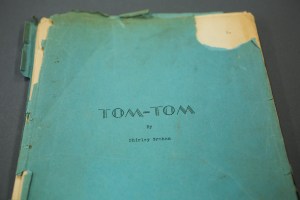
In 1932, this opera was a hit. Why has no one seen it since?
A workshop at Radcliffe showcased “Tom-Tom,” an opera by African-American composer Shirley Graham that hasn’t been performed since its 1932 premiere.
-
Nation & World
Prison education at Harvard
Harvard is hosting a conference on prison education, bringing to campus for the first time formerly incarcerated students and activists.
-
Science & Tech
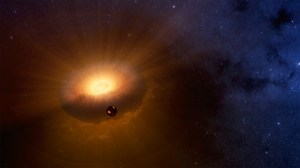
A new view of the moon
Harvard grad student Simon Lock is the lead author of a study that challenges conventional wisdom on how the moon formed.
-
Science & Tech
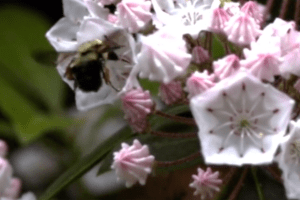
For this flower, it’s ready, set, launch
Harvard researchers used high-speed video to not only quantify how fast the filaments in mountain laurel flowers move, but how they target likely pollinators.
-
Science & Tech
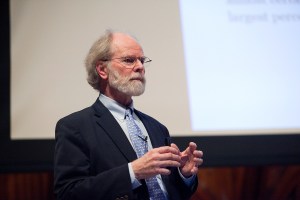
James McCarthy recognized for climate change insights
Tyler Prize winner James McCarthy, a professor of biological oceanography and Alexander Agassiz Professor of Biological Oceanography in the Museum of Comparative Zoology, remains optimistic that climate change is a solvable problem.
-
Arts & Culture
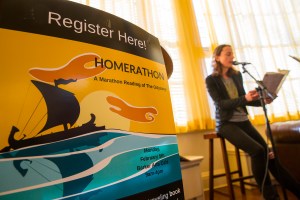
New chapter for ‘The Odyssey’
Professor Emily Wilson, the first woman to translate the ancient epic “The Odyssey” into English, explains her milestone achievement.
-
Arts & Culture
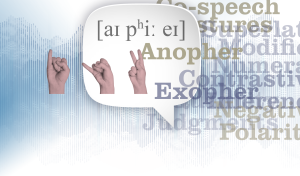
Decoding languages in the lab
Linguistics lab applies scientific methods to studying and understanding how people communicate.
-
Health
Songs in the key of humanity
A new Harvard study suggests that people around the globe can identify lullabies, dancing songs, and healing songs — regardless of the songs’ cultural origin — after hearing just a 14-second clip.
-
Science & Tech
Picture-perfect approach to science
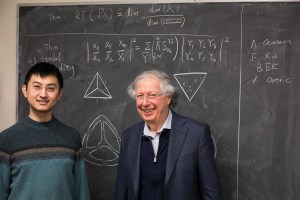
After creating a 3-D language called quon, which could be used to understand concepts related to quantum information theory, Harvard mathematicians now say the language offers tantalizing hints that it could offer insight into a host of other areas in mathematics, from algebra to Fourier analysis, and in theoretical physics from statistical physics to string…
-
Health
A volume control for the brain
The brain is awash in sights, sounds, smells, and other stimuli every moment. How can it sort through the flood of information to decide what is important and what can be relegated to the background? Harvard researchers found evidence that oxytocin, popularly known as the “love hormone,” plays a crucial role in helping the brain…

-
Science & Tech
For answers on coral conservation, she followed the fish
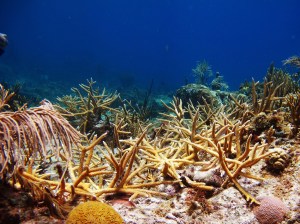
A new study suggests that efforts to restore coral reefs have a positive impact on fish populations, both short- and long-term.
-
Science & Tech
As climate changes, so will wine grapes
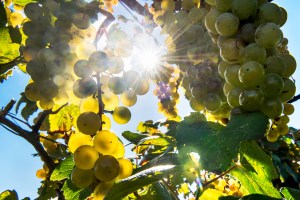
Though vineyards might be able to counteract some effects of climate change by planting lesser-known grape varieties, scientists and vintners need a better understanding of the wide diversity of grapes and their adaptions.
-
Science & Tech
Study uncovers botanical bias
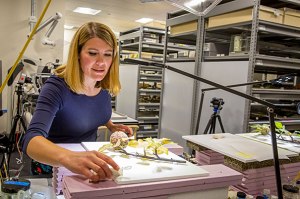
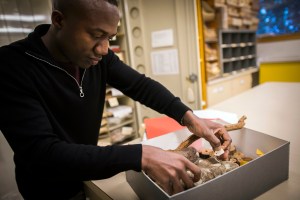
Climate change studies that rely on herbarium collections need to account for biases in the data, new research says.
-
Campus & Community
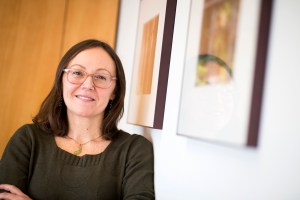
Professor Paola Arlotta awarded George Ledlie Prize
Developmental neurobiologist Paola Arlotta has been awarded the George Ledlie Prize by the President and Fellows of Harvard College.
-
Health
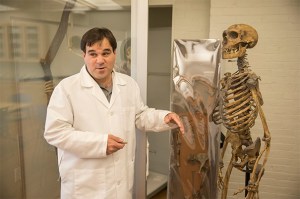
Study identifies hundreds of genetic ‘switches’ that affect height
Researchers discovered hundreds of genetic “switches” that influence height, then performed tests that demonstrated how one such switch altered the function of a key gene involved in height difference.
-
Arts & Culture
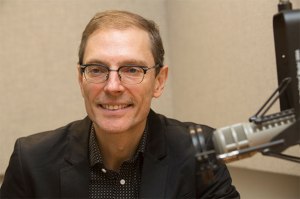
Storytelling as a global force
English Professor Martin Puchner talks to the Gazette about his new book “The Written World,” about how literature shaped civilization.
-
Science & Tech
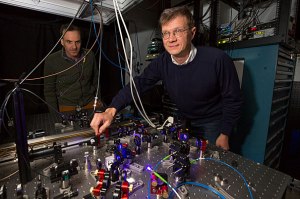
Researchers create quantum calculator
Researchers have developed a special type of quantum computer, known as a quantum simulator, that is programmed by capturing super-cooled rubidium atoms with lasers and arranging them in a specific order, then allowing quantum mechanics to do the necessary calculations.
-
Arts & Culture
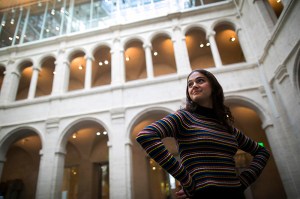
Scholar’s eye for fashion
Harvard senior Lily Calcagnini’s history and literature concentration places fashion front and center in cultural theory.
-
Arts & Culture
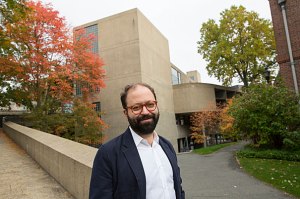
A more collaborative Carpenter Center
Dan Byers wants to build community around contemporary art as new director of the Carpenter Center.
-
Health
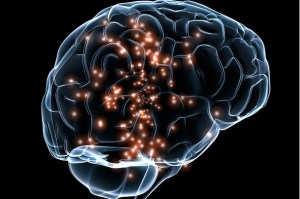
Unraveling the brain’s secrets
Harvard scientists are among those who will receive more than $150 million in funding over the next five years through the National Institutes of Health’s Brain Research through Advancing Innovative Neurotechnologies (BRAIN) Initiative.
-
Arts & Culture
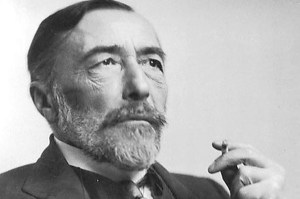
The world according to Conrad
Professor Maya Jasanoff talks about her new book, “The Dawn Watch: Joseph Conrad in a Global World.”
-
Health
Study explores whole-body immunity
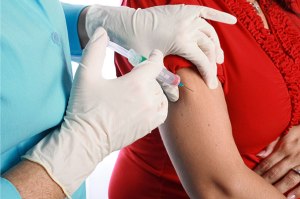
New research on the immune system suggests that the molecule interferon plays an important role in activating antiviral genes across many tissues, helping against infection.
-
Campus & Community
Gratitude aplenty
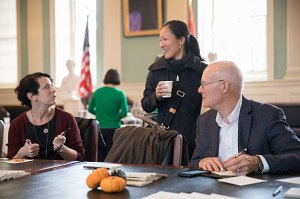
Faculty and staff at Harvard’s Faculty of Arts and Sciences sent appreciative notes and dropped off donations to the Harvard Square Homeless Shelter at a pre-Thanksgiving celebration.
-
Science & Tech
Small media, big payback
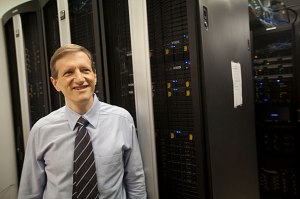
Researchers found that if just three outlets write about a particular major national policy topic, discussion of that topic across social media rises by more than 62 percent.
-
Campus & Community
Learning from a legend (a.k.a. Dad)
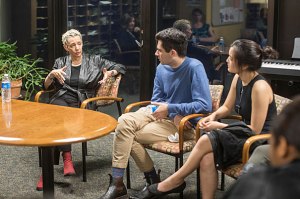
Jamie Bernstein remembered her father by heart during a visit to Harvard to discuss centennial celebrations of the legendary maestro’s life and legacy.
-
Arts & Culture
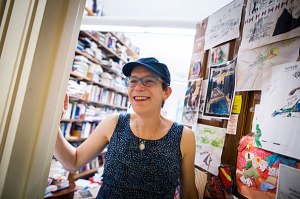
Stephanie Burt opens up
The Harvard poet discusses new book of poetry, life as a trans woman, and settling in as as co-poetry editor of The Nation.
-
Health
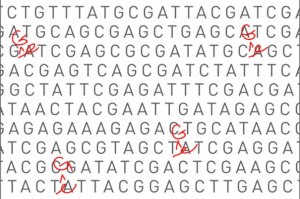
A step forward in DNA base editing
Scientists at Harvard University and the Broad Institute have developed a new class of DNA base editor that can repair the type of mutations that account for half of human disease-associated point mutations. These single-letter mutations are associated with disorders ranging from genetic blindness to sickle-cell anemia to metabolic disorders to cystic fibrosis.
-
Arts & Culture
Eden as a storyteller’s paradise
A conversation with Pulitzer Prize-winning scholar Stephen Greenblatt on his new book, “The Rise and Fall of Adam and Eve.”
-
Campus & Community
A touch of rot
A new exhibit inside the Glass Flowers gallery at the Harvard Museum of Natural History proves that a bad apple doesn’t always spoil the bunch.