
 Featured series


Tag: Psychology
-
Science & Tech
Pinpointing punishment
It’s a question most attorneys wish they could answer: How and why do judges and juries arrive at their decisions? The answer, according to Joshua Buckholtz, may lie in the…
-
Science & Tech
Cooking up cognition
A new study suggests that many of the cognitive capacities that humans use for cooking — a preference for cooked food, the ability to understand the transformation of raw food into cooked, and even the ability to save and transport food to cook it — are shared with chimpanzees.

-
Campus & Community
An advocate for others
While at Harvard, Veronica Gloria ’15 worked to empower first-generation and Latino students like herself.

-
Science & Tech
Understanding common knowledge
A new study examines how different kinds of shared beliefs can affect how people cooperate, and how people use common knowledge, a type of shared understanding, to coordinate their actions.
-
Science & Tech
Fighting unfairness
A new study by Harvard scientists suggests that, from a young age, children are biased in favor of their own social groups when they intervene in what they believe are unfair situations. But as they get older, they can learn to become more impartial.
-
Campus & Community
‘What could be more interesting than how the mind works?’
Interview with Professor Steven Pinker as part of the Experience series.
-
Health
Fair-minded birds
New research conducted at Harvard demonstrates sharing behavior in African grey parrots.
-
Science & Tech
Hierarchical differences
Female academics are less likely to collaborate across rank, a Harvard study found.
-
Science & Tech
Love, it’s a battlefield
With the approach of Valentine’s Day, Harvard experts discuss expectations and students reveal their plans.

-
Science & Tech
Muting the Mozart effect
Though it has been embraced by everyone from advocates for arts education to parents hoping to encourage their kids to stick with piano lessons, two new studies conducted by Harvard researchers show no effect of music training on the cognitive abilities of young children.

-
Health
Polly want a vocabulary?
Irene Pepperberg, best known for her work with an African grey parrot named Alex — whose intelligence was estimated as equal to that of a 6-year-old child — recently relocated her lab to Harvard, where she continues to explore the origins of intelligence by working with birds.
-
Science & Tech
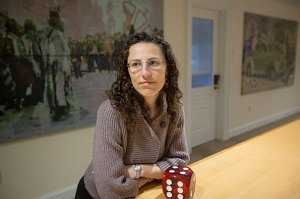
Dirty deeds, deconstructed
New studies co-authored by Harvard Business School Professor Francesca Gino find that, contrary to decades of accepted wisdom, cheating feels good.
-
Science & Tech
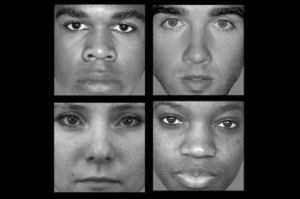
What’s in a face?
Using scans of the brain, Harvard researchers show that patterns of neural activity change when people look at black and white faces, and male and female faces.
-
Science & Tech
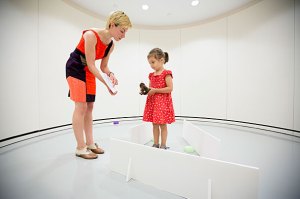
A higher plane
Research by scientists in Elizabeth Spelke’s lab suggests our innate understanding of abstract geometry has origins in the evolutionary past.
-
Science & Tech
Advancing science and technology
The National Science Foundation is awarding grants to create three new science and technology centers this year, with two of them based in Cambridge. The two multi-institutional grants total $45 million over five years.

-
Science & Tech
Biases that can blind us
Psychology Professor Mahzarin Banaji gave incoming members of Harvard’s Class of 2017 a tour of their own biases, helping to raise awareness that can help them avoid making decisions based on unconscious preferences.
-
Campus & Community
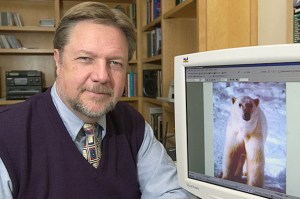
Daniel M. Wegner famous for ‘thought suppression’
Daniel M. Wegner, a pioneering social psychologist who helped to reveal the mysteries of human experience through his work on thought suppression, conscious will, and mind perception, died July 5 at age 65.
-
Campus & Community
Psychology professor wins Taube Award
H. Stephen Leff, an assistant professor of clinical psychology in the Department of Psychiatry at Harvard Medical School, has received the Carl Taube Award from the American Public Health Association.
-
Health
Mourning that vexes the future
In a new paper, Professor of Psychology Richard McNally and graduate student Don Robinaugh say that while people suffering from complicated grief — a syndrome marked by intense, debilitating emotional distress and yearning for a lost loved one — had difficulty envisioning specific events in their future, those problems disappeared when they were asked to…
-
Science & Tech
The nearness of you
In research described earlier this year in the Personality and Social Psychology Bulletin, Elinor Amit, a College Fellow in psychology, along with two collaborators, Cheryl Wakslak and Yaacov Trope, showed that people increasingly prefer to communicate verbally (versus visually) with people who are distant (versus close) — socially, geographically, or temporally.
-
Science & Tech
Online learning: It’s different
By interspersing online lectures with short tests, student mind-wandering decreased by half, note-taking tripled, and overall retention of the material improved, said Daniel Schacter, the William R. Kenan Jr. Professor of Psychology, and Karl Szpunar, a postdoctoral fellow in psychology.
-
Health
Q&A with Matthew Nock
Professor of Psychology Matthew Nock is the author of a new paper, co-authored with other Harvard faculty, which examines suicidal thoughts and behaviors among adolescents. In a recent conversation with the Gazette, Nock discussed his research, and the resources available at Harvard for students and others in the community.
-
Science & Tech
Peering into our blind spots
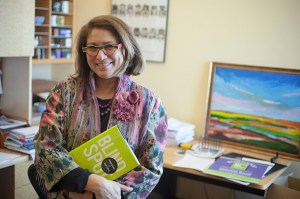
Harvard psychologist Mahzarin Banaji and longtime collaborator Anthony Greenwald condense three decades of work on the unconscious mind in “Blindspot: Hidden Biases of Good People.”
-
Arts & Culture
He wrote the book of love
A neurologist who teaches at Harvard Medical School ponders love and its complexities in his latest book, “What to Read on Love, Not Sex: Freud, Fiction, and the Articulation of Truth in Modern Psychological Science.”

-
Campus & Community
William Kaye Estes
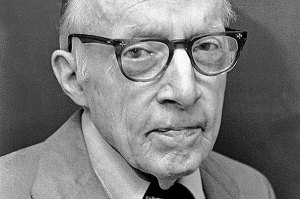
At a Meeting of the Faculty of Arts and Sciences on November 6, 2012, the Minute honoring the life and service of the late William Kaye Estes, Daniel and Amy Starch Professor of Psychology, Emeritus, was placed upon the records. Professor Estes made pioneering contributions to many cognitive domains over a period spanning more than…
-
Health
Rapid acts of kindness
In a series of experiments, Harvard researchers found that people who make quick decisions act less selfishly than those who deliberate.

-
Science & Tech
Figuring out fairness
A new Harvard study suggests that children as young as 3 consider merit — a key part of more-advanced ideas of fairness — when distributing resources.
-
Health
Bringing the psych lab online
A team of researchers from Harvard and Wellesley College shows that data gathered from online volunteers can be just as good as data collected in the lab.

-
Health
A story that doesn’t hold up
A study conducted by Professor of Psychology Richard J. McNally and colleagues from the University of Groningen and the University of Amsterdam is casting doubt on the “amnesia barrier” that has long been a hallmark of multiple personality disorder, now called dissociative identity disorder, by demonstrating that patients have knowledge of their other identities.
-
Health
A fresh look at mental illness
In a paper published in Neuron, Joshua Buckholtz and co-author Andreas Meyer-Lindenberg identify a biological reason for why many mental disorders share similar symptoms, a situation that makes diagnosis challenging.
