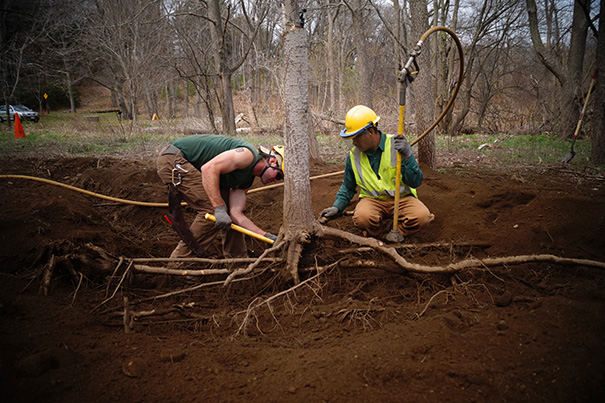
A clever exhibit at the Radcliffe Institute for Advanced Study, designed by Graduate School of Design Professor Rosetta Elkin, is bringing organic beauty out of the shadows. Her installation highlights the root system of a white poplar.
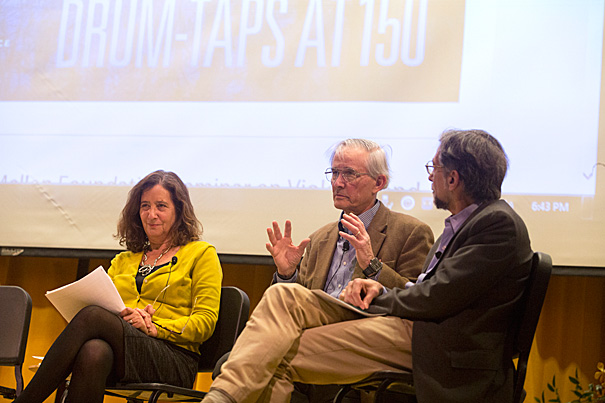
A Harvard panel assesses Walt Whitman’s vivid and pictorial ‘Drum-Taps,’ a collection of Civil War poems out in print for the first time in 150 years. Professor Elisa New will explore “Drum-Taps” (along with Melville’s war poems) in a new HarvardX online American poetry course, which launches May 8.
Gloria Hong ’15 won the Grand Jury Prize at the Girls Impact the World Film Festival for her short documentary, “Losing Sight, But Gaining a Vision” The film was made while Hong was enrolled in “African and African American Studies 109,” taught by Joanna Lipper.
An exhibit at Pusey Library demonstrates how the first Harvard class photograph albums evolved. In the antebellum 19th century, photography was young, image technologies were changing fast (often with Boston practitioners in the lead), and Harvard students began adding the visual to the repositories of memory that for centuries had been dominated by text.
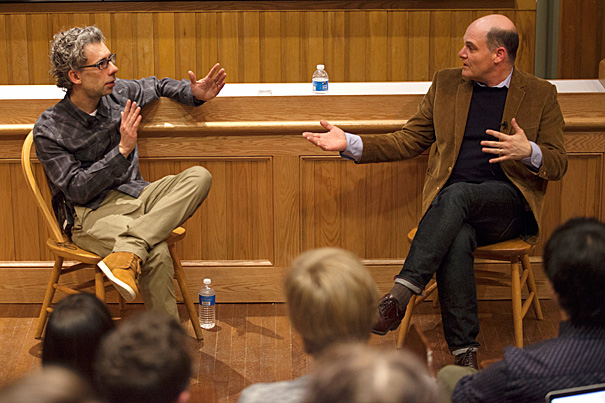
Matthew Weiner, creator of “Mad Men,” talked about his development as a writer and the show’s beginnings in a conversation with Harvard’s Bret Anthony Johnston on Monday at Sever Hall.
American audiences quickly embraced the Austrian composer and conductor Gustav Mahler when he moved to the United States, and to a surprising degree, lecturer Federico Cortese told an Ed Portal audience.
To mark the 150th anniversary of President Abraham Lincoln’s assassination, Martha Hodes’ new book offers firsthand accounts from the days following the murder.
Scholars from across Harvard will convene at the Radcliffe Institute for Advanced Study on Friday for a symposium called “University as Collector” that will explore the importance of universities as collecting institutions.
During a panel discussion at Radcliffe, musicians in the diverse Silk Road Ensemble explained how they combine instruments, mesh traditions to make new music.
“Harvard Voices,” sponsored by the Harvard University Committee on the Arts, united a cross-section of artistic influences and University arts resources.
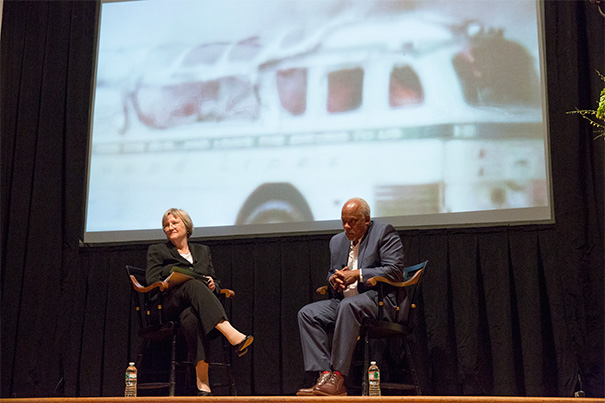
Filmmaker Stanley Nelson Jr. took part in a question-and-answer session with Harvard President Drew Faust as part of the William Belden Noble Lectures.
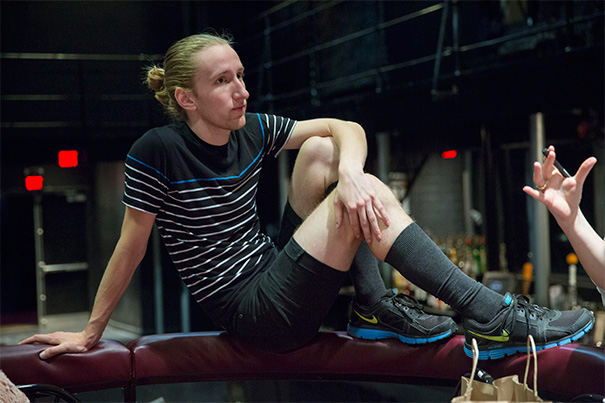
A Harvard senior creates a student-run show for his senior project. The work grew out of his special concentration in theater arts and performance. “OSCAR at The Crown and the love that dare not speak its name” runs April 15 and 16 at 8 p.m. and April 17 at 10:30 p.m.
The story of “Drapetomania: Grupo Antillano and the Art of Afro-Cuba” is one of discovery and rediscovery. For the 30 artists represented, it illustrates the uncovering of an artistic heritage, and a lineage that was long denied. As part of “Drapetomania,” the Cooper Gallery is also presenting a Cuban film series, with screenings on Thursdays at noon.
Written approximately 20 years after Elie Wiesel was freed from imprisonment in the Auschwitz, Buna, and Buchenwald concentration camps, “The Choice” is having a staged reading at Sanders Theatre on Sunday. It marks a premiere for the recently rediscovered work.
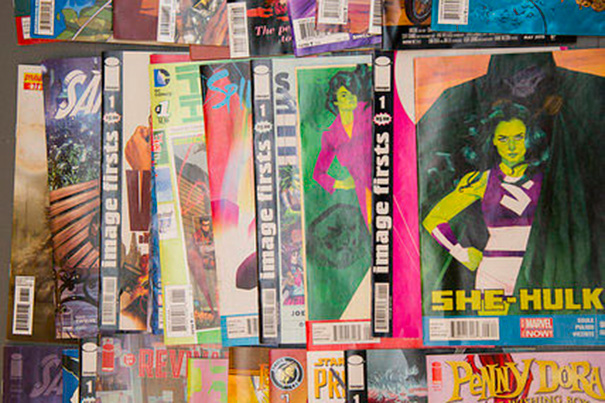
“Confronting Violence,” an April 9-10 conference at the Radcliffe Institute, will explore how activism and cultural change can affect public policy and reduce violence. It includes an exhibit, “Confronting Violence: Critical Approaches to American Comics and Video Games,” which can be viewed through April 17.
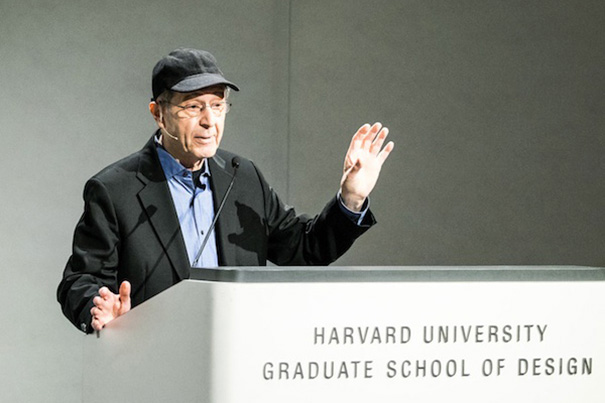
During a talk at the Graduate School of Design, composer Steve Reich’s haunting “WTC 9/11” demonstrated the unique ability of sound to recall not only the defining moment of loss, but the trauma that continually threatens to erase it from memory.
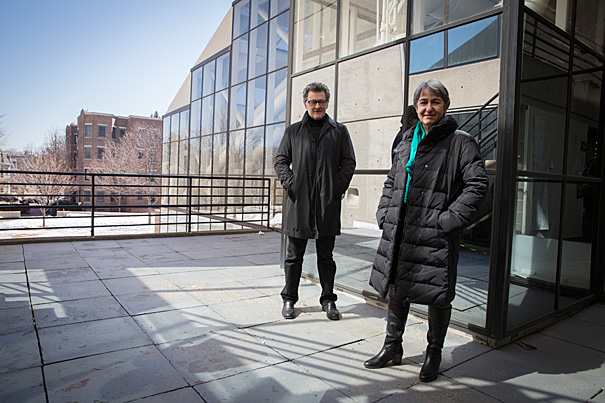
Speaking at the Harvard Graduate School of Design, two French architects advocate building and rebuilding based on modesty, generosity, and economy, with an eye to comfort and beauty.
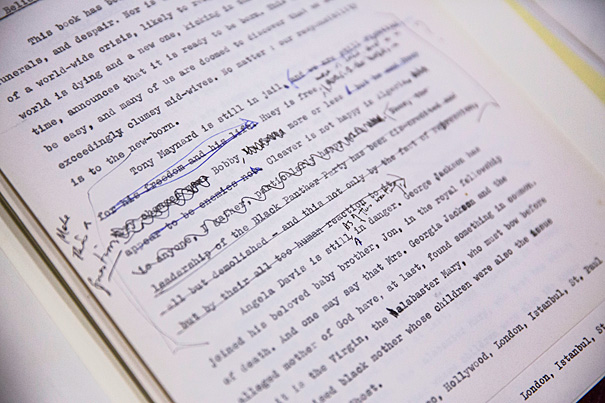
Houghton Library recently acquired its 3,000th American item, the typescript of an unproduced James Baldwin play — a rich tangle of the author’s obsessions in need of a scholar’s clarifying touch.

 Featured series


 Gallery