Featured series


Tag: Climate Change Research
-
Science & Tech
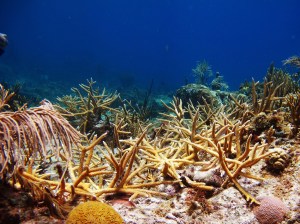
For answers on coral conservation, she followed the fish
A new study suggests that efforts to restore coral reefs have a positive impact on fish populations, both short- and long-term.
-
Science & Tech
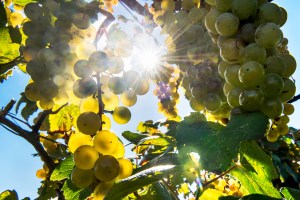
As climate changes, so will wine grapes
Though vineyards might be able to counteract some effects of climate change by planting lesser-known grape varieties, scientists and vintners need a better understanding of the wide diversity of grapes and their adaptions.
-
Science & Tech
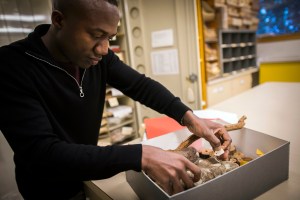
Study uncovers botanical bias
Climate change studies that rely on herbarium collections need to account for biases in the data, new research says.
-
Science & Tech
New England is losing 65 acres of forest a day
A new Harvard Forest report, “Wildlands and Woodlands, Farmlands and Communities,” calls for tripling conservation efforts across the region.
-
Science & Tech
Students aiding the environment
Five undergraduate women from Harvard College talk about how they spent the summer researching climate and ecological stresses.

-
Science & Tech
Reconciling predictions of climate change
Harvard researchers are able to provide a best estimate regarding how much the Earth will warm as a result of doubled CO2 emissions.
-
Science & Tech
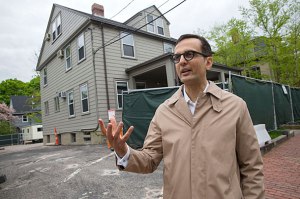
A house that produces energy
Harvard’s Ali Malkawi explains his efforts to create a house will be transformed into an energy-efficient headquarters and lab space for the Graduate School of Design’s Center for Green Buildings and Cities.
-
Science & Tech
Midwest summer storms threaten ozone, study warns
Summer storms in the central U.S. create the same chemical reactions damaging ozone in the Arctic, warns a Harvard study calling for a closer look at the region’s UV radiation risk.
-
Campus & Community
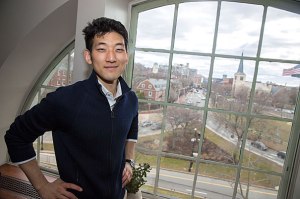
Making sense of climate costs
Ph.D. graduate Jisung Park focuses on the natural environment’s effects on society—a boyhood interest that grew first in Kansas, then sharpened in Seoul.
-
Health
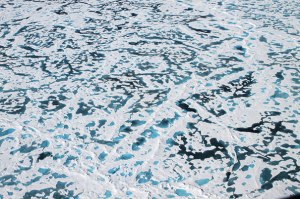
Solving the mystery of the Arctic’s green ice
Researchers have found that due to warming temperatures, phytoplankton can now grow under Arctic sea ice, dramatically changing the ecology.
-
Science & Tech
Creative path through Harvard Forest
David Buckley Borden, a Bullard Fellow at Harvard Forest, is using art to make a point about sustainability and conservation.

-
Science & Tech
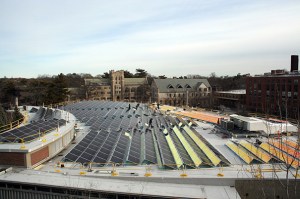
7 projects win funding for climate change solutions
Seven Harvard projects will share $1 million to help battle climate change across a range of academic boundaries.
-
Science & Tech
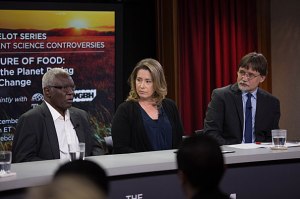
The climate change threat to food
Four experts gathered at the Harvard T.H. Chan School of Public Health for a panel concerning the impact of climate change on agriculture and the global food system, with an emphasis on the United States and Africa, and a nod toward what the incoming Trump administration might do about the issue.
-
Science & Tech
Mitigating the risk of geoengineering
To halt the rise of global temperatures, Harvard researchers are looking at solar geoengineering, which would inject light-reflecting sulfate aerosols into the stratosphere to cool the planet.

-
Science & Tech
Human health risks from hydroelectric projects
Harvard researchers found 90 percent of new or proposed hydroelectric power plants will increase the concentration of toxic methylmercury in the food web near indigenous communities in Canada.
-
Science & Tech
Strong case for seagrass
New findings on seagrass reinforce the need to direct research where biodiversity is most at risk, says Harvard Herbaria fellow Barnabas Daru.
-
Science & Tech
‘Smoke waves’ will affect millions in coming decades
Wildfires threaten more than land and homes. The smoke they produce contains fine particles (PM2.5) that can poison the air for hundreds of miles. Air pollution from the 2016 Fort…

-
Science & Tech
A battery inspired by vitamins
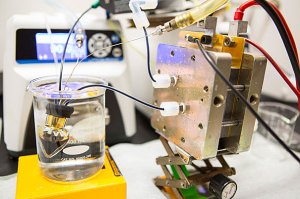
Harvard researchers have developed a new class of battery electrolyte material based on vitamin B2 that could enable large-scale, inexpensive electricity storage for renewable power sources.
-
Science & Tech
Turning the brain green
Harvard neurosurgeon Ann-Christine Duhaime thinks a better understanding of the brain’s reward system might help encourage greener living.
-
Science & Tech
Tackling carbon emissions in China
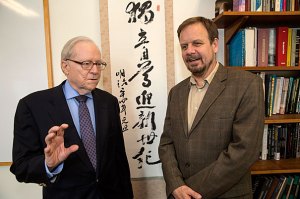
A Beijing symposium co-sponsored by the Harvard China Project and the Harvard Global Institute explored the possibility of China adopting a carbon tax as a way to reduce climate-warming greenhouse gas emissions. The Gazette spoke with economist Dale Jorgenson, the Samuel W. Morris University Professor, and Chris Nielsen, the executive director of the China Project,…
-
Science & Tech
Fishing gaps called malnutrition threat
Declining fish catches around the world have set off concerns about malnutrition, especially among the poor.
-
Science & Tech
Targeting the ills of climate change
U.S. Secretary of State John Kerry helped launch a new Harvard climate change and global health initiative Thursday, saying that climate change impacts almost always affect human health.

-
Science & Tech
The complex relationship between heat and ozone
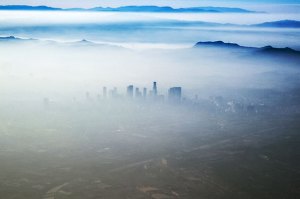
If emission rates continue unchecked, regions of the United States could experience between three and nine additional days of unhealthy ozone levels each year by 2050, according to a new study from the Harvard John A. Paulson School of Engineering and Applied Sciences.
-
Science & Tech
Earlier warnings for heat waves
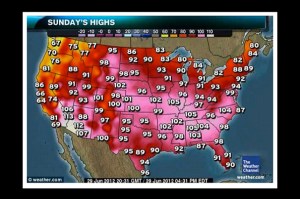
In a new study, researchers from Harvard University and the National Center for Atmospheric Research have identified sea surface temperature patterns that help predict extreme heat waves in the Eastern United States up to 50 days in advance.
-
Science & Tech
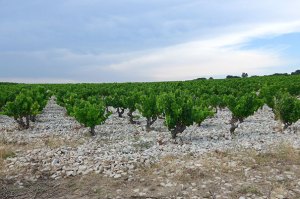
Warmer weather, finer wines
By examining more than 500 years of harvest records, researchers found that wine grape harvests across France, on average, now occur two weeks earlier than in the past, largely due to climate change. While earlier harvests are normally associated with higher quality wines, researchers caution the trend likely won’t last.
-
Science & Tech
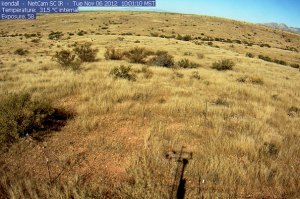
The shifts from climate change
Grasslands across North America will face higher summer temperatures and widespread drought by the end of the century, a study says, but those negative effects should be offset by an earlier start to the spring growing season and warmer winter.
-
Science & Tech
Today’s farming practices can cool temps
In a surprising finding that runs counter to most climate change research, Harvard scientists examining temperature records have shown that, in regions with the most intense farming, peak summer temperatures have declined over the decades.

-
Science & Tech
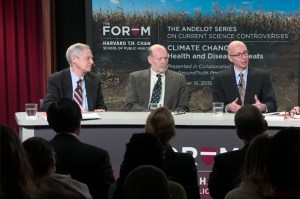
Paris deal a step toward better health, experts say
Panelists in a Harvard Chan School forum examined how the Paris climate agreement might affect human health.
-
Science & Tech
Sick planet, sick people
Harvard scientists are helping launch a new initiative to foster collaboration among scientists working at the intersection of the environment and health.
-
Science & Tech
Harvard creates Global Institute
A multidisciplinary project to investigate climate change, energy security, and sustainable development in China has received the first $3.75 million grant from the new Harvard Global Institute.