Featured series
Science & Tech
-
Is there a philosopher in the house?
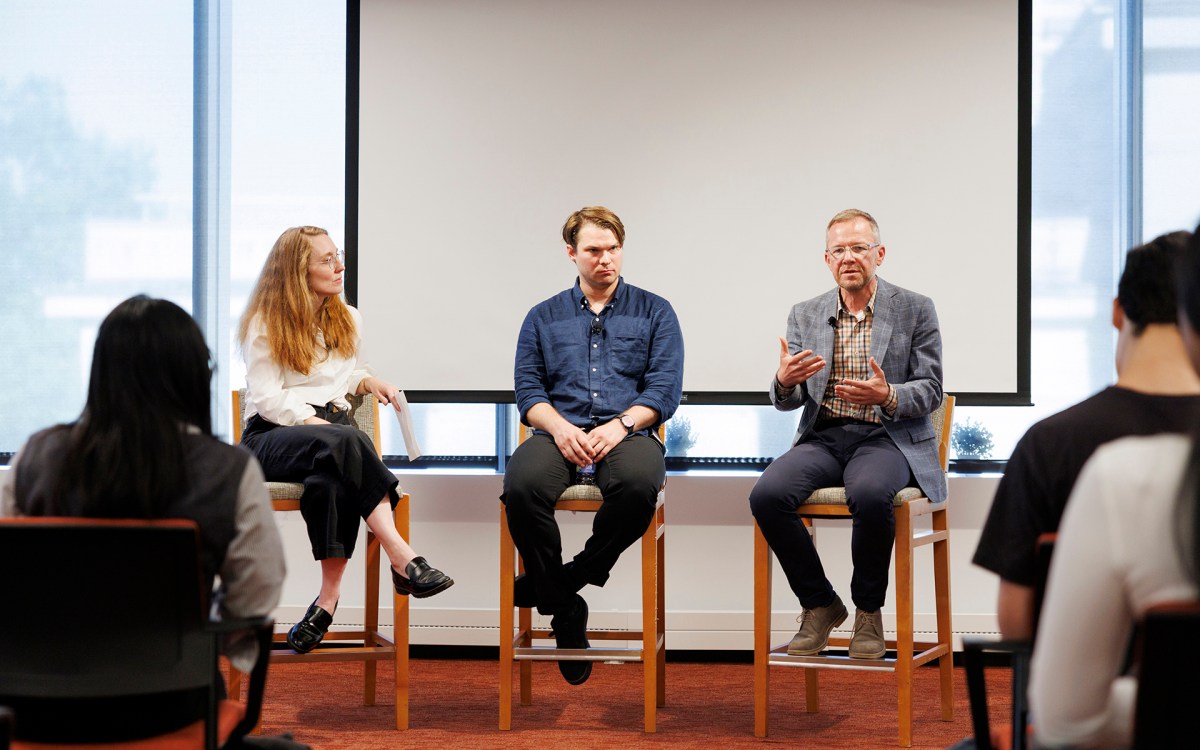
Tech insiders call for humanist-scientist discourse amid ‘Copernican moment’ of AI age
-
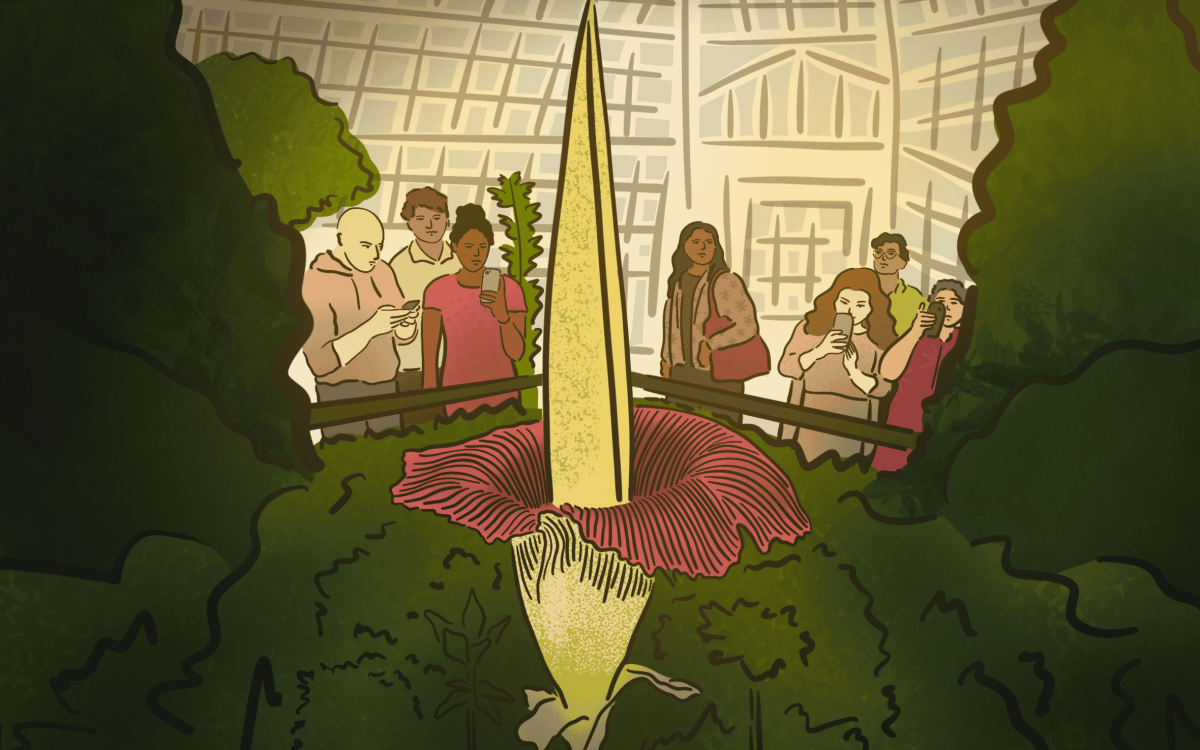
Can you tell an amorphophallus from an aspergillus?
Word nerds, classicists, and botanists, it’s your time to shine in etymology quiz inspired by Div School book
 Quiz
Quiz
-
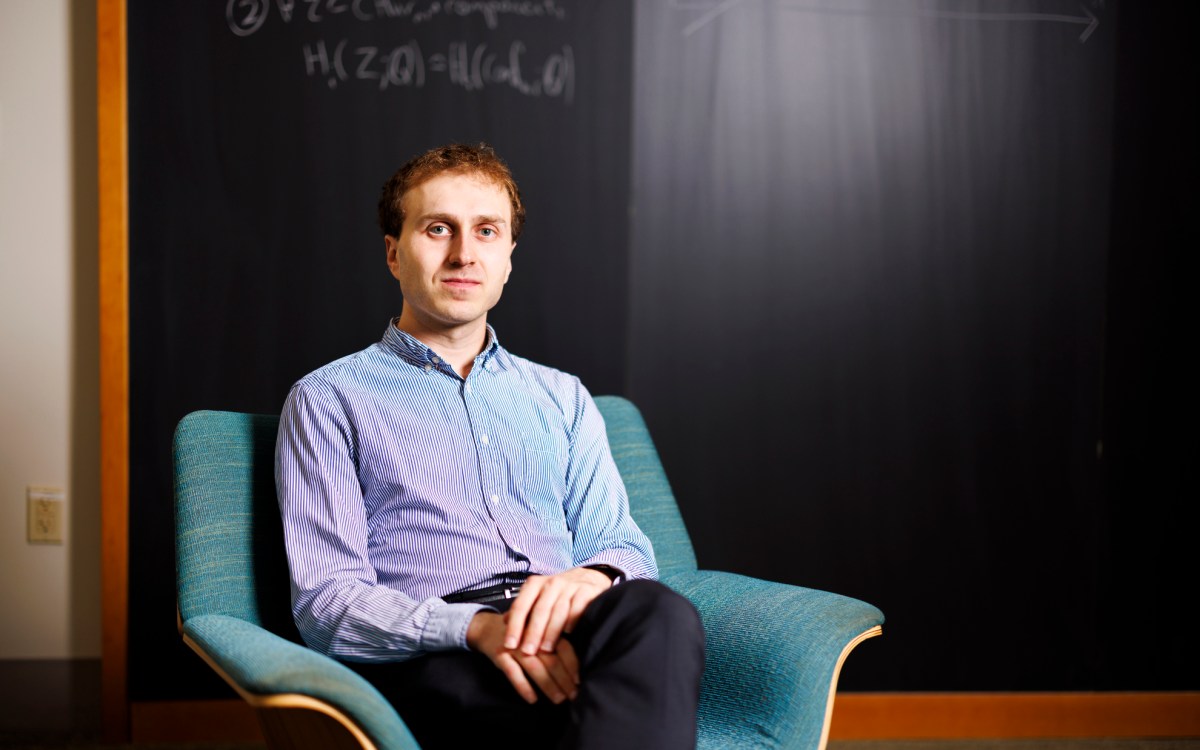
What it takes to solve math’s toughest problems
Logic skills, yes, but also two seemingly incompatible traits: Confidence and humility
-
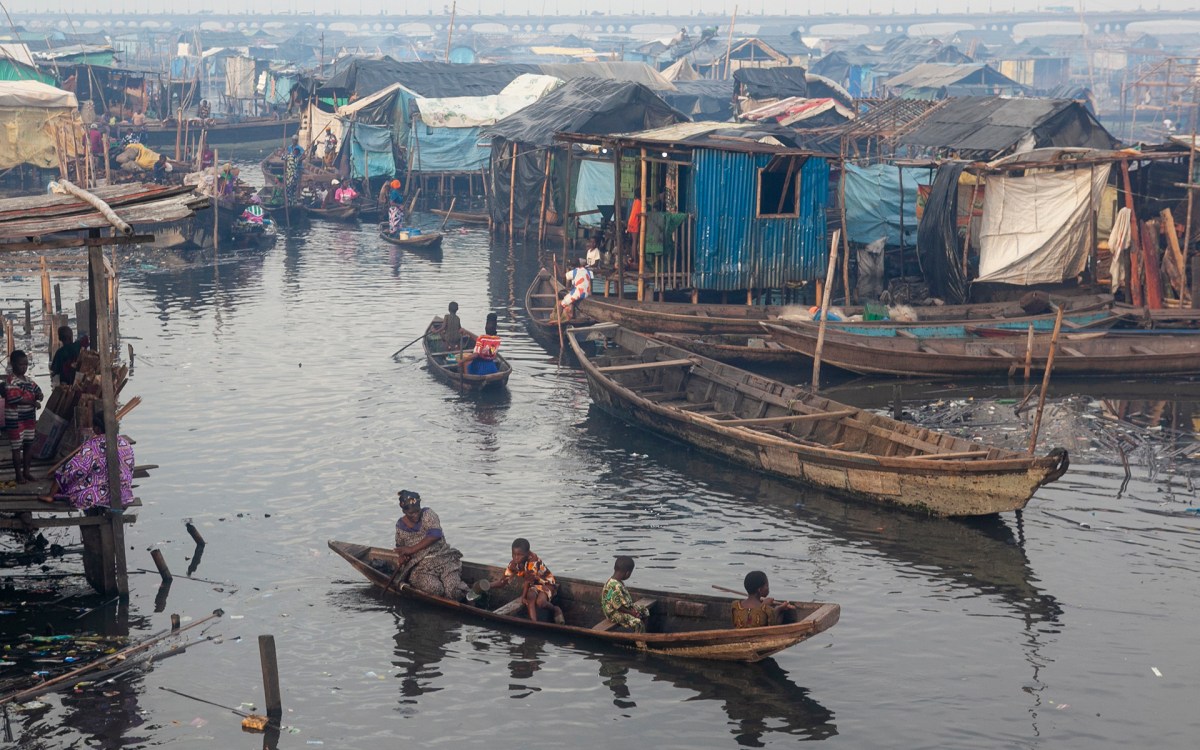
When the sea steals homes and jobs
Along West Africa’s Gulf of Guinea, Salata Institute research is helping communities weigh excruciating choices
-

Will Meta settlement reduce physical, mental health risks for young users?
Experts say many of its terms may help limit use, negative social comparisons, but regulation may still be necessary
-
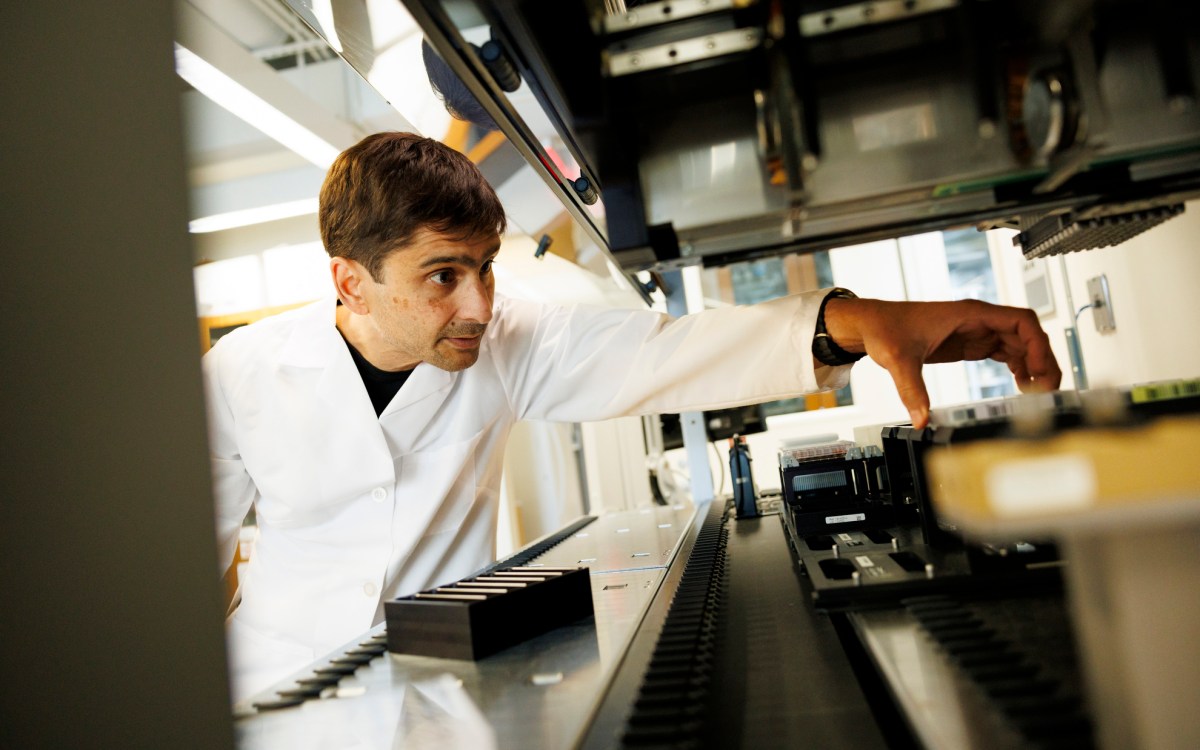
The why behind sex
Research details answer to a question that’s more complex than it seems
-
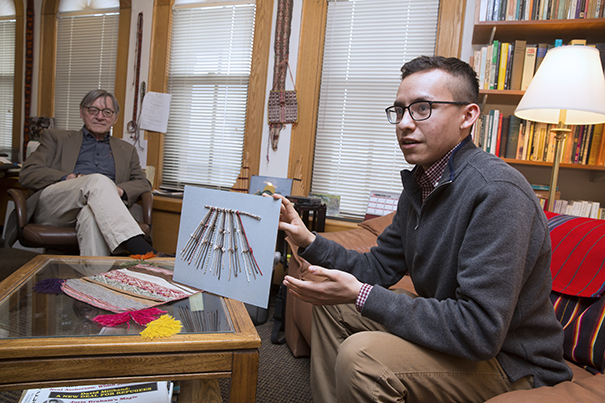
Voices from the Incas’ past
An undergraduate deciphers the meaning of Incan knots, giving long-dead native South American people a chance to speak.
-
Paying the price of surviving childhood cancer
Study finds out-of-pocket health care costs can lead to financial problems for survivors of childhood cancer.
-
The social cycle of repression
A Harvard study links an individual’s psychological basis for enforcing group hierarchies to national indicators.
-
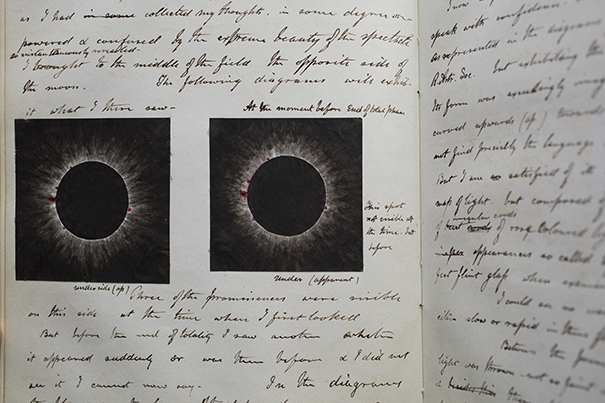
Eclipses, through the years
As photography developed, Harvard astronomers embraced it as a scientific means to understand the sky.
-
No harm, no foul
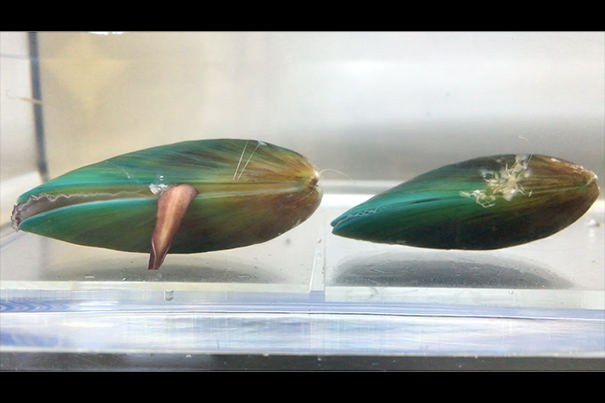
Researchers at SEAS, the Wyss Institute, and Nanyang Technological University in Singapore have developed a nontoxic coating that deters marine life from attaching to surfaces in a breakthrough for maritime travel and commerce.
-
Viewing the solar eclipse? There’s an app for that
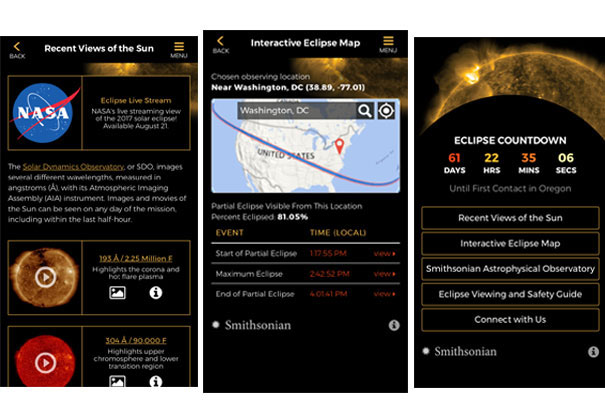
The Smithsonian and Harvard have released an interactive app ahead of the 2017 total solar eclipse, giving Americans a front-row seat to a rare celestial event.
-
The negative side of positive thinking
“It often seems that partisans believe they are so correct that others will eventually come to see the obviousness of their correctness,” said Todd Rogers of the Harvard Kennedy School about his new research.

-
Gauging street change over time
Study uses computer vision algorithm to study Google Street View images to show urban shifts.

-
Robotic suit promotes normal walking in stroke patients
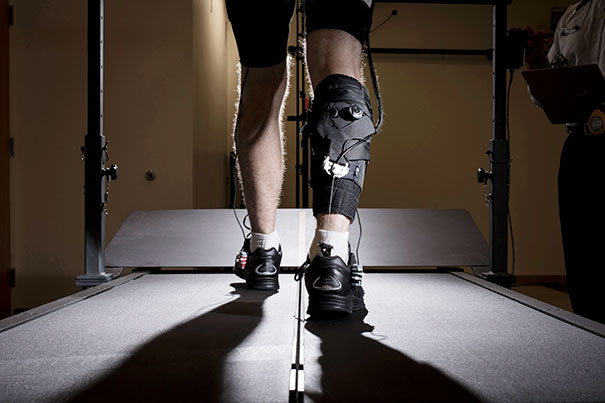
Wyss Institute’s soft, wearable, robotic suit promotes normal walking in stroke patients.
-
Last survivors on Earth
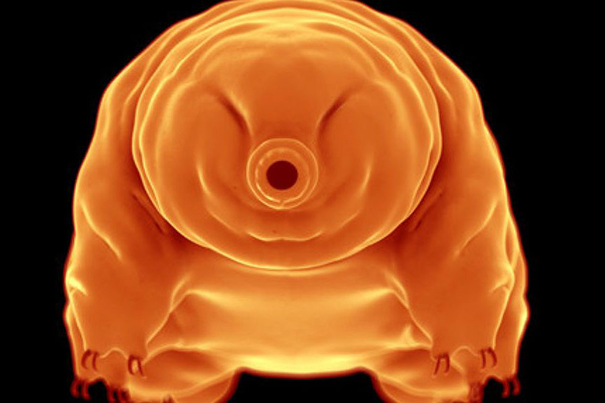
A testament to the resiliency of life, the microscopic tardigrade can survive any cosmic calamity, according to an Oxford-Harvard study.
-
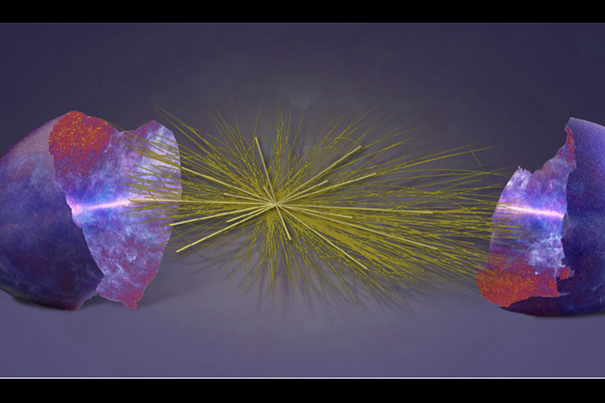
Scientists are using the universe as a ‘cosmological collider’
Using universe as cosmological collider could provide information that leads to the sign of new physics.
-
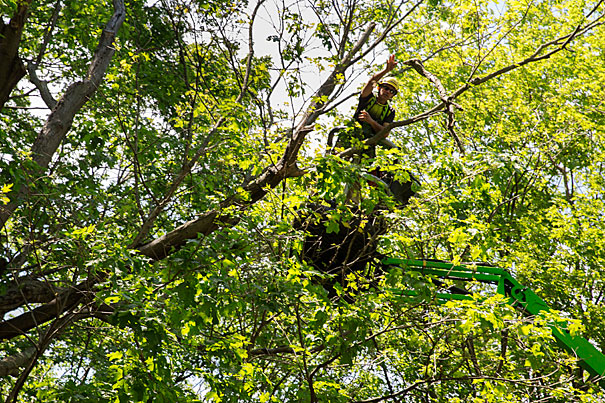
Wielding chainsaws for science
A collaboration between the Arnold Arboretum and the U.S. Forest Service has the two organizations, which typically fight tree pests, rearing wood-boring beetles for science.
-
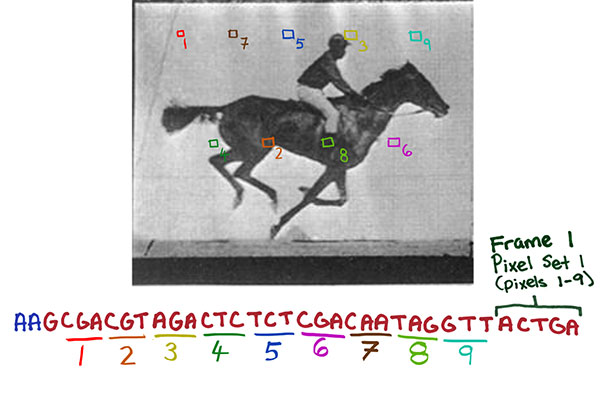
New CRISPR technology takes cells to the movies
CRISPR system-based technology enables the chronological recording of digital information, turning living cells into a biological hard drive that can record information.
-
Research may provide the tools to create better schools
Harvard and MIT study reveals that cognitive science field experiments are critical to understanding human learning and education.
-
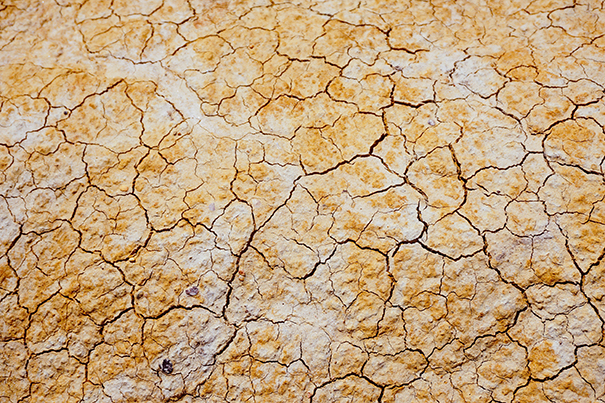
Reconciling predictions of climate change
Harvard researchers are able to provide a best estimate regarding how much the Earth will warm as a result of doubled CO2 emissions.
-
Inequality’s influence
A new study has found that, following momentary exposure to inequality, support for a “millionaire’s tax” dropped by more than 50 percent.
-
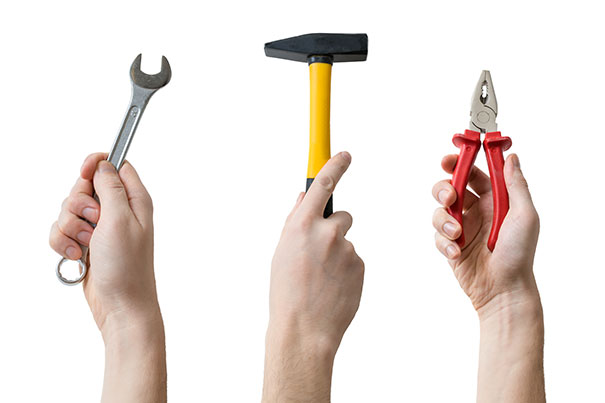
How the brain handles tools
A new study shows that, despite having no experience using tools with their hands, the brains of people born without hands represent tools and hands much the same as seen in the brains of people born with hands.
-
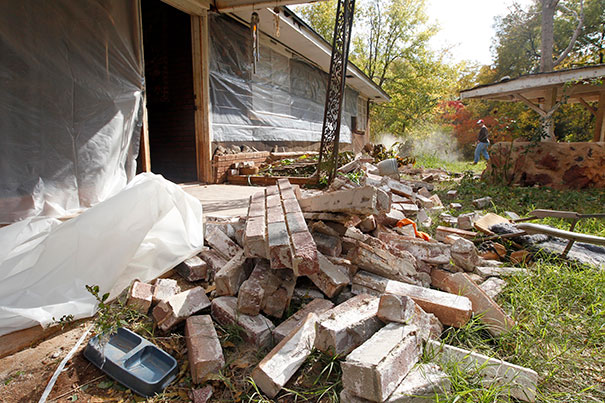
Feeling the impact of fracking
As a fellow at Radcliffe, environmental historian Conevery Bolton Valencius is investigating connections between fracking and earthquakes.
-
For IT Summit, a focus on innovation
The annual Harvard IT Summit at Sanders Theatre brought together professionals, key partners, and faculty for a day of programming and sessions to explore technology innovations and best practices in higher education.
-
Scholars greet Paris exit as multifaceted mistake
Harvard experts look at different aspects of President Trump’s decision to withdraw the U.S. from the Paris climate agreement.
-
A house that produces energy
Harvard’s Ali Malkawi explains his efforts to create a house will be transformed into an energy-efficient headquarters and lab space for the Graduate School of Design’s Center for Green Buildings and Cities.
-
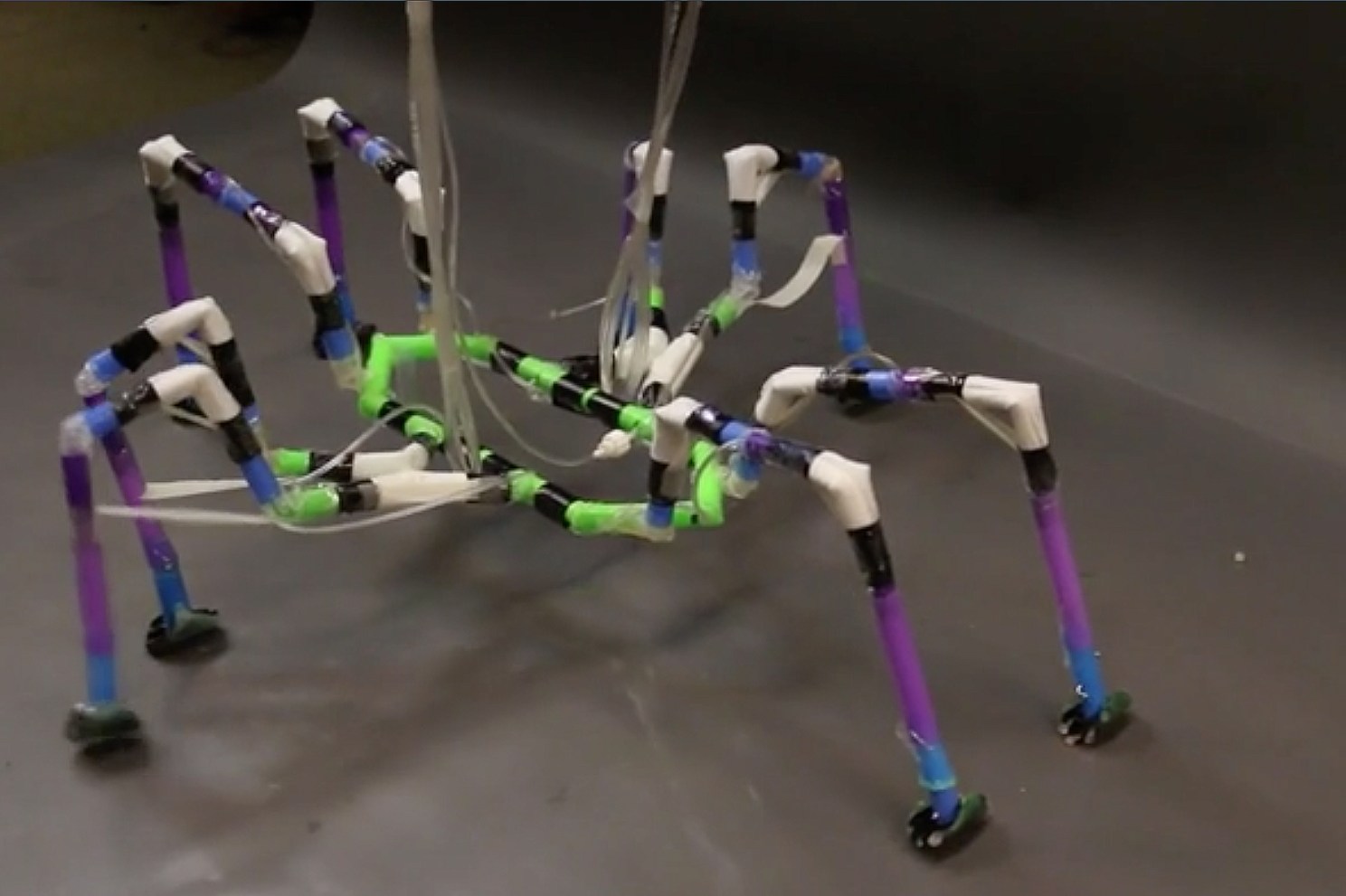
From drinking straws to robots
Inspired by arthropod insects and spiders, scientists George Whitesides and Alex Nemiroski have created a type of semi-soft robot capable of walking, using drinking straws, and inflatable tubing. The team was even able to create a robotic water strider capable of pushing itself along the water’s surface.
-
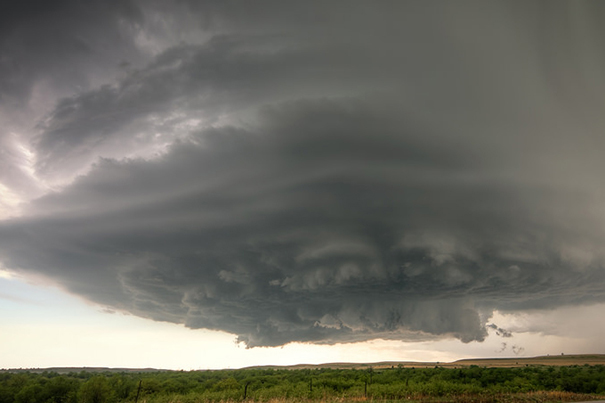
Midwest summer storms threaten ozone, study warns
Summer storms in the central U.S. create the same chemical reactions damaging ozone in the Arctic, warns a Harvard study calling for a closer look at the region’s UV radiation risk.
-
Will business fill the Paris void?
Q&A with HBS Professor George Serafeim on the response among corporate leaders to the U.S. exit from the Paris climate agreement.

-
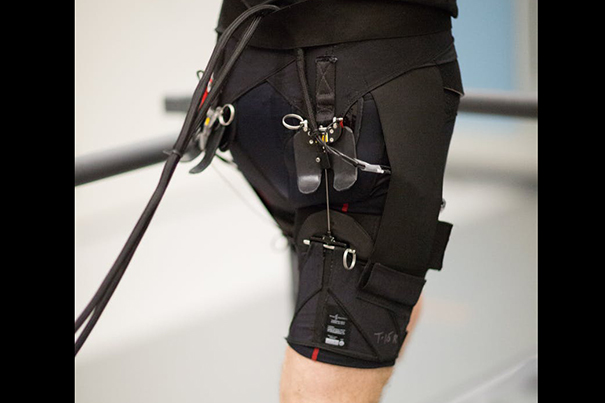
New robotic exosuit could push the limits of human performance
Harvard researchers have demonstrated that a tethered soft exosuit can bring those dreams of high performance closer to reality.
-
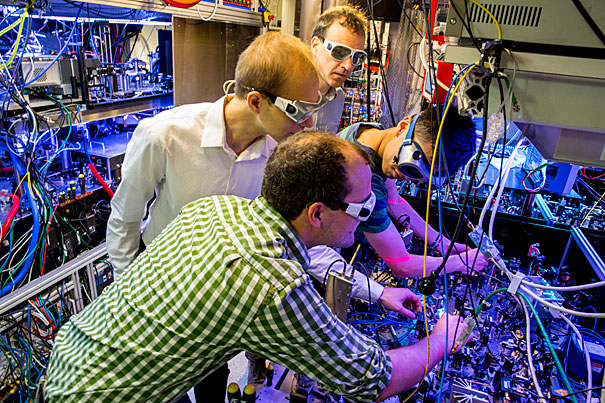
Figuring out superconductors
A team of physicists has taken a crucial step toward understanding superconductors by creating a quantum antiferromagnet from an ultracold gas of hundreds of lithium atoms.
-
Probing the Black Death for lead pollution insights
The natural level of lead in the air is essentially zero, according to research backed by data from the 14th-century Black Death, when mining and smelting ceased.
-
Human stem cells model the kidney’s filtration barrier
Researchers say their glomerulus-on-a-chip lined by human stem cell-derived kidney cells could help model patient-specific kidney diseases and guide therapeutic discovery.
-
Sorrow, frustration, hope in opioid crisis
The Ed School and the Harvard Chan School brought together experts to discuss the nation’s opioid crisis in separate panel events.

-
Drone’s-eye view
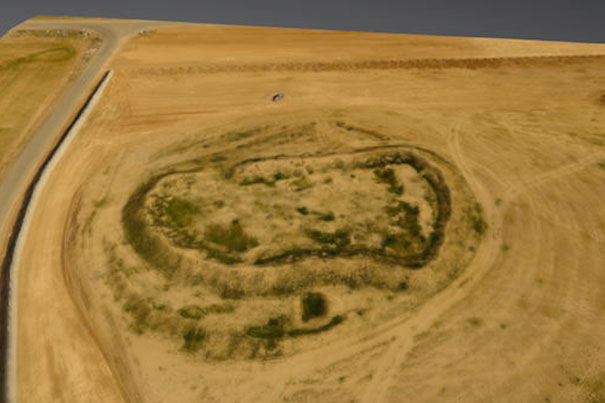
Researchers in recent years have begun applying the emerging technology of the drone aircraft to research efforts, and are now even using them to quickly create 3-D maps of ancient sites in Iraq’s Kurdistan region.