Featured series

Tag: Harvard School of Public Health
-
Health
Women with heart risk
Heart disease is the leading cause of death in women in the United States, deadlier than all forms of cancer combined. The good news is that up to 90 percent of heart disease may be preventable.
-
Health
Smoke and fire
Vaughan Rees of the Harvard T.H. Chan School of Public Health shares his thoughts on the intense debate in Westminster over a push to ban tobacco sales. The ban was defeated, but the battle is not yet over.
-
Health
Weapons for battling viruses
Bangladesh has used stepped-up surveillance, an understanding of transmission routes, and expert advice on cultural and traditional practices to devise interventions against Nipah, an Ebola-like virus with a high mortality rate.
-
Health
The communications gap on vaccines
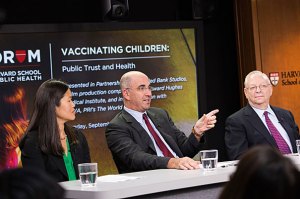
Panelists at the School of Public Health called for a stronger communications effort by physicians to counter misinformation on vaccines.
-
Nation & World
Voice of the brutalized
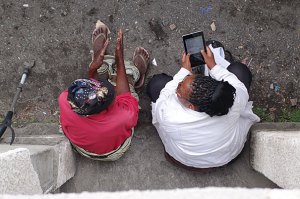
Harvard Humanitarian Initiative researchers polled residents of a war-torn part of the Democratic Republic of the Congo, finding that though many think the security situation has improved, trust in government is at a low ebb.
-
Health
Ebola’s ripple effects
The fight to end the Ebola epidemic is not just about saving lives, it’s also about heading off a potentially broader humanitarian crisis, according to a Harvard Kennedy School panel.
-
Campus & Community
$350M gift to tackle public health challenges
The Harvard School of Public Health announced its — and Harvard University’s — largest-ever gift, $350 million from The Morningside Foundation, which will rename the School and foster programs to improve health in several key areas.

-
Health
U.S. diet shows modest improvement
Dietary quality in the United States has improved steadily in recent years, but overall dietary quality remains poor and disparities continue to widen among socioeconomic and racial/ethnic groups, according to a new study from the Harvard School of Public Health.

-
Science & Tech
Are failing bees our warning sign?
Harvard School of Public Health Associate Professor of Environmental Exposure Biology Chengsheng (Alex) Lu outlines the danger posed to our food supply — and possibly to us — by the collapse of honeybee colonies.
-
Health
Fewer clinics, less care
The protective gear needed to get Sierra Leone’s health clinics reopened, coupled with public education about the Ebola epidemic, are the greatest areas of need, according to a Harvard Fulbright Fellow and physician from Sierra Leone.

-
Health
Understanding Ebola
Though the threat to the U.S. population from the Ebola outbreak in West Africa is low, the need in epidemic countries is great, says Michael VanRooyen, director of the Harvard Humanitarian Initiative.

-
Health
Viral load as an anti-AIDS hammer
Harvard researchers have joined with counterparts in the U.S. and Botswana governments to conduct a major evaluation of AIDS treatment targeted specifically to reduce infectivity.
-
Campus & Community
Marc J. Roberts, 71
Marc J. Roberts, a longtime professor at the Harvard School of Public Health whose former students run health systems across the country and around the world, died suddenly on July 26 at his home in Cape Cod.

-
Science & Tech
The mess left by stress
A new report says many Americans are feeling high levels of stress, and a forum addressed how they might deal with it.
-
Health
Vasectomy may increase risk of aggressive prostate cancer
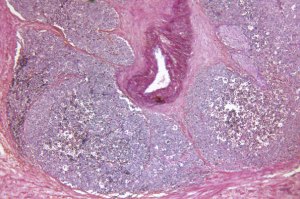
Vasectomy is associated with a small increased risk of prostate cancer, and a stronger risk for advanced or lethal prostate cancer, according to a new study from Harvard School of Public Health.
-
Campus & Community
Middle schoolers embrace health
Nearly 400 sixth-, seventh-, and eighth-graders from 15 schools across Boston and Cambridge visited Harvard Medical School as part of the annual program Reflection in Action: Building Healthy Communities. The program works to expand students’ knowledge of health and public health issues.

-
Campus & Community
Above and beyond
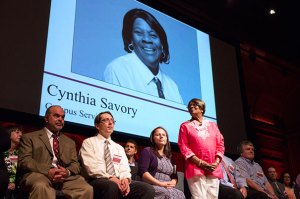
Harvard Heroes ceremony celebrates 64 unsung staffers for their unusual and valuable contributions to University life.
-
Nation & World
For good policy, forget party
Collaboration and inclusion, even of political opponents, is critical to forging successful health policy, former Massachusetts Gov. Michael Dukakis told a group of health ministers from around the world gathered at Harvard.

-
Science & Tech
Breathing easier over electricity
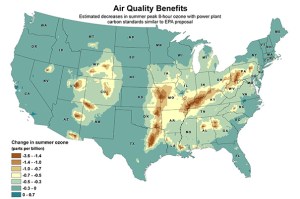
The Environmental Protection Agency’s release of draft regulations that would reduce carbon dioxide emissions from power plants by 30 percent from 2005 levels by 2030 will have a significant impact on human health, Harvard analysts say.
-
Health
House calls, without visits
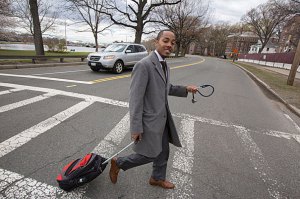
With a master’s from the School of Public Health, physician Darrell Gray hopes to use telecommunications to extend care to endangered groups in underserved neighborhoods.
-
Campus & Community
Partners, from grade school to Medical School
Fraternal twins Rosh and Roshan Sethi have shared much of their lives, including at Yale as undergraduates and sharing an apartment while enrolled at Harvard Medical School. Now preparing to graduate, they’re anticipating diverging careers, with Roshan exploring radiation oncology and Rosh head and neck surgery.

-
Science & Tech
Impact of pesticide residue hard to track, experts say
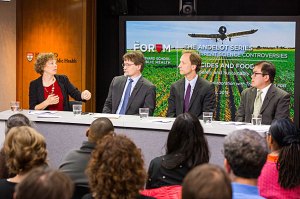
Researchers face steep challenges in trying to pinpoint the long-term effects of pesticides in the food supply, said panelists at HSPH.
-
Health
Putting off baby
Panelists at HSPH examined the trend toward delayed parenting identified in a recent government report.

-
Campus & Community
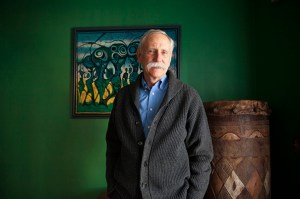
‘I spend a fair amount of time thinking about what might go wrong’
Interview with Professor Walter Willett as part of the Experience series.
-
Science & Tech
Colder winters add to colony collapse
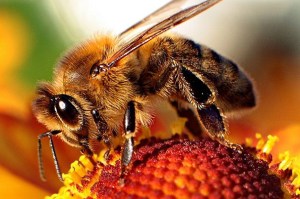
Two widely used neonicotinoids — a class of insecticide — appear to significantly harm honeybee colonies over the winter, particularly during colder winters, according to a new study from Harvard School of Public Health.
-
Health
Rising CO2 poses significant threat to human nutrition
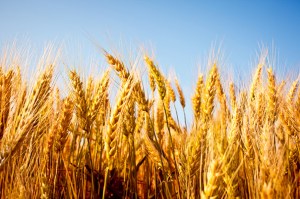
At the elevated levels of atmospheric CO2 anticipated by around 2050, crops that provide a large share of the global population with most of its dietary zinc and iron will have significantly reduced concentrations of those nutrients, according to a new study led by Harvard School of Public Health.
-
Science & Tech
Managing an aging populace
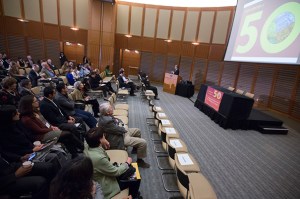
Aging, health care, and the challenges facing the globe’s women were the focus of a symposium marking the 50th anniversary of the Harvard Center for Population and Development Studies.
-
Health
A taste of danger
Students in humanitarian relief got a taste of crisis during a three-day simulation at Harold Parker State Forest.

-
Nation & World
Relief and research
Peter Maurer, the president of the International Committee of the Red Cross, was at Harvard recently to explore possible collaborations with the School of Public Health and the Kennedy School.

-
Campus & Community
Harvard moves beyond a day and into ‘Earth Month’
Throughout April, Harvard’s Office for Sustainability has coordinated with Schools across campus to create a month worthy of being called “Earth Month.” The highlight will be Earth Day, Tuesday, in the Science Center Plaza.