Featured series
Month: March 2011
-
Health
The improbable appears promising
A section of the AIDS virus’ protein envelope once considered an improbable target for a vaccine now appears to be one of the most promising, new research by Harvard-affiliated Dana-Farber Cancer Institute scientists indicates.
-
Health
New hope for the cure
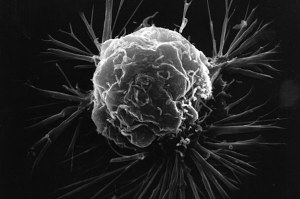
For the 20 percent of patients with so-called triple-negative breast cancer, the outcome is bleak. Now, however, researchers from Harvard Medical School (HMS) and Baylor College of Medicine have identified a critical molecular component to the disease, one that suggests potential therapies involving combinations of FDA-approved, readily available drugs.
-
Campus & Community
An unprecedented admissions year
Almost 35,000 students applied to Harvard College for admission to the Class of 2015. Letters of admission and email notifications were sent to 2,158 students, 6.2 percent of the record pool of 34,950. More than 60 percent of the admitted students will receive need-based scholarships averaging more than $40,000.

-
Health
Brain changes found in normal elders
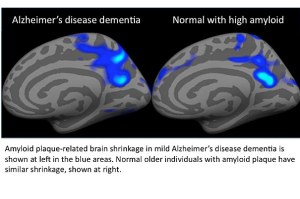
Harvard-affiliated researchers using two brain-imaging technologies have found that apparently normal older individuals with brain deposits of amyloid beta — the primary constituent of the plaques found in the brains of Alzheimer’s disease patients — also had changes in brain structure similar to those seen in Alzheimer’s patients.
-
Nation & World
For Libya, ‘no compromise’ in sight
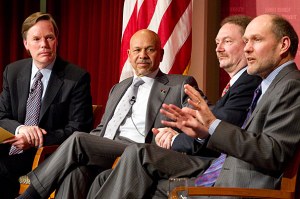
Libyans want freedom, but the road to democracy is paved with unanswered questions. With the country torn by internal warfare, former Libyan diplomat Ali Suleiman Aujali and other experts gathered at the Harvard Kennedy School to look for answers.
-
Health
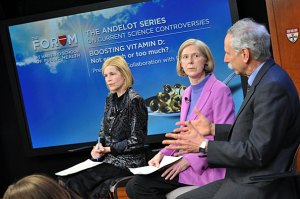
Dose response
In a Harvard School of Public Health webcast, researchers used a recent federal report to start a conversation on vitamin D. How much is enough, and how much is too much?
-
Campus & Community
Harvard rallies against cancer
Now through April 8, team up with other Harvard faculty and staff members to shut out cancer through Harvard Community Gifts.
-
Campus & Community
A pub of their own
Undergraduates have been getting into the good times at the Cambridge Queen’s Head Pub at Loker Commons since it opened in 2007. Student patrons flock there for the programming, affordable pub grub, and, for those over 21, a strong selection of beers from local microbreweries. Students also run the place, gaining valuable business experience and…

-
Campus & Community
Senior relief
Harvard offers a wealth of resources to help seniors manage stress and get as much from their last year of college as they have from their first three.

-
Campus & Community
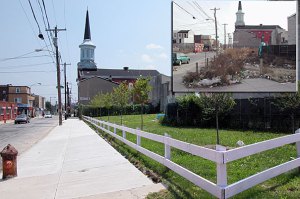
‘Bright Ideas’
The Ash Center for Democratic Governance and Innovation at the Harvard Kennedy School recognized 36 government initiatives as Bright Ideas recipients on March 29.
-
Campus & Community
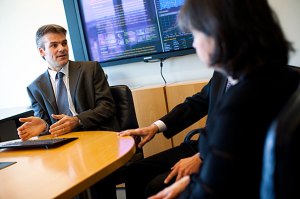
Understanding China
Harvard Management Company hosted a conference on China in December, drawing on the expertise of University academics to provide its fund managers with background, context, and perspective that will help them better understand and assess investment opportunities and risks in the emerging economic giant.
-
Campus & Community
Refrigerants, Naturally! wins Roy Award
The Harvard Kennedy School (HKS) announced March 24 that the 2011 Roy Family Award for Environmental Partnership will be given to Refrigerants, Naturally!, an alliance of corporations substituting environmentally harmful fluorinated gases with natural refrigerants in their commercial refrigeration installations.
-
Nation & World
Starting up in hard times
In a down economy, thinking like entrepreneurs can help large companies to innovate and thrive, said business leaders at an event hosted by Harvard Business School and The Economist magazine on March 24.

-
Nation & World
Tapping the ‘information fire hose’
Management of information flow and usage needs to be revamped to take advantage of two new information “fire hoses” enabled by modern technology: that which is conveyed from affected populations via social media and mobile technology, and information and analysis provided from a network of volunteers that has arisen around the world.

-
Nation & World
Thinking globally, differently
Harvard students now represent more than 50 countries and a spectrum of cultures, religions, and ethnic backgrounds. Because of that, teaching is changing too, said speakers at Conversations@FAS, a faculty forum.

-
Nation & World
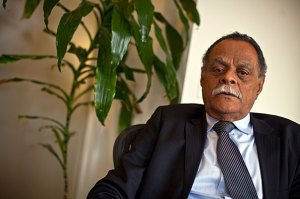
Lessons of the Haiti quake
Leaders of government, military, and nongovernmental organizations gathered at the Faculty Club and Loeb House to take a look back at the response to last year’s Haiti earthquake and seek lessons that can be applied to future disasters.
-
Health
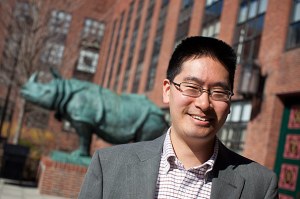
Kidney close-up
Scientists at Harvard have created breathtaking three-dimensional images of an entire organ, moving a step closer to understanding the complex development of the kidney.
-
Nation & World
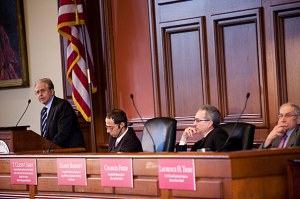
A constitutional question
A panel of legal scholars examined whether health care reform is constitutional during a panel at Harvard Law School.
-
Health
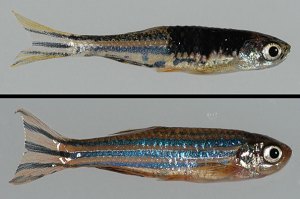
Progress against melanoma
Harvard stem cell researchers at Children’s Hospital Boston have taken two important steps toward development of a new way of treating melanoma, the most virulent form of skin cancer.
-
Nation & World
At ground zero in coastal Japan
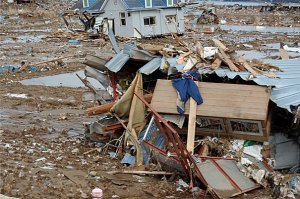
In a rare opening for American-trained physicians, three Harvard doctors spend time bringing medical aid to a tsunami-stricken city in coastal Japan.
-
Health
Studying the roots of life
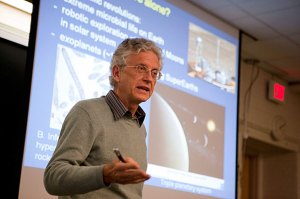
Key amino acids important for biological life are among the ones most easily formed in nature, according to Ralph Pudritz from McMaster University.
-
Nation & World
‘Crisis in Japan: The Way Forward’
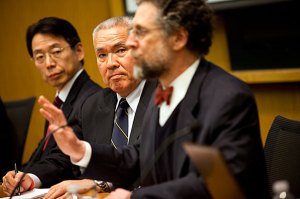
The disaster created when an earthquake, tsunami, and nuclear crisis struck Japan may be entering a new stage as the effects start to ripple through the country’s economy, politics, and society, according to a panel of Harvard analysts and Japanese officials.
-
Health
Benefits of eating fish tip the scale
In a new, large-scale study from Harvard School of Public Health and Brigham and Women’s Hospital, researchers found no evidence that higher levels of mercury exposure were associated with higher risk of coronary heart disease, stroke, or total cardiovascular disease in two separate studies of U.S. adults.

-
Health
Multiple myeloma genome unveiled
Harvard scientists have unveiled the most comprehensive picture to date of the full genetic blueprint of multiple myeloma, a form of blood cancer.
-
Nation & World
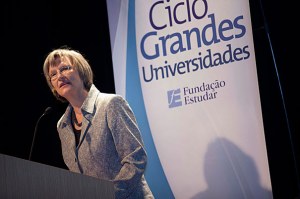
Spotlight on Harvard in Brazil
President Drew Faust is traveling this week to highlight Harvard’s engagement with Latin America. In Brazil, she is reconnecting with alumni, exchanging ideas with the leaders of local universities, and meeting with Brazilian students who have studied alongside Harvard students or with Harvard faculty in Brazil.
-
Campus & Community
Six Harvard students receive Soros Fellowships
Six from Harvard University have been awarded 2011 Paul & Daisy Soros Fellowships.
-
Campus & Community
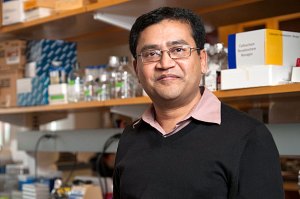
AHA honors Ruhul Abid’s research
A paper by Ruhul Abid was recently selected by the journal Arteriosclerosis, Thrombosis, and Vascular Biology as the most outstanding vascular biology paper of 2010.
-
Campus & Community
HMS fellowship open for applicants
Harvard Medical School and the Nancy Lurie Marks Foundation are accepting applications for the Nancy Lurie Marks Junior Faculty Merit Scholarship.
-
Campus & Community
Faculty Council meeting held March 23
At its 11th meeting of the year on March 23, the Faculty Council heard a review of the joint A.B./M.M. program with the New England Conservatory. They also voted to amend the rules concerning study out of residence and to update the faculty’s media policy. Finally, they heard reports on the activities of undergraduates and…
-
Campus & Community
A champion of democracy
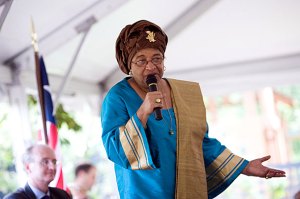
Liberian President Ellen Johnson Sirleaf, a Kennedy School alumna who has restored stability to her war-torn nation, will be the speaker at Harvard’s 360th Commencement, a choice lauded by faculty.