Featured series

Health
‘Harvard Thinking’: How super-agers keep their brains young
Illustrations by Liz Zonarich/Harvard Staff
In podcast, experts break down ‘biological contradiction’ of a 65-year-old with the memory of a 25-year-old — and what that means for the rest of us
Aging is inevitable. Aging well? Not so much. Yet some older adults, known as “super-agers,” retain the cognitive sharpness of people decades younger. Understanding what sets super-agers apart could be key to unlocking benefits for the rest of us, say researchers.
“Super-agers are a biological contradiction. They are over 65 years old, but they have really maintained a brain with youthful characteristics,” said Alexandra Touroutoglou, Harvard Medical School associate professor of neurology and director of imaging operations at the Frontotemporal Disorders Unit at Mass General Hospital.
In this episode of “Harvard Thinking,” host Samantha Laine Perfas asked experts what they’re learning from studying these exceptional agers. Along with Touroutoglou, she was joined by William Mair, a professor of molecular metabolism and the director of the Healthy Aging Initiative at the Harvard T.H. Chan School of Public Health, and Suzanne Salamon, Harvard Medical School assistant professor in medicine and clinical chief of gerontology at Beth Israel Deaconess Medical Center.
Listen on: Spotify Apple YouTube
The transcript
William Mair: I think that for a long time, humans saw aging as just this inevitable consequence, that our bodies break down like machines, that this is a kind of innate pace that you are given when you are born and there’s nothing we can do about it. But we know that the rate at which our bodies age is variable between individuals. And not only is it variable: It’s malleable.
Samantha Laine Perfas: It is natural that our brains and bodies atrophy with age. But some adults, those known as super-agers, have shown that we may be able to keep the sharpness of someone decades younger, even matching the cognitive abilities of a person in their 20s. We’re finding that super-agers’ brains are different from those of their peers, leading them to age exceptionally well. What is it that sets them apart?
Welcome to “Harvard Thinking,” a podcast where the life of the mind meets everyday life. Today I’m joined by:
Mair: My name’s Will Mair. I’m a professor of molecular metabolism. I’m also the director of the Healthy Aging Initiative at the Chan School of Public Health.
Laine Perfas: He runs a lab that studies the biology of aging with a focus on trying to understand why cells and tissues age. Then:
Alexandra Touroutoglou: I am Alexandra Touroutoglou, associate professor of neurology at Harvard Medical School.
Laine Perfas: She’s also the director of imaging operations at the Frontotemporal Dementia Unit at Mass General Hospital and runs clinical trials attempting to improve cognitive symptoms in Alzheimer’s patients. And finally:
Suzanne Salamon: Suzanne Salamon. I’m an assistant professor at Harvard Medical School.
Laine Perfas: She’s a geriatric doctor with patients ranging from age 55 to 110. Locally, she serves on the board of the Brookline Senior Center.
And I’m your host, Samantha Laine Perfas. I’m a writer for The Harvard Gazette. Today we’ll talk about what we’ve learned about super-agers and the secrets that may help us all extend and enrich our later years.
It is normal for our brains to atrophy as we age, but for some people, the so-called super-agers, they seem to avoid it. What is it that sets them apart from their peers?
Touroutoglou: Super-agers is an interesting phenomenon because, as you say, they are a biological contradiction. They are over 65 years old, but they have really maintained a brain with youthful characteristics. And because of that, their memory does not decline. They perform as well as young adults in their 20s. This means that while the general thinking is that memory declines and brain functions slow as we age, the studies on super-agers suggest that this is not inevitable and that there may be ways to maintain high levels of cognitive function for much longer in life.
“It is really what we found in their brains that has been so earth-shattering for us.”
Mair: I’d love to pick up on something you said, Alexandra, about the inevitability of aging. I think that for a long time, humans saw aging as just this inevitable consequence, that our bodies break down like machines, that this is a kind of innate pace that you are given when you are born and there’s nothing we can do about it. But we know that the rate at which our bodies age is variable between individuals. And not only is it variable: It’s malleable. In the last 25 years, the field of biology has developed quite sophisticated tools to measure molecularly the rate of biological aging. Those tools have shown us that not only is there variation between human individuals in the way their bodies age, but also that some things we do can really modulate the rate at which people age. And so we can understand now increasingly the biology of those exceptional agers, what makes them different, and begin to work out ways to apply that to the rest of us who are less fortunate.
Salamon: The super-agers, the people who are maintaining their youthful ability to remember things and to be social, they still have the same medical issues as people who aren’t super-agers. I have several people in their 90s, and even the super-agers get arthritis, they get back pain, they get spinal stenosis, they have heart disease. And so I think, what Will was saying is, we really need to look at is not only the brains of the super-agers to figure out what keeps their brains sharp, but also in general how to keep everybody’s body sharp with things that have been shown to keep people healthier.
Laine Perfas: I definitely want to get into some of the things we can do to perhaps join that super-ager demographic. But before we do that, I wanted to talk a little bit more about the differences that we see between super-agers and non-super-agers, both in cognitive function but also physical differences.
Touroutoglou: If you were to ask me what is a super-ager compared to a typical older adult, I would say a youthful brain in someone who is 65 years old or older. It’s really what we found in their brains that has been so earth-shattering for us. Our first findings, published in 2016, helped shed light on what was so special about their brains. Our team measured the size of every region in the brain. We found that super-agers had more volume in areas of the brain that are important for memory, most notably the hippocampus. And in some cases, we saw that they had the same size as they are in young adults in their 20s. And our next question was, how well connected are the brains of super-agers? That was the next logical step for us to understand, because we know that no brain region is an island. What we found was that super-agers show stronger connections in brain circuits compared to their peers. And, when we looked closer to better understand how their brains activated when they were actually performing a memory task, we found that they approached memory differently. It seems that they are likely to use more effective strategies rather than just relying on raw memory ability. It’s not that they’re working harder necessarily; they’re just working smarter. We know that in real life, unexpected health events can happen that can accelerate cognitive decline. And that brought us to another study where we focused on surgery. And what we found was that super-agers were more resilient in developing cognitive side effects or delirium after surgery under general anesthesia. So none of the super-agers developed these cognitive complications. Another more surprising finding was that a brain region known as the mid-cingulate cortex was larger in super-agers, and actually the same as that of young adults. And this is particularly interesting because the mid-cingulate cortex is traditionally understood to have to do more with motivation than memory. So some have argued that this region supports tenacity, persistence, grit in the face of difficult tasks.
Salamon: That is fascinating because I will tell you, your observation about general surgery and anesthesia is something that we see so frequently in the hospital at Beth Israel Deaconess. Our geriatric service does many consults on the surgical service, and we are frequently called for, as you said, delirium, which is confusion that happens often when people are in the hospital and often right after surgery. And we find that people who come in with a little bit of cognitive decline already, once they have general surgery and anesthesia, they frequently have dropped a level in their ability to function in the world that frequently never comes back quite to the baseline that they went into the hospital with.
Mair: I think this is also cool, also to get to this fundamental question, Samantha — to become a super-ager, are you a super-ager in your brain and not in your body? Could you be a super-ager for your skeletal muscle, but not your brain? And therefore are we aging — are different parts of our body in different cognitive outputs and different functional outputs, aging at the same rate or different ones? And how do we get to that? Because that question is central if we’re going to ask, how do we all benefit. And I think increasingly those questions are beginning to be studied. So when we talk about those kind of biological aging clocks, which have an increasing level of sophistication, more recently, we can use things like proteomics from plasma samples to assess from one sample the rate of aging from different tissues — because you can see that those proteins come from specific tissues, and you can use those as a way to gauge aging across a body. And in some of those examples, you can show that actually different tissues do age at different rates in a system, and that this might be different for different individuals. I’d love to know from the experts here about whether you think that these exceptional agers, cognitively — is it true that all of them are outliers in cognitive performance, but not in other areas? Is it some are aging across the board more generally well than others? And how do you think about those interventions?
Laine Perfas: It makes me think of something Alexandra said: When you look at the brain regions of super-agers, no area of the brain is an island. Which does get me to my next question, which perhaps Will, this would be a good one for you, but I am curious about what we know about the biology of aging at the cellular level?
Mair: I think that really gets to the difference between describing how aging manifests at a cellular level and then what those causes of aging are and how we can modulate them. And over the course of the last 20 years, we have coalesced around these hallmarks of aging, which describe various cellular functions, from DNA damage to telomere shortening to metabolic dysfunction — there are about 12 of them at this point — which kind of all go wrong with time, and they can lead to different defects. What is important for this conversation is the extent to which those detrimental effects that we see with time on biological function, they impact different tissues and cells differently. So what’s going to cause a disease in the brain, where many of the cells are non-dividing and they have to last your lifetime, will be different than what drives aging in a very proliferative tissue, for instance. But what’s really interesting is we are beginning to realize now, when you think about this interconnectedness, that there are single interventions that we can do, which can modulate all of these hallmarks at the same time. So we know this really well in animal models in the lab, that we can take an animal which ages very badly — whether it’s a nematode worm that lives and dies in two weeks, or a mouse that lives and dies in two years — and we can do one intervention, whether it’s dietary, genetic mutations, or now drugs that completely slow the rate at which those animals age. They live longer, but they also have delayed onset of all those age-related diseases. So you can affect all hallmarks at the same time. And those interventions now are moving through towards clinical trials for humans to see if they can benefit age-related conditions.
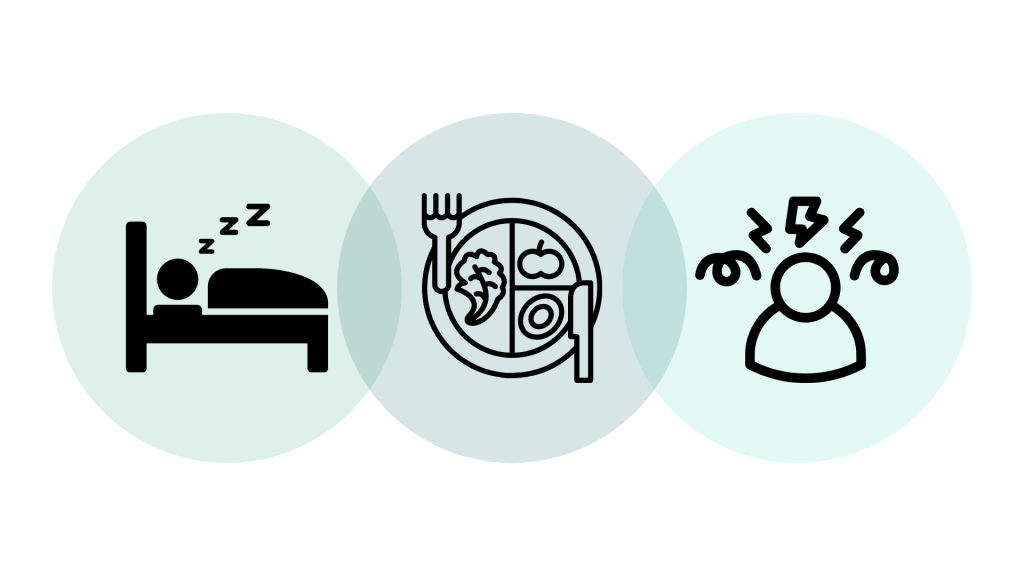
But on the other hand, while we wait for those cellular moonshots to come to fruition, we know there are things we can do now, things that describe and are linked to exceptional agers in human populations — whether that’s social engagement, optimism, nutrition, good sleep, low stress, exercise, of course, the things your grandmother told you to do. Increasingly we know that those do have an effect on the whole way the system ages and so we can begin to take a precision approach to apply those things. I think what’s really fascinating is that anything that makes a human age better, whether that is social engagement or optimism or yoga or good diet, does something to the biology and ultimately affects all those hallmarks in the same way. And so these are interventions we can apply across the board, and they’re competing. There is no point in taking some supplement that you read about on Instagram to treat your aging properly if you are sleeping four hours a night, really stressed, eating a poor diet, all those other things. And so there are many things that cause the body to age, and they all go wrong at the same time. Almost anything in biology is worse in an old individual than a young one. But what’s really exciting is now we know a lot about how we can target those things all at the same time.
Salamon: You know what’s really fascinating about what you just said? We are talking about older people who have sharp brains, but bodies who still have diseases. And I am now dealing with somebody in an assisted living facility who’s in his mid-60s. He’s very young, ran marathons all his life, is extremely physically fit, but has early dementia, which is horrible. And it’s a fascinating thing to know: Why does one part of the body age so differently than another part of the body?
Mair: In the era of moving towards precision medicine and precision biology, really, understanding the difference between individuals is really where the answer lies, right? We can increasingly have tools now at a much more scalable and affordable level to understand on a case-by-case basis what makes someone different from others, and to study that molecular level.
I think for a long time, one of the problems with translating bench research, foundational science research, is that we are taught to reduce all the heterogeneity, all the differences, right? To do a good experiment, you want to keep everything the same and change one thing. But as soon as you try to scale that to an individual, to a human therapeutic, or put it through clinical trials, humans are very different, right? So now we increasingly need to get the answers from those differences, and use tools like AI and machine learning to really understand for an individual like that, what is it that makes that person suffer differently from someone else, to respond to an intervention differently?
Laine Perfas: Thinking about Suzanne’s patient that ran marathons his whole life, I would imagine lived a very healthy lifestyle, very physical, very challenging, that required a lot of resilience and grit, and yet is experiencing cognitive decline at a fairly young age. You are all scientists, so you are probably going to hate my question, but it makes me wonder if some people are just lucky.
Mair: So I’m happy to answer that first. Luck — or the scientific word for luck is stochasticity, right? This is just stochastic effects. This is just chance: I tend to think it’s just science we don’t understand yet. I think it is clear that for exceptional agers or for those who are aging more poorly, it is not down to one thing. We can’t define that it’s due to just genetics or one thing in their environment, which makes them separate from everybody else. I do think biological systems are an interaction between genes and the environment, and it’s a very complicated environment. The environment can be things that you do to yourself, things that are done to you, your psychosocial outlook. And we are only beginning to get to a stage now in biology where we integrate these different disciplines. So for instance, I talked about the Healthy Aging Initiative we’re doing at the School of Public Health. We are trying to bring together social behavioral scientists who are working on why optimism makes some people age better in social integration and study the biological mechanisms of that. So many of these things, which I think we do put down to luck quite rightly, really, we don’t quite understand what gives them that luck. I think a classic example is the woman who lived the longest of any human smoked until she was 110. And you can find things, which they all put their luck down to. They’re sure they aged well because they ate a pound of butter a day, or they were optimistic and they did these things. That’s not really science, right? That’s N-of-1 science and we can’t do it. But we are at a stage now where I think we can begin to at least understand on a more global scale what ties these folks together.
Touroutoglou: From the super-aging studies, we’ve known that no particular lifestyle was conducive to super-aging. Some super-agers appear to follow all conceivable recommendations for a healthy life. Others did not eat well, enjoyed smoking or drinking. As Suzanne said, some super-agers also did not seem to be medically healthier than their peers. We have known from some studies that they have similar medication regimens. But what set them apart was what Will said. The group was particularly sociable. They tended to report more friends and family connections. That was the only thing that was common among all super-agers.
Laine Perfas: So let’s talk now about some of the things that seem to slow down our biological aging. All of you have mentioned relationships. So let’s talk about those a little bit, but then also talk about some of the other things that we’ve learned from looking at super-agers.
Mair: This is slightly outside what my lab studies, but we have folks at my school, including people like Professor Laura Kubzansky, who study human populations and study things like optimism, social engagement, and even the act of giving as opposed to receiving in the world is really linked to healthy aging and how our bodies age. We increasingly know a lot about these more generalized behaviors that involve being part of community, that really are — these are epidemiological studies, so it’s always about trying to understand causation versus correlation, but increasingly we can study at the biology level how those different ways we behave can change our body age. These are things that we can begin to change. It’s hard to just turn a pessimist into an optimist, right? That’s a difficult thing to do. Just say, just be different. But at the same time, increasingly, if we can understand the effects on people of social disengagement, of those negative things, the effect we are maybe having through social media, these things that are driving disconnectedness among people, and studying, can getting connectedness through remote means, can that replace human-to-human interactions? These are increasingly things which we can study at a scientific level. I think that’s a real frontier, which we are just beginning to explore now in really incredible ways.
Salamon: That’s so important because so many older people live alone and feel isolated, and it would be interesting to know if they do FaceTime more now that we have all the gadgets. It does seem to me that is very helpful, when people call on the phone. There’s a lot of push to have people age in place, stay in their homes forever, but it’s not really clear that is the best thing for people.
“In the last 25 years, the field of biology has developed quite sophisticated tools to measure molecularly the rate of biological aging. Those tools have shown us that not only is there variation between human individuals on the way their bodies age, but also that some things we do can really modulate the rate at which people age.”
Laine Perfas: Suzanne, since you work directly with patients that are in this demographic, I’d love to hear you talk a little bit about what you have seen be successful for people.
Salamon: One thing that I have seen a lot are what I mentioned before, people who are living in their own homes, homes that they’ve lived in for 40, 50 years, that they don’t want to leave, and usually they get pushed by their kids or by social workers or someone to move into a place where there are other people around. They’re building a lot of these continuing-care communities where they have independent and assisted living and memory care for people who need it. And I have yet to see a single person who regretted moving. They go kicking and screaming, and then once they’re there, they … I’m trying to think of even one who didn’t love it ultimately. Anybody who moves to a new place, it takes a little getting used to, but most of these places offer you your privacy or a whole range of interesting things. So I would say that in our society, if we had more of these kinds of places that were affordable so that people could move into them, I think that’s huge.
My mother, who was living independently until she was 97, and I always thought of her as a super-ager, she fell and broke her pelvis when she was 97. She came up to Boston and was going to move. We rented a place for her in a building, very independent, but it was right at the beginning of COVID. And so we took her in with us just until COVID passed. So of course she stayed with us for three and a half years. I really learned more about geriatrics during those three years with her. And, I think for her, and I’ve seen this with other people too, living together with family is, for many people, very helpful. Most families can’t do it; they don’t have the space or whatever. But to find a place where there is connection and people have interests that interest them, I think that’s really important.
Laine Perfas: We haven’t talked much about the role of diet and physical activity as you continue to age, because there is the physical health of your body and your skeletal system and your muscular system in addition to the cognitive function. But I also imagine they support each other.
Mair: One of the best investments you can make in your healthy aging and how you’re going to age is maintaining muscle mass and skeletal muscle with time. It’s clear that the links between just maintaining your independence and maintaining that muscle mass with time are really important. And so exercise becomes this overriding thing from the biological sciences of aging perspective. Many of the molecular sensors of exercise are also sensors which, in our cells, sense changes to food. And I think some of the things that we have targeted in more lab-based studies that slow the rate of aging are often those things that are intricately tied with metabolism and fasting and exercise and food. When you’re talking about diet, and I’m not someone who works with nutrition and human studies, but a lot on metabolism and how our bodies sense the food we eat and process that food. I do think that metabolic dysfunction leads to cellular dysfunction. So we are very interested in mechanisms that can maintain our bodies’ and our cells’ capacity to sense the nutrients they’re eating and use them appropriately. So switching burning sugar and burning fat. And some of those things, like intermittent fasting or time-restricted feeding, which you may have heard about, they get a lot of public attention: when you eat during the day and trying to not spend all of your day eating and have periods of fasting in your diet. I think we’re at early stages to really show the effect of those on human aging, but certainly the data and animal models are very compelling. And I do think what’s interesting from my point of view is this idea of circadian alignment; I do think that thinking about circadian rhythm, when we sleep, when we eat, when we exercise, is really something that has a big effect.
Touroutoglou: And I just wanted to add here that today, research suggests that a brain-healthy diet is a heart-healthy diet. Brain function is vulnerable to cardiovascular disease and the impact of conditions such as diabetes. The Mediterranean diet, which emphasizes fruits, vegetables, whole grains, legumes, fish, and other seafood, has shown benefits.
Mair: And the flip side of this is when we think about obesity as a risk factor for disease, right? We know increasingly now that obesity is not just a driver for Type 2 diabetes, but also nearly every chronic condition of old age that the obese patients are at risk for: Alzheimer’s disease, cancer earlier, all these sorts of things. In many ways, there are outliers to that, but you can see obesity as kind of an accelerated aging phenotype, which also begins to explain some of these links between BMI and exercise and healthy aging, and some of these side effects that are coming out by things like GLP-1 agonists. There’s a real commonality between healthy metabolism and metabolic function, and many of these different outcomes and chronic diseases of aging, which leads to things like exercise being one of the few things we can really do right now to have an effect on early cognitive decline.
Laine Perfas: I think sometimes with older populations, the advice given is when you get to your later years, slow down, take it easy, relax in retirement. What do you all think of that advice?

Mair: I think it’s balance, right? Slowing down and just taking it easy is maybe not the best advice if that means that you are sedentary and you’re not maintaining your muscle mass. But also we shouldn’t push people to be perfect the whole time. I think there is now also this flip side of this kind of longevity culture we’re in right now, in many ways. It’s this idea that you have to completely optimize your body at all times. You have to wake up every day and see how you slept and how your body’s recovered and be perfect, which is its own pressure, right? And that takes away from these ideas about the mental effects, your mental health on how your body ages. These things are, as we discussed, all connected. So I think there has to be a balance. We have to forgive ourselves for not being perfect. We have to try and understand and meet people where they’re at in terms of what they can do to intervene. But also this sense that it’s never too late actually. And so there are things you can do even really into advanced ages, which can change the trajectory of decline of your body.
Salamon: It seems that no matter how old people are, everybody has some kind of a tracker, whether it’s an Apple watch or a cellphone. I do try to motivate people by showing them the little heart that they can press. But I tell people, regardless of how old you are or want to be, what is important is that you get there healthy without a heart attack or a stroke. And that this can really be helped if you can get a certain number of steps. So you look at how much is your baseline steps, and if it’s 500 steps, try to double it. So to meet people where they’re at, but still to push people a little bit.
Mair: And I think to demystify some of those technologies for older adults, whether it’s those trackers or AI, increasingly, we are moving to a world where we have precision information and lots of data about ourselves. And that can be overwhelming, but it can also be incredible to make good decisions. And finding ways to get that into people’s psyche, who might be afraid of those technologies, helping them to use it to make good choices without feeling they’re a slave to their step number and their sleep score is really important.
“The group was particularly sociable. They tended to report more friends and family connections. That was the only thing that was common among all super-agers.”
Laine Perfas: Learning how to do new things challenges your brain in a healthy way to continue to stay young and nimble. So I was just thinking about listeners who might be like, “Oh, technology, another thing to learn.” It’s like, “Exactly. I think it could be good for you to learn how to use it.”
Mair: Absolutely.
Touroutoglou: Yeah, that’s what I was going to say. Anecdotally, talking with our participants, the super-agers say they really enjoy challenging themselves. They don’t want to sit in the background; they want to learn new things.
Laine Perfas: So if I am someone who’s looking to strengthen and maintain my cognitive abilities and physical function until much later in life, what are some things that I can do that I have agency over?
Salamon: I would say one thing for sure, which Will alluded to, is to stay within the normal weight. Because I agree, I think that being overweight is really a problem for the body, and once you slip into diabetes, that really does affect almost every organ.
Mair: I think one of the most underrated things, although increasingly getting more attention, is sleep and the power of sleep for how we age. Sleep is not just this kind of rest and recovery period. It’s an active process that your brain is using. As we all seek ways to optimize our aging, thinking about sleep, healthy diet, lowering your stress, not having chronic cortisol increases because you’re stressed the whole time, thinking about — maybe, it’s this idea that we used to try and just push to perform and achieve at our work and that meant we sacrifice many other things including spending time with our family, eating well, sleeping, exercising; so really prioritizing these kinds of pillars of healthy living, which really affect how our bodies age. And then I do think there’s real optimism. There are things and technologies coming online in the next 10 to 20 years or maybe sooner around the biology of aging, which will have really incredible effects on preventative medicine.
Touroutoglou: One of the questions we typically get at the clinic is: “How can I become a super-ager?” And in this day and age, we get the question, “How can I avoid the cognitive decline that typically comes with aging? How can I avoid Alzheimer’s disease?” And I’d like to mention a clinical trial that we are currently running at Mass General; our team is using innovative brain imaging techniques to really understand the inner workings from the cooperating brain. We have now identified the features of the super-aging brain that are linked to their youthful function. And we are applying these findings using an innovative technique called non-invasive brain stimulation. And by doing that, we hope to recreate the patterns of resilience that we found in super-agers by promoting neuroplasticity and by strengthening the connections between the neurons in the brain and between the brain regions that we found in super-agers to be related to their sharp memory. I am optimistic that we will be able to delay brain aging and reduce symptoms for Alzheimer’s disease.
Mair: There are things we can do as individuals, but you know, in case there are any policymakers out there, I think we also have to think about inequity in how our bodies age, right? One of the best predictors of healthy aging is wealth and education. And where you are born in Boston will really change the rate at which your body ages. And now, increasingly in the last two years with those molecular measures of biological aging that I talked about, we’ve shown that social inequities drive the rate of aging. And so I think yes, there are things we can do, but also from a public policy perspective, we can really think about what it is that’s leading to some areas of society to age more poorly. And that’s a combination of many of the things that we talked about, why the life expectancy gains that we saw in the last century in this country didn’t occur for all demographics, right? They occurred for different people in different ways, and some people’s life expectancy got worse. So there are things that you can do, but I think there are things we can do together as a community to try and understand why it is that where you are born in many ways, and the luck that life throws at you, to go back to luck, does change how your body ages. And that means that if we solve that problem for the fortunate, we can start to solve it for the less fortunate.
Laine Perfas: Thank you all for this really great conversation.
Mair: Thank you.
Touroutoglou: Thank you.
Salamon: Thank you.
Laine Perfas: Thanks for listening. To find a transcript of this episode and all of our other episodes, visit harvard.edu/thinking. And if you like this podcast, rate and review us on Apple and Spotify. It helps other listeners find us. This episode was hosted and produced by me, Samantha Laine Perfas. It was edited by Ryan Mulcahy and Paul Makishima with original music and sound design by Noel Flatt. Produced by Harvard University. Copyright 2026.
Recommended reading
- “Rethinking what it means to age as humans live longer and healthier” by The Harvard Gazette
- “Exploring why some remain sharp even as decades roll by” by The Harvard Gazette
- “Aging independently, by design” by The Harvard Gazette