Featured series

Tag: Physics
-

-
Science & Tech
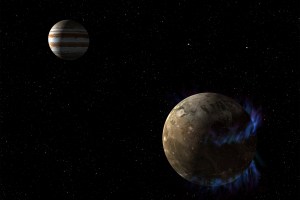
A ‘Goldilocks zone’ for planet size
Researchers have redefined the lower size limit for planets to maintain surface liquid water for long periods of time, extending the so-called habitable zone for small, low-gravity planets.
-
Campus & Community
Black hole project nets Breakthrough Prize
The nearly 350 astronomers, postdoctoral fellows, graduate students, and undergraduates who worked for more than a decade to capture the first-ever image of a black hole have been named the recipients of the 2020 Breakthrough Prize in Fundamental Physics.
-
Science & Tech
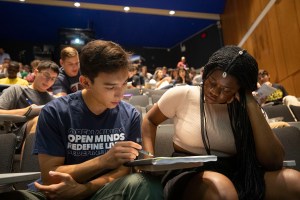
Lessons in learning
Study shows students in ‘active learning’ classrooms learn more than they think
-
Science & Tech
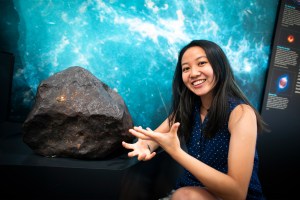
How the moon came to be
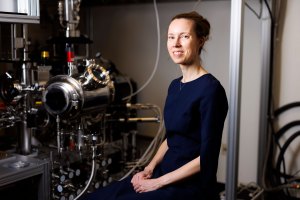
A fourth-year graduate student in the lab of Professor of Geochemistry Stein Jacobsen, Yaray Ku is working on a project aimed at understanding how the moon formed, and to do it, she’s working with actual lunar samples.
-
Campus & Community
Funding promising scientists
Associate Professor of Physics Cora Dvorkin and Associate Professor of Computer Science Stratos Idreos will each receive at least $150,000 a year for the next five years through the Department of Energy Early Career Research Program.
-
Science & Tech
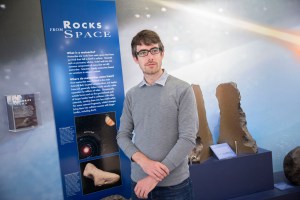
A way to make Mars habitable
Researchers from Harvard University, NASA’s Jet Propulsion Lab, and the University of Edinburgh suggest that regions of the Martian surface could be made habitable with a material — silica aerogel — that would mimic Earth’s atmospheric greenhouse effect.
-
Science & Tech
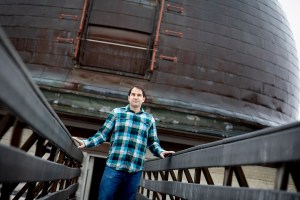
Spreading seeds of life
Scientists at the Institute for Theory and Computation have made a comprehensive calculation suggesting that panspermia could happen, and have found that as many as 10 trillion asteroid-sized objects might exist that carry life.
-
Science & Tech
Oceans away
A new NASA-funded program will study water worlds and environments to understand the limits of life as part of the search for life on other planets.
-
Science & Tech
A new vision for neuroscience
For decades scientists have been searching for a way to watch a live broadcast of neurons firing in real time. Now, a Harvard researcher has done it with mice.
-
Science & Tech
Ultra-high-speed Wi-Fi breakthrough
In a breakthrough on the road toward ultra-high-speed Wi-Fi, Harvard researchers have demonstrated for the first time a laser that can emit microwaves wirelessly, modulate them, and receive external radio frequency signals.
-
Science & Tech
Containing the sun
Scientists from Harvard and Princeton have teamed up to create an artificial intelligence algorithm that can predict destructive disruptions in nuclear fusion experiments
-
Science & Tech
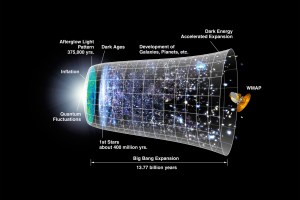
Before the Big Bang
Harvard researchers are proposing using a “primordial standard clock” as a probe of the primordial universe. The team laid out a method that may be used to falsify the inflationary theory experimentally.
-
Health
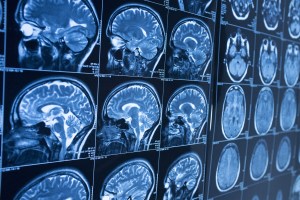
Seeing brain activity in ‘almost real time’
Researchers from Brigham and Women’s Hospital, King’s College London, and other institutions have developed a technique for measuring brain activity that’s 60 times faster than traditional fMRI.
-
Science & Tech
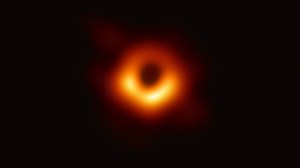
‘Seeing the unseeable’
A years-long effort by dozens of researchers at the Harvard-Smithsonian Center for Astrophysics reveals the first-ever image of a supermassive black hole.
-
Science & Tech
A black hole, revealed
Researchers at the Event Horizon Telescope (EHT) just unveiled the first-ever image of a black hole, which captures what EHT Director Sheperd Doeleman called “a one-way door from our universe.”
-
Science & Tech
Our endless fascination with pi
For centuries, pi — the ratio of a circle’s circumference to its diameter — has fascinated mathematicians and scientists. For more perspective on the famous number, the Gazette turned to physics lecturer Jacob Barandes — who, with some help from his 9-year-old daughter, Sadie, recited pi to 100 digits for us.

-
Science & Tech
Seeing things in a different light
Harvard researchers are using a chemical process known as triplet fusion upconversion to transform near-infrared photons into high-energy photons. The high-energy photons could be used in a huge range of applications, including a new type of precisely targeted chemotherapy, in which low-energy infrared lasers that penetrate deep into the body could be used to transform…
-
Campus & Community
Nobel physics laureate Roy Glauber dies at 93
Roy Glauber, the pioneering theoretical physicist who received the 2005 Nobel Prize in physics, died on Dec. 26. He was 93.
-
Science & Tech
Electrons, up really close
Working in a basement lab at Harvard, a group of researchers led by John Doyle, the Henry B. Silsbee Professor of Physics, have been part of a team making the most precise measurement of the shape of the field around an electron. The results suggest that some theories for what lies beyond the standard model…
-
Science & Tech
Learning catalysts’ secrets
Cynthia Friend, who recently received a multimillion dollar grant from the U.S. Department of Energy, is well positioned to help “change the face and carbon footprint of the chemical industries sector,” one of her team’s goals.
-
Science & Tech
150 years later, her star is still rising
At Harvard College Observatory in the late 19th and early 20th century, Henrietta Swan Leavitt developed a powerful new tool for estimating the distances of stars and galaxies.

-
Science & Tech
Developing micron-sized magnetic resonance
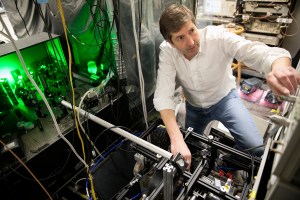
Harvard scientists have developed a system that uses nitrogen-vacancy centers — atomic-scale impurities in diamonds — to read the nuclear magnetic resonance signals produced by samples as small as a single cell — and they did it on a shoestring budget using a 53-year-old, donated electromagnet.
-
Science & Tech
A new view of the moon
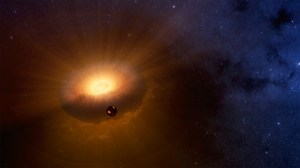
Harvard grad student Simon Lock is the lead author of a study that challenges conventional wisdom on how the moon formed.
-
Campus & Community
Charles Slichter, longtime Corporation member, dies at 94
Charles Pence Slichter ’45-’46, A.M. ’47, Ph.D. ’49, an internationally known physicist who won the National Medal of Science in 2007 and served on the Harvard Corporation for a quarter-century, died on Feb. 19. He was 94.
-
Science & Tech
Picture-perfect approach to science
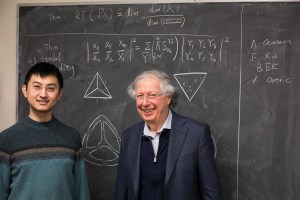
After creating a 3-D language called quon, which could be used to understand concepts related to quantum information theory, Harvard mathematicians now say the language offers tantalizing hints that it could offer insight into a host of other areas in mathematics, from algebra to Fourier analysis, and in theoretical physics from statistical physics to string…
-
Science & Tech
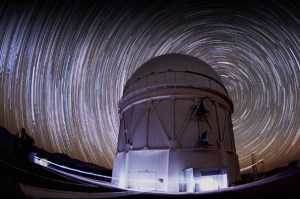
First glimpse of a kilonova, and Harvard was there
Marking the beginning of a new era in astrophysics, scientists for the first time have detected gravitational waves and electromagnetic radiation, or light, from the same event. Harvard researchers were pivotal in the work.
-
Science & Tech
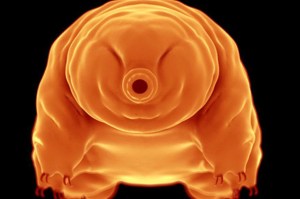
Last survivors on Earth
A testament to the resiliency of life, the microscopic tardigrade can survive any cosmic calamity, according to an Oxford-Harvard study.
-
Science & Tech
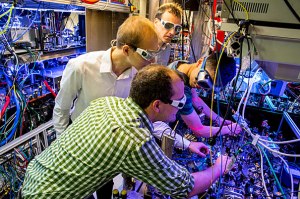
Figuring out superconductors
A team of physicists has taken a crucial step toward understanding superconductors by creating a quantum antiferromagnet from an ultracold gas of hundreds of lithium atoms.
-
Campus & Community
Inspired by physics and art
Julia Grotto ’17 combines art, science, and public service to paint a complete picture of her life at Harvard.