Featured series
Science & Tech
-

Rethinking — and reframing — superintelligence
Microsoft researcher says separating AI from people makes systems dangerous and unproductive
-
First, male gets heated up, then female, and then, you know
Study shows infrared radiation from plants serves as invitation to pollinating insects
-

‘Consciousness’
What we know and don’t know about the life of your mind
-
Science needs contrarians, and contrarians need support
Institute of Quantitative Social Science initiative tailored to researchers exploring provocative ideas
-

Cracking the code of why, when some choose to ‘self-handicap’
New research also offers hints for devising ways to stop students from creating obstacles to success

-
How memory works (and doesn’t)
In podcast, scientists explain why remembering is more reconstruction than replay
 Podcast
-
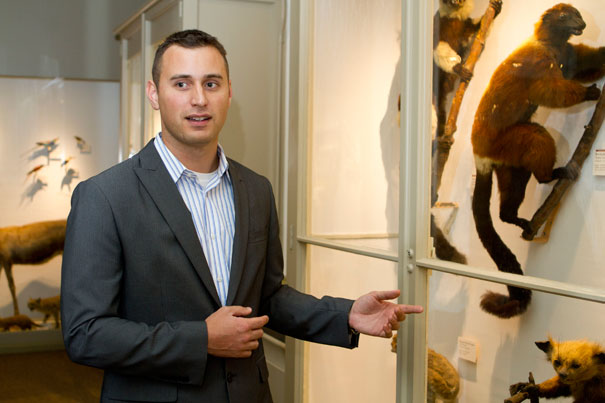
Where wild food matters
A postdoctoral fellow at Harvard’s Center for the Environment, Christopher Golden, is the lead author of a paper. It says that in societies where people rely on bush meat for important micronutrients, people’s lost access to wildlife could hurt children’s health
-
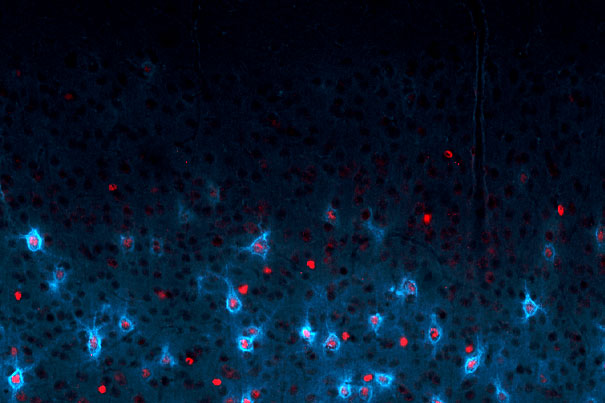
Neurons in youth
A group of researchers is working to map how the brain is wired in an effort to pinpoint the causes of — and potential treatments for — schizophrenia, autism, and a host of other disorders.
-
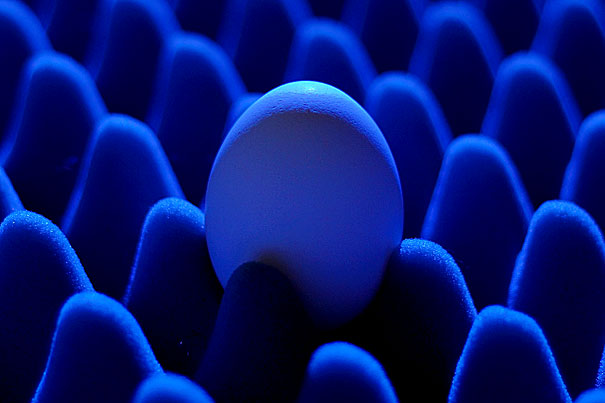
SEAS brings good things to light
By nestling quantum dots in an insulating egg-crate structure, researchers at the Harvard School of Engineering and Applied Sciences have demonstrated a robust new architecture for quantum-dot light-emitting devices (QD-LEDs).
-
Nice guys can finish first
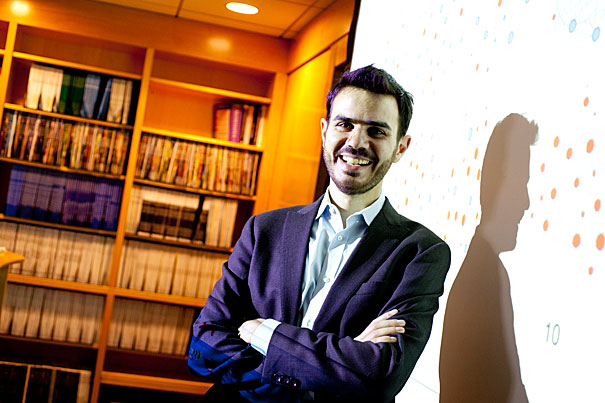
Nice guys can finish first — a new paper, published in the Proceedings of the National Academy of Sciences, has found that complex social networks like those of everyday life encourage members to be friendlier and more cooperative, with the possible payoff coming in an expanded social sphere. The study said selfish behavior can lead to an individual being shunned from the group and left — literally — on his or her own.
-
Growing strong
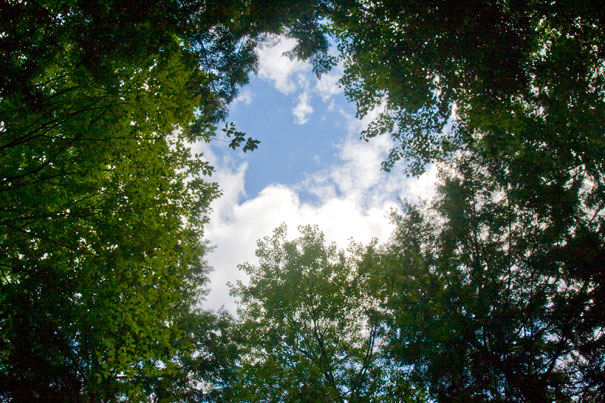
Steven Wofsy and Andrew Richardson discuss New England’s still-growing forests and their role as a buffer against the effects of climate change.
-
America’s first time zone
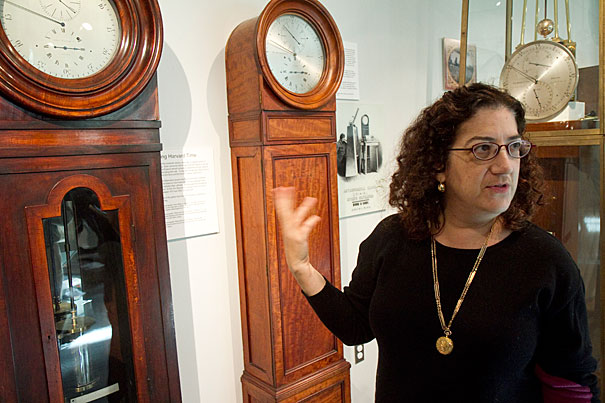
The Harvard College Observatory built its foundation in the mid-1800s, after an epidemic of train wrecks prompted the railroads to seek a regional standard for greater accuracy and safety.
-
Bright idea
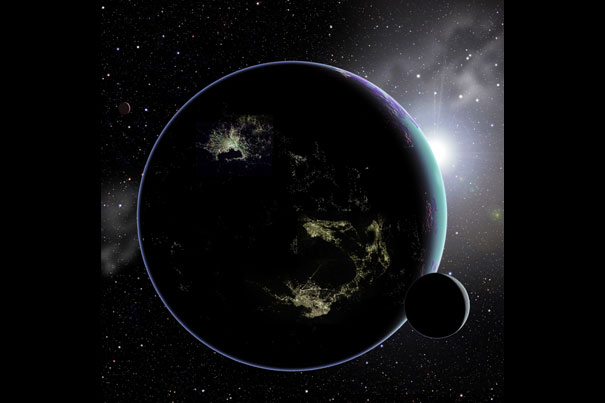
In a new paper, Avi Loeb of the Harvard-Smithsonian Center for Astrophysics and Edwin Turner of Princeton University suggest a new technique for finding aliens: Look for their city lights.
-
Tracing biological pathways
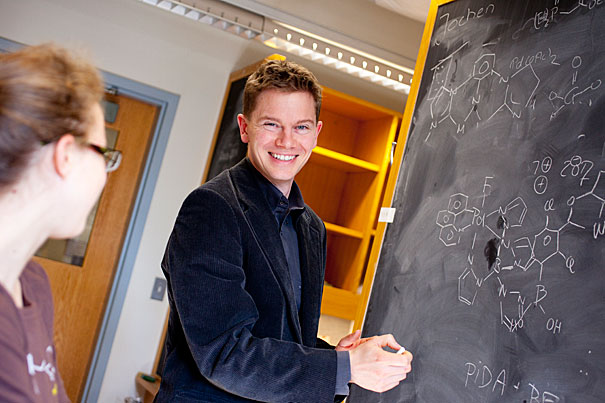
A new chemical process developed by a team of Harvard researchers may increase the utility of positron emission tomography (PET) in creating real-time 3-D images of chemical processes occurring inside the human body.
-
Students vs. computer
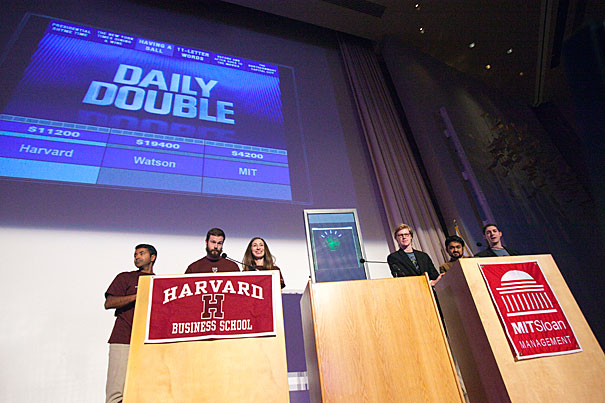
Harvard Business School and MIT Sloan students put IBM’s groundbreaking, “Jeopardy!”-winning computer to the test in a live match-up on Oct. 31. But outsmarting Watson, it turns out, is a not-so-elementary task.
-
Crowdsourcing nutrition in a snap
Harvard School of Engineering and Applied Sciences’ PlateMate project proves that a well-managed crowd can play the role of a trained nutritionist.
-
New views of the cosmos
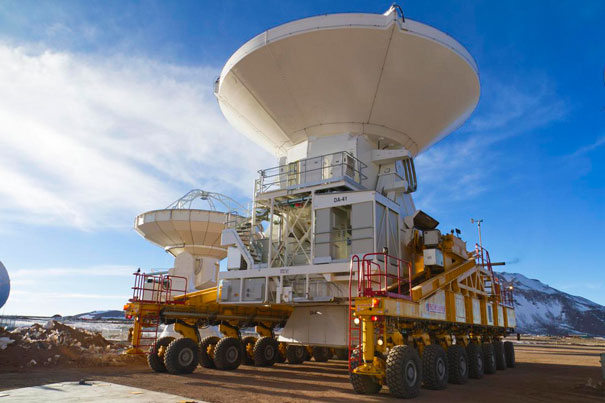
Though it won’t be completed until 2013, the Atacama Large Millimeter/submillimeter Array, a radio telescope observatory under construction in northern Chile, is already the most powerful and complex such facility ever built, and four astronomers from the Harvard-Smithsonian Center for Astrophysics are among those first in line to use it.
-
Woods, yes, but as before, no
The stunning regrowth of New England forests over the past century marks a conservation victory, but an Arnold Arboretum forest expert says there’s no turning back the clock to pre-colonial times. Today’s forests are a blend of native New England plants and invasive species, growing on a human-altered landscape.
-
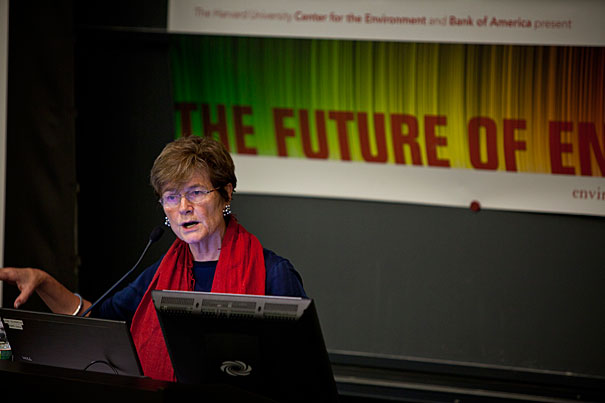
Weighing the risks of fracking
Susan Tierney, former assistant secretary for policy at the U.S. Department of Energy, discussed the environmental risks and potential benefits of shale gas extraction in a Future of Energy talk sponsored by the Harvard University Center for the Environment.
-
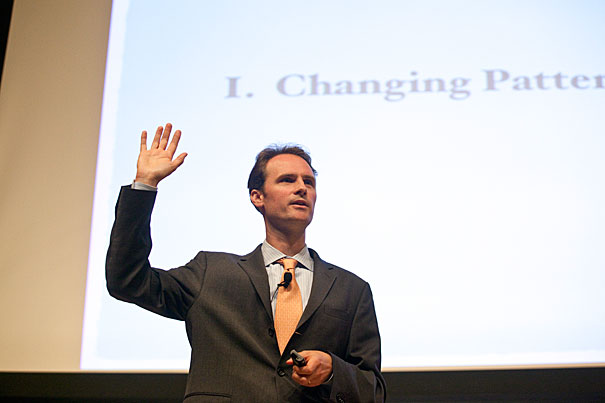
The podcast revolution
Two fellows at Harvard’s Berkman Center for Internet & Society revolutionized how people create and consume digital information.
-
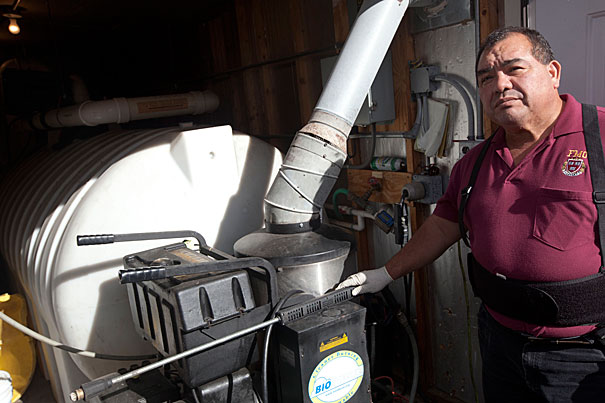
Fewer drops to drink
With water scarcity a growing worldwide worry, Harvard programs, faculty, staff, and students are exploring ways to protect precious supplies, both globally and on campus.
-
A tool to touch the sun
Harvard-Smithsonian Center for Astrophysics researcher Justin Kasper has designed an instrument that will peek out from behind a heat shield to touch the sun’s atmosphere on a NASA solar probe designed to get far closer to the sun than any before.

-
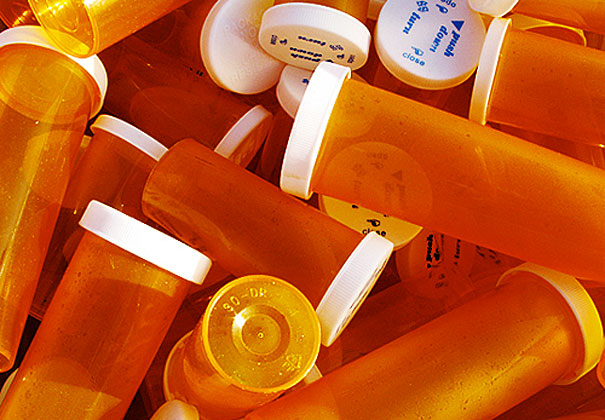
You’re not so anonymous
Prescription data stripped of identify information seems not so anonymous after all. Researcher Latanya Sweeney aims to make such personal data more secure and to provide recourse for people who are harmed by privacy breaches.
-
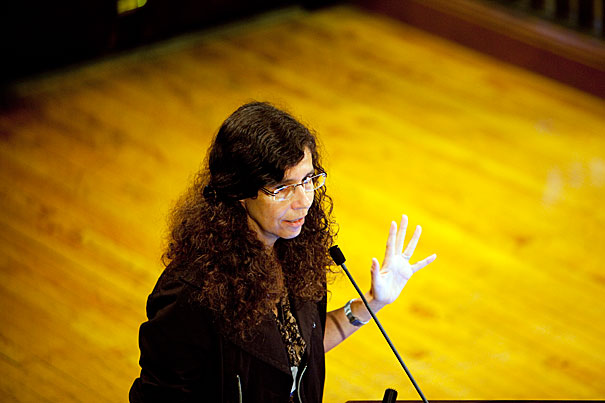
Molecules as motors
Scientists from around the world gathered at the Radcliffe Institute for Advanced Study Oct. 14 for a symposium on advancing efforts to study and design molecules as motors.
-
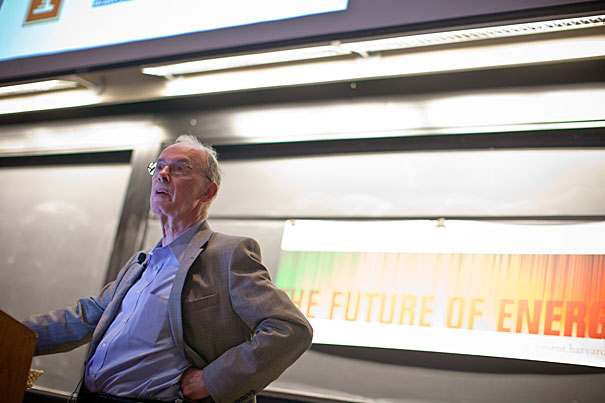
New sources near for biofuels
Researchers are making progress in creating a biofuels process that will allow the use of tough-to-digest cellulose produced by hardy grasses that can be grown on marginal land around the world, the head of the Energy Biosciences Institute said Oct. 13 during a presentation at the Harvard University Center for the Environment.
-
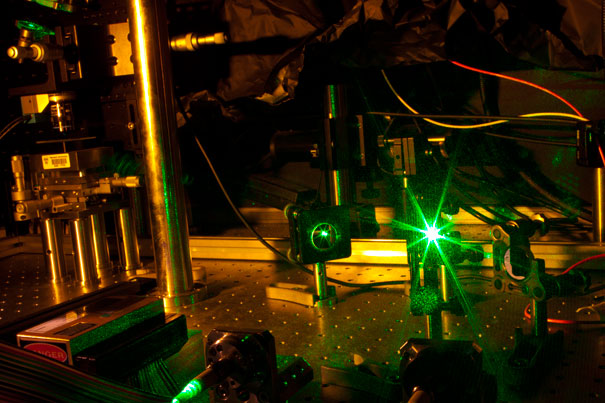
Progress in quantum computing
Engineers and physicists at Harvard have managed to capture light in tiny diamond pillars embedded in silver, releasing a stream of single photons at a controllable rate.
-
Surgical Anesthesia
Allan M. Brandt Dean, Graduate School of Arts and Sciences Amalie Moses Kass Professor of the History of Medicine, Harvard Medical School Professor of the History of Science, Faculty of Arts and Sciences
-
First Programmable Computer
Michael D. Smith Dean, Faculty of Arts and Sciences John H. Finley Jr. Professor of Engineering and Applied Sciences, SEAS
-
Reinforcement Theory
Mahzarin R. Banaji Richard Clarke Cabot Professor of Social Ethics, Faculty of Arts and Sciences
-
The Invention of GIS
Charles Waldheim Chair, Department of Landscape Architecture John E. Irving Professor of Landscape Architecture, Graduate School of Design
-
The Cognitive Revolution
Steven Pinker Johnstone Family Professor of Psychology Harvard College Professor
-
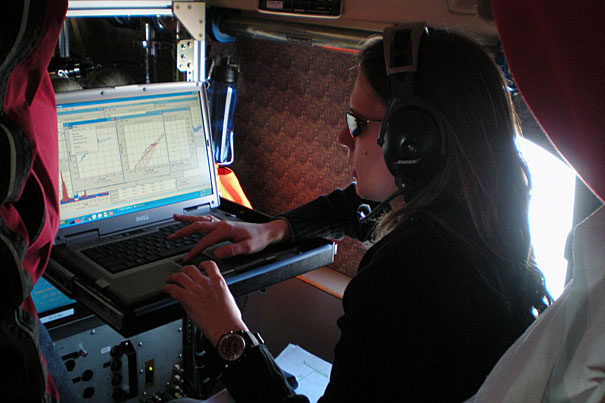
Tracking the pollution amid the remote
A national research project led by Harvard scientist Steven Wofsy tries to fill in the blanks of understanding how the Earth’s atmosphere works by crisscrossing the globe by jet, measuring air changes.
-
Organ Transplant
Nicholas L. Tilney Francis D. Moore Distinguished Professor of Surgery, Harvard Medical School
-
Nobel origins
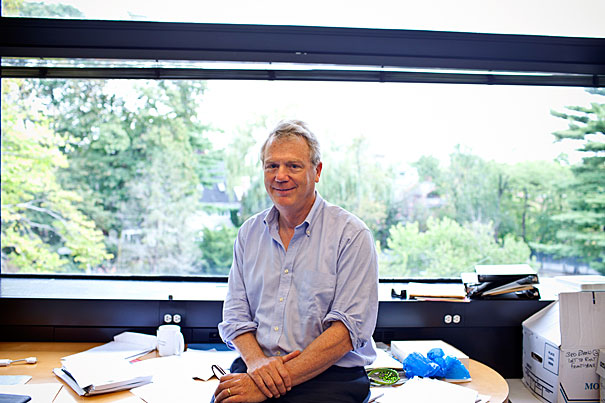
All three winners of the 2011 Nobel Prize in physics have connections to Harvard — including two whose Ph.D.s launched them into their winning notion of an accelerating universe and the puzzle of dark matter.
-
Next big thing: Improved tiny tweezers
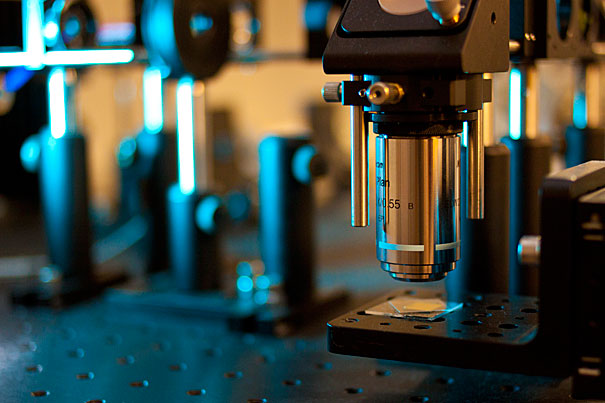
Harvard School of Engineering and Applied Sciences have developed a new device that creates strong forces more efficiently than traditional optical tweezers and eliminates a problem that caused earlier setups to overheat.
-
The return to recycling
Recycling was the norm before the Industrial Revolution’s creation of cheap consumer goods started to produce what eventually became the throwaway society, according to Susan Strasser, author of the book “Waste and Want: A Social History of Trash.”