Featured series


Tag: Evolution
-
Science & Tech
What shapes your dog’s personality
Neuroscientist finds skills, temperament influenced by brain differences across breeds

-
Campus & Community
Hearth and home — in Stone Age
Motivating Professor Amy Elizabeth Clark’s interest is what she calls a “feminist approach” to studying human history.

-
Science & Tech
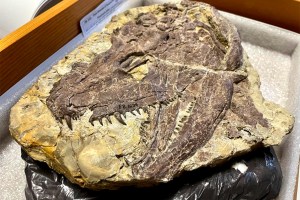
‘Croco-salamander’ bones offer clues to how early animals emerged from water
A study overturns the long-held belief that ancient species grew at slow, steady pace, and offers insights into human maturation.
-
Science & Tech
Study challenges accepted notion of mammal spine evolution
A new Harvard study challenges the accepted notion of mammal spine evolution
-
Science & Tech
How plants adapt to climate change
Researchers at the Arnold Arboretum are studying how maple trees are adapting to climate change.
-
Science & Tech
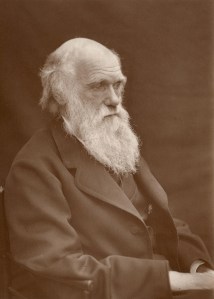
Was Darwin first? Kind of depends
Charles Darwin’s work arose in an era where many were thinking about the source of nature’s variety.
-
Science & Tech
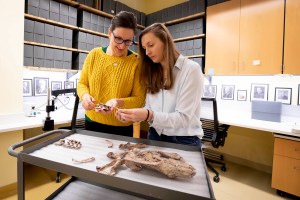
Filling in the blanks of evolution
Harvard Researchers show what drives functional diversity in the spines of mammal.
-
Science & Tech
Survival of the fittest takes a hit
By re-barcoding the DNA of yeast, researchers were able to follow evolution for approximately 1,000 generations, finding surprises along the way.
-
Health
Debunking old hypotheses
Biology Professor Cassandra G. Extavour debunks old hypotheses about form and function on insect eggs using new big-data tool

-
Science & Tech
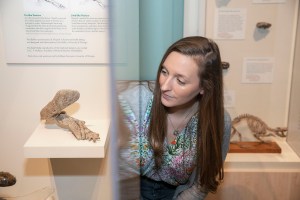
Researcher connects the dots in fin-to-limb evolution
With an innovative technique called anatomical network analysis, clear patterns emerge that help solve the puzzle of how fins became limbs 420 million years ago.
-
Science & Tech
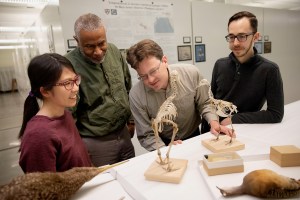
The evolution of flightless birds
Based on an analysis of the genomes of more than a dozen flightless birds, including an extinct moa, a team led by Harvard researchers found that while different species show wide variety in the protein-coding portions of their genomes, they appear to turn to the same regulatory pathways when evolving flight loss.
-
Science & Tech
Written in the bones
Harvard doctoral students offered a glimpse of the future of evolutionary inquiry, outlining projects that touch on the human pelvis, butterfly hybrids, field and forest mice, and the mystery of an ancient pile of bones.

-
Science & Tech
Rapid evolution, illustrated
A study in which mice were released into outdoor enclosures to track how light- and dark-colored specimens survived confirms that mice survive better in similarly colored habitats, providing insights into evolution.

-
Science & Tech
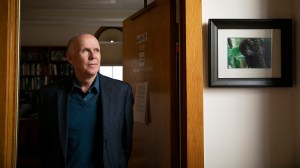
How violence pointed to virtue
Richard Wrangham’s new book examines the strange relationship between good and evil.
-
Science & Tech
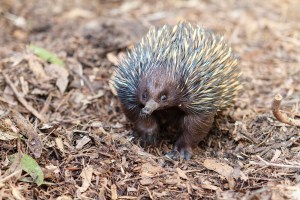
How mammals grew diverse
Using a detailed, musculoskeletal model of an echidna forelimb, Harvard scientists are not only shedding light on how the little-studied echidna’s forelimbs work, but also opening a window into understanding how extinct mammals might have used those limbs.
-
Science & Tech
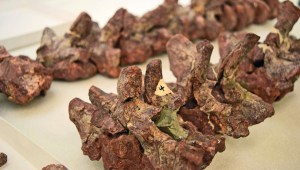
Breaking down backbones
Harvard scientists are using the fossil record and a close examination of the vertebrae of thousands of modern animals to understand how and when specialized regions in the spines of mammals developed.
-
Science & Tech
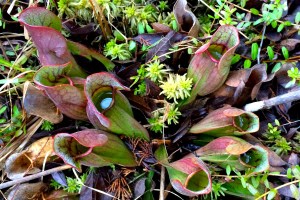
Pitcher plants build own communities
Harvard research has shown that the “miniature ecosystems” housed in pitcher plants from opposite sides of the world are strikingly similar, suggesting that there may be something about the plants themselves that drives the formation of those communities.
-
Science & Tech
How fast can we run?
Harvard Professor Daniel Lieberman offers evolutionary perspective on Roger Bannister’s four-minute mile, today’s marathoners.

-
Health
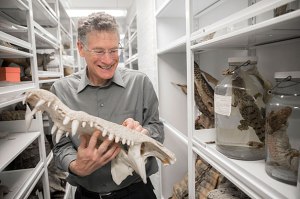
A new era in the study of evolution
Harvard biologist Jonathan Losos talks about his new book, “Improbable Destinies: Fate, Chance, and the Future of Evolution.”
-
Health
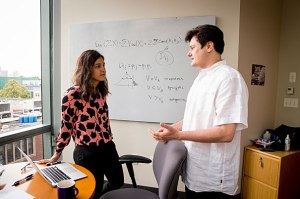
Making sense of survival
A Harvard study suggests a process known as synergistic epistasis enables humans to survive with an unusually high mutation rate.
-
Health
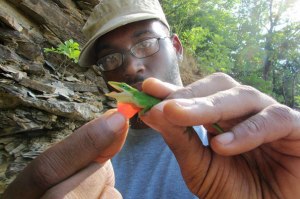
Making the most of a dead lizard in the snow
The extreme winter of 2013–2014 created conditions for a Harvard grad student to expand his work on green anole lizards into study of natural selection in action.
-
Health
Probing protein diversity
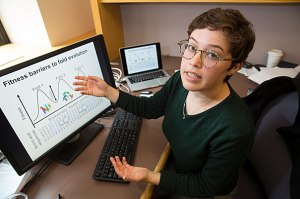
A team of researchers has found that the stability plays a key role in the evolution of different protein structures.
-
Health
Mimicking life in a chemical soup
An Origins of Life researcher has created a chemical system that mimics early cell behavior.

-
Science & Tech
Why sing to baby? If you don’t, you’ll starve
A new study suggests that infant-directed song evolved as a way for parents to signal to children that their needs were being met, while leaving time for other tasks, like food foraging or caring for other offspring.

-
Science & Tech
Strong case for seagrass
New findings on seagrass reinforce the need to direct research where biodiversity is most at risk, says Harvard Herbaria fellow Barnabas Daru.

-
Health
Similar designs, 100 million years apart
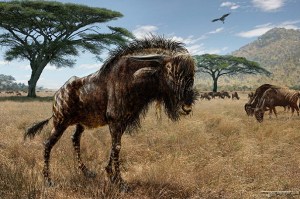
A study found that both Rusingoryx atopocranion, a relative of the wildebeest, and hadrosaur dinosaurs evolved large bony domes on their foreheads, which were likely used as resonating chambers to warn of predators and communicate with others.
-
Health
New weapons against agricultural pests
Using phage-assisted continuous evolution (PACE) technology developed by Harvard professor David Liu and his co-workers, a team of researchers has evolved new forms of a natural insecticidal protein called “Bt toxin,” which can be used to help control Bt toxin resistance in insects.

-
Health
So long, snout
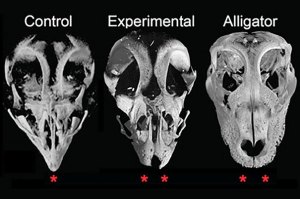
New research shows that bird beaks are the result of skeletal changes controlled by two genetic pathways, shedding light on the origins of one of nature’s most efficient tools.
-
Health
New hope in old viruses
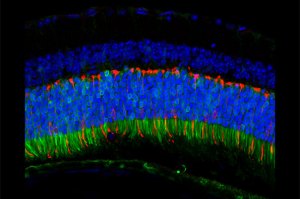
Harvard Stem Cell Institute researchers at Massachusetts Eye and Ear have reconstructed an ancient virus that is highly effective at delivering gene therapies to the liver, muscle, and retina.
-
Science & Tech
A shift in motherhood
New findings draw from evolution to explain why human mothers seek help with raising their children.