
 Featured series

Tag: Children’s Hospital Boston
-
Health
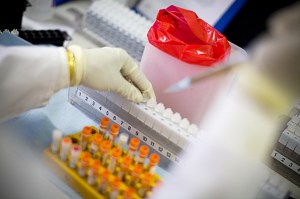
Diagnosing Ebola in minutes
A new test can accurately diagnose the Ebola virus disease within minutes at the point of care.
-
Health
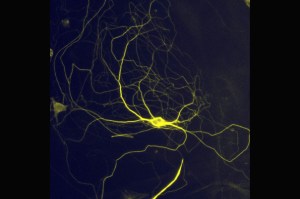
Creating pain-sensing neurons
Harvard Stem Cell Institute researchers at Boston Children’s Hospital and Harvard’s Department of Stem Cell and Regenerative Biology have successfully converted mouse and human skin cells into pain-sensing neurons that respond to a number of stimuli that cause acute and inflammatory distress.
-
Health
‘Heart disease-on-a-chip’
Harvard scientists have merged stem cell and “organ-on-a-chip” technologies to grow, for the first time, functioning human heart tissue carrying an inherited cardiovascular disease. The research appears to be a big step forward for personalized medicine, because it is working proof that a chunk of tissue containing a patient’s specific genetic disorder can be replicated…
-
Health
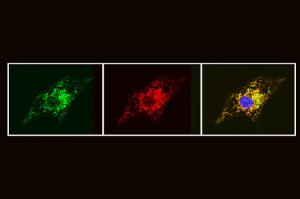
New hope for treating ALS
Harvard stem cell scientists have discovered that a recently approved medication for epilepsy might be a meaningful treatment for amyotrophic lateral sclerosis (ALS), also known as Lou Gehrig’s disease, a uniformly fatal neurodegenerative disorder.
-
Health
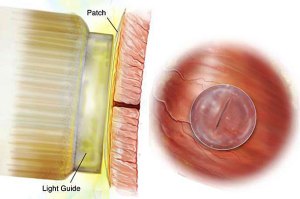
Bio-inspired glue keeps hearts securely sealed
The waterproof, light-activated glue developed by researchers at Harvard-affiliated Brigham and Women’s Hospital and Children’s Hospital Boston and their colleagues at MIT can successfully secure biodegradable patches to seal holes in a beating heart.
-
Health
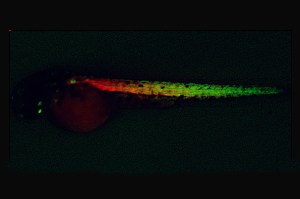
Clues on generating muscles
Harvard stem cell scientists have discovered that the same chemicals that stimulate muscle development in zebrafish can be used to differentiate human stem cells into muscle cells in the laboratory, which makes muscle cell therapy a more realistic clinical possibility.
-
Health
Improving cord blood transplants
They began with a discovery in zebrafish in 2007, and now researchers at the Harvard Stem Cell Institute (HSCI) have published initial results of a Phase Ib human clinical trial of a therapeutic that could improve the success of blood stem cell transplantation. This marks the first time that HSCI has carried a discovery from…
-
Health
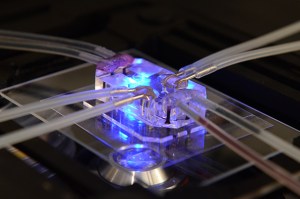
Organs-on-chips evaluate therapies for lethal radiation exposure
A team at the Wyss Institute at Harvard has received a $5.6 million grant from the FDA to use its organs-on-chips technology to test human physiological responses to radiation and evaluate drugs designed to counter those effects.
-
Health
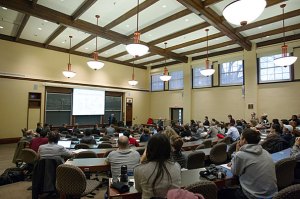
‘Stem cell tourism’ growing trend
A Harvard panel examined the problem of clinics around the world that provide stem cell treatments for intractable conditions. Although there is no medical evidence of the treatments’ effectiveness, such clinics have drawn thousands of patients from many countries.
-
Campus & Community
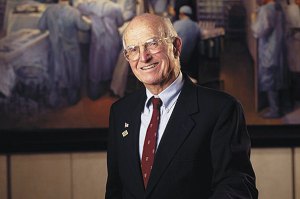
Transplant pioneer dies at 93
Joseph E. Murray, emeritus professor of surgery at Harvard Medical School, whose many breakthroughs included the first successful kidney transplant, died Nov. 26, after suffering a hemorrhagic stroke at his Wellesley, Mass., home on Thanksgiving. He was 93.
-
Campus & Community
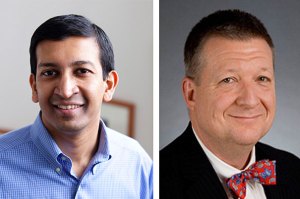
Economist, neurosurgeon win MacArthurs
Raj Chetty, professor of economics, and Benjamin Warf, a neurosurgeon at Children’s Hospital Boston and associate professor at Harvard Medical School, are among 23 recipients of this year’s MacArthur Foundation fellowships, or “genius grants.”
-
Science & Tech
Merging the biological, electronic
For the first time, Harvard scientists have created a type of cyborg tissue by embedding a 3-D network of functional, biocompatible, nanoscale wires into engineered human tissues.
-
Health
Clot-busting technology goes straight to work
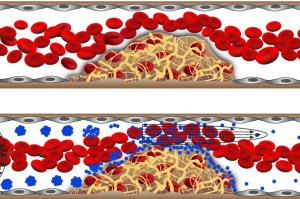
Researchers at the Wyss Institute for Biologically Inspired Engineering at Harvard have developed a novel biomimetic strategy that delivers life-saving nanotherapeutics directly to obstructed blood vessels, dissolving blood clots before they cause serious damage or even death.
-
Health
Scientists restore basic vision in lab mice
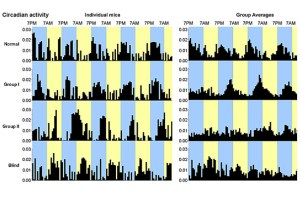
A researcher at Harvard-affiliated Children’s Hospital and Harvard Medical School has regenerated optic nerves in laboratory animals and restored basic vision to the animals.
-
Health
Chasing down a better way to run
From pondering prehistoric man to employing high-tech 3-D imaging, Harvard researchers are leaving no shoe unturned to discover why we run, and how we can do it better.

-
Campus & Community
O’Donnells donate $30 million
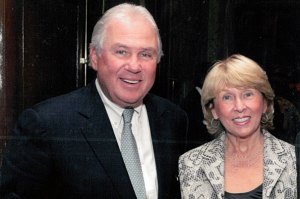
Harvard University announced today that well-known Boston business executive and philanthropist Joseph J. O’Donnell ’67, M.B.A. ’71, a longtime Harvard benefactor, and his wife, Katherine A. O’Donnell, have donated $30 million to the University.
-
Health
Wyss Institute project targets sepsis
The Wyss Institute for Biologically Inspired Engineering at Harvard has been awarded a $12.3 million, four-year grant from the Defense Advanced Research Projects Agency to develop a treatment for sepsis, a commonly fatal bloodstream infection.
-
Health
Expecting better
Harvard researchers in the Children’s Hospital Boston Informatics Program have created a model for predicting a drug’s tendency to cause birth defects.
-
Health
Excess maternal weight gain increases birth weight, study finds
Expectant mothers who gain large amounts of weight tend to give birth to heavier infants who are at higher risk for obesity later in life. But it’s never been proven that this tendency results from the weight gain itself, rather than genetic or other factors that mother and baby share.
-
Health
Scadden, Zon win Hematology Society awards
Two Harvard professors will receive awards from the American Society of Hematology for their “significant contributions to the understanding and treatment of hematologic diseases.” David Scadden, who is co-director of the…
-
Health
Two HSCI groups find residual genetic ‘memory’ in iPS cells;
Two groups of Harvard Stem Cell Institute researchers have independently made similar discoveries about the characteristics of induced pluripotent stem cells (iPSCs), but they have reached somewhat different conclusions about the implications…
-
Science & Tech
Living, breathing human lung-on-a-chip
Researchers at Harvard’s Wyss Institute for Biologically Inspired Engineering have created a device that mimics a living, breathing human lung on a microchip. The device, about the size of a rubber eraser, acts much like a lung in a human body and is made using human lung and blood vessel cells.
-
Science & Tech
Media reporting HSPH professor to be named head of federal Medicare, Medicaid programs
Major media outlets are this weekend reporting that President Barack Obama has selected Harvard School of Public Health (HSPH) professor Donald M. Berwick, MD, MPP, to head the federal government’s…
-
Health
Efforts to prevent childhood obesity must begin early
Normal 0 0 1 751 4281 35 8 5257 11.1282 0 0 0 Efforts to prevent childhood obesity should begin far earlier than currently thought — perhaps even before birth…
-
Campus & Community
Stem Cell Experiment Reverses Aging In Rare Disease
The team at Children’s Hospital Boston and the Harvard Stem Cell Institute were working with a new type of cell called induced pluripotent stem cells or iPS cells, which closely resemble embryonic stem cells but are made from ordinary skin cells…
-
Nation & World
Night shift, Port-au-Prince
A series of tents now function as Port-au-Prince’s primary hospital, as post-earthquake medical volunteers make ends meet during the night shift.
-
Campus & Community
Hub lab writing the book on face-reading
Pity the Boston car salesman who negotiated across the table from Charles A. Nelson III, a Harvard neuroscience professor who runs the nation’s top laboratory studying how people learn to decode facial expressions…
-
Campus & Community
Around the Schools: Harvard Medical School
When programmers at the Informatics Solutions Group at Children’s Hospital Boston were asked to create a grants database for researchers, they knew where to start. They simply asked the hospital’s affiliated Harvard Medical School (HMS) professors about their Facebook-surfing habits.
-
Campus & Community
Study says 1 in 5 children lack vitamin D
At least 1 in 5 US children ages 1 to 11 don’t get enough vitamin D and could be at risk for a variety of health problems including weak bones, the most recent national analysis suggests. By a looser measure, almost 90 percent of black children that age and 80 percent of Hispanic children could…
-
Health
Darkness with the light
Adult survivors of childhood cancer have an increased risk of suicidal thoughts, even decades after their cancer treatments have ended, according to a study led by Harvard researchers at Dana-Farber…