
 Featured series
Tag: Research
-
Health
Hallmarks of healthy eating
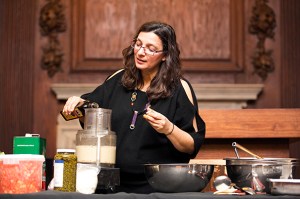
The Mediterranean Diet has been lauded as a healthy eater’s dream, but it’s still a mystery to many Americans. Greek cooking guru Diane Kochilas and cardiac health expert Frank Sacks — who have worked to enhance the diet’s presence in Harvard’s dining hall menus — visited groups across Harvard last week to share insights and…
-
Campus & Community
Finalists in health, science challenge
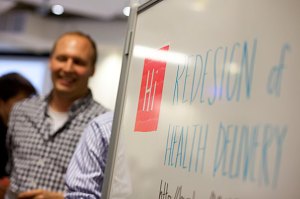
Harvard University announced the selection of eight finalist teams in the inaugural Deans’ Health and Life Sciences Challenge on April 4.
-
Health
Progress, puzzles in halting malaria
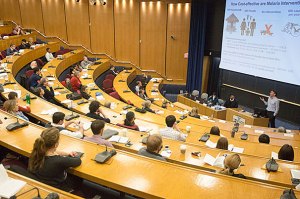
Among the many challenges facing scientists and public health officials seeking to erase malaria from the globe are the reservoirs of parasites hidden in asymptomatic carriers or dormant in patients’ livers, said analysts at the Harvard School of Public Health.
-
Science & Tech
Evolutionary oomph
Scientists may soon be able to turn to one of the most powerful forces in biology — evolution — to help in their quest to develop new synthetic polymers.
-
Campus & Community
A look inside the lab
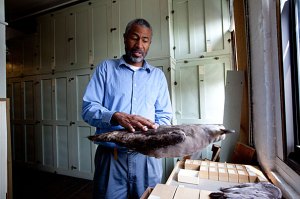
The Faculty of Arts and Sciences’ Division of Science recently relaunched its “Science Research Lecture Series,” aimed at introducing the broader local community to research conducted by Harvard faculty members. The talks will be held once a month in the Science Center, and will be open to the public.
-
Health
Major weight loss tied to microbes
In a study conducted by Harvard and MGH researchers, gut microbes of mice underwent drastic changes following gastric bypass surgery, and transfer of the microbes into sterile mice resulted in rapid weight loss.
-
Science & Tech
Tweaking the universe
In a question-and-answer session, Harvard astronomy chair Avi Loeb explains the new data from the European Space Agency’s Planck satellite.
-
Science & Tech
Space and climate change
A lecturer from the Harvard-Smithsonian Center for Astrophysics says that “dark clouds of gas and dust have the potential to alter Earth’s climate.
-
Science & Tech
Sharper view of matter
In a breakthrough that could one day yield important clues about the nature of matter itself, a team of Harvard scientists has measured the magnetic charge of single particles of matter and antimatter with unprecedented precision.
-
Arts & Culture
The dark side of chocolate
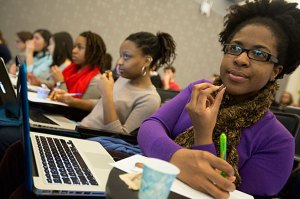
Exploring the sweet and dark sides of chocolate, a new course examines the history and food politics of the beloved treat.
-
Science & Tech
The power of ‘thanks’
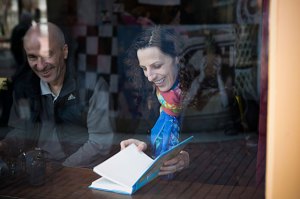
In “Sidetracked: Why Our Decisions Get Derailed, and How We Can Stick to the Plan,” Francesca Gino, an associate professor at Harvard Business School, explores a range of fascinating subjects, including how emotions influence decisions and the often-thorny matter of understanding the perspectives of others. Blending social science and real-world examples, Gino’s book also highlights…
-
Health
Less stress, more living
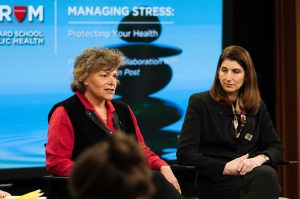
The effects of stress on health, well-being, and even creativity were the focus of the Forum at Harvard School of Public Health (HSPH) this week.
-
Health
Environment counts, Alzheimer’s research suggests
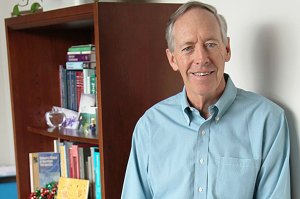
A new study led by Harvard Medical School Professor Dennis Selkoe provides specific, pre-clinical scientific evidence supporting the concept that prolonged and intensive stimulation by an enriched environment may have beneficial effects in delaying one of the key negative factors in Alzheimer’s disease.
-
Nation & World
Tracking disease in a tent city
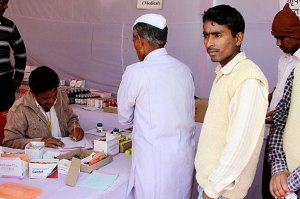
At India’s Kumbh Mela, the largest temporary city in the world, public health researchers from Harvard and beyond staged a small but nimble operation to follow health measures and disease outbreaks. The results will hold lessons not just for future Harvard students, but for urban health planners in India and elsewhere.
-
Science & Tech
A learner’s guide to the universe
Harvard’s Avi Loeb is helping prepare the next generation of astronomers with a new textbook, “The First Galaxies in the Universe.”

-
Science & Tech
Using explosions to power soft robots
Using small explosions produced by a mix of methane and oxygen, researchers at Harvard have designed a soft robot that can leap as much as a foot in the air.
-
Campus & Community
Applications open for M-RCBG senior fellows program
The Mossavar-Rahmani Center for Business and Government (M-RCBG) is accepting applications for its senior fellows program.
-
Science & Tech
New ways to fund science
As research funding dwindles, scientists need to rethink their methods for supporting the most promising projects, and how they communicate their work to the public, Nobel Prize–winning geneticist Paul Nurse told an audience of Harvard scientists.

-
Science & Tech
Technology to help monitor concussions
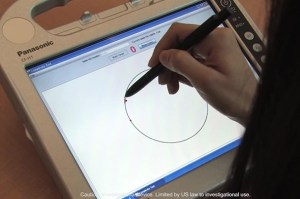
Researchers recently completed the first clinical study of a new rapid neuroassessment device they developed to quantitatively measure neuromuscular performance. The team is currently conducting a study with athletes in the Boston area to determine the sensitivity of the technology in diagnosing concussions.
-
Science & Tech
Competition that computes
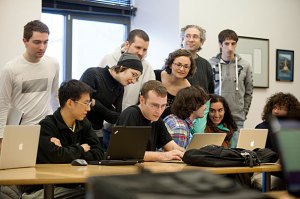
It might appear that evacuating a major city following a natural disaster and playing foosball have little, if anything, in common. For students participating in the IACS Computational Challenge, however, both are problems that can be tackled with some clever coding.
-
Science & Tech
When fairness prevails
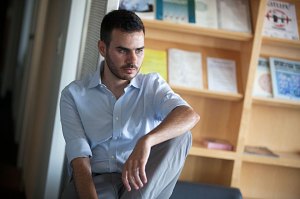
Using computer simulations designed to play a simple economic “game,” researchers at Harvard’s Program for Evolutionary Dynamics showed that uncertainty is a key ingredient behind fairness. Their work is described in a Jan. 21 paper in the Proceedings of the National Academy of Sciences.
-
Health
Doctors can feel their patients’ pain
A novel experiment illuminates the importance of the doctor-patient relationship, providing the first data into the underlying neurobiology of the caregiver.

-
Health
Watching teeth grow
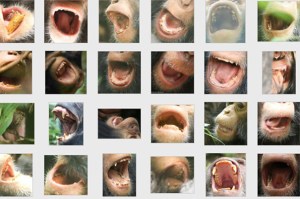
For more than two decades, scientists have relied on studies linking tooth development in juvenile primates with their weaning as a rough proxy for understanding similar landmarks in the evolution of early humans. New research from Harvard, however, challenges that thinking by showing that tooth development and weaning aren’t as closely related as previously thought.
-
Health
Mutations drive malignant melanoma
Two mutations that collectively occur in 71 percent of malignant melanoma tumors have been discovered in what Harvard scientists call the “dark matter” of the cancer genome, where cancer-related mutations haven’t been previously found.

-
Health
New avenue in neurobiology
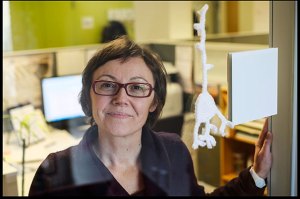
Harvard stem cell biologists have proven that it is possible to turn one type of already differentiated neuron into another inside the brain, and their findings may have enormous implications for the treatment of neurodegenerative diseases.
-
Health
A hidden genetic code
For decades, scientists wondered whether there was some subtle difference between parts of the genetic code that, while different, appear to encode the same amino acid. Harvard researchers now have the answer.
-
Science & Tech
An early sign of spring, earlier than ever
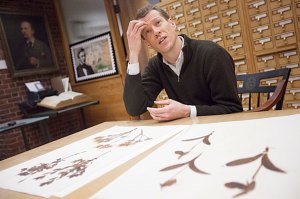
Record warmth in 2010 and 2012 resulted in similarly extraordinary spring flowering in the eastern United States — the earliest in the more than 150 years for which data is available— researchers at Harvard University, Boston University, and the University of Wisconsin have found.
-
Health
Digging yields clues
As described in a Jan. 16 paper in Nature, a team of researchers led by Hopi Hoekstra, professor of organismic and evolutionary biology and molecular and cellular biology, studied two species of mice – oldfield mice and deer mice – and identified four regions in their genome that appear to influence the way they dig…
-
Health
Pill-sized device rivals endoscopy
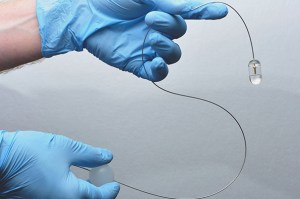
Physicians may soon have a new way to screen patients for Barrett’s esophagus, a precancerous condition usually caused by chronic exposure to stomach acid. Harvard researchers at the Wellman Center for Photomedicine at Massachusetts General Hospital have developed an imaging system enclosed in a capsule about the size of a multivitamin pill that creates detailed,…
-
Health
One cell is all you need
Scientists at Harvard have pioneered a breakthrough technique that can reproduce an individual’s entire genome from a single cell. The development could revolutionize everything from cancer treatment, by allowing doctors to obtain a genetic fingerprint of a person’s cancer early in treatment, to prenatal testing.
