Featured series
Tag: FAS
-
Science & Tech
Game-changing game changes
Games that can change based on players’ actions help Harvard’s Martin Nowak and his fellow researchers to understand the evolution of cooperation.
-
Science & Tech
How to feel the heat
A team of researchers was able to show how sensory neurons in the face detect temperature, and how this information is later passed on to the hindbrain of zebrafish, where it is processed to produce behavior.
-
Science & Tech
We solved the problem! Now let’s unsolve it.
Harvard researcher Daniel Gilbert’s “prevalence-induced concept change” speaks to humankind’s conflicted relationship with progress.
-
Health
When wandering minds are just fine
While most of the psychological literature calls mind wandering a detrimental “failure of executive control” or a “dysfunctional cognitive state,” a new study led by Paul Seli, a Banting Postdoctoral Fellow working in the lab of Dan Schacter, suggests that in some cases there’s no harm in it.

-
Campus & Community
Sandel wins Asturias Award
Michael Sandel, the Anne T. and Robert M. Bass Professor of Government, has won the 2018 Princess of Asturias Award in Social Sciences.
-
Science & Tech
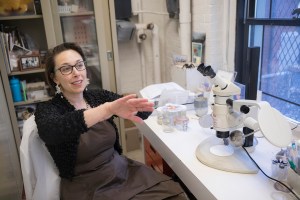
Eye-popping arachnids
Harvard researchers examined mysteries of color in the spider species Phoroncidia rubroargentea.
-
Arts & Culture
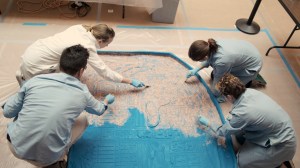
A cast fit for an Egyptian king
Harvard students have created a replica of the ‘Dream Stela’ that rests between the paws of the Great Sphinx in Giza.
-
Campus & Community
When a House is a bountiful home
Harvard roommates from varied backgrounds say that, in the College’s House system, their differences draw them together.
-
Arts & Culture
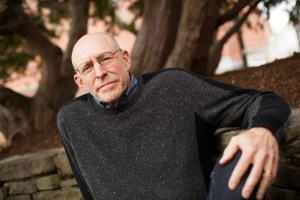
Michael Pollan takes a trip
Michael Pollan, author, lecturer, and science writer, experimented with psychedelics as part of his new book on the latest research in the field.
-
Campus & Community
Voicing their differences
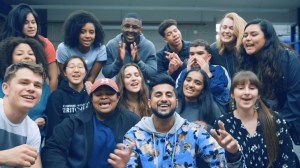
The student group 21 Colorful Crimson performs a mix of covers and originals, with hopes of eventually recording an album of their own material.
-
Campus & Community
Expanding support for leading research
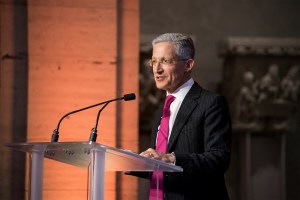
A gift from Josh Friedman ’76, M.B.A. ’80, J.D. ’82, and Beth Friedman, longstanding benefactors of the University, will double the resources available for high-risk, high-reward science, allowing more of the most ambitious research projects at Harvard to move forward.
-
Campus & Community
Rewarding remarkable studies
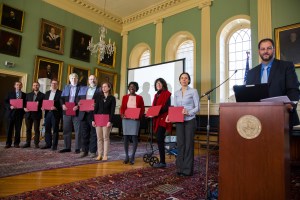
The annual awards created through a gift from James A. Star ’83 fund research unlikely to be funded through other programs — risky studies with the potential to contribute to radical new understandings of our world.
-
Health
Moving beyond the scientific nudge
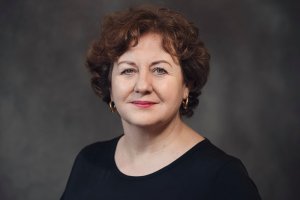
In a study published in Nature Human Behavior, Harvard’s Michèle Lamont argues that if researchers want to capture a fuller picture of human behavior, they need a new approach that bridges the gap between sociology and cognitive psychology.
-
Health
Enzyme interference
Researchers discovered that Eggerthella lenta — a bacterium found in the guts of more than 30 percent of the population — can metabolize the cardiac drug digoxin in high enough quantities to render it ineffective. Now, a team of researchers has identified the culprit gene that produces the digoxin-metabolizing enzyme.
-
Nation & World
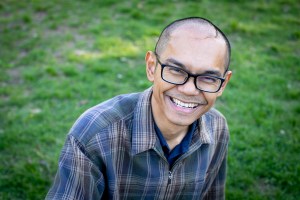
The doctor gets a doctorate
Neither Wirun Limsawart’s knowledge as a doctor nor his work as a hospital manager could help him solve Thailand’s national crisis over health care malpractice.
-
Science & Tech
Carbon consumers
Natural lab holds promise to transform understanding of deep-ocean carbon cycling, says Professor Peter Girguis.

-
Campus & Community
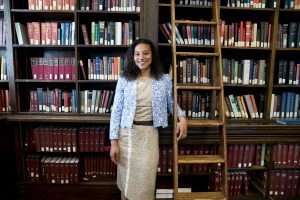
Assistant professor named a Carnegie Fellow
Elizabeth Hinton, assistant professor of history and of African and African American Studies, has been named a 2018 Carnegie Fellow.
-
Science & Tech
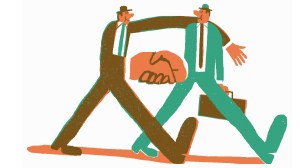
Choosing partners or rivals
A new study shows that in repeated interactions winning strategies involve either partners or rivals, but only partnership allows for cooperation.
-
Campus & Community
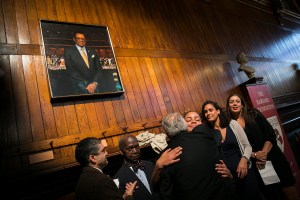
A lasting legacy, now on view
The University unveiled a portrait of the late S. Allen Counter, founder of the Harvard Foundation for Intercultural and Race Relations.
-
Campus & Community
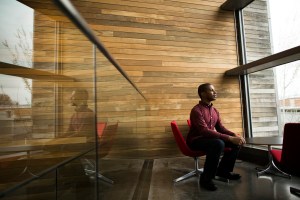
How college rocked my world
The Transcript Project aims “to recognize the curiosity-driven intellectual journey that college is meant to be,” according to Dean Robin Kelsey.
-
Health
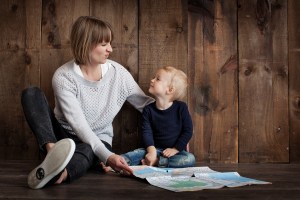
Research sheds light on how parents operate
In a new study, Harvard researchers describe how separate pools of neurons control individual aspects of parenting behavior in mice.
-
Arts & Culture
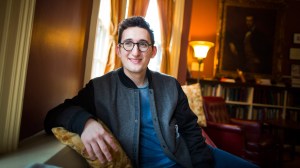
From the Everglades to Tribeca
Harvard junior Lance Oppenheim will premiere his latest documentary, “The Happiest Guy in the World,” at the Tribeca Film Festival.
-
Science & Tech
Developing micron-sized magnetic resonance
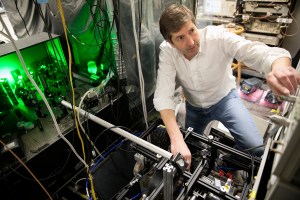
Harvard scientists have developed a system that uses nitrogen-vacancy centers — atomic-scale impurities in diamonds — to read the nuclear magnetic resonance signals produced by samples as small as a single cell — and they did it on a shoestring budget using a 53-year-old, donated electromagnet.
-
Campus & Community
FAS stars honored with Dean’s Distinction Awards
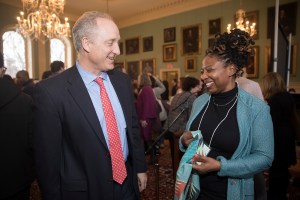
Four teams and 61 employees from across FAS were honored at the annual Dean’s Distinction Awards ceremony.
-
Science & Tech
The ruse of ‘fake news’
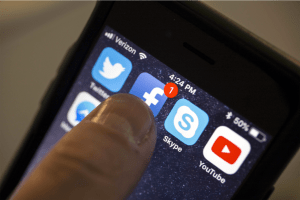
In a recently published study, Harvard Kennedy School Professor Matthew Baum and Northeastern University Professor David Lazer, an associate of the Harvard Institute for Quantitative Social Science, argue that a multidisciplinary effort is needed to understand better how the Internet spreads content and how citizens process the news and information they consume.
-
Arts & Culture
A farewell to arms, a hello to Harvard
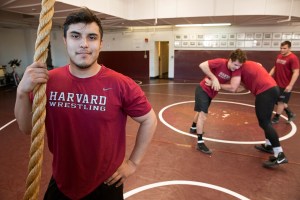
Richard Martinez III has gone from Army barracks to Hurlbut Hall, bringing with him maturity and desire to be a role model for Mexican-Americans.
-
Campus & Community
Behind the numbers, a deep personal dimension to financial aid
Stories from Haley Catherine Curtin ’18 and other Harvard students illuminate the personal dimension of financial aid.
-
Science & Tech
A role for cyanide in recipe for life
New Harvard findings show that a mixture of cyanide and copper, when irradiated with UV light, could have helped form the building blocks of life on early Earth.
-
Campus & Community
FAS Dean Smith to step down
Michael D. Smith, Edgerley Family Dean of Harvard’s Faculty of Arts and Sciences, will step down from his leadership of Harvard’s largest School to return full-time to teaching.
-
Arts & Culture
A storyteller partial to sand
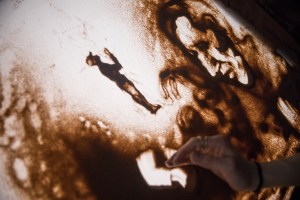
Experiences in Russia, Montana, and at Harvard converge in freshman Dasha Bough’s sand art.