
 Featured series

Tag: Medicine
-
Health
Women more likely to suffer drug side effects, but reason may not be biology
Studies debunk prevailing belief, highlight series of gender-based social factors

-
Nation & World
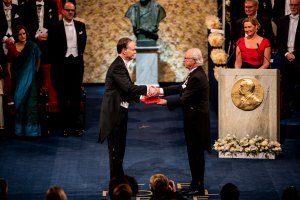
Did winning the Nobel change your life?
Harvard laureates say it gave bully pulpit, brought invitations to speak (sometimes on subjects they know nothing about), meet kings (and play poker with Steve Martin).
-
Campus & Community
‘To understand the world but also to change the world’
Arthur Kleinman pays tribute to beloved student with new class that explores wide-ranging intellectual contributions of Partners In Health co-founder Paul Farmer.
-
Health
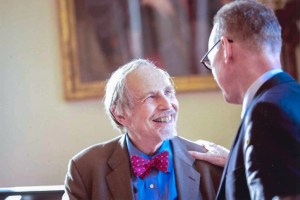
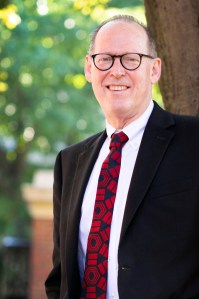
‘He showed us that the moral high ground can win’
Colleagues mourn the loss of Paul Farmer, Harvard professor and Partners In Health cofounder, and pledge to continue the work he pioneered.
-
Campus & Community
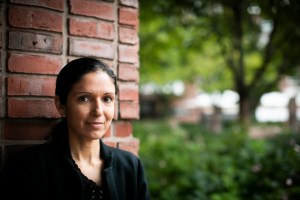
A life’s mission sparked by disbelief over Tuskegee study
Harvard Kennedy School Professor Marcella Alsan wins a MacArthur “genius” grant for her work in public health.
-
Campus & Community
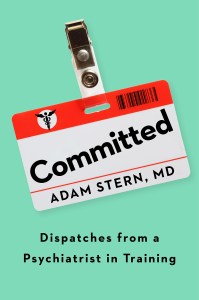
Thrown into the deep end in the psych ward
Excerpt from memoir chronicles an intern’s day in the ER.
-
Science & Tech
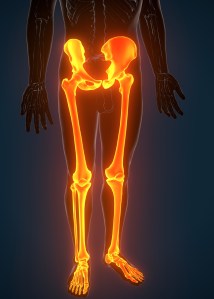
Taking a step toward discovering the cause of joint disease
A Harvard study could lead to potential therapeutics for one of the most prominent ailments of the elderly and one of the most prominent musculoskeletal defects in newborns.
-
Health
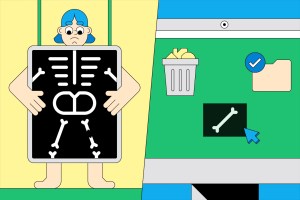
AI revolution in medicine
As part of our series, artificial intelligence is examined through the medical lens. It may lift personalized treatment, fill gaps in access to care, and cut red tape, but risks abound.
-
Science & Tech
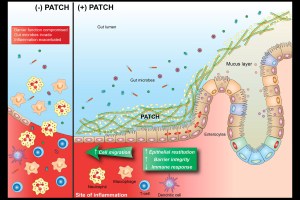
Living hydrogel can help heal intestinal wounds
A genetically programmed living hydrogel material that facilitates intestinal wound healing is being considered for development as a probiotic therapy for patients with inflammatory bowel disease.
-
Science & Tech
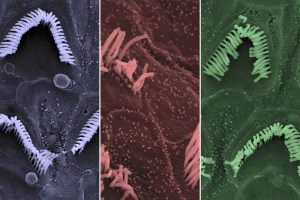
Single letter speaks volumes
Scientists have used an optimized version of the CRISPR-Cas9 gene-editing system to prevent hearing loss in so-called Beethoven mice, which carry a genetic mutation that causes profound hearing loss in humans and mice alike.
-
Campus & Community
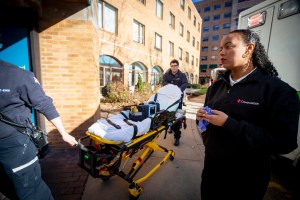
Crimson EMS in action
A student-run emergency medical services organization at Harvard, Crimson CMS facilitates the training, certification, and volunteer service of EMTs.
-
Science & Tech
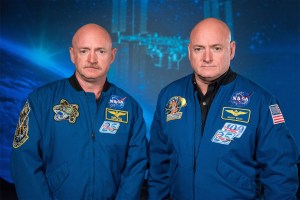
Twins in space
To understand the strain that space flight places on the body, NASA-affiliated researcher Brinda Rana has been examining the molecular changes in the twin astronauts Scott and Mark Kelly for five years.
-
Health
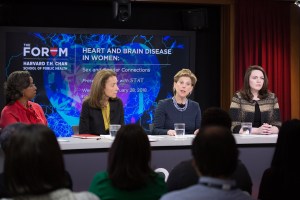
When disease strikes, gender matters
Experts in Harvard Chan School discussion call for more sensitivity to differences between men and women in study and treatment of disease.
-
Health
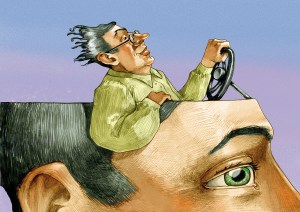
Driven by ego? This book’s for you
Harvard-trained psychiatrist Mark Epstein talks about his new book, “Advice Not Given: A Guide to Getting Over Yourself.”
-
Arts & Culture
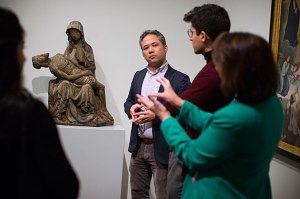
Prescribing art in medicine
A Wintersession course studied compassion and suffering through the lenses of dance, music, and science.
-
Campus & Community
Hidden Spaces: Where time stands still
Harvard Medical School’s light-filled Gordon Hall reflects how students once learned.

-
Campus & Community
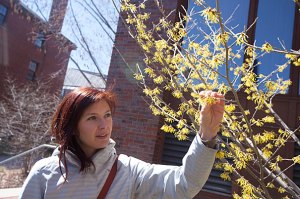
Hearkening to herbs
At the Harvard Herbaria, Steph Zabel is a curatorial assistant who digitizes collections of dried plant specimens. After working hours, she tends living and local plants, running her own herbalism businesses.
-
Campus & Community
Senior named Global Health Fellow
Harvard College senior Mary Davies ’13 has been named a Global Health Fellow with Medical Missionaries.
-
Arts & Culture
On the nature of difference
Harvard College Dean Evelynn M. Hammonds discussed her book “The Nature of Difference: Sciences of Race in the United States from Jefferson to Genomics” before 50 students as part of Wintersession activities.

-
Health
Doctors can feel their patients’ pain
A novel experiment illuminates the importance of the doctor-patient relationship, providing the first data into the underlying neurobiology of the caregiver.

-
Health
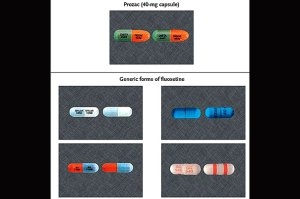
Problem with generic meds
Researchers from Harvard-affiliated Brigham and Women’s Hospital have found that some patients who receive generic drugs that vary in their color are over 50 percent more likely to stop taking the drug, leading to potentially important and potentially adverse clinical effects.
-
Health
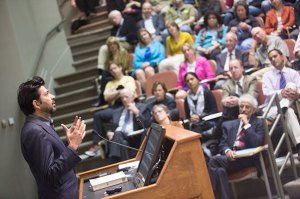
The narrative of cancer
Medical experts are coming to see cancer not as a disease of cells or even of genes, but as an “organismal disease,” Siddhartha Mukherjee, author of the Pulitzer Prize–winning cancer history “The Emperor of All Maladies,” told a Harvard Medical School audience on Oct. 11.
-
Health
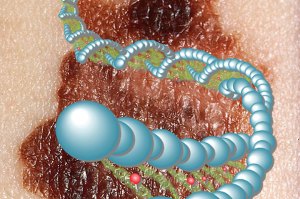
Skin cancer detection breakthrough
Researchers at Harvard-affiliated Brigham and Women’s Hospital have pinpointed when seemingly innocuous skin pigment cells mutate into melanoma.
-
Campus & Community
O’Callahan a new director at HUHS
Patrick O’Callahan has been named the new director of after-hours urgent care and the Stillman Infirmary at Harvard University Health Services.
-
Campus & Community
HMS, Dana-Farber scientists receive 2012 Alpert Prize
HMS faculty Kenneth Anderson, Paul Richardson, and Alfred Goldberg are three of four researchers being honored for their research and development of a pioneering cancer drug.
-
Science & Tech
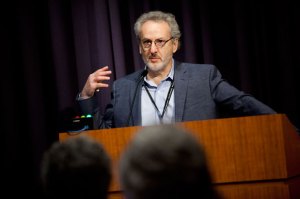
Using nature to inspire robotics
The annual symposium of the Wyss Institute for Biologically Inspired Engineering, held at Harvard Medical School, prompted a spirited discussion on robotics and medicine, with nature as a model.
-
Campus & Community
Family values, in an orphanage
Sonya Soni always felt called to serve the Indian orphanage that her family has run for four generations. Two years at Harvard Divinity School challenged her to rethink what the struggling community needs most.

-
Science & Tech
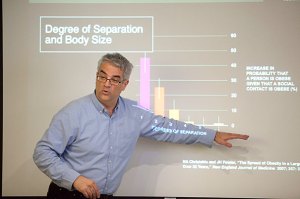
Rules of attraction
Nicholas Christakis, whose research explores how everything from obesity to smoking to happiness spreads among our social networks, is turning his attention to the past, exploring why and how we became the social animals we are.
-
Campus & Community
HMS appoints center director
Harvard Medical School Professor of Medicine Russell S. Phillips has been appointed inaugural director of HMS’s Center for Primary Care by Jeffrey S. Flier, dean of the faculty of medicine.
-
Campus & Community
Bench to Bedside – Innovation at Harvard
Harvard researchers and clinicians collaborate across disciplines and around the globe to craft solutions to the world’s toughest health challenges.