
 Featured series


Tag: School of Engineering and Applied Sciences
-
Campus & Community
A first for Harvard
For the first time in Harvard’s history, more than 30,000 students have applied for undergraduate admission. Applications have doubled since 1994, and about half of the increase has come since the University implemented a series of financial aid initiatives over the past five years to ensure that a Harvard College education remains accessible and affordable…
-
Science & Tech
Web wizardry
Harvard lecturer David Malan’s introductory computer-programming class spawns an array of imaginative new applications, reflected in the annual CS 50 Fair.
-
Science & Tech
Wizard at circuits, physics
Donhee Ham, Gordon McKay Professor of Electrical Engineering and Applied Physics, uses his personal energy and understanding of physics to design innovative integrated circuits.
-
Campus & Community
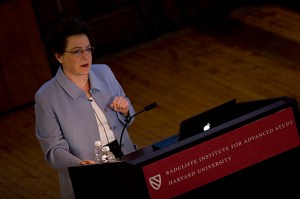
Seeding new ventures at Radcliffe
The Radcliffe Institute of Advanced Study will look to advance research and promote cooperation among faculty members by providing resources and space that foster collaboration.
-
Health
First cancer vaccine to eliminate tumors in mice
A cancer vaccine carried into the body on a carefully engineered, fingernail-sized implant is the first to successfully eliminate tumors in mammals, a team of Harvard bioengineers and biologists report today in the journal Science Translational Medicine. The new approach uses plastic disks impregnated with tumor-specific antigens and implanted under the skin to reprogram the…
-
Science & Tech
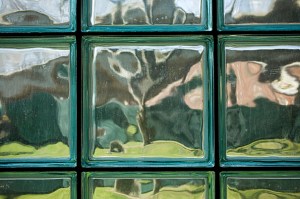
New wrinkle in old approach
Harvard materials scientists have come up with what they believe is a new way to model the formation of glasses, a type of amorphous solid that includes common window glass.
-
Science & Tech
Materials scientists find better model for glass creation
Harvard materials scientists have come up with what they believe is a new way to model the formation of glasses, a type of amorphous solid that includes common window glass. Glasses form through the process of vitrification, in which a glass-forming liquid cools and slowly becomes a solid whose molecules, though they’ve stopped moving, are…
-
Campus & Community
Around the Schools: School of Engineering and Applied Sciences
Cherry A. Murray, dean of the School of Engineering and Applied Sciences (SEAS) and John A. and Elizabeth S. Armstrong Professor of Engineering and Applied Sciences, hosted her first “all-hands” community meeting on Oct. 16 to outline her ambitious 10-year plan for the School.
-
Campus & Community
‘The Lab’ opener set for Nov. 8
Members of the Harvard community are invited to celebrate the opening (Nov. 8, 6:30 p.m.) of The Laboratory at Harvard, a new platform for student idea experimentation in the arts and sciences.
-
Science & Tech
Bringing new meaning to the term scientific paper
An insight from the labs of Harvard chemist George M. Whitesides and cell biologist Donald Ingber is likely to make a fundamental shift in how biologists grow and study cells – and it’s as cheap and easy as reaching for a paper towel. Ratmir Derda, a postdoctoral student co-mentored by Whitesides and Ingber at Harvard’s…
-
Health
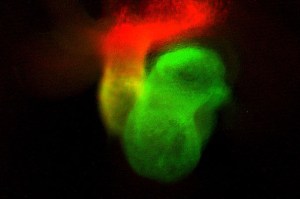
From stem cells to heart muscle
A team of Harvard Stem Cell Institute researchers at Massachusetts General Hospital and collaborators at Harvard’s School of Engineering and Applied Sciences has taken a giant step toward possibly using human stem cells to repair damaged hearts.
-
Health
From stem cells to functioning strip of heart muscle
A team of Harvard Stem Cell Institute (HSCI) scientists at Massachusetts General Hospital (MGH) and collaborators at Harvard’s School of Engineering and Applied Sciences (SEAS) has taken a giant step toward the possibility of using human stem cells to repair damaged hearts. http://www.kaltura.com/p/616782/sp/61678200/embedIframeJs/uiconf_id/5415041/partner_id/616782 The researchers led by HSCI Principal Faculty member Kenneth Chien, M.D., PhD, report using…
-
Science & Tech
Big-picture view of nanoscale
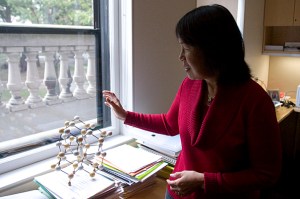
After 25 years at the University of California, Santa Barbara, a pioneer in the fabrication of miniature electronic and photonic devices takes up residence at Harvard’s School of Engineering and Applied Sciences.
-
Science & Tech
Stimulus funds provide welcome research boost
In remarks last month at the National Institutes of Health (NIH) in Bethesda, Md., President Barack Obama said not only do we need stimulus money to create thousands of jobs in the sciences and technology, but also to get the progress of the nation’s research back on track. “We can only imagine the new discoveries…
-
Health
Three-dimensional structure of human genome deciphered
Scientists have deciphered the three-dimensional structure of the human genome, paving the way for new insights into genomic function and expanding our understanding of how cellular DNA folds at scales that dwarf the double helix. In a paper featured this week on the cover of the journal Science, they describe a new technology called Hi-C…
-
Science & Tech
Donald Ingber awarded the 2009 BMES Pritzker Distinguished Lectureship for outstanding achievements, originality and leadership
Donald Ingber, M.D., Ph.D., founding director of the Wyss Institute for Biologically Inspired Engineering at Harvard University, has been awarded the Biomedical Engineering Society’s prestigious Pritzker Distinguished Lectureship for 2009. The lectureship recognizes outstanding achievements, a high level of originality and leadership in the science and practice of biomedical engineering. Presentation of the award, a…
-
Campus & Community
SEAS, FAS professor Allan R. Robinson dies at 76
Allan R. Robinson, Gordon McKay Professor of Geophysical Fluid Dynamics Emeritus died on Sept. 25, at the age of 76.
-
Health
Opposites attract – but they may not stay together
Opposites may always attract. But they may not remain together long-term. In a counter-intuitive discovery published in the current edition of the journal Nature, researchers from Harvard, the University of California at Davis, Princeton, and Penn State University report that oppositely charged drops of water will not attract permanently, but instead will bounce off each other indefinitely when…
-
Campus & Community
Mahadevan, Huybers named MacArthur Fellows
Assistant Professor of Earth and Planetary Sciences Peter Huybers and England de Valpine Professor of Applied Mathematics Lakshminarayanan Mahadevan are named MacArthur Foundation Fellows.

-
Science & Tech
Huybers and Mahadevan named MacArthur Foundation Fellows
Two Harvard faculty members who study present and past ice sheets and the science behind familiar objects and everyday events have been named recipients of prestigious MacArthur Foundation “genius” grants. This year’s awards, announced today by the John D. and Catherine T. MacArthur Foundation, go to Assistant Professor of Earth and Planetary Sciences Peter Huybers…
-
Campus & Community
Around the Schools: School of Engineering and Applied Sciences
President Drew Faust and FAS Dean Mike Smith welcomed Cherry A. Murray as the new dean of the School of Engineering and Applied Sciences with a formal reception on Sept. 8. Murray began her post as dean on July 1.
-
Science & Tech
Research team at Harvard to develop small-scale mobile robotic devices
A multidisciplinary team of computer scientists, engineers, and biologists at Harvard received a $10 million National Science Foundation (NSF) Expeditions in Computing grant to fund the development of small-scale mobile robotic devices. Inspired by the biology of a bee and the insect’s hive behavior, the researchers aim to push advances in miniature robotics and the design of compact…
-
Science & Tech
Scientists expect wildfires to increase as climate warms in the coming decades
As the climate warms in the coming decades, atmospheric scientists at Harvard’s School of Engineering and Applied Sciences (SEAS) and their colleagues expect that the frequency of wildfires will increase in many regions. The spike in the number of fires could also adversely affect air quality due to the greater presence of smoke. The study,…
-
Science & Tech
Four from Harvard win Presidential Early Career Awards in Science and Engineering
Four Harvard researchers have been named among the winners nationwide of this year’s Presidential Early Career Awards for Scientists and Engineers (PECASE). They are Roland G. Fryer Jr., Patrick J. Wolfe, Robert J. Wood, and Nonie K. Lesaux. The announcement came today from the White House. The PECASE program recognizes outstanding scientists and engineers who,…
-
Health
Computer scientists model cell division
Computer scientists at Harvard have developed a framework for studying the arrangement of tissue networks created by cell division across a diverse set of organisms, including fruit flies, tadpoles, and plants. The finding, published in the June 2009 issue of PLoS Computational Biology, could lead to insights about how multicellular systems achieve (or fail to…
-
Health
Researchers solve ‘bloodcurdling’ mystery
By applying cutting-edge techniques in single-molecule manipulation, researchers at Harvard University have uncovered a fundamental feedback mechanism that the body uses to regulate the clotting of blood. The finding, which could lead to a new physical, quantitative, and predictive model of how the body works to respond to injury, has implications for the treatment of…
-
Science & Tech
Narayanamurti named director of Science, Technology, and Public Policy Program at Belfer Center
Venkatesh “Venky” Narayanamurti will be the new director of the Science, Technology, and Public Policy Program at Harvard Kennedy School’s Belfer Center for Science and International Affairs, Belfer Center director Graham Allison announced April 1. “Dean Venky,” as he is widely known, is the John A. and Elizabeth S. Armstrong Professor of Engineering and Applied…
-
Science & Tech
Science, engineering programs advancing
Harvard President Drew Faust today renewed the University’s commitment to the vision of advancing interdisciplinary, collaborative science in general, and the Department of Stem Cell and Regenerative Biology (SCRB), the Harvard Stem Cell Institute (HSCI), and the Wyss Institute for Biologically Inspired Engineering (WIBIE) in particular. “These important, forward-looking programs are vital to the future…
-
Science & Tech
Implants mimic infection to rally immune system against tumors
Harvard bioengineers have shown that small plastic disks impregnated with tumor-specific antigens and implanted under the skin can reprogram the mammalian immune system to attack tumors. The research — which rid 90 percent of mice of an aggressive form of melanoma that would usually kill the rodents within 25 days — represents the most effective…