
 Featured series


Tag: Massachusetts General Hospital
-
Health
New type of human stem cell may be more easy to manipulate
Harvard Stem Cell Institute (HSCI) researchers at the Massachusetts General Hospital Center for Regenerative Medicine (MGH-CRM) have a developed a new type of human pluripotent stem cell that can be manipulated more readily than currently available stem cells. As described in the latest edition of Cell Stem Cell, these new cells could be used to…
-
Health
Detailed metabolic profile gives “chemical snapshot” of the effects of exercise
Using a system that analyzes blood samples with unprecedented detail, a team led by Harvard Medical School (HMS) researchers at Massachusetts General Hospital (MGH) has developed the first “chemical snapshot” of the metabolic effects of exercise. Their findings, reported today’s edition of Science Translational Medicine, may improve understanding of the physiologic effects of exercise and…
-
Health
New insights into the mystery of natural HIV immunity
When people become infected by HIV, it’s usually only a matter of time, barring drug intervention, until they develop full-blown AIDS. However, a small number of people exposed to the virus progress very slowly to AIDS — and some never develop the disease at all. In the late 1990s, researchers showed that a very high percentage of those naturally HIV-immune people,…
-
Campus & Community
Paul C. Zamecnik
Paul Charles Zamecnik, the Collis P. Huntington Professor of Oncologic Medicine Emeritus, died in Boston on Oct. 27, 2009, at the age of 96. During a research career that spanned more than 70 years, he made a series of scientific contributions that represented multiple fields of biochemistry and molecular biology.

-
Campus & Community
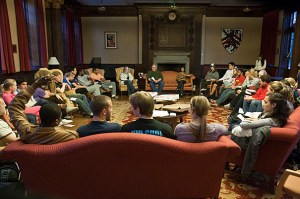
Truths and myths on marijuana
Seminar on marijuana discusses legal ramifications, effects of using the drug.
-
Health
Novel artificial pancreas controls blood sugar more than 24 hours
An artificial pancreas system that closely mimics the body’s blood sugar control mechanism was able to maintain near-normal glucose levels without causing hypoglycemia in a small group of patients. The system, combining a blood glucose monitor and insulin pump technology with software that directs administration of insulin and the blood-sugar-raising hormone glucagon, was developed at…
-
Health
Electronic medical records not a panacea?
The implementation of electronic health record systems may not be enough to significantly improve health quality and reduce costs. In the April 2010 issue of Health Affairs, Harvard researchers from the Mongan Institute for Health Policy at Massachusetts General Hospital (MGH) report finding that currently implemented systems have little effect on measures such as patient…
-
Science & Tech
Women in life sciences still lag in compensation, advancement
Women conducting research in the life sciences continue to receive lower levels of compensation than their male counterparts, even at the upper levels of academic and professional accomplishment, according to a study conducted by the Mongan Institute for Health Policy at Massachusetts General Hospital. In their report in the April issue of Academic Medicine, the…
-
Health
“Good” cells can go “bad” in a “bad neighborhood”
Normal.dotm 0 0 1 375 2142 Harvard University 17 4 2630 12.0 0 false 18 pt 18 pt 0 0 false false false The general theory of cancer development holds that malignancies occur because of the presence of certain genetic elements within the affected cells. But a new study by Harvard researchers at Massachusetts General…
-
Health
Alzheimer’s-associated protein may be part of the innate immune system
Amyloid-beta protein – the primary constituent of the plaques found in the brains of Alzheimer’s disease patients – may be part of the body’s first-line system to defend against infection. In their report in the open-access journal PLoS One, a team led by Harvard Medical School (HMS) researchers at Massachusetts General Hospital (MGH) describe their…
-
Campus & Community
Heart test debate heats up
Two studies published yesterday are expected to reignite an emotionally charged debate about whether young athletes should be screened with a heart test to reduce the small risk of sudden death from an undiagnosed heart problem.
-
Campus & Community
Helping heal survivors
For nearly 30 years, Dr. Richard F. Mollica has been helping people cope with the worst catastrophes imaginable. The longtime director of the Harvard Program in Refugee Trauma at Massachusetts General Hospital has worked with survivors of the brutal Pol Pot regime in Cambodia, 9/11 in New York, and, most recently, the earthquake in Haiti.
-
Campus & Community
A service for Haiti’s sadness
More than 200 attend Harvard memorial service for those killed in and affected by the Haitian earthquake.

-
Nation & World
Medical workers gain momentum
Harvard-affiliated doctors report on carnage, rescue operations in quake-ravaged Haiti, as medical teams gain traction.

-
Campus & Community
Babette Whipple, former MGH psychology researcher, dies at 91
Babette Samelson Whipple, former psychology researcher at Massachusetts General Hospital (MGH), died on Dec. 18, 2009, after a short illness. She was 91.

-
Nation & World
Harvard mobilizes relief fund
Assistance mobilizes to aid earthquake-shaken Haiti, including groups of experts and medical personnel affiliated with Harvard.

-
Health
Fishing for new medications
A robust new technique for screening drugs’ effects on zebrafish behavior is pointing Harvard scientists toward unexpected compounds and pathways that may govern sleep and wakefulness in humans. Among their more intriguing findings, described this week in the journal Science: Various anti-inflammatory agents in the immune system, long known to induce sleep during infection, may…
-
Health
Coronary artery disease more severe in HIV-infected men, study finds
Harvard researchers at Massachusetts General Hospital (MGH) have found that relatively young men with longstanding HIV infection and minimal cardiac risk factors had significantly more coronary atherosclerotic plaques — some involving serious arterial blockage — than did uninfected men with similar cardiovascular risk. The study, published in this month’s edition of the journal AIDS, is…
-
Health
Natural flu-fighting protein discovered in human cells
Harvard researchers report having discovered a family of naturally occurring antiviral agents in human cells, a finding that may lead to better ways to prevent and treat influenza and other viral infections. In both human and mouse cells the flu-fighting proteins prevented or slowed most virus particles from infecting cells at the earliest stage in…
-
Health
Light used to map effect of neurons on one another
Harvard scientists have used light and genetic trickery to trace out neurons’ ability to excite or inhibit one another, literally shedding new light on the question of how neurons interact with one another in live animals. The work is described in the current issue of the journal Nature Methods. It builds upon scientists’ understanding of…
-
Campus & Community
New Stroke Tool May Predict Early Recurrence
Researchers have developed a tool to predict whether a patient will suffer a second stroke within 90 days of a first stroke.
-
Health
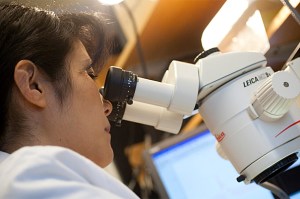
Help from Shore
Yasuko Nagasaka is among 81 recipients awarded a Shore Fellowship. Such grants can be used for “mini-sabbaticals” by junior faculty who do not yet have independent funding.
-
Campus & Community
Delivering doses of sweet harmony
As musicians from the Longwood Symphony Orchestra played selections from Dvorak’s “American Quartet,’’ 50 Vietnamese immigrants, mostly in their 70s and 80s, sat in plush chairs at a Dorchester day-care center for the elderly, listening raptly. Tears welled in Mary Nguyen’s eyes. Never in her 72 years had she heard such music, she said…
-
Health
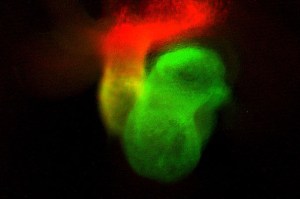
From stem cells to heart muscle
A team of Harvard Stem Cell Institute researchers at Massachusetts General Hospital and collaborators at Harvard’s School of Engineering and Applied Sciences has taken a giant step toward possibly using human stem cells to repair damaged hearts.
-
Health
From stem cells to functioning strip of heart muscle
A team of Harvard Stem Cell Institute (HSCI) scientists at Massachusetts General Hospital (MGH) and collaborators at Harvard’s School of Engineering and Applied Sciences (SEAS) has taken a giant step toward the possibility of using human stem cells to repair damaged hearts. http://www.kaltura.com/p/616782/sp/61678200/embedIframeJs/uiconf_id/5415041/partner_id/616782 The researchers led by HSCI Principal Faculty member Kenneth Chien, M.D., PhD, report using…
-
Campus & Community
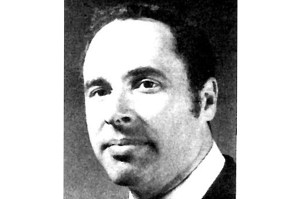
Robert D. Leffert
Robert Leffert, who died on Dec. 7, 2008, at the age of 75, is remembered for being a spectacular physician who in his time at the Massachusetts General Hospital became a major force in rehabilitation medicine and also in the management of upper extremity disorders.
-
Campus & Community
Body’s Own Antioxidant May Slow Parkinson’s Decline, Study Says
Today’s study “suggests a new approach in slowing down the rate of the disease,” said Schwarzschild, an associate professor of neurology at Harvard Medical School, in an Oct. 9 telephone interview. “People live with Parkinson’s disease for decades. We want to make those decades much more manageable and keep people much more mobile….”
-
Health
Three Harvard teams to receive $9 million each in federal funding for stem cell research
Three teams of Harvard Stem Cell Institute (HSCI) researchers are slated to receive $27 million over seven years in National Heart Lung and Blood Institute (NHLBI) grants for the development of stem-cell based tools and treatments to understand and treat cardiovascular and blood disorders. The NHLBI Progenitor Cell Biology Consortium will consist of nine research…
-
Health
Jack Szostak 2009 Nobel Laureate in Physiology or Medicine
Jack Szostak, a genetics professor at Harvard Medical School and Harvard-affiliated Massachusetts General Hospital (MGH), has won the 2009 Nobel Prize in physiology or medicine for pioneering work in the discovery of telomerase, an enzyme that protects chromosomes from degrading. The work not only revealed a key cellular function, it also illuminated processes involved in…
-
Campus & Community
‘Immortality Enzyme’ Wins Three Americans Nobel Prize
Three American scientists, including Jack W. Szostak, genetics professor at Harvard Medical School and Massachusetts General Hospital, shared the Nobel Prize in medicine for research linked to telomerase, an “immortality enzyme” that allows cells to divide continuously without dying and could play a role in the uncontrolled spread of cancer cells.