Featured series


Tag: Environments & Sustainability
-
Science & Tech
Beware the deeper water
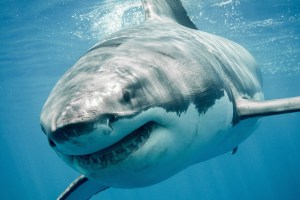
For the past decade, scientist Greg Skomal and a team of researchers have been tagging and studying great white sharks off the Massachusetts coast. He hopes his work tracking the sharks’ movement, biology, and behavior will help shed light on the giant predators, help protection efforts, and perhaps reduce their encounters with humans.
-
Science & Tech
Scientists are blown away by hurricane experiment’s results
Three decades after scientists intentionally knocked down nearly 300 trees at Harvard Forest, nature is still surprising as experiments continue.
-
Science & Tech
A gold star for going green
Harvard received an award at the Climate Leadership Conference in Baltimore, recognizing its commitment to the environment.

-
Science & Tech
The impact of ocean acidification
In a first-of-its-kind study, findings suggest that continued ocean warming and acidification could impact everything from how fish move to how they eat.
-
Arts & Culture
Design course opens students’ eyes to ‘plant blindness’
A course at the Graduate School of Design takes students from the classroom into Harvard’s Arnold Arboretum, where plants come to life for these landscape architects.
-
Science & Tech
And now, land may be sinking
A new study, which used everything from tide gauges to GPS data to paint the most accurate picture ever of sea-level rise along the East Coast of the U.S., is suggesting that in addition to rising seas, communities along the coast may also have to contend with the land sinking.
-
Science & Tech
A growing role as a living lab
Harvard’s Arnold Arboretum is a critical destination for researchers such as Andrew Groover, who finds every species he needs within its 281 acres.

-
Nation & World
Getting from no nuclear to slow nuclear
Environmental fellow Michael Ford and climate scientist Daniel Schrag say that improved nuclear power could play an important role in U.S. energy production midcentury and beyond.
-
Science & Tech
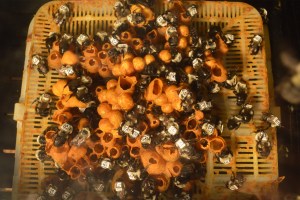
Bees on the brink
Using an innovative robotic platform to observe bees’ behavior, Harvard researchers showed that, following exposure to a commonly used class of pesticides, bees spent less time nursing larvae and were less social than other bees.
-
Science & Tech
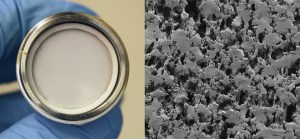
Filtering liquids with liquids
Liquid-gated membranes filter nanoclay particles out of water with twofold higher efficiency and nearly threefold longer time to foul, and reduce the pressure required for filtration over conventional membranes.
-
Science & Tech
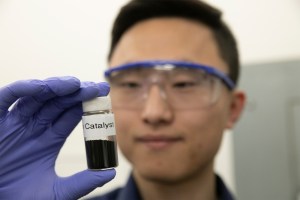
Turning tide on greenhouse gases
Emissions from power plants and heavy industry, rather than spewing into the atmosphere, could be captured and chemically transformed from greenhouse gases like carbon dioxide into industrial fuels or chemicals thanks to a system developed by Harvard researchers.
-
Science & Tech
Studying environmental issues in China
A group of Harvard undergraduatess interested in fighting environmental decline spent the summer studying China’s problems and working alongside scholars whose efforts are directed at a host of issues.

-
Health
Research links air quality, air safety
Harvard Chan School researchers recruited 30 commercial airline pilots for a study exploring whether carbon dioxide levels affect cockpit performance.

-
Science & Tech
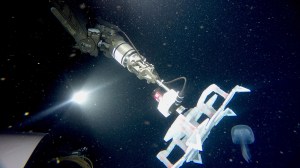
‘Aliens’ of the deep captured
A new device developed by Harvard researchers safely traps delicate sea creatures inside a folding polyhedral enclosure and lets them go without harm using a novel, origami-inspired design.
-
Science & Tech
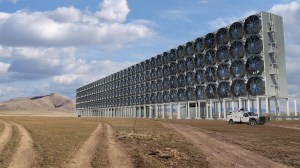
Team plans industrial-scale carbon removal plant
In a step to help fight global warming, Harvard Professor David Keith has a plan to repurpose existing technology to slash the costs of carbon capture.
-
Health
Environmental medicine brings climate change to forefront
During a panel discussion at Harvard Medical School, members of Students for Environmental Awareness in Medicine gave the physicians’ perspective on how environmental issues will impact human health.

-
Science & Tech
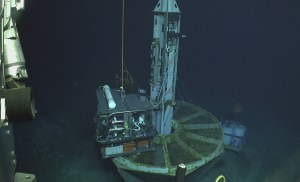
Carbon consumers
Natural lab holds promise to transform understanding of deep-ocean carbon cycling, says Professor Peter Girguis.
-
Science & Tech
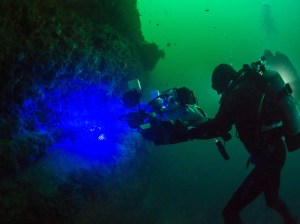
Radcliffe’s ‘jellyfish guy’ follows the light
Seeking new biomedical tools and treatments, marine biologist David Gruber plumbs the potential of an oceanic enigma.
-
Health
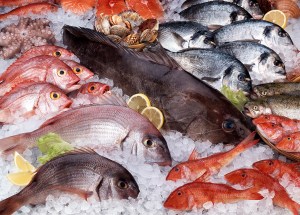
Study tracks mercury sources in seafood
Harvard researchers have mapped geographic sources of methylmercury in seafood, with tuna and shrimp big factors.
-
Science & Tech
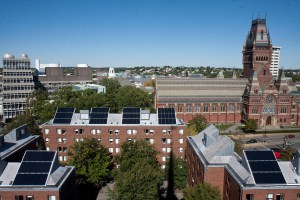
New grants for climate solutions
Seven new research projects have been awarded funding in the fourth round of grants from Harvard’s Climate Change Solutions Fund.
-
Health
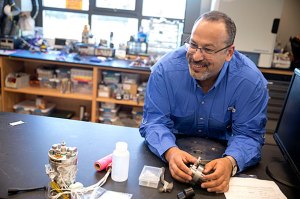
Launching a space mission from the deepest ocean
Scientists from Harvard and Woods Hole are collaborating on deep-sea technologies that could be a model for exploring oceans on the moons of Jupiter and Saturn.
-
Science & Tech
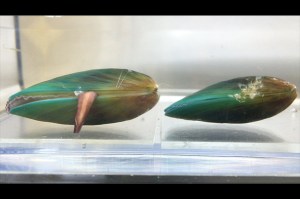
No harm, no foul
Researchers at SEAS, the Wyss Institute, and Nanyang Technological University in Singapore have developed a nontoxic coating that deters marine life from attaching to surfaces in a breakthrough for maritime travel and commerce.
-
Science & Tech
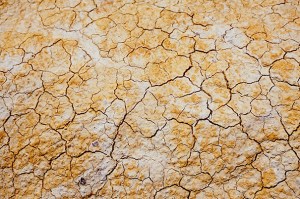
Reconciling predictions of climate change
Harvard researchers are able to provide a best estimate regarding how much the Earth will warm as a result of doubled CO2 emissions.
-
Nation & World
You’re wrong about that, says Jonathan Franzen
Novelist Jonathan Franzen had some corrections for fellow liberals in a lecture at the Harvard Graduate School of Design.

-
Health
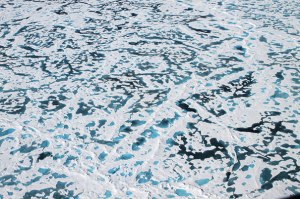
Solving the mystery of the Arctic’s green ice
Researchers have found that due to warming temperatures, phytoplankton can now grow under Arctic sea ice, dramatically changing the ecology.
-
Science & Tech
What to expect from Pruitt’s EPA
The Gazette speaks to Robert Stavins, director of the Harvard Project on Climate Agreements and a past member of the EPA’s Science Advisory Board, about the future of the EPA under the leadership of Scott Pruitt.

-
Science & Tech
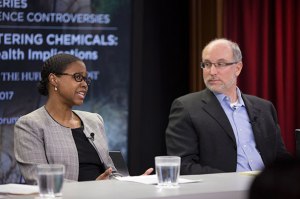
The unsettling chemicals around us
There are thousands of unapproved chemicals, often banned elsewhere, in the U.S. environment, panelists at a Harvard forum say.
-
Science & Tech
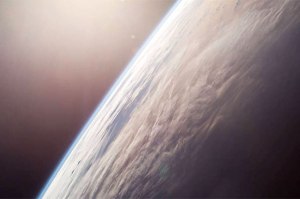
Mitigating the risk of geoengineering
To halt the rise of global temperatures, Harvard researchers are looking at solar geoengineering, which would inject light-reflecting sulfate aerosols into the stratosphere to cool the planet.
-
Science & Tech
What’s next for climate change policy
Harvard environmental experts looking ahead to a Trump administration see trouble for President Obama’s Clean Power Plan and U.S. international climate action, but add that the nation’s environmental protection regulatory framework would be difficult to dismantle, and there may be hope for new approaches to addressing environmental ills.

-
Science & Tech
Human health risks from hydroelectric projects
Harvard researchers found 90 percent of new or proposed hydroelectric power plants will increase the concentration of toxic methylmercury in the food web near indigenous communities in Canada.