Featured series


Tag: Children
-
Nation & World
Thinking about having baby? Even during climate crisis?
Scholar says increasing numbers of young adults are weighing what is best for planet, children

-
Nation & World
How schools teach children about their social station
Sociologist Peter Francis Harvey observed students at private upper-middle-class and public working-class schools to explore implicit lessons.

-
Science & Tech
Poverty hurts children’s brain development but social safety net may help
Study finds aid programs cut disparities in brain structure and mental health, especially in states where the cost of living is high.
-
Work & Economy
Tracking ‘nepo baby’ effect on young Americans’ earnings
Matthew Staiger, an economist and research scientist at Harvard’s Opportunity Insights, finds nearly 1 in 3 latch on with parent’s employer and earn more because of it — but there is race gap.
-
Health
Building ‘bravery muscles’ to fight rising anxiety among kids
Harvard psychologist says pandemic worsened trend and screening, early intervention key to avoiding bigger problems.
-
Health
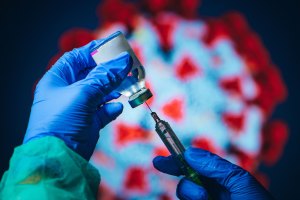
FDA panel member cheered by Pfizer news on COVID vaccine in kids
The Pfizer-BioNTech vaccine has been shown to be safe in school-age children, a potentially key development in the fight to bring the coronavirus pandemic under control.
-
Nation & World
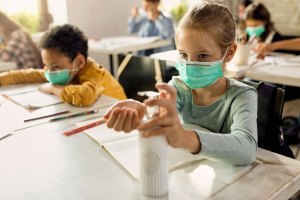
How to help your kids with classroom anxieties
Experts from the Harvard Graduate School of Education offer advice to parents and teachers on how to ease student anxiety as another pandemic school year begins.
-
Health
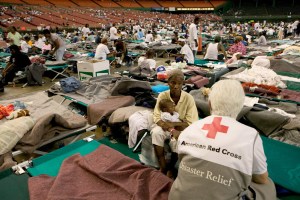
Lessons from Katrina on how pandemic may affect kids
Harvard researchers looked at Katrina’s impact on children and how the lessons learned there could be applied to the COVID pandemic.
-
Campus & Community
Easing children’s COVID-19 anxieties
Recent Harvard grads created an educational website featuring a South Asian protagonist for children to assuage worries and answer questions.

-
Health
Child’s best friend
Mass. General study finds that the loss of a pet can potentially trigger mental health issues in children.

-
Health
Children’s role in spread of virus bigger than thought
A new study has found that children infected with the virus that causes COVID-19 were shown to have a significantly higher level of virus in their airways than hospitalized adults in ICUs for COVID-19 treatment.

-
Health
Talking about the emotional toll of the pandemic
The Harvard Chan School of Public Health will launch a series of weekly interactive forums to discuss issues and options.

-
Health
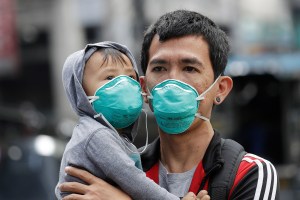
A big coronavirus mystery: What about the children?
A key unanswered question in the coronavirus epidemic concerns why children seem to be getting fewer or less-serious infections from the new contagion.
-
Science & Tech
Power play
With “High Sees,” architect Megan Panzano reasserts how play can impact mental and social development.

-
Health
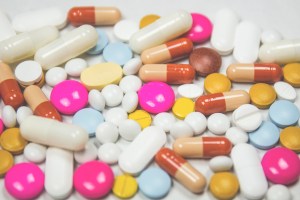
A warning for youth
Compared with vitamins, dietary supplements for weight loss, muscle building, and energy were associated with nearly three times the risk of severe medical events in children and young adults.
-
Nation & World
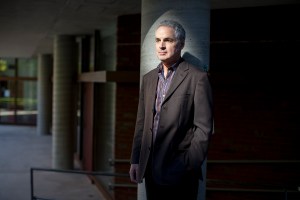
Unpacking the power of poverty
Social scientists have long understood that a child’s environment can have long-lasting effects on their success later in life. Exactly how is less well understood. A new Harvard study points to a handful of key indicators, including exposure to high lead levels, violence, and incarceration, as key predictors of children’s later success.
-
Health
Giving kids a running start
Massachusetts General Hospital and Harvard Medical School researchers tested the impact of a before-school exercise program on kids’ emotional and physical health.

-
Health
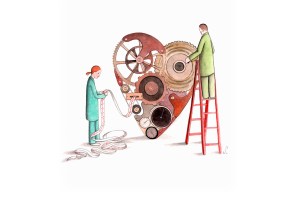
When love and science double date
They suggest that couples share goals and aspirations, stay curious about each other, and, for pity’s sake, go out once in a while.
-
Health
Discerning bird
To look at him, Griffin doesn’t seem like he’d be smarter than your typical 4-year-old — he’s a bird, after all. But the African grey parrot can easily outperform young children on certain tests, including one that measures understanding of volume.

-
Health
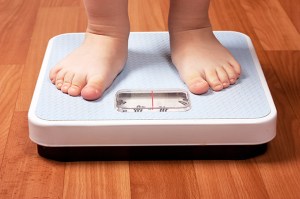
Alarming obesity projections for children in U.S.
If current trends continue, more than 57 percent of U.S. children will be obese at age 35, according to a new study from the Harvard Chan School.
-
Campus & Community
Tips on guiding parents through media maze
As part of the Harvard Ed Portal Faculty Speaker series, Harvard Graduate School of Education’s Joe Blatt shared his research on ever-changing technology and media’s impact on children.

-
Health
Study flags later risks for sleep-deprived kids
Children ages 3 to 7 who don’t get enough sleep are more likely to have problems with attention, emotional control, and peer relationships in mid-childhood, according to a new study led by a Harvard pediatrician.

-
Health
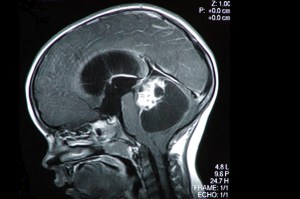
New hope for children with brain tumors
A new study out of Harvard-affiliated Dana-Farber/Boston Children’s Cancer and Blood Disorders Center suggests that precision medicine can provide vital care in treatment and diagnosis of pediatric brain tumors.
-
Health
When picky eating is too great a luxury
Low-income parents face an extra challenge when trying to get their kids to eat healthy: the cost of food wasted if children refuse to eat it.

-
Health
High poverty’s effect on childhood leukemia
Children with acute lymphoblastic leukemia who live in high-poverty areas are substantially more likely to suffer early relapse than other patients, according to a new study.

-
Science & Tech
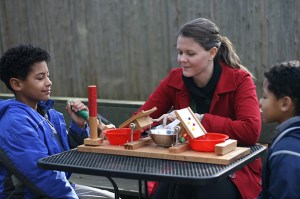
A focus on fairness
Using a simple game in which candy is distributed between two players, researchers found that children in various countries were quick to reject unfair deals, but in three countries they were also willing to reject deals unfair to others.
-
Health
Keeping an eye on screen time
With parents and kids in back-to-school mode, refocusing on the daily demands of homework, sports, and activities, time spent staring at a screen comes at a premium. Steven Gortmaker, professor of the practice of health sociology at the Harvard T.H. Chan School of Public Health, has been studying how we have used and sometimes abused…

-
Health
Inadequate hydration can lead to impaired cognitive, emotional function
Drinking enough water is essential for physiological processes such as circulation, metabolism, temperature regulation, and waste removal. More than half of all children and adolescents in the United States are under-hydrated — probably because they’re not drinking enough water, according to the first national study of its kind from the Harvard T.H. Chan School of…

-
Science & Tech
A shift in motherhood
New findings draw from evolution to explain why human mothers seek help with raising their children.

-
Science & Tech
Fighting unfairness
A new study by Harvard scientists suggests that, from a young age, children are biased in favor of their own social groups when they intervene in what they believe are unfair situations. But as they get older, they can learn to become more impartial.