
 Featured series

Campus & Community
-
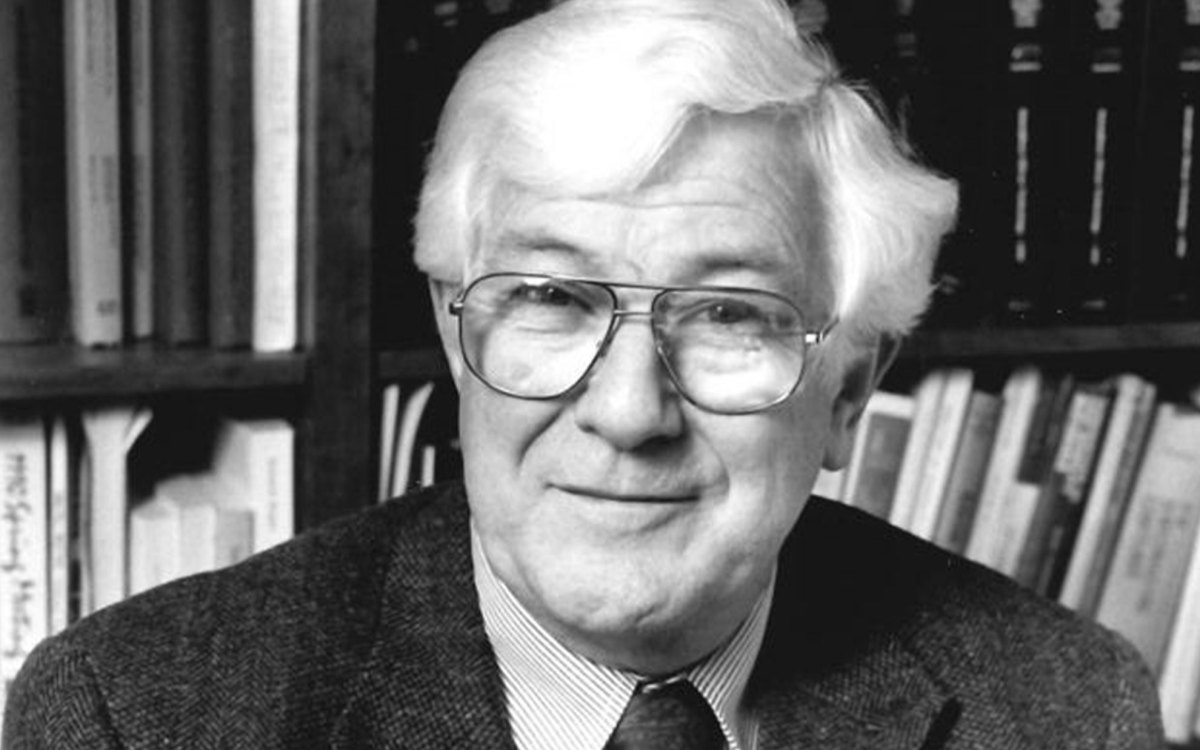
William Paul, 94
Memorial Minute — Faculty of Arts and Sciences
-
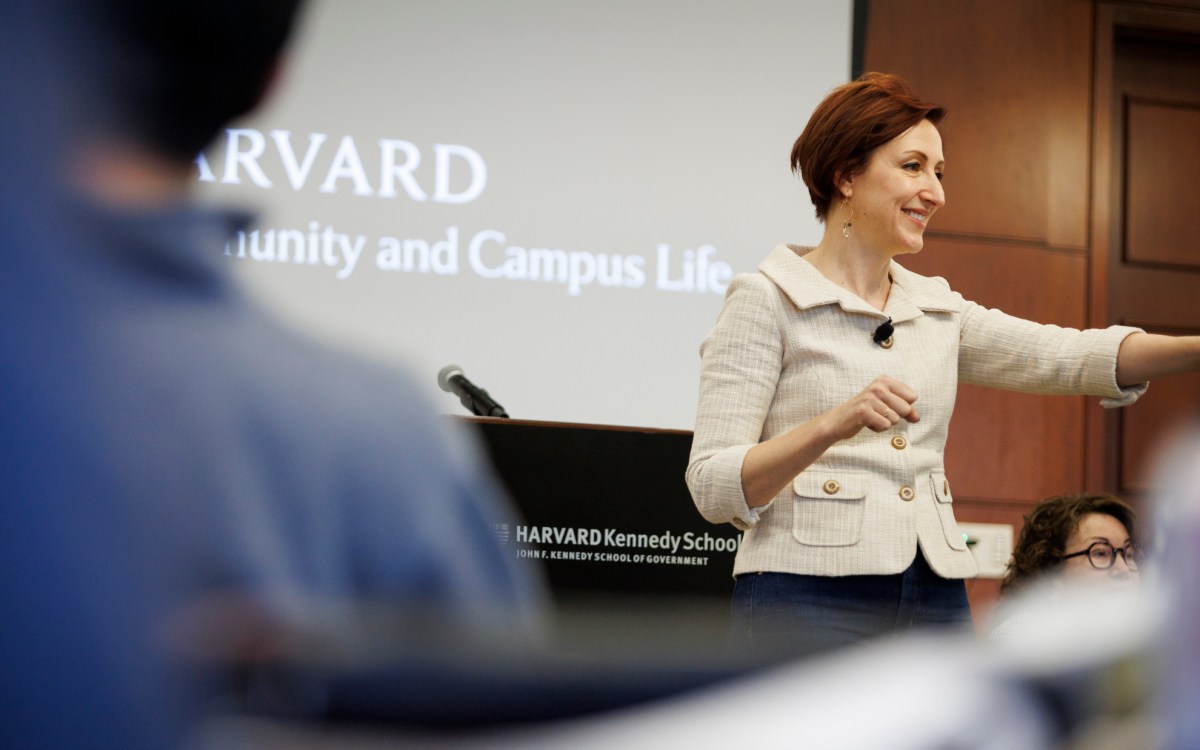
‘Truth is rarely found in echo chambers’
Faculty, staff, and students explore what it takes to connect across difference at Community and Campus Life forum
-
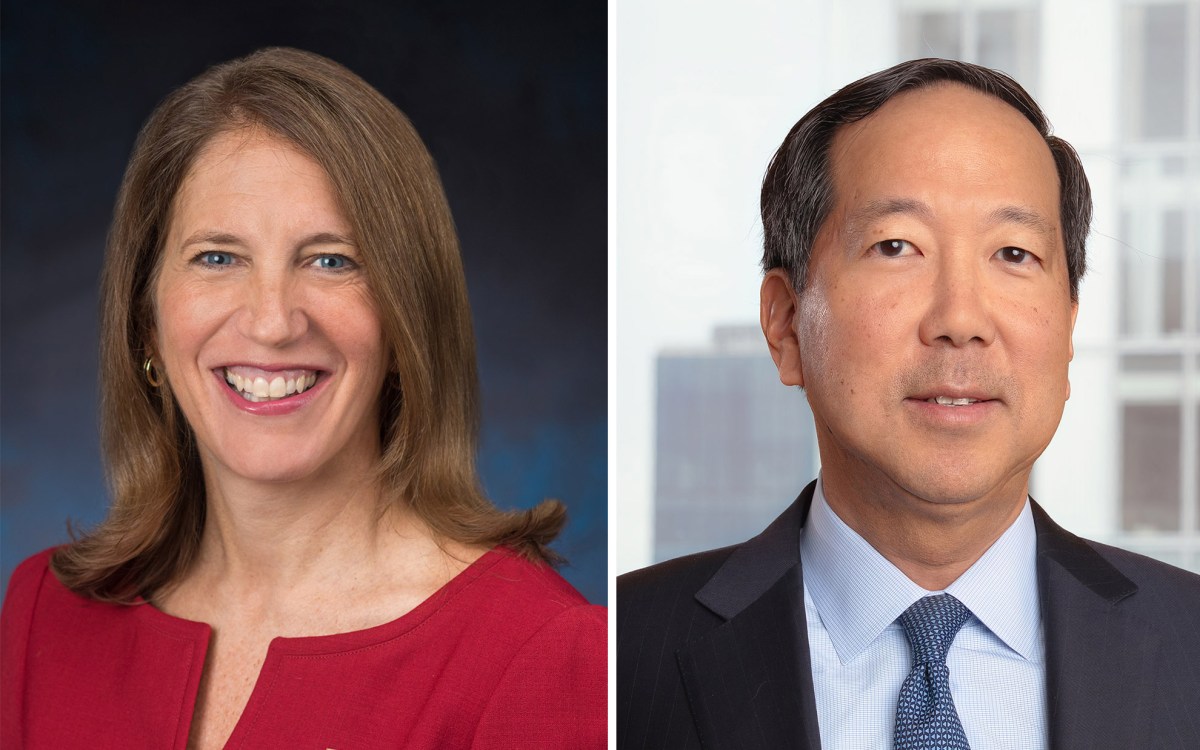
Two new Corporation members
Sylvia Mathews Burwell and Michael S. Chae to join governing board
-
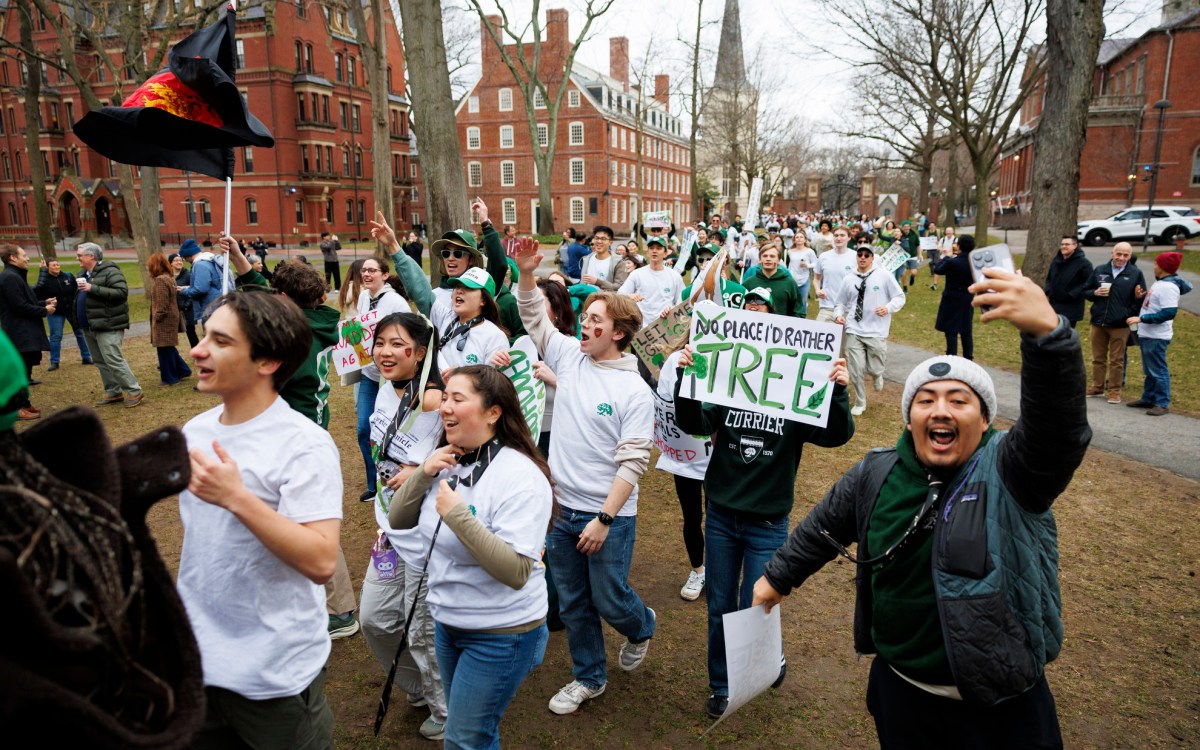
‘Best college tradition anywhere’
Smurf-blue hair, chain-mail suits, vuvuzelas, and bagpipes abound as students flood Yard for annual raucous rite of Housing Day
 Gallery
-

‘OK, I get it. This makes sense.’
Grade-inflation panel says updated plan focuses on reining in A’s, restoring integrity of system, freeing students to follow curiosity
-
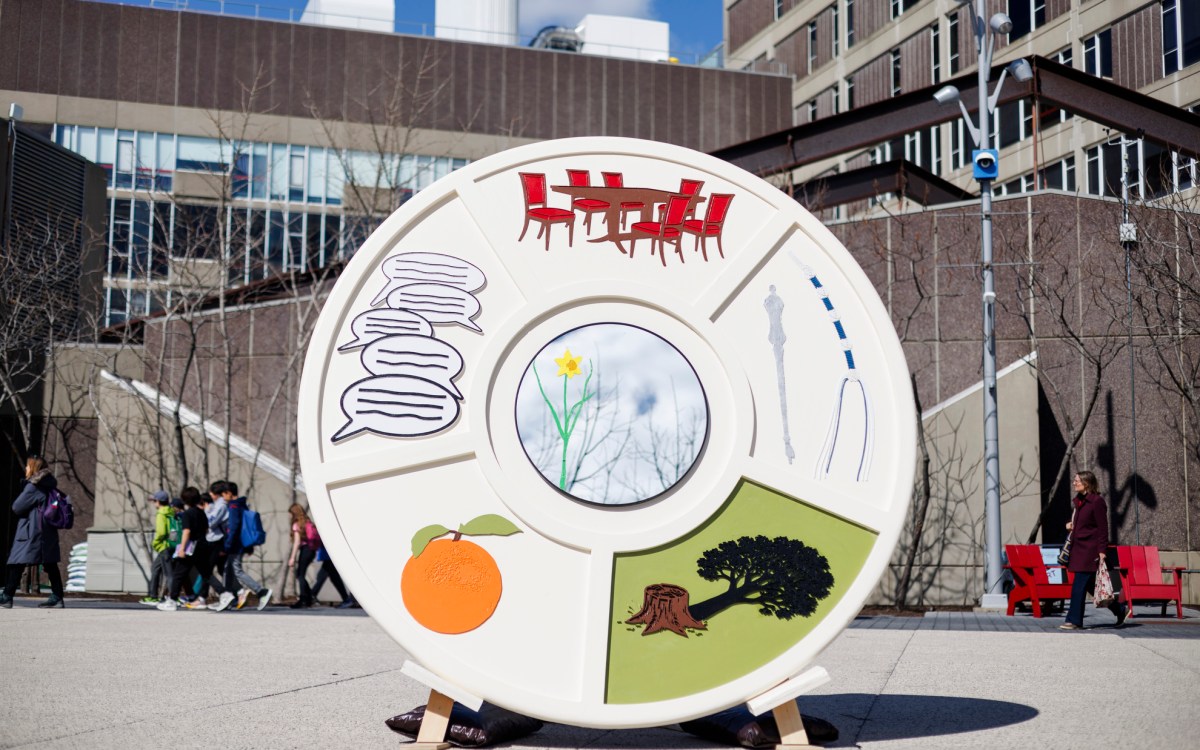
A community-sized Seder plate
Through sculpture’s 6 stories, Hillel seeks to portray ‘a bigger picture of what it means to be Jewish’
-
Undergrad education review released
Marking the end of the first phase of Harvard Colleges comprehensive review of undergraduate education, William C. Kirby, dean of the Faculty of Arts and Sciences and Edith and Benjamin Geisinger Professor of History, announced the release of A Report on the Harvard College Curricular Review. The report affirms Harvards commitment to a liberal education in the arts and sciences and proposes significant changes in the structure and content of the undergraduate experience.
-
Framed
The textured stone of the Weeks Footbridge provides an almost-Mediterranean look to a spring day on the Charles. Framed by the stone are rowers taking part in last Saturdays crew competition, in which Harvard took every race. (Staff photo Lindsay Pierce/Harvard News Office)
-
Mucus plays key role in cancer
Mucus is exciting to some cancer researchers. No kidding.
-
Notice for Faculty Council meeting
At its 12th meeting of the year (April 28) the Faculty Council discussed with Deans Benedict Gross, William Kirby, and Jeffrey Wolcowitz the recently released Report on the Harvard College Curricular Review. Professors Goran Ekstrom (Earth and Planetary Science), Eric Jacobsen (Chemistry and Chemical Biology), Richard Losick (Molecular and Cellular Biology), and Diana Sorensen (Romance Languages and Literatures), Co-chairs of the reviews four Working Groups, were also present for this discussion. A discussion of the review has also been scheduled for the May 4 Faculty Meeting, with the possibility that this consideration will be continued at the May 18 Faculty Meeting.
-
Independence day
Rebecca Wexler 05 plays electric violin with fellow Recklez band members during IsraelFest (Yom HaAtzmaut) in front of the Science Center on Tuesday. (Staff photo Jon Chase/Harvard News Office)
-
This month in Harvard history
April 14, 1955 – Steeplejack Laurie Young ascends the spire of the Memorial Church to survey the weathervane to determine whether it can be regilded in place. He begins the…
-
Memorial services set for Okin, Kelleher, Furdon
Susan Okin service May 2 Friends and family of Susan Moller Okin, a fellow at the Radcliffe Institute for Advanced Study, will host a memorial service on Sunday, May 2,…
-
Police reports
Following are some of the incidents reported to the Harvard University Police Department (HUPD) for the week ending April 24. The official log is located at 1033 Massachusetts Ave., sixth floor.
-
President Summers has May office hours
President Lawrence H. Summers will hold office hours for students in his Massachusetts Hall office on the following dates:
-
Clarke says Patriot Act preserves civil liberties
People who care about civil liberties in the United States should embrace rather than fight the USA Patriot Act, former Bush administration anti-terrorism coordinator Robert Clarke told a standing-room-only audience at the John F. Kennedy School of Government April 21.
-
Awards honor women leaders, present and future
When Hanna Holborn Gray, president emerita of the University of Chicago and Fellow of Harvard College, was pursuing a Ph.D. in history at Harvard in the 1950s, female role models in academia were scarce. At the time, Harvards Faculty of Arts and Sciences boasted exactly one female with tenure – Helen Maud Cam – and even she couldnt enter the Faculty Club by the front door or Lamont Library at all. Gray launched an impressive career in academia nonetheless, refusing to be hobbled by the factor that derailed many a budding female professors career: marriage.
-
Time names Lander one of world’s most influential people
In the April 26 special issue of Time magazine, Professor of Systems Biology Eric Lander, founder and director of the Eli and Edythe L. Broad Institute, is featured as one of the worlds 100 most influential people.
-
Crimson drowns Navy
Harvard mens heavyweight crew further expanded its trophy collection this past Saturday (April 24) with a nine-second triumph over visiting Navy in the 69th rowing of the Adams Cup. Earlier this month, the defending national champion Crimson (ranked No. 1 in the national polls by USRowing) captured the Stein Trophy in Providence and the Compton Cup on the Charles en route to its 5-0 dual-meet record.
-
Sports briefs
Heavy-hitting frosh lands league nod, again For the second time this season, freshman softballer Virginia Fritsch has been named Ivy League Rookie of the Week. In the Crimson’s last six…
-
Dean Shinagel receives Nolte Award
Dean of Continuing Education and University Extension Michael Shinagel received the Julius M. Nolte Award for Extraordinary Leadership at the annual conference of the University Continuing Education Association (UCEA) April 16 in San Antonio. Established in 1965, the Nolte Award is the most prestigious of all UCEA awards and is given to an individual in recognition of unusual and extraordinary contributions to the cause of continuing education on the regional, national, and international level.
-
Institute kicks off collaborative effort
The Harvard Stem Cell Institutes inaugural symposium kicked off in interdisciplinary fashion Friday (April 23) with discussions that explored the business, ethics, and science of stem cell research.
-
Little Foundation sponsors DEAS program
The Altran/Arthur D. Little Foundation for Innovation will provide $500,000 in the form of money, professional expertise, and consulting to the Harvard Division of Engineering and Applied Sciences (DEAS) during the next five years to help support a broad-based program on innovation in science and technology.
-
Students visit ‘Harvard of China’
Harvard College, striving to increase international experiences for its students, may now have one more arrow in its quiver, thanks to the student-initiated Harvard in Asia Project (HIAP). Chaired by David Yuan 06 and Silas Xu 05, HIAP returned triumphant from its first-ever exchange with Peking University, or Beida, in Beijing earlier this month. During spring break, 21 Harvard students made the 10-day trip, aimed at enhancing cross-cultural understanding between the students of the two universities – and at changing the Harvard students college experience.
-
Scientists discuss experiments on self
Yes, self-experimentation is exactly what it sounds like. Its when a researcher uses him- or herself as the (or one of the) subjects of an experiment. A recent gathering at the School of Public Health (HSPH) looked into the practice in a discussion titled Self-Experimentation by Investigators: Panel and Case Discussion. The exchange produced a robust examination of the relationship between good ethics and rigorous science, between junior and senior investigators, and between scientists and institutional review boards (IRBs). The March 26 event, sponsored by the Schools Human Subjects Committee (HSC), drew researchers and IRB members from across Harvard, as well as from other universities and hospitals.
-
Dangerous silences
Within the past several years, articles in the mainstream media have sounded an alarm about a widening black gender gap. In African-American communities, women are outpacing men in professional and educational achievement, while incarceration and unemployment rates for black men far exceed those for black women. Some charge that this phenomenon is affecting marriage possibilities and family structures among blacks.
-
Loeb physics lecturer explains string theory
String theory – the idea that the universe is made up not of particles but of tiny vibrating strings – is in the midst of a second revolution that some physicists hope will lead to the long-sought single theory that explains how the universe functions, according to Columbia University Professor Brian Greene.
-
Biomarker identifies diabetes risk in women
Researchers from Brigham and Women’s Hospital (BWH) have found that elevated levels of a biomarker that corresponds to a condition in which arteries do not dilate properly can be an indicator of type 2 diabetes risk in women. In addition, endothelial dysfunction – the inflammatory condition in which arteries do not dilate properly – is also an indicator of cardiovascular disease, leading researchers to believe that it could be an underlying link between the two epidemics. The findings are published in the April 28 issue of the Journal of the American Medical Association.
-
Gates, Marton receive Wharton Awards
W.E.B Du Bois Professor of the Humanities Henry Louis Gates Jr. and journalist and human rights advocate Kati Marton have been honored with the ninth annual Edith Wharton Women of Achievement Awards. The awards were presented at an April 7 ceremony by Edith Wharton Restoration, a nonprofit organization dedicated to the restoration of The Mount – the authors 1902 estate and gardens in Lenox.
-
Mann to receive Vosgerchian Teaching Award
Robert Mann, founder and first violinist of the Julliard String Quartet and a member of the Julliard School Music Division faculty since 1946, has been named the recipient of the 2004 Luise Vosgerchian Teaching Award.
-
Office for the Arts names grant recipients
The Office for the Arts at Harvard (OFA) has announced its support of 22 art projects and performances that will take place during Arts First weekend (May 6-9). Sponsored by the OFA grants program and selected by the Council on the Arts, the projects range from music and the visual arts to theater and the cultural arts.
-
PBHA auction supports summer camps
Red Sox VIP tickets, a flight with singer/songwriter and pilot Livingston Taylor, and a movie date with New York Times film critic Elvis Mitchell are among the items on the auction block tonight (April 29) at Phillips Brooks House Associations Spring Auction and Raffle to benefit its Summer Urban Program, which runs 12 low-cost day camps for local children. Dean of the College Benedict Gross is master of ceremonies at the event, which includes drinks and hors doeuvres, a silent and live auction, and live music. From 5 to 8 p.m. at Phillips Brooks House in Harvard Yard, $20. For more information, go to http://www.evite.com/mannix@fas.harvard.edu/supauction.
-
Eleven undergrads selected for study abroad grants
Five Harvard students have been awarded grants by the National Security Education Program (NSEP), and another six have received grants from the Freeman-Asia Program. The Institute of International Education administers both grants.
-
How to price the priceless
Amid the fuss over Democratic front-runner John Kerrys latest 10-year plan to expand health-care coverage to the tune (according to some Republicans) of $900 billion, and renewed allegations that the Bush administration has suppressed Medicare costs predictions, Harvard Business Schools Regina E. Herzlinger shrugs her shoulders, and smiles. Shes not surprised by the continued political rigmarole and shes not intimidated by this stickiest of issues. In fact, her ideas, scores of health-care professionals contend, could solve the conundrum of pricing the priceless – care for the sick.
-
Undergrads set the STAGE for social, academic success
Just before 3 oclock on a recent Thursday, Kate Johnsen wrestles with the lock on the door to the Mary Ellen McCormack Youth Center. Moments after she gets the entry to the basement room open, children steadily trickle in. The center is strewn with evidence of spirited use: Checkers are scattered on the floor, homework charts and art projects hang on walls, and toy trucks occupy corners. But the kids, who are between 8 and 10 years old and all live in the Mary Ellen McCormack Housing Development, the oldest public housing project in New England, arent darting to the toys and games. After all, they have a show to rehearse, a pair of plays that theyre debuting for the public on Harvards campus less than two weeks from the day. Theyve been on April vacation all week, but theyre still faithfully at the center during the usual after-school program schedule to get ready for the big show.
-
Installation of rare bear claw necklace at Peabody
A special reception commemorating the installation of the recently rediscovered grizzly bear claw necklace at the Peabody Museum will be held May 13 – the day the artifact goes on public display – from 5 to 7 p.m. at the museum. Provost Steven E. Hyman and William Fash, Howells Director of the Peabody Museum, will host the event.