Featured series


Tag: CFA
-
Nation & World
Celebrating Mass STEM Week with astrophysics and AI
“Astronomy Is for All of Us: Celebrating Women Astrophysicists and the History of Cosmic Discovery” recognized Mass STEM week, a statewide effort to boost high schoolers’ interest in and awareness of science, technology, engineering, and math.
-
Nation & World
Finding explanation for Milky Way’s warp
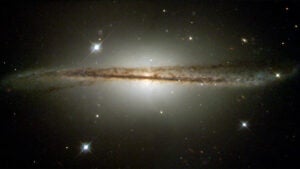
The Center for Astrophysics | Harvard and Smithsonian’s results bolster hypothesis of how galaxy evolved.
-
Nation & World
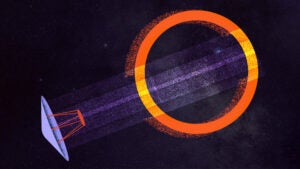
After capturing image of black hole, what’s next?
New Center for Astrophysics mission aims for closer look at photon rings and insight into nature of space and time.
-
Nation & World
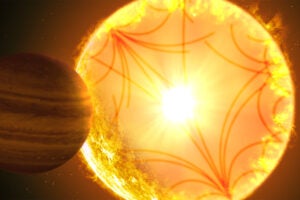
Doomed exoplanet spiraling toward obliteration
For the first time, astronomers have spotted an exoplanet whose orbit is decaying around an evolved, or older, host star.
-
Nation & World
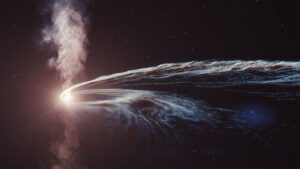
Black hole burps up shredded star
For the first time, astronomers have observed a black hole burping up stellar remains years after it shredded and consumed the star.
-
Nation & World
New director plots fresh course for the CfA
As the first woman director of the Center for Astrophysics, Lisa Kewley talks about strategies for a new era in astronomy, growing up with a love for space, and challenges for women in the field.

-
Nation & World
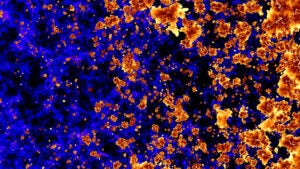
A glimpse into the universe’s first light
Using one of the world’s largest supercomputers, high-resolution simulations were created that show 1 million galaxies forming some 13 billion years ago.
-
Nation & World
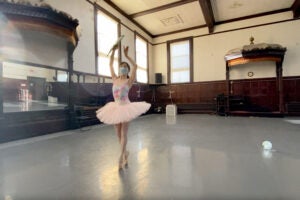
Turning photons into pirouettes
Astrophysics student Xiaohan Wu used dance to explain the physics behind photons in the early universe, winning the “Dance Your Ph.D.” international competition.
-
Nation & World
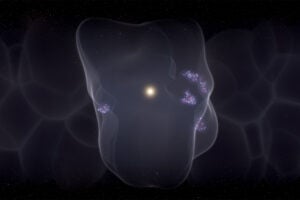
How a bubble gives birth to young stars
Scientists have shown how a chain of events led to the creation of the vast bubble that is responsible for the formation of all young stars within 500 light-years of the sun and Earth.
-
Nation & World
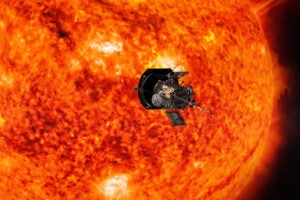
Touching the sun
An instrument made by scientists and engineers at the Center for Astrophysics has helped verify that — for the first time in history — a spacecraft has entered the corona of the sun.
-
Nation & World
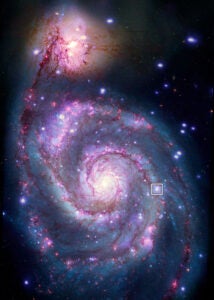
Tantalizing transit
Signs of a planet transiting a star outside of the Milky Way galaxy may have been detected for the first time.
-
Nation & World
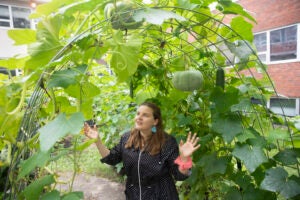
Head in the stars, hands in the dirt
The garden at the Center for Astrophysics | Harvard & Smithsonian provides nutrition and a visual feast that is open to all.
-
Nation & World
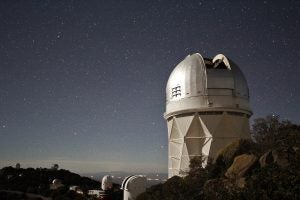
Charting the universe
Nearly 40 years after creating the first, iconic map of the universe, researchers aim for the largest map ever.
-
Nation & World
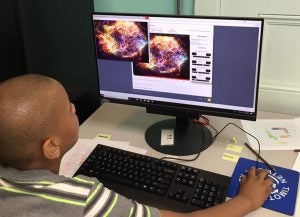
Reaching for the stars
Using robotic telescopes and other engaging astronomy activities, researchers at the Center for Astrophysics | Harvard & Smithsonian hope to spark interest in the sciences.
-
Nation & World
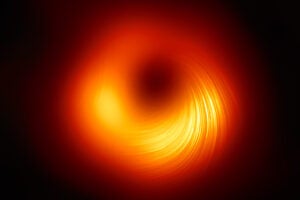
Image of black hole’s magnetic fields captured for first time
Images released by the Event Horizon Telescope (EHT) collaboration reveal how the black hole, some 55 million light-years away, appears in polarized light.
-
Nation & World
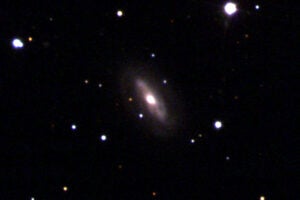
Black hole on the move
Astronomers at the Center for Astrophysics | Harvard & Smithsonian have detected a moving supermassive black hole.
-
Nation & World
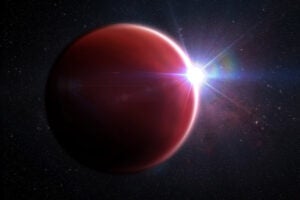
Cloudless, Jupiter-like planet discovered
The first Jupiter-like planet without clouds has been detected by astronomers at the Center for Astrophysics | Harvard & Smithsonian. Unlike our Jupiter, which takes nearly 12 years to orbit the sun, WASP-62b completes a rotation in just four-and-a-half days.
-
Nation & World
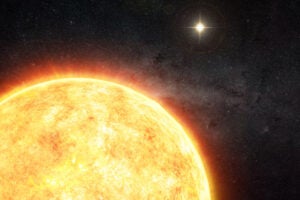
Far-out findings from the cosmos
CfA astronomers theorize that the solar system originally had two suns as they further research a sneezing star and ‘Oumuamua.
-
Nation & World
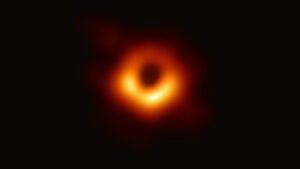
‘Seeing the unseeable’
A years-long effort by dozens of researchers at the Harvard-Smithsonian Center for Astrophysics reveals the first-ever image of a supermassive black hole.
-
Nation & World
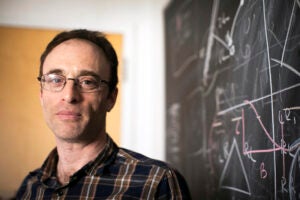
A black hole, revealed
Researchers at the Event Horizon Telescope (EHT) just unveiled the first-ever image of a black hole, which captures what EHT Director Sheperd Doeleman called “a one-way door from our universe.”
-
Nation & World
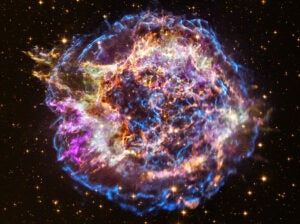
Stepping inside a dead star
An astronomical team uses detailed data to create a virtual reality experience of being inside an exploded star.
-
Nation & World
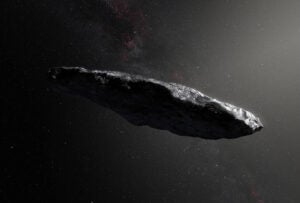
Something weird this way comes
A paper by Harvard researchers wonders whether the interstellar object known as “‘Oumuamua” is a visitor from an alien civilization.
-
Nation & World
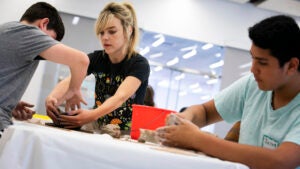
A season for exploration
At the third annual Summer Explorations series at the Harvard Ed Portal, local students of all ages experienced programs that enriched learning, stimulated curiosity, and explored everything from storytelling to ceramics to bike riding.
-
Nation & World
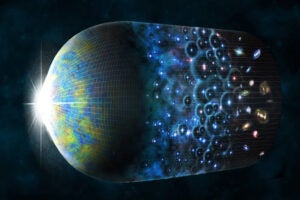
New light on dark matter
Harvard-Smithsonian Center for Astrophysics researchers explore dark matter particles that may carry an electric charge, and explain why that matters.
-
Nation & World
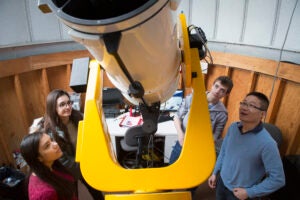
Space to learn
Harvard postdoc Or Graur finds success in the launch of Science Research Mentoring Program, which provides 10 local high school students a year of space research, working with a “real-life” scientist.
-
Nation & World
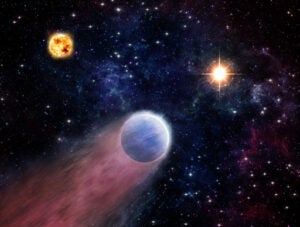
Black hole blasts may transform ‘mini-Neptunes’ into rocky worlds
Researchers believe outbursts by a nearby supermassive black hole in the center of the Milky Way have transformed Neptune-like planets into rocky planets.
-
Nation & World
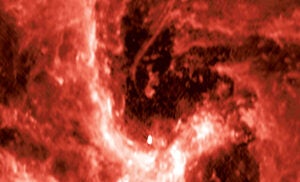
Improved image of supermassive black hole
Improved image allows astronomers to follow filament much closer to the galaxy’s central black hole.
-
Nation & World
To everything there is a season? It’s not as simple as that
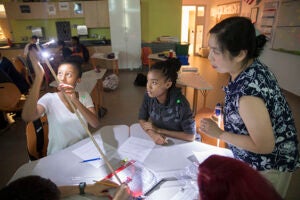
Harvard scientists and Cambridge Public Schools educators are collaborating on a special-thinking program that clears up misconceptions and teaches eighth-graders the hard science behind the changing seasons.
-
Nation & World
First glimpse of a kilonova, and Harvard was there
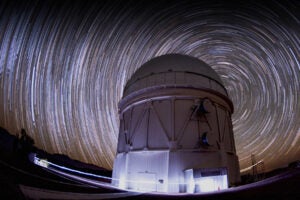
Marking the beginning of a new era in astrophysics, scientists for the first time have detected gravitational waves and electromagnetic radiation, or light, from the same event. Harvard researchers were pivotal in the work.
-
Nation & World
Viewing the solar eclipse? There’s an app for that
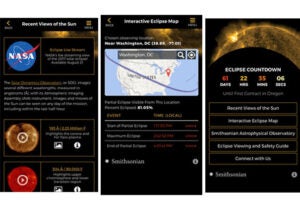
The Smithsonian and Harvard have released an interactive app ahead of the 2017 total solar eclipse, giving Americans a front-row seat to a rare celestial event.