
 Featured series


Tag: Catherine Dulac
-
Science & Tech
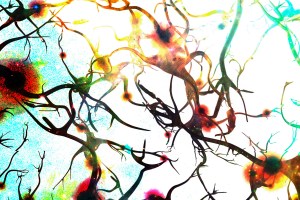
Fresh insights into inflammation, aging brains
Harvard scientists’ research on mice suggests chain reaction may be involved in the brain’s aging process.
-
Campus & Community
Three new University Professors
Catherine Dulac, Robert J. Sampson, and Arlene Sharpe have been named Harvard University Professors, Harvard’s highest distinction for a faculty member.

-
-
Campus & Community
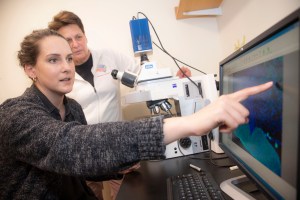
Risk rewarded
Harvard researchers will share nearly $1 million in funding to pursue high-risk, high-reward projects from using zircons to explore the earliest life on Earth to creating next-generation painkillers.
-
Science & Tech
Biological triggers for infant abuse
Harvard team discovers neural circuits underlying aggressive behavior of adult mice toward young ones.
-
Campus & Community
Backing high-risk, high-reward
Seven Harvard professors have been awarded funds from the Star-Friedman Challenge for Promising Scientific Research.

-
Campus & Community
Catherine Dulac wins Breakthrough Prize for Life Sciences
Catherine Dulac is awarded a 2021 Breakthrough Prize in Life Sciences for her pioneering work identifying the neural circuitry that regulates parenting behavior.
-
Campus & Community
Recognition for some risky research
The Star-Friedman Challenge is helping Harvard scientists during a time of great global uncertainty by boosting high-risk, high-impact research.
-
Campus & Community
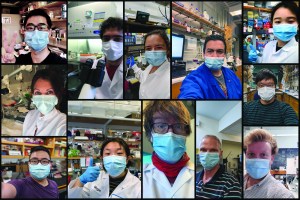
‘Moving in the right direction’
Nearly 2,000 faculty and staff from the FAS Division of Science and the School of Engineering and Applied Sciences got back to their labs this week
-
Campus & Community
Scaled-down labs felt ‘this special responsibility’
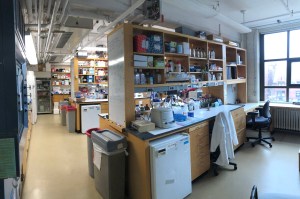
Harvard scientists put their research on hold for safety, and see chance to help hospitals with precious gear.
-
Campus & Community
Giving to the next generation
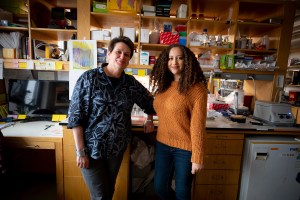
Professor Catherine Dulac used the money from her endowed position to fund the studies of an overloaded neuroscience undergrad.
-
Health
Cellular atlas of brain region leads to discoveries
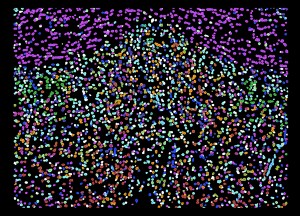
Harvard scientists have created a first-of-its-kind cellular atlas of an important region in the brains of mice. Using a cutting-edge imaging technology, researchers pinpointed where the cells were located and their various functions.
-
Health
Research sheds light on how parents operate
In a new study, Harvard researchers describe how separate pools of neurons control individual aspects of parenting behavior in mice.

-
Campus & Community
Four scholars win Arts and Sciences Professorships
Catherine Dulac, Jennifer Lewis, Louis Menand, and Mary C. Waters have been appointed to prestigious, five-year chairs at Harvard.

-
Health
A volume control for the brain
The brain is awash in sights, sounds, smells, and other stimuli every moment. How can it sort through the flood of information to decide what is important and what can be relegated to the background? Harvard researchers found evidence that oxytocin, popularly known as the “love hormone,” plays a crucial role in helping the brain…

-
Health
Unraveling the brain’s secrets
Harvard scientists are among those who will receive more than $150 million in funding over the next five years through the National Institutes of Health’s Brain Research through Advancing Innovative Neurotechnologies (BRAIN) Initiative.
-
Health
Expanding the brain
New findings reveal how genomic imprinting can dramatically expand biological diversity, and could have important implications for understanding the brain.
-
Campus & Community
Harvard faculty elected to NAS
Seven Harvard faculty members were elected to the National Academy of Sciences.
-
Campus & Community
Three faculty members receive NAS awards
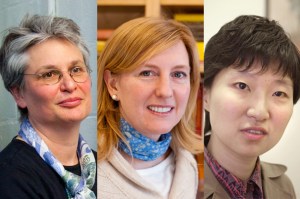
Catherine Dulac, Hopi Hoekstra, and Xiaowei Zhuang have received National Academy of Sciences awards.
-
Health
Parental controls
It could be that the key to being a better parent is all in your head, Harvard researchers say.
-
Science & Tech
Neurons in youth
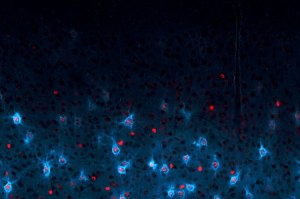
A group of researchers is working to map how the brain is wired in an effort to pinpoint the causes of — and potential treatments for — schizophrenia, autism, and a host of other disorders.
-
Health
Animal scents
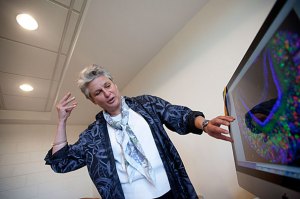
A Harvard study of how mice respond to scent cues from potential mates, competitors, and nearby predators has laid a foundation for further investigations that may eventually lead to a greater understanding of social recognition in the animal brain, with implications for a host of human disorders ranging from autism to post-traumatic stress disorder.
-
Health
Throwing a genetic switch
Study finds that maternal genes in mice predominate in the developing brain, while paternal genes gain the upper hand in adulthood. Researchers also find 1,300 imprinted genes in the brain, far more than previously known.

-
Health
Mom’s influence comes first
Genome-wide analysis of mice brains has found that maternally inherited genes are expressed preferentially in the developing brain, while the pattern shifts decisively in favor of paternal influence by adulthood. The researchers report having identified 1,300 genes active in the mouse brain that show some degree of parental bias, greatly expanding on the 45 previously…
-
Science & Tech
‘The art of seeing things invisible’
“This is a wonderful story of collaboration and imagination,” said Harvard President Drew Faust, moments before cutting a ribbon yesterday afternoon to open the new Harvard Center for Biological Imaging (CBI). The facility, on the second floor of the BioLabs at 16 Divinity Ave., is not just another room filled with microscopes. For everything about the facility is unique, from…
-
Campus & Community
Sexual attraction a matter of scent
An unexpected finding may settle an ongoing scientific debate by providing evidence that key reproductive behaviors in mice arise predominantly, if not exclusively, from olfactory input instead of input from the vomeronasal, visual, or auditory senses.