
 Featured series


Tag: Department of Earth and Planetary Sciences
-
Science & Tech
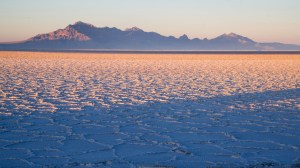
From a plant-free place, clues about how to help plants survive as planet warms
Data from salt flats suggest dry soil is worse than rising temperature
-
Campus & Community
John H. Shaw named vice provost for research
John H. Shaw, a prominent geologist and applied geophysicist, has been named the University’s next vice provost for research.

-
Science & Tech
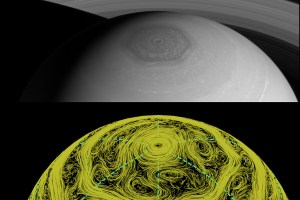
Interplanetary storm chasing
Harvard researchers use a 3D model to figure out how a hexagon-shaped mega-storm on Saturn was formed.
-
Science & Tech
When it hits 100 degrees in Siberia …
With the threat of extreme heat rising, from California to Siberia, we ask climate scientist Peter Huybers what to expect in the future.

-
Science & Tech
Students bring fresh perspective to environmental issues
Each year the Harvard University Center for the Environment awards funding to students who have an interest in environmental and energy research. The students’ backgrounds vary as widely as their topics.
-
Science & Tech
Toxic mercury springs from a hidden source
Environmental scientists at Harvard have discovered that the Arctic accumulation of mercury, a toxic element, is caused by both atmospheric forces and the flow of circumpolar rivers that carry the element north into the Arctic Ocean.

-
Campus & Community
Allan R. Robinson
At a Meeting of the Faculty of Arts and Sciences on December 6, 2011, the Minute honoring the life and service of the late Allan R. Robinson, Gordon McKay Professor of Geophysical Fluid Dynamics, Emeritus, was placed upon the records. Professor Robinson’s insights into the Gulf Stream, the evolution of ocean eddies, and the dynamics…
-
Arts & Culture
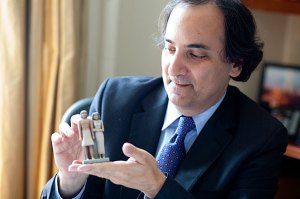
The future of archaeology
Smitten as a boy with the wonders of ancient Egypt, archaeologist Peter Der Manuelian deep into excavations but also wedded to the Web.
-
Science & Tech
Battling climate change on all fronts
Harvard’s research spans the gamut from the sciences to the humanities, examining key questions about this critical challenge facing humanity.
-
Science & Tech
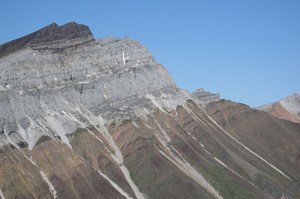
Signs of ‘snowball Earth’
Researchers find strong clues that sea ice covered tropical climes, including the equator, 716.5 million years ago, suggesting there was a time of a “snowball Earth.”
-
Science & Tech
Scientists find signs of ‘snowball Earth’
Geologists have found evidence that sea ice extended to the equator 716.5 million years ago, bringing new precision to a “snowball Earth” event long suspected of occurring around that time.
-
Campus & Community
Surrendering their secrets
Ann Pearson, professor of biogeochemistry, uses chemistry to understand ancient biology.
-
Science & Tech
Study: Polar ice sheets vulnerable to even moderate global warming
A new analysis of the geological record of the Earth’s sea level, carried out by scientists at Harvard and Princeton University’s Woodrow Wilson School of Public and International Affairs, employs a novel statistical approach that reveals the planet’s polar ice sheets are vulnerable to large-scale melting even under moderate global warming scenarios. Such melting would…
-
Campus & Community
Mahadevan, Huybers named MacArthur Fellows
Assistant Professor of Earth and Planetary Sciences Peter Huybers and England de Valpine Professor of Applied Mathematics Lakshminarayanan Mahadevan are named MacArthur Foundation Fellows.

-
Science & Tech
Huybers and Mahadevan named MacArthur Foundation Fellows
Two Harvard faculty members who study present and past ice sheets and the science behind familiar objects and everyday events have been named recipients of prestigious MacArthur Foundation “genius” grants. This year’s awards, announced today by the John D. and Catherine T. MacArthur Foundation, go to Assistant Professor of Earth and Planetary Sciences Peter Huybers…
-
Science & Tech
Geology is destiny
As a teenager in Toronto in the 1950s, Paul Hoffman would spend hours in the Royal Ontario Museum studying its collection of rocks and minerals. He became a passionate collector, trading rocks with friends and exploring abandoned mines in search of crystals.
-
Health
Microbes thrive in harsh, isolated water under Antarctic glacier
A reservoir of briny liquid buried deep beneath an Antarctic glacier supports hardy microbes that have lived in isolation for millions of years, researchers report this week in the journal Science. The discovery of life in a place where cold, darkness, and lack of oxygen would previously have led scientists to believe nothing could survive…
-
Health
Taking a stride toward synthetic life
Harvard scientists have cleared a key hurdle in the creation of synthetic life, assembling a cell’s critical protein-making machinery in an advance with both practical, industrial applications and that advances the basic understanding of life’s workings. George Church, a genetics professor at Harvard Medical School and member of Harvard’s Origins of Life Initiative, reported the…
-
Science & Tech
Hotter seasons coming earlier, research finds
An analysis of global temperatures between 1850 and 2007 has illuminated some climate change details, showing that winter temperatures have risen more rapidly than summer temperatures and that the seasons are coming nearly two days earlier than they were 50 years ago. Perhaps most worrisome, however, is that none of the dozens of computerized climate…
-
Science & Tech
John P. Holdren named President-elect Obama’s Science Advisor
President-elect Barack Obama today announced that he has selected Harvard’s John P. Holdren to serve as Assistant to the President for Science and Technology in the new administration. The post, popularly known as “the President’s science advisor,” also includes directorship of the Office of Science and Technology Policy in the Executive Office of the President…
-
Science & Tech
Global warming threatens his nation’s existence, a president warns
During a talk at Harvard, the leader of the South Pacific island nation of Kiribati laid out an extraordinary plan that would scatter his people through the nations of the world as rising sea levels submerge the islands they have called home for centuries. President Anote Tong said the half-meter sea level rise projected by…
-
Science & Tech
Mars’ water appears to have been too salty to support life
A new analysis of the Martian rock that gave hints of water on the Red Planet — and, therefore, optimism about the prospect of life — now suggests the water was more likely a thick brine, far too salty to support life as we know it. The finding, by scientists at Harvard University and Stony…
-
Science & Tech
Sulfur dioxide may have helped maintain a warm early Mars
Sulfur dioxide (SO2) may have played a key role in the climate and geochemistry of early Mars, geoscientists at Harvard University and the Massachusetts Institute of Technology (MIT) suggest in the Dec. 21 issue of the journal Science. Their hypothesis may resolve longstanding questions about evidence that the climate of the Red Planet was once…
-
Science & Tech
Oceans are back on Mars
Since spacecraft sent back the first close-up images of Mars more than 30 years ago, some experts have insisted that oceans once existed on the now dry, cold planet. Critics have maintained for decades that such an idea is the product of unrestrained imaginations. Now, a study published in today’s (June 14) issue of the…
-
Science & Tech
Tilting at ice ages
Here’s a story to cool you off on a hot summer day. One of the major mysteries of ice ages may have been solved by a Harvard climatologist.
-
Science & Tech
Global warming yields ‘glacial earthquakes’ in polar areas
Seismologists at Harvard University and Columbia University have found an unexpected offshoot of global warming: “glacial earthquakes” in which Manhattan-sized glaciers lurch unexpectedly, yielding temblors up to magnitude 5.1 on the moment-magnitude scale, which is similar to the Richter scale. Glacial earthquakes in Greenland, the researchers found, are most common in July and August, and…
-
Campus & Community
Climate choices: Grim and grimmer
Climate change from burning fossil fuels is probably already unavoidable, but it is still up to humans to decide just how bad it will be, Professor of Earth and Planetary Sciences Daniel Schrag said Thursday (Sept. 29) in a talk on global warming that kicked off a new exhibit on the subject at the Harvard…
-
Campus & Community
Warming called a global ‘experiment’
Climate scientist Daniel Schrag says that human-caused climate change is inevitable, though scientists don’t know exactly how severe or even exactly what its effects will be. Schrag said the public health effects related to climate change would probably be most severe in poorer nations. Though climate effects will be experienced in richer nations, those countries…
-
Campus & Community
Researchers close in on date of critical rise in Earth’s oxygen
Findings by Harvard researchers and colleagues narrow the range of possible dates for a critical change in the Earth’s atmosphere. Scientists had previously believed oxygen first appeared sometime between 2.45 billion and 2.22 billion years ago, a span of about 230 million years. The new findings narrow that window dramatically – to about 130 million…
-
Science & Tech
Earth’s birth date turned back
Radioactive elements in rocks decay in a predictable way, like the ticking of a well-made clock that can run for millions of years. The decay marks a change in character of the elements; one type of uranium, for example, decays into lead. To measure the age of meteorites, and thereby deteremine the age of Earth…