Featured series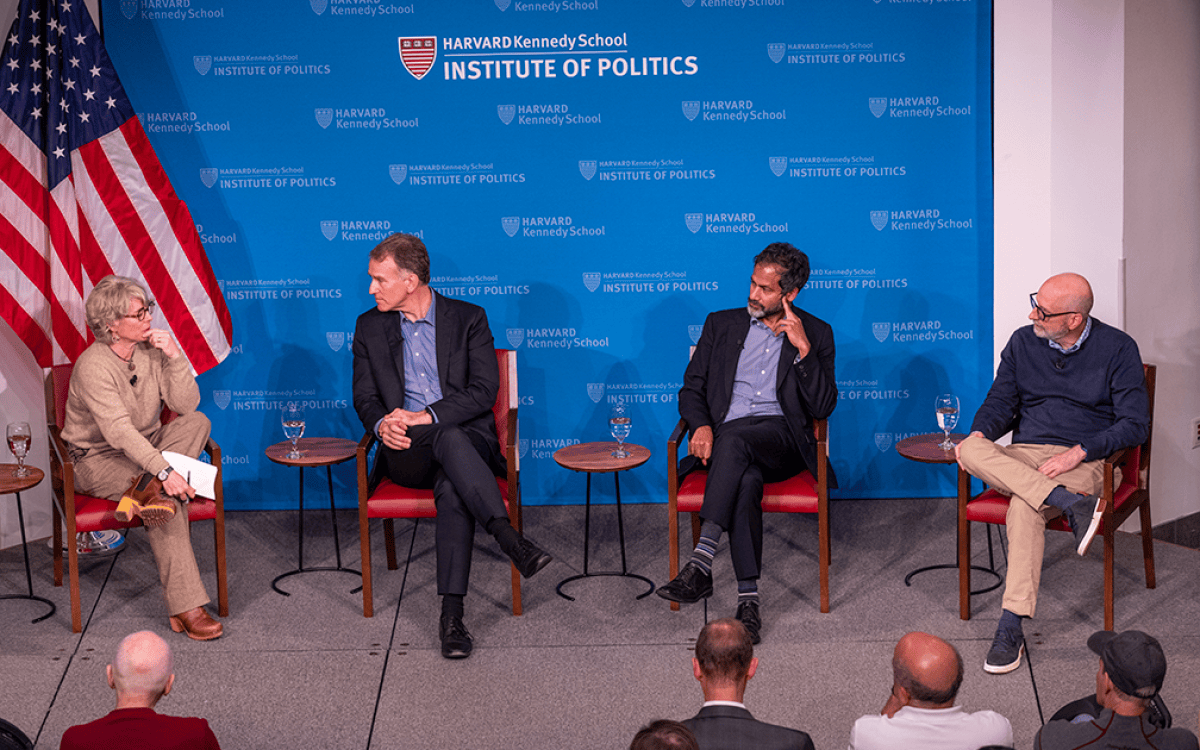
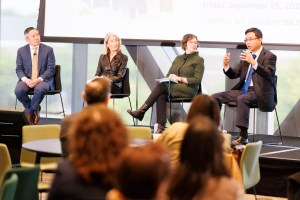
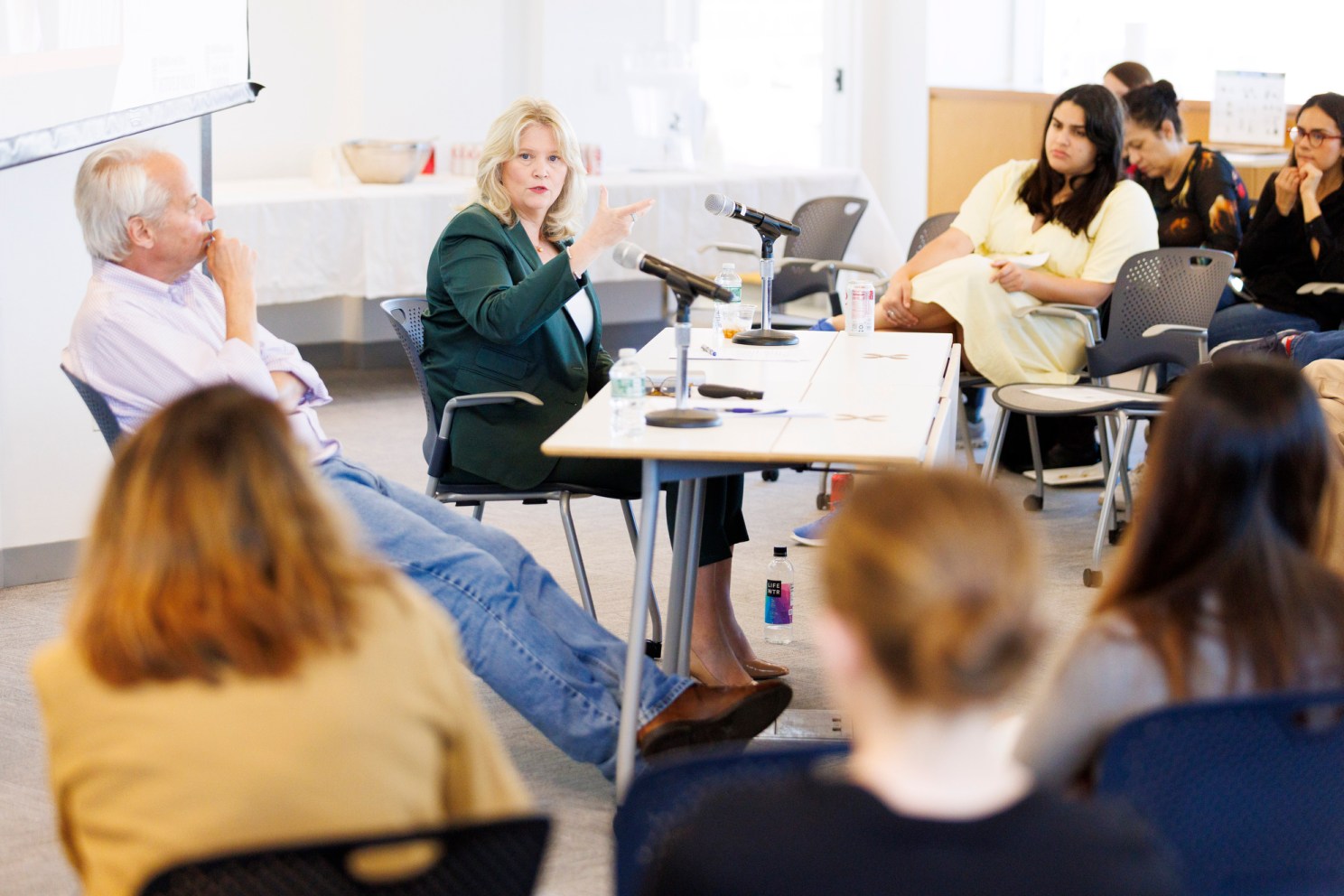
Doug Sosnik (left) and Sara Fagen.
Veasey Conway/Harvard Staff Photographer
Nation & World
You like Ike. But AI may help campaigns figure how to ensure you actually vote
Strategists predict powerful new technology will bring seismic shifts in U.S. political life
At a Harvard Kennedy School event Monday, strategists from both parties forecast that the 2028 presidential election will mark the start of a seismic and generational shift in U.S. politics as campaigns fully embrace the rapidly escalating power of AI.
“It’ll be the first AI campaign, so the stakes are going to be unbelievably high,” said Doug Sosnik, a former White House political director and veteran political adviser to dozens of Democratic candidates, including President Bill Clinton.
The strategists discussed during the session, sponsored by the Institute of Politics, how they expect AI to impact everything from how candidates reach and persuade potential voters to how organizations figure out where their supporters are and what will get them to actually vote on Election Day.
Sara Fagen, a strategic data and technology consultant, said that because of its speed and power, AI soon will allow political campaigns to customize their messaging to reach specific voters using data collected about a voter’s activities and motivations in a much more sophisticated way than currently.
“Eventually, probably not in ’28, but perhaps in the next presidential [election], you’ll hit a button and your target audience of 20 million people will get 20 million different campaigns,” said Fagen, who served as White House director of political affairs under President George W. Bush.
“Eventually, probably not in ’28, but perhaps in the next presidential [election], you’ll hit a button and your target audience of 20 million people will get 20 million different campaigns.”
Sara Fagen
Like the historic 1960 presidential election between John F. Kennedy Jr. and Richard Nixon, the first in which television played a decisive role, reshaped political campaigns for decades, 2028 will usher in a new political era, said Sosnik, now a fall 2026 Hauser Leader, Center for Public Leadership at HKS.
It’s been more than two decades since political campaigns began to harness data and technology in a serious way, analysts said.
Before 2004, campaigns had been organized and analyzed around precincts. But as Republicans found it increasingly difficult to accurately map Democratic voters, they turned to a very early form of data analytics during the 2004 presidential election between George W. Bush and John Kerry.
“We were able to figure out a different way to do this and sort of pinpoint who would be a supporter, who would need to be persuaded. It didn’t matter where they lived; it just mattered based on our algorithm and how to make those predictions,” said Fagen, who worked on the Bush campaign. “And we did that, and we did it very successfully.”
In 2008, the Obama campaign famously took microtargeting and data analytics to the next level and made it a significant component of the campaign’s structure, not just a helpful add-on. Since then, there’s been very little change in how campaigns use data and digital technology until now, they said.
Two big costly features of campaigns, advertising and polling, will also change thanks to AI, Sosnik and Fagen said.
Campaigns will be able to crank out new content much faster and cheaper and AI will affect advertising buying decisions, not only where and when to place ads, but how to best approach voters, said Sosnik.
Pollsters continue to face difficulties connecting with younger and non-college-educated adults by phone, a trend that’s likely to grow and leads to a skewed sense of the electorate.
With AI’s ability to analyze vast data sets, polling firms and even news organizations will be able to build “synthetic” cohorts to test messaging, particularly on voters who shun politics or are harder to reach by phone and better predict what people will or won’t support rather than relying solely on traditional polling methods, which are very expensive to do properly, said Fagen.
Certainly, they warned, AI’s entry into the body politic poses risks that have already emerged. Some campaigns have begun using AI-created images and deep fakes, as well as near-perfect voice manipulations that put words into a person’s mouth that were never said.
There are some “very positive” aspects of AI becoming a fixture of campaigns, Fagen said.
Fact-checking will become much faster and draw from a wider array of sources, providing voters with more information that’s less easily manipulated to assess the accuracy of candidates and political claims.
Even with political will, efforts by Congress or the courts to regulate AI will not catch up to how campaigns are currently using it in time to affect the 2026 midterms or 2028 presidential election, said Fagen.
Sosnick agreed.
By the time Congress finally takes action on AI, “It’s not going to matter functionally,” he said.