
 Featured series


Tag: Department of Physics
-
Campus & Community
STEM takes a knee for reflection and reckoning
Harvard Science takes part in #ShutDownAcademia, #ShutDownSTEM, and #Strike4BlackLives
-
Science & Tech
A platform for stable quantum computing, a playground for exotic physics
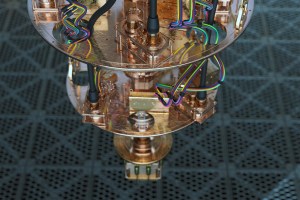
Harvard researchers have demonstrated the first material that can have both strongly correlated electron interactions and topological properties. The discovery both paves the way for more stable quantum computing and creates an entirely new platform to explore exotic physics.
-
Campus & Community
Physics Department wins $1M award
The Harvard University Department of Physics recently won a $1 million award from the Moore Foundation to study quantum systems.
-
Science & Tech
When the beat goes off
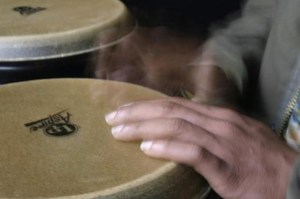
Rhythm research has implications for both audio engineering and neural clocks, said Holger Hennig, a postdoctoral fellow in the laboratory of Eric Heller in the Physics Department at Harvard, and first author of a study of the Ghanaian and other drummers in the journal Physics Today.
-
Campus & Community
March memorial for Norman Ramsey
The Department of Physics will host a memorial ceremony for Nobel laureate and former physics professor Norman Ramsey.
-
Science & Tech
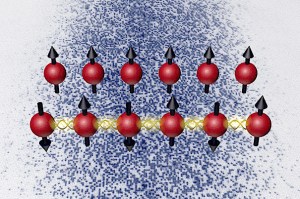
The ‘quantum magnet’
Harvard physicists have expanded the possibilities for quantum engineering of novel materials such as high-temperature superconductors by coaxing ultracold atoms trapped in an optical lattice — a light crystal — to self-organize into a magnet, according to an article in the journal Nature.
-
Science & Tech
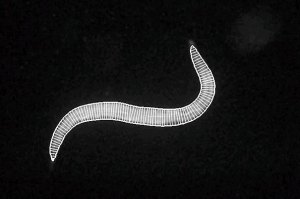
Light touch
Physicists and bioengineers have developed an optical instrument allowing them to control the behavior of a worm just by shining a tightly focused beam of light at individual neurons inside the organism.
-
Science & Tech
Graphene may help speed up DNA sequencing
Researchers from Harvard University and MIT have demonstrated that graphene, a surprisingly robust planar sheet of carbon just one-atom thick, can act as an artificial membrane separating two liquid reservoirs.
-
Science & Tech
Quantum networks advance with entanglement of photons, solid-state qubits
A team of Harvard physicists led by Mikhail D. Lukin has achieved the first-ever quantum entanglement of photons and solid-state materials. The work marks a key advance toward practical quantum networks, as the first experimental demonstration of a means by which solid-state quantum bits, or “qubits,” can communicate with one another over long distances. Quantum networking applications such as…
-
Science & Tech
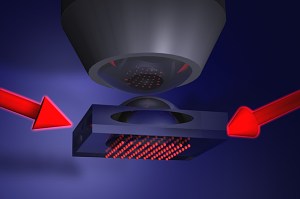
Insights on quantum mechanics
Physicists create an artificial material to gain up-close insights into quantum materials and how they interact.
-
Science & Tech
Applied physicists create building blocks for a new class of optical circuits
Imagine creating novel devices with amazing and exotic optical properties not found in nature — by simply evaporating a droplet of particles on a surface. By chemically building clusters of nanospheres from a liquid, a team of Harvard researchers, in collaboration with scientists at Rice University, the University of Texas at Austin, and the University…
-
Science & Tech
The Postdocs
Some physicists spend their lives obsessed with questions about the possibility of parallel universes, or of travel at the speed of light. Amy Rowat is obsessed with the mechanical properties of the tiny cell nucleus, and how changes in its shape affect the cell’s physiological function. She also is applying her training as a soft-matter physicist to the question of…
-
Science & Tech
Cold atoms and nanotubes come together in an atomic ‘black hole’
Carbon nanotubes, long touted for applications in materials and electronics, may also be the stuff of atomic-scale black holes. Physicists at Harvard University have found that a high-voltage nanotube can cause cold atoms to spiral inward under dramatic acceleration before disintegrating violently. Their experiments, the first to demonstrate something akin to a black hole at…
-
Science & Tech
Marrying high performance optics with microfluidics
Harvard engineers have successfully created a silicone rubber stick-on sheet containing dozens of miniature, powerful lenses, bring them one step closer to putting the capacity of a large laboratory into a micro-sized package. The marriage of high performance optics with microfluidics could prove the perfect match for making lab-on-a-chip technologies more practical. Microfluidics, the ability…
-
Science & Tech
Toy story
Scientists have long studied how atoms and molecules structure themselves into intricate clusters. Unlocking the design secrets of nature offers lessons in engineering artificial systems that could self-assemble into desired forms. In the Jan. 29 edition of Science, a team from Harvard led by Vinothan Manoharan and Michael Brenner presents additional clues to how and…
-
Health
Light used to map effect of neurons on one another
Harvard scientists have used light and genetic trickery to trace out neurons’ ability to excite or inhibit one another, literally shedding new light on the question of how neurons interact with one another in live animals. The work is described in the current issue of the journal Nature Methods. It builds upon scientists’ understanding of…
-
Science & Tech
Quantum gas microscope offers glimpse of quirky ultracold atoms
Harvard physicists have created a quantum gas microscope that can be used to observe single atoms at temperatures so low the particles follow the rules of quantum mechanics, behaving in bizarre ways. The work, published this week in the journal Nature, represents the first time scientists have detected single atoms in a crystalline structure made…
-
Science & Tech
Materials scientists find better model for glass creation
Harvard materials scientists have come up with what they believe is a new way to model the formation of glasses, a type of amorphous solid that includes common window glass. Glasses form through the process of vitrification, in which a glass-forming liquid cools and slowly becomes a solid whose molecules, though they’ve stopped moving, are…
-
Science & Tech
Physics for the musical masses
Harvard physicist Lisa Randall is taking Paris’ opera-going public to the fifth dimension this month, working with a composer and artist to present an opera that incorporates Randall’s theories about extra dimensions of space. Randall, a theoretical physicist whose ideas were presented in her 2005 book, “Warped Passages: Unraveling the Mysteries of the Universe’s Hidden…
-
Science & Tech
Researchers see exotic force for first time
For the first time, researchers have measured a long-theorized force that operates at distances so tiny they’re measured in billionths of a meter, which may have important applications in nanotechnology as scientists and engineers seek new ways to create devices far too small for the eye to see. The advance, by researchers by Harvard and…
-
Science & Tech
ATLAS detector seeks to illuminate universe’s mysteries
Scientists at Harvard and around the world held their breath earlier today, as colleagues switched on the most powerful particle accelerator ever built, the Large Hadron Collider at CERN, the particle physics laboratory in Geneva. To their relief, the twin proton beams circulated in opposite directions around the 17-mile underground loop with no problems. Though…
-
Science & Tech
Turning on cells with magnetic switches
Harvard scientists have figured out how to turn cells on and off using magnets, an advance with potentially broad applications as researchers around the world work to find new ways to manipulate cells and correct cellular functions that diseases send awry. Donald Ingber, the Judah Folkman Professor of Vascular Biology at Harvard Medical School and…
-
Campus & Community
Using physics to understand biology
Anita Goel is using the tools of physics to examine one of the most basic processes of biology, the way genetic information is extracted from DNA molecules and how this process is influenced by the environment. Goel, an associate of the Physics Department, is hoping her unique approach will lead to both a new understanding…
-
Science & Tech
Light propagates via wires more slender than its own wavelength
A research team led by Harvard’s Eric Mazur and Limin Tong, a visiting professor from Zhejiang University in China, reported on their work with nanowires in the Dec. 18, 2003 issue of the journal Nature. “You wouldn’t normally imagine that a baseball could pass through a garden hose, but these nanowires appear able to handle…
-
Science & Tech
Have light, will not travel
Harvard researchers fired a short signal pulse of red laser light into a sealed glass cylinder containing a hot gas of rubidium atoms illuminated by a strong control beam. While the pulse was traveling through the rubidium gas, they switched off the control beam, resulting in the storage of a holographic imprint of the signal…
-
Science & Tech
Seeing the hole truth
Folding is a big deal in biology. It not only changes a molecule’s shape but its function. Take the proteins made by genes. Folded one way, they can activate processes necessary for a healthy life. Folded another way, they can trigger the wild cell growth known as cancer. Now, using holes as tiny as 30…
-
Science & Tech
Scientists look inside antimatter
“We have obtained the first glimpse inside an antihydrogen atom, and this is a significant step on the way to precision measurements that will allow matter/antimatter comparisons to be made,” says Gerald Gabrielse, professor of physics at Harvard and leader of the research team. Such comparisons could show why antimatter and matter have not destroyed…
-
Science & Tech
Why antimatter matters so much
In 1995, experimenters made nine or 10 atoms of antihydrogen at the Center for European Nuclear Research in Geneva, Switzerland. Since then, researchers have sought a method for making more antimatter, which would allow them to test fundamental theories of the universe. A team led by Gerald Gabrielse, Harvard professor of physics, is close to…
-
Science & Tech
New way to ‘see’ DNA
Research by Harvard scientists was driven by the need to make extremely small holes that mimic the pores in human cells through which different molecules must pass to keep the cells alive and healthy. “My colleagues and I first had the idea of sequencing genes by forcing DNA molecules through minute openings,” explains David Branton,…