
 Featured series

Tag: Department of Anthropology
-
Nation & World
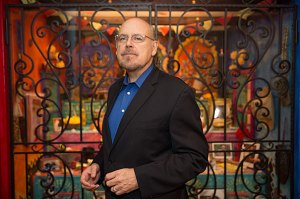
Examining U.S.-Mexico ties in the age of Trump
Harvard’s expert in Latin America, Davíd Carrasco, spoke with the Gazette about Mexico, which has taken center stage in the 2016 U.S. presidential campaign, and the long relationship between the two neighboring countries.
-
Campus & Community
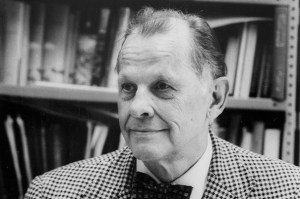
Professor Richard N. Frye dies at 94
Harvard scholar, friend, and Aga Khan Professor Emeritus Richard Frye taught Iranian history and culture at the University for more than 40 years.
-
Arts & Culture
The modern opens the past
In the inaugural lecture of a series organized by Harvard’s Digital Futures consortium, data-publishing entrepreneur Eric Kansa lays out a case for archaeology to “get on the map” of disciplines sharing data widely on the Web.
-
Nation & World
The record of Japanese disaster
Harvard experts were among the lead organizers of a major effort to construct a multimedia archive of last year’s devastating earthquake and aftermath in Japan. The site goes live this week.

-
Arts & Culture
Casting an impression
Through studio sessions at the New England Sculpture Service, the course “Cast in Bronze: A Workshop in Exploring and Creating Bronze Sculpture” provided the opportunity not only to create bronze sculptures, but also to better understand the practice and craft of making art.

-
Arts & Culture
A vanishing neighborhood
Two Harvard ethnographers directed the prize-winning “Foreign Parts,” a documentary that captures the sights and sounds of Willets Point, a vibrant, vanishing corner of New York City.

-
Arts & Culture
Scholarship beyond words
Harvard classes and a new journal embrace an emerging wave of doctoral learning beyond the written word that uses film, photo, audio, and other communication channels.

-
Science & Tech
For bonobos, it’s one for all
Daycare workers and kindergarten teachers tend to offer young humans a lot of coaching about the idea of sharing. But for our ape cousins the bonobos, sharing just comes naturally.
-
Campus & Community
Harvard Medical School fetes scholar, names chair
Harvard Medical School (HMS) will endow a new chair named for child psychiatrist Leon Eisenberg, the School’s longtime Maude and Lillian Presley Professor of Social Medicine, starting July 1.

-
Science & Tech
Student diggers take Harvard’s roots from dirt to display case
Emily Pierce ’10 was up to her hips in Harvard Yard, standing in a square hole in the ground, carefully scraping soil as she sought bits of archaeological treasure: a button here, a piece of bone there — clues that together could weave a tale of Harvard’s early years. It was the fall of 2007,…
-
Science & Tech
Chimps in wild appear not to regularly experience menopause
A pioneering study of wild chimpanzees has found that these close human relatives do not routinely experience menopause, rebutting previous studies of captive individuals which had postulated that female chimpanzees reach reproductive senescence at 35 to 40 years of age. Together with recent data from wild gorillas and orangutans, the finding — described this week…
-
Science & Tech
Male voice pitch predicts reproductive success in hunter-gatherers
Deeper voice pitch predicts reproductive success in male hunter-gatherers, according to a new study from researchers with Harvard University, McMaster University, and Florida State University. This is the first study to examine the correlation between voice pitch and child-bearing success, and the results point to a role for voice pitch in Darwinian fitness in humans.…
-
Science & Tech
Blogging from the Ugandan forest
A Web log, or blog, co-written by Harvard researcher Ian Gilby, working in Uganda’s Kibale Forest, makes vivid the family lives of chimpanzees. The blog, on the Anthropology Department Web site, also provides an unusual glimpse into the daily life of a field scientist. The blog was the brainchild of Alex Georgiev, a graduate student…
-
Campus & Community
Investigating canals across time, from space
The view from space of an ancient canal network is recasting archaeologists’ understanding of the Assyrian capital of Nineveh and of the farming economy that supported it at its height of power almost 3,000 years ago.
-
Science & Tech
Ancient humans brought bottle gourds to Americas from Asia
Thick-skinned bottle gourds widely used as containers by prehistoric peoples were likely brought to the Americas some 10,000 years ago by individuals who arrived from Asia, according to a new genetic comparison of modern bottle gourds with gourds found at archaeological sites in the Western Hemisphere. The finding solves a longstanding archaeological enigma by explaining…
-
Science & Tech
Human skull is 7 million years old
When a 7-million-year-old skull was first found, Daniel Lieberman, a professor of anthropology at Harvard, called it “one of the greatest discoveries of the past 100 years.” After studying new evidence including teeth and jaw fragments, Lieberman stands by that statement. “The next oldest, reasonably complete humanlike skull we have is just over 3 million…
-
Campus & Community
Man’s smartest friend
Anthropologist Brian Hare’s research involved New Guinea singing dogs, a subspecies that shows strong indications of domestication at some time in the past but now exists as feral, reclusive individuals in the highlands of New Guinea. These dogs, related to dingoes, have gone without significant human contact for at least the past 6,000 years, and…
-
Campus & Community
Blocking the road to extinction
A widely cited estimate is that at current rates of deforestation, orangutans will be extinct in the wild in 20 years. But Assistant Professor of Anthropology Cheryl Knott, who heads the Gunung Palung Orangutan Project, believes all is not lost. For the past decade, Knott has helped humans understand orangutans, their treetop world, and their…
-
Science & Tech
Harvard students uncover Martha’s Vineyard history
Some significant details emerged from the items uncovered by Harvard archaeology students at a dig on Martha’s Vineyard in 1999. For instance, the site has been used by humans much longer than archaeologists first expected. A stone spear tip indicated the spot was inhabited by humans as long as 10,000 years ago — just 1,000…
-
Health
Diving into the gene pool
Maryellen Ruvolo, professor of anthropology, specializes in the analysis of human and primate family trees using DNA data, a subfield of molecular evolution. She is probably best known for her work showing that people are more closely related to chimpanzees than to gorillas, contrary to previous thinking. She has also worked on the search for…