
 Featured series


Tag: inflammation
-
Health
Research shows working out gets inflammation-fighting T cells moving
Activated by regular exercise, immune cells in muscles found to fend off inflammation, enhance endurance in mice

-
Health
Researchers find key to healing muscle injuries in elderly
Controlling inflammation enables injured aged muscle recovery, offering promise for the future of mechanotherapies.

-
Health
Torn muscle? Send in the gut microbes for rapid repair
A Harvard-led study shows that the gut microbiota acts as the training camp for a class of immune cells that are recruited to heal muscle injury.
-
Health
Skull channels shown to protect brain from infection
Researchers have found that “brain water” can exit through tiny channels to reach the skull’s bone marrow, which can detect infection or injury.
-
Health
How acupuncture fights inflammation
Researchers have identified a subset of neurons that must be present for acupuncture to trigger an anti-inflammatory response.
-
Science & Tech
Massage helps injured muscles heal faster and stronger
Using a controlled massage system, researchers found that treatment led to greater repair and strength recovery in mice.
-
Science & Tech
Dissecting the ‘undruggable’
Researchers at Harvard have designed new, highly selective tools that can add or remove sugars from a protein with no off-target effects, to examine exactly what the sugars are doing and engineer them into new treatments for “undruggable” proteins.
-
Science & Tech
A ‘miracle poison’ for novel therapeutics
Researchers prove they can engineer proteins to find new targets with high selectivity, a critical advance toward potential new treatments to help neuroregeneration, cytokine storm.
-
Health
The positive effects of optimism
A Harvard Chan School study has found a link between optimism and hypertension, describing the positive force as having a “protective effect” on individuals, including those in combat.

-
Science & Tech
Quieting the storm
Acupuncture activates inflammation-regulating pathways, tames cytokine storm in mice.

-
Science & Tech
Gut microbiome influences ALS outcomes
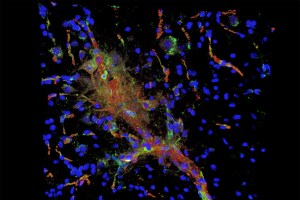
The researchers found that in mice with a common ALS genetic mutation, changing the gut microbiome could prevent or improve disease symptoms.
-
Health
Inflammatory processes may play role in ALS
Accumulating evidence suggests that inflammatory processes may play a role in the initiation and progression of amyotrophic lateral sclerosis (ALS).
-
Health
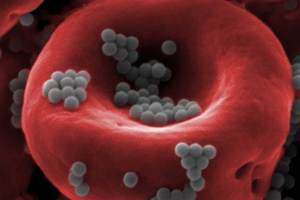
Harnessing nature to beat cancer
Every year, more than 18 million people around the world are told, “You have cancer.” In the U.S., nearly half of all men and more than one-third of women will develop some kind of cancer during their lifetimes, and 600,000-plus die from it annually. Despite the billions of dollars and countless new treatments that have…
-
Health
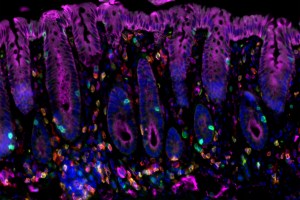
Interaction between immune factors can trigger cancer
Harvard researchers found that interaction between immune factors triggers cancer-promoting chronic inflammation, setting the stage for the development of skin cancer associated with chronic dermatitis and colorectal cancer in patients with colitis.
-
Health
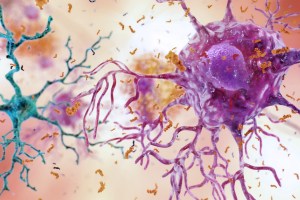
Exercise can ‘clean up’ Alzheimer’s environment
Study finds that inducing production of new neurons can improve cognitive function in a mouse model of Alzheimer’s disease.
-
Health
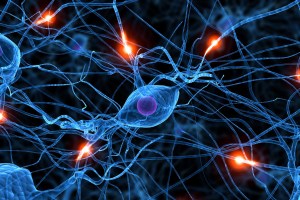
New research finds key players in MS progression
Researchers identify the key players involved in the gut-brain connection and their roles in the progression of neurologic diseases, such multiple sclerosis.
-
Health
Inflammation reduction cuts risk of heart attack, stroke
Brigham and Women’s Hospital’s clinical trial confirms its “inflammatory hypothesis” — reducing inflammation cuts the risk of future cardiovascular events.
-
Health
Probe of Alzheimer’s follows paths of infection
Starting with microbes, Harvard-MGH researchers outline a devastating chain of events
-
Health
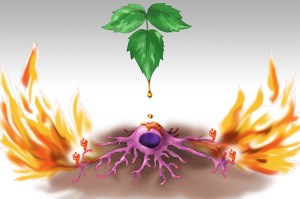
From leaf to itch
Harvard researchers have riddled the role of a molecule key to eruption of the torturous blisters as well as an antibody that interrupts the inflammatory response, opening the way to potential relief for careless hikers.
-
Health
Research suggests new avenues for attacking ALS
Harvard researchers have found evidence that bone marrow transplantation may one day be beneficial to a subset of patients suffering from ALS.
-
Health
‘New clarity’ against Alzheimer’s
Rudolph Tanzi of Harvard Medical School, recently named to Time’s list of the most influential people in the world, talks about the promising future of Alzheimer’s research.
-
Health
Nut consumption reduces risk of death
In the largest study of its kind, people who ate a daily handful of nuts were found to be 20 percent less likely to die from any cause over a 30-year period than those who didn’t consume nuts, say Harvard researchers.
-
Health
Sense of security may be false with tried and true anti-inflammatories
For all the tender joints and headaches they relieve and colon cancer they may prevent, the older nonsteroidal anti- inflammatory drugs (NSAIDs) raise another serious health risk. The highly publicized danger of heart attacks and other cardiovascular side effects first discovered in randomized control trials of newer, selective NSAIDs are being found in the older…
-
Health
Higher levels of systemic inflammatory markers associated with progression of AMD
Researchers led by Johanna M. Seddon, M.D., at the Massachusetts Eye and Ear Infirmary, Harvard Medical School, and Harvard School of Public Health, conducted a prospective longitudinal study to examine several biomarkers for cardiovascular disease, including CRP and IL-6, to measure the relationship between these biomarkers and incidence rates of progression of AMD. They found…
-
Health
Cystic fibrosis gene linked to fatty acid defects
Researchers already understood that the defective CFTR gene causes CF, explains senior author Steven D. Freedman, M.D., Ph.D., of the gastroenterology division at BIDMC and associate professor of medicine at Harvard Medical School. “But we didn’t understand how this defective gene leads to the symptoms of the disease. This new study sheds light on what…
-
Health
Innate signal sparks homing of T cells
The results of three studies published together in the Aug. 31, 2003 online edition of Nature Immunology help explain the uncanny ability of T cells to home to problem areas in the body and suggest potential new mechanisms to treat inflammatory diseases, such as asthma. When one fast-acting lipid hits the panic button about a…
-
Health
Study: Use of acetaminophen linked to hypertension
Out of a group of 80,000 women surveyed, those who regularly took acetaminophen or non-steroidal anti-inflammatory drugs (NSAIDs) – and had no previous history of high blood pressure – had a significantly elevated risk of becoming hypertensive. For example, women who took NSAIDs for 22 or more days per month increased their risk by 86…
-
Health
Chili peppers and inflammation
Researchers have discovered that the burinng pain of arthritis is similar to the pain associated with eating chili peppers. “The receptor activated by chili peppers in the mouth and other tissues also increases in the terminals of sensory neurons in the skin after inflammation, and this contributes to pain hypersensitivity,” says Clifford Woolf, director of…
-
Health
Inflammatory villain turns do-gooder
Many drugs try to tame inflammation by inhibiting molecular events occurring at the beginning of the body’s own immune response. But that may thwart the body’s attempt to heal. A team of Harvard Medical School researchers says a better approach may be to enhance the activity of natural compounds that work to resolve an inflammation.…