
 Featured series

Tag: Immunology
-
Health
App predicts hospital capacity
Harvard’s Global Health Institute puts its research expertise into motion, helping hospitals assess capacity and quality of care so they can prepare for COVID-19 patients appropriately.

-
Campus & Community
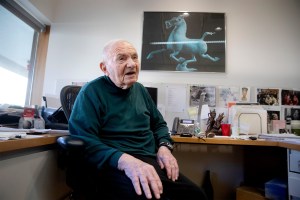
Still wrestling with big questions
Harvard biochemistry professor Jack Strominger is still working in his lab at 94 years old. He will retire and become emeritus in July.
-
Science & Tech
A shot in the arm for vaccine research
Immunology research at the Ragon Institute of MGH, MIT, and Harvard has advanced an HIV vaccine into the clinic, and will diversify thanks to a major gift from Phillip T. and Susan M. Ragon.

-
Science & Tech
A silly-sounding prize for some serious science
Harvard-trained researchers win Golden Goose Awards from the American Association for the Advancement of Science.

-
Health
Streamlining care through electronic consultations
Mass. General researchers have found that electronic consultations in allergy and immunology can simplify the process of providing the most appropriate care, often reducing the need for in-person specialist visits.

-
Health
Toward safer bone-marrow transplants
The combination of the antibody CD117 and the drug saporin selectively targets blood stem cells, making transplantation safer by limiting collateral damage caused by the current standard of treatment, chemotherapy, and radiation.

-
Health
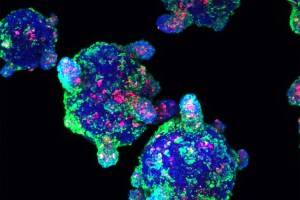
Epidemic of autoimmune diseases calls for action
Scientists at the Harvard Stem Cell Institute are seeking ways to protect newly transplanted cells from autoimmune attack.
-
Campus & Community
Flier to step down as Medical School dean
Jeffrey S. Flier will step down as dean of Harvard Medical School next July and return to teaching following a sabbatical year in 2016-17.

-
Health
Initiative challenges drug crisis
Taking aim at the alarming slowdown in the development of new and lifesaving drugs, Harvard Medical School is launching the Initiative in Systems Pharmacology, a comprehensive strategy to transform drug discovery by convening biologists, chemists, pharmacologists, physicists, computer scientists, and clinicians to explore together how drugs work in complex systems.
-
Health
New insights into the mystery of natural HIV immunity
When people become infected by HIV, it’s usually only a matter of time, barring drug intervention, until they develop full-blown AIDS. However, a small number of people exposed to the virus progress very slowly to AIDS — and some never develop the disease at all. In the late 1990s, researchers showed that a very high percentage of those naturally HIV-immune people,…
-
Science & Tech
Faust calls global health one of her main priorities
Declaring the University’s efforts to improve the state of global health knowledge, education, and capacity building to be one of her “very highest priorities” as president of Harvard, Drew Faust today (May 18) announced the appointment of Sue J. Goldie, Roger Irving Lee Professor of Public Health and director of the Center for Health Decision…

-
Health
Bone marrow stem cells may help control inflammatory bowel disease
Massachusetts General Hospital (MGH) and Harvard Medical School investigators have found that infusions of a particular bone marrow stem cell appeared to protect gastrointestinal tissue from autoimmune attack in a mouse model.
-
Health
Initial human trial of Type 1 diabetes treatment begun
Scientists at the Massachusetts General Hospital (MGH) have initiated a phase 1 clinical trial to reverse type 1 diabetes. The trial is exploring whether the promising results from the laboratory of Denise Faustman, Associate Professor of Medicine at Harvard Medical School, can be applied in human diabetes. A phase 1 trial is usually designed to…
-
Health
Blood stem cells fight invaders
No other stem cell is more thoroughly understood than the blood, or hematopoietic, stem cell. These occasional and rare cells, scattered sparingly throughout the marrow and capable of replenishing an entire blood system, have been the driving force behind successful bone marrow transplants for decades. Scientists, for the most part, have seen this as the…
-
Health
Pursuing a cholera vaccine
The reports from Dhaka are hopeful. It is 2005, and Dr. Firdausi Qadri and colleagues at the International Center for Diarrheal Disease Research, Bangladesh, are testing a new cholera vaccine on children. In their study, a single dose of live, crippled bacteria goes down easily in a fizzy drink. Within days, most of the children…
-
Campus & Community
Key antibody IgG links cells’ capture and disposal of germs
Scientists have found a new task managed by the antibody that’s the workhorse of the human immune system: Inside cells, immunoglobulin G (IgG) helps bring together the phagosomes that corral invading pathogens and the potent lysosomes that eventually kill off the germs. The research, by Axel Nohturfft at Harvard University and colleagues at Harvard, Massachusetts…
-
Campus & Community
Cells that work themselves to death
When you’re fighting flu or any other infection, your body mobilizes battalions of cells to defend against the invading viruses or bacteria. But once the invaders have been defeated and you’ve recovered from aches, fever, headaches, and a sore throat, your body has to get rid of the now-unneeded fighting cells. If left alone, they…
-
Health
How gold and other medicinal metals function against rheumatoid arthritis and other autoimmune diseases
Gold compounds have been used for the treatment of rheumatoid arthritis and other autoimmune diseases for more than 75 years, but until now, how the metals work has been a mystery. Harvard Medical School researchers report in the Feb. 27, 2006 issue of Nature Chemical Biology that special forms of gold, platinum, and other classes…
-
Health
Bacterium proves essential to immune system development
In the July 15, 2005 Cell, a team led by Dennis Kasper, the William Ellery Channing Professor of Medicine at Brigham and Women’s Hospital and professor of microbiology and molecular genetics at Harvard Medical School (HMS), and Sarkis Mazmanian, HMS instructor in microbiology and molecular genetics, both at the Channing laboratory, reports that Bacteriodes fragilis…
-
Health
Novel combination overcomes drug-resistant multiple myeloma cells
The researchers hope to move rapidly to clinical trials of the therapy, a combination of the drug Velcade and an experimental compound that was designed by researchers at the Broad Institute of the Massachusetts Institute of Technology and Harvard University. The report demonstrates that the combination was more than twice as effective as either drug…
-
Health
TB gene identified
As many as one out of three people in the world are infected with the bacteria that causes tuberculosis, public health experts estimate. That could lead to a global plague were it not for the fact that only one out of 10 infected people actually develops the disease. Still, TB is a major global health…
-
Health
Broken hearts may mend after all
Although adult muscle cells become inflexible after differentiation, these cells temporarily loosen the structure to divide in fetal development. Mark T. Keating found that in some lower vertebrates, heart tissue regenerates without the scarring seen in mammals. This seems to occur by proliferation of existing cardiomyocytes, not stem cells. Felix Engel, an HMS research fellow…
-
Health
T cell misfits may spell autoimmunity
For a would-be T cell, the journey from cradle to grave is likely to be brief. After leaving the bone marrow, the immature immune cell travels directly to the thymus, where it undergoes a winnowing process. To become a mature T cell, it must learn to attack alien proteins and not those peptides produced by…
-
Health
TB susceptibility gene identified
As many as one out of three people in the world are infected with the bacteria that causes tuberculosis, public health experts estimate. That could lead to a global plague were it not for the fact that only one out of 10 infected people actually develops the disease. Still, TB is a major global health…
-
Health
New findings about protection against pneumococcal disease
Before the advent of the pneumococcal vaccine, known as Prevnar, S. pneumoniae caused millions of ear infections each year, half a million episodes of bacterial pneumonia, and life- threatening cases of meningitis and bacteremia. Prevnar triggers recipients’ immune systems to produce “anticapsular antibodies.” However, Prevnar doesn’t work well in the developing world, and it is…
-
Health
Joslin Diabetes Center scientists find genetic defects in immunological tolerance
The genetic defect keeps the body from properly dealing with “errant” immune cells that it normally eliminates by a process called immunological tolerance. These immune cells then attack the insulin-producing beta cells in the pancreas, mistaking them for foreign invaders. This is the first step in the onset of type 1 diabetes. The pancreatic beta…
-
Health
Innate signal sparks homing of T cells
The results of three studies published together in the Aug. 31, 2003 online edition of Nature Immunology help explain the uncanny ability of T cells to home to problem areas in the body and suggest potential new mechanisms to treat inflammatory diseases, such as asthma. When one fast-acting lipid hits the panic button about a…
-
Health
Bacterial construct makes for elegant vaccine
Investigators from Harvard Medical School and London’s Hammersmith Hospital have found a way to use the bacterium Listeria along with Escherichia coli to fight disease instead of causing it. In the November 2001 issue of Gene Therapy, Darren Higgins, Harvard Medical School assistant professor of microbiology, and Hammersmith co-authors report that by modifying E. coli…
-
Health
AIDS vaccine trials underway
A new AIDS vaccine is being tested in Boston, according to senior investigator Clyde Crumpacker, infectious disease specialist in the Virology Research Clinic at Beth Israel Deaconess Medical Center (BIDMC) and professor of medicine at Harvard Medical School’s Division of AIDS. The study, which will include a total of 160 participants at 10 sites throughout…