
 Featured series

Tag: emotions
-
Science & Tech
Logic or emotion: Which is more valuable?
Neither thinking nor feeling is superior, according to Leonard Mlodinow’s new book, which argues that the two are inextricably linked.

-
Science & Tech
What prompted Capitol rioters to violence?
The Jan. 6 attack on the U.S. Capitol over Donald Trump’s election loss stunned the country and forced many to ask what prompts people to political violence.

-
Science & Tech
For teens who feel it all, a research-backed explanation
When teenagers seem to be experiencing conflicting emotions at the same time and struggling to make sense of them all, it may be because they are.

-
Health
Meditation’s positive residual effects
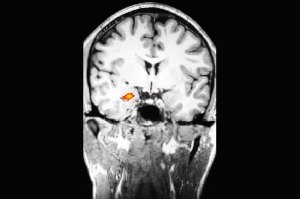
A new study has found that participating in an eight-week meditation training program can have measurable effects on how the brain functions even when someone is not actively meditating.
-
Campus & Community
Doctor fatigue hurting patients
Too many 24-hour shifts worked by hospital interns cause medical mistakes that harm and may even kill patients, according to a new Harvard Medical School study. Doctors in training who fall asleep during surgery or while examining patients make four times more errors that cause deaths than their better-rested colleagues, the research reveals. Young doctors…
-
Health
Researchers find a gene for fear
A team of researchers from Harvard, Columbia, and Rutgers universities has found the seat of fear. It’s located in a pea-sized area deep in the brain of all mammals, from gerbils, to lions, to humans. And it’s involved in both inborn fear and the dread we acquire from dealing with people and things that hurt…
-
Campus & Community
Discovering how we appreciate a loss
A committee of psychiatrists, surgeons, ethicists, and others decided that the only course left for five people with otherwise untreatable mental disorders was to cut out a certain area of their brains. The region sits near the middle of the brain tucked between regions that have to do with thinking and emotion. It is known…
-
Campus & Community
Probing inappropriate rage
As 30 research subjects seethed, scientists measured blood flowing between the thinking and emotional parts of their brains. What would be the difference between people who controlled their anger pretty well, and those who could not handle it in a socially acceptable way? These were the first such brain scans ever done with mental patients…
-
Campus & Community
Scientists pursue happiness
“When we try to predict what will make us happy we’re often wrong,” says Daniel Gilbert, a professor of psychology at Harvard University. “Researchers all over the world find the same predictable errors, whether the pursuit involves romance, a new car, or a sumptuous meal.” Gilbert uses the results of his study of election outcomes…
-
Health
Emotions change with direction
If someone looks directly at you with an angry expression, you usually assume that person is mad at you. If she or he looks away, you become unsure. The person may be angry with someone or something else. In the latter case, the emotional part of your brain shows more activity. With fear, it’s the…
-
Health
Starship memories
Psychologists are at odds over the idea that people can forget traumatic events then “recover” intact memories of the trauma years later. On one side are clinicians, who observe that painful memories can be repressed, banished from a trauma survivor’s consciousness until they’re “recovered” with the help of certain psychotherapeutic techniques in adulthood. Memory researchers,…
-
Health
Pain and pleasure activate same brain structures
David Borsook is a Harvard Medical School associate professor of radiology, who both treats patients and conducts research. “Over 15 years of seeing patients with pain it became obvious that we do not have good methods of assessing chronic pain,” Borsook says. “And we do not have good methods for treating it.” So Borsook and…
-
Health
The fruit fly fight club
Fruit flies fight. The males will go after each other, fighting to establish dominance. Edward Kravitz, the George Packer Berry professor of neurobiology at Harvard Medical School, is using the fighting fruit fly model system to explore the neurobiology of aggression. Previously Kravitz has used fighting lobsters to study changes in the brain that occur…
-
Health
Research suggests optimistic attitude can reduce risk of heart disease in older men
Researchers from the Harvard School of Public Health, working with colleagues from the Department of Veterans Affairs, studied some 1,306 Boston area men who were part of the Veterans Affairs Normative Aging Study. In 1986, the volunteers completed a questionnaire that judged whether they were optimistic or pessimistic. They all were healthy individuals with no…