
 Featured series


Tag: Department of Chemistry and Chemical Biology
-
Science & Tech
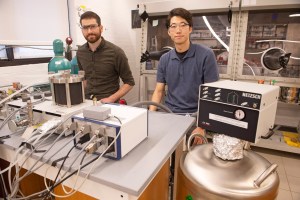
Keeping cool without warming the planet
Harvard scientists have developed a revolutionary new mechanism that could unlock environmentally friendly air conditioning.
-
Science & Tech
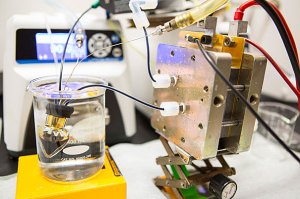
A battery inspired by vitamins
Harvard researchers have developed a new class of battery electrolyte material based on vitamin B2 that could enable large-scale, inexpensive electricity storage for renewable power sources.
-
Campus & Community
Energy research wins grant
Harvard chemist Cynthia Friend has been awarded a major center grant from the U.S. Department of Energy’s Basic Energy Sciences’ Energy Frontier Research Centers program, which is designed “to accelerate the scientific breakthroughs needed to build the 21st-century energy economy.”

-
Campus & Community
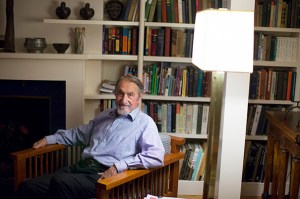
Harvard professor wins Nobel in chemistry
Martin Karplus, the Theodore William Richards Professor of Chemistry Emeritus in Harvard’s Department of Chemistry and Chemical Biology, is one of three to share in the Nobel Prize in chemistry, the The Royal Swedish Academy of Sciences announced this morning.
-
Science & Tech
Now, ice won’t stick
A Harvard team of researchers has invented a way to keep any metal surface free of ice and frost. The treated surfaces quickly shed even tiny, incipient condensation droplets or frost, simply through gravity.

-
Science & Tech
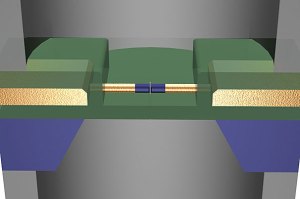
Reading life’s building blocks
A team led by Harvard researcher Charles Lieber has for the first time succeeded in creating a device that opens the door to using tiny holes called nanopores in an electrically charged membrane to quickly and easily sequence DNA.
-
Health
Quantum (not digital) computing
Study uses quantum computing to make calculations, in a breakthrough that could change myriad fields, including cryptography and materials science.

-
Health
Researchers ‘NOTCH’ a victory in war on cancer
Normal 0 0 1 819 4673 38 9 5738 11.1282 0 0 0 Scientists have devised an innovative way to disarm a key protein considered to be “undruggable,” meaning that all previous efforts to develop a drug against it have failed. Their discovery, published in today’s edition of the journal Nature, lays the foundation for…
-
Health
Nanowires go 2-D, 3-D
Taking nanomaterials to a new level of structural complexity, scientists have determined how to introduce kinks into arrow-straight nanowires, transforming them into zigzagging two- and three-dimensional structures with correspondingly advanced functions.
-
Science & Tech
Harvard scientists bend nanowires into 2-D and 3-D structures
Taking nanomaterials to a new level of structural complexity, Harvard researchers have determined how to introduce kinks into arrow-straight nanowires, transforming them into zigzagging two- and three-dimensional structures with correspondingly advanced functions. The work is described this week in in a letter in the journal Nature Nanotechnology by scientists led by Bozhi Tian and Charles…
-
Science & Tech
Bringing new meaning to the term scientific paper
An insight from the labs of Harvard chemist George M. Whitesides and cell biologist Donald Ingber is likely to make a fundamental shift in how biologists grow and study cells – and it’s as cheap and easy as reaching for a paper towel. Ratmir Derda, a postdoctoral student co-mentored by Whitesides and Ingber at Harvard’s…
-
Health
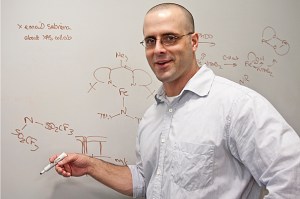
Betley probes natural power plant
Harvard chemist Ted Betley is examining the process of photosynthesis to understand and manipulate nature’s engineering.
-
Science & Tech
Why leave it to nature?
Amid calls for transformative change in the world’s energy supply, Harvard chemist Ted Betley is taking a back-to-basics approach and examining the mother of all energy supplies — photosynthesis — for clues to how nature runs a power plant. Betley, assistant professor of chemistry and chemical biology, says he’s convinced that solar power must become…
-
Science & Tech
After bloody revolution: Bringing science back to Liberian classrooms
Adam Cohen and Ben Rapoport needed materials to conduct a science experiment, but supplies were hard to come by. Cohen, assistant professor of chemistry and chemical biology and of physics in the Harvard Faculty of Arts and Sciences, and Rapoport, an M.D./Ph.D. student at Harvard Medical School and the Department of Electrical Engineering and Computer…
-
Health
Taking a stride toward synthetic life
Harvard scientists have cleared a key hurdle in the creation of synthetic life, assembling a cell’s critical protein-making machinery in an advance with both practical, industrial applications and that advances the basic understanding of life’s workings. George Church, a genetics professor at Harvard Medical School and member of Harvard’s Origins of Life Initiative, reported the…
-
Science & Tech
Researchers find new molecule to block ‘Hedgehog’ signaling in cancer, development
Researchers have achieved a feat drug developers had thought difficult, if not impossible, discovering a compound that blocks the functioning of a key developmental protein by binding to an “undruggable” target — an advance that may provide a new avenue to fight skin, pancreatic, prostate, and other cancers. A team led by Stuart Schreiber, the…
-
Health
New label-free method tracks molecules and drugs in live cells
A new type of highly sensitive microscopy developed by Harvard researchers could greatly expand the limits of modern biomedical imaging, allowing scientists to track the location of minuscule metabolites and drugs in living cells and tissues without the use of any kind of fluorescent labeling. The technique, based on stimulated Raman scattering (SRS), works by…
-
Science & Tech
Jeremy Knowles, eminent chemist, Harvard leader, 72
SUBHEAD By XXXXXXXXX Harvard News Office –> Jeremy R. Knowles, an eminent chemist and longtime leader of Harvard’s Faculty of Arts and Sciences, died April 3 at his home in Cambridge, after a struggle with cancer. Known for his formidable intellect, his encompassing interests, and his urbane wit, Knowles was a member of the Harvard…
-
Science & Tech
Nanowire generates its own electricity
Harvard chemists have built a new wire out of photosensitive materials that is hundreds of times smaller than a human hair. The wire not only carries electricity to be used in vanishingly small circuits, but generates power as well. Charles M. Lieber, the Mark Hyman Jr. Professor of Chemistry, and colleagues created the nanowire out…
-
Health
Nine Harvard faculty members win NIH’s Pioneer, Innovator Awards
Nine Harvard researchers “well-positioned to make significant – and potentially transformative – discoveries in a variety of areas,” ranging from brain development to reprogramming stem cells, have been awarded special funding by the National Institutes of Health (NIH). The grants, announced Tuesday (Sept. 18), total $15 million over the next five years. They will be…
-
Campus & Community
Comprehensive model first to map protein folding at atomic level
Scientists at Harvard University have developed a computer model that, for the first time, can fully map and predict how small proteins fold into three-dimensional, biologically active shapes. The work could help researchers better understand the abnormal protein aggregation underlying some devastating diseases, as well as how natural proteins evolved and how proteins recognize correct…
-
Campus & Community
DEAS researcher takes turn training future African scientists
Elisabeth Moyer knows that planeloads of relief supplies arrive regularly in Africa. She knows that African and international workers struggle to provide food and to fight diseases such as AIDS, tuberculosis, malaria, and polio. But lost amid the continent’s immediate needs and concerns are its scientists, who Moyer and a growing number of others believe…
-
Campus & Community
Molecule by molecule, new assay shows real-time gene activity
Chemists at Harvard University have developed the first technique providing a real-time, molecule-by-molecule “movie” of protein production in live cells. Their direct observation of fluorescently tagged molecules in single cells – providing striking real-time footage of the birth of individual new protein molecules inside – greatly increases scientists’ precision in probing genetic activity. Using the…
-
Health
Synthetic molecule blocks exit from cell organelle
The ubiquitous, small GTPases are a family of signal transduction molecules that play crucial roles in numerous biological processes, including cell motility and division. Though scientists have eyed these proteins as potential therapeutic targets for years, inhibitors of GTPases have proven exceedingly difficult to develop; currently there are only a handful in existence. But in…
-
Health
RNAi solution knocks down herpes infection
Ever since RNA interference hit the scene a few years ago as a way to selectively turn off gene expression, researchers have been investigating whether these small but powerful bits of RNA can be used as therapies. The problem has been delivery – how to get the RNA into the cell where it can silence…
-
Science & Tech
Making the world’s smallest gadgets even smaller
You may not have noticed, but the smallest revolution in world history is under way. Laboratories and factories have begun to make medical sensors and computer-chip components smaller than a single blood cell or the periods on this page. Charles Lieber, Hyman Professor of Chemistry, has been making such diminishingly small things for years. He…
-
Campus & Community
Cancer link to ‘protein promiscuity’ being studied
When found at abnormally high concentrations, two proteins implicated in many human cancers have the potential to spur indiscriminate biochemical signaling inside cells, chemists at Harvard University have found. Their finding may expand scientists’ current understanding of oncogenesis – that cancer arises when an oncoprotein becomes overactive, ramping up the biochemical pathways that it normally…
-
Health
Novel combination overcomes drug-resistant multiple myeloma cells
The researchers hope to move rapidly to clinical trials of the therapy, a combination of the drug Velcade and an experimental compound that was designed by researchers at the Broad Institute of the Massachusetts Institute of Technology and Harvard University. The report demonstrates that the combination was more than twice as effective as either drug…
-
Campus & Community
Drops in drops hold practical promise
A team of Harvard researchers has developed a technique that allows the precise formation of double emulsions – droplets within droplets – that offers new ways to deliver drugs, nutrients, and other consumer and industrial products. The team, led by Gordon McKay Professor of Applied Physics and Professor of Physics David Weitz, devised a technique…