
 Featured series



Tag: Dana-Farber Cancer Institute
-
Health
Treatment resistance in some cancer cells may be reversible
The ability of cancer cells to resist treatment with either targeted drug therapies or traditional chemotherapy may, in some cases, result from a transient state of reversible drug “tolerance.” In a paper that will appear in the journal Cell and is being released early online, Harvard researchers at the Massachusetts General Hospital (MGH) Cancer Center…
-
Campus & Community
New cancer drug screening method created
Scientists affiliated with Harvard Medical School say they’ve developed a laboratory technique that improves on traditional methods of screening potential anti-cancer drugs.
-
Campus & Community
Dana-Farber calls for artists
The Dana-Farber Cancer Institute is looking for artists to help create its 2010 collection of holiday cards and candle wraps.
-
Science & Tech
Another piece of cancer puzzle falls into place
An international team of researchers has created a genome-scale map of 26 cancers, revealing more than 100 genomic sites where DNA from tumors is either missing or abnormally duplicated compared to normal tissues. The study, the largest of its kind, finds that most of these genetic abnormalities are not unique to one form of cancer, but are shared across multiple…
-
Health
Genes linked to breast cancer drug resistance
Harvard researchers at the Dana-Farber Cancer Institute have discovered a “gene activity signature” that predicts a high risk of cancer recurrence in some breast tumors that have been treated with commonly used chemotherapy drugs. Despite their resistance to drugs of the anthracycline class, the breast cancers bearing this gene signature probably still will be vulnerable…
-
Health
Cancer vaccine success
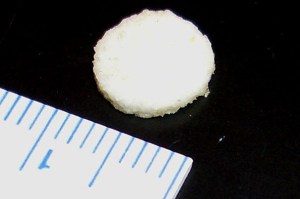
A cancer vaccine carried into the body on a carefully engineered, fingernail-sized implant is the first to successfully eliminate tumors in mammals, scientists report this week (Nov. 25) in the journal Science Translational Medicine.
-
Health
First cancer vaccine to eliminate tumors in mice
A cancer vaccine carried into the body on a carefully engineered, fingernail-sized implant is the first to successfully eliminate tumors in mammals, a team of Harvard bioengineers and biologists report today in the journal Science Translational Medicine. The new approach uses plastic disks impregnated with tumor-specific antigens and implanted under the skin to reprogram the…
-
Health
Researchers ‘NOTCH’ a victory in war on cancer
Normal 0 0 1 819 4673 38 9 5738 11.1282 0 0 0 Scientists have devised an innovative way to disarm a key protein considered to be “undruggable,” meaning that all previous efforts to develop a drug against it have failed. Their discovery, published in today’s edition of the journal Nature, lays the foundation for…
-
Health
Breast cancer: Scourge of developing world
Three-day symposium opens, focusing attention on the rise of breast cancer in developing nations, even as resources are scarce to contain it.

-
Health
Darkness with the light
Adult survivors of childhood cancer have an increased risk of suicidal thoughts, even decades after their cancer treatments have ended, according to a study led by Harvard researchers at Dana-Farber Cancer Institute (DFCI). The researchers report in the Journal of Clinical Oncology that nearly 8 percent of childhood cancer survivors said they have experienced suicidal…
-
Health
Three Harvard teams to receive $9 million each in federal funding for stem cell research
Three teams of Harvard Stem Cell Institute (HSCI) researchers are slated to receive $27 million over seven years in National Heart Lung and Blood Institute (NHLBI) grants for the development of stem-cell based tools and treatments to understand and treat cardiovascular and blood disorders. The NHLBI Progenitor Cell Biology Consortium will consist of nine research…
-
Campus & Community
Donations to cancer institute hit $1b
A Dana-Farber Cancer Institute fund-raising campaign has hit the $1 billion mark a year earlier than expected – despite the ragged economy – setting what is believed to be a record for New England health care institutions. The drive’s success, which will be announced today, appears to have few national parallels, although at least one…
-
Campus & Community
What the end-of-life conversation can bring
Professor Holly Prigerson, director of the Center for Psycho-oncology and Palliative Care Research at the Dana Farber Cancer Institute, has confronted the issue professionally and personally. Last fall Prigerson and her co-investigators published a study in The Journal of the American Medical Association examining how end-of-life care discussions between doctors and terminal patients affected the…
-
Health
Study finds promise in combined transplant/vaccine therapy for high-risk leukemia
Two of the most powerful approaches to cancer treatment — a stem cell transplant and an immune system-stimulating vaccine — appear to reinforce each other in patients with an aggressive, hard-to-control form of leukemia, Harvard scientists at Dana-Farber Cancer Institute (DFCI) have found. The researchers report that patients with high-risk acute myeloid leukemia (AML) or…
-
Health
Study supports DNA repair-blocker research in cancer therapy
Scientists at Dana-Farber Cancer Institute have uncovered the mechanism behind a promising new approach to cancer treatment: damaging cancer cells’ DNA with potent drugs while simultaneously preventing the cells from repairing themselves. The findings, reported in the Aug. 14 edition of Molecular Cell, help explain the promising results being seen in clinical trials of compounds…
-
Health
Postdiagnosis aspirin use reduces risk of dying from colorectal cancer
Regular use of aspirin after colorectal cancer diagnosis may reduce the risk of cancer death, report Harvard researchers at Massachusetts General Hospital (MGH), Dana-Farber Cancer Institute (DFCI) and Brigham and Women’s Hospital. In today’s edition of the Journal of the American Medical Association, the study’s authors also find that the aspirin-associated survival advantage was seen…
-
Health
Scientists create energy-burning brown fat in mice
Harvard researchers at Dana-Farber Cancer Institute have shown that they can engineer mouse and human cells to produce brown fat, a natural energy-burning type of fat that counteracts obesity. If such a strategy can be developed for use in people, the scientists say, it might open a novel approach to treating obesity and diabetes. A…
-
Health
An unusual collection: A brain tumor tissue bank
Five years ago, as she was walking into Caritas Holy Family Hospital and Medical Center in Methuen, Mass., Patricia Fay saw a priest she knew and cornered him. “I’m like ‘Oh, Father Peter! And I sort of grabbed him by his arm,” she recounts.“I said, ‘What are you doing here? Father Peter! I could use…
-
Health
First molecular steps to childhood leukemia identified
A Harvard research based at Massachusetts General Hospital has identified how a chromosomal abnormality known to be associated with acute lymphoblastic leukemia (ALL) – the most common cancer in children – initiates the disease process. In the July issue of Cell Stem Cell, they describe how expression of this mutation in hematopoietic stem cells (HSCs),…
-
Health
Study pinpoints novel cancer gene and biomarker
Dana-Farber Cancer Institute scientists’ discovery of a cancer-causing gene – the first in its family to be linked to cancer – demonstrates how the panoramic view of genomics and the close-up perspective of molecular biology are needed to determine which genes are involved in cancer and which are mere bystanders. The findings are reported in…
-
Health
After a century, link between chromosomal instability and centrosome defects in cancer cells is unraveled
In a new study, Dana-Farber Cancer Institute scientists disprove a century-old theory about why cancer cells often have too many or too few chromosomes, and show that the actual reason may hold the key to a novel approach to cancer therapy. Since the late 19th century, scientists have attributed the surplus or shortage of intact…
-
Health
AML patients benefit from stem cell transplants
A stem cell transplant (SCT) from a compatible donor early in the course of disease is the best approach for the majority of young and middle-aged adult patients with acute myeloid leukemia (AML), according to a new analysis of two dozen clinical studies. The findings of the research, published in the June 10 issue of…
-
Health
DFCI cancer research highlights age-related treatment effectiveness, patient cost concerns
New research from the Dana-Farber Cancer Institute highlights age-related responses to colon cancer treatment and patient attitudes toward cost of drugs to manage side effects. Research presented at the American Society of Clinical Oncology‘s annual meeting in Orlando, Fla., Friday (May 29) shows that the vast majority of advanced colon cancer patients in a clinical…
-
Health
Genetic testing for breast or ovarian cancer risk may be greatly underutilized
Although a test for gene mutations known to significantly increase the risk of hereditary breast or ovarian cancer has been available for more than a decade, a new study finds that few women with family histories of these cancers are even discussing genetic testing with their physicians or other health-care providers. In an online report…
-
Science & Tech
Scientists create custom three-dimensional structures with ‘DNA origami’
By combining the art of origami with nanotechnology, Dana-Farber Cancer Institute researchers have folded sheets of DNA into multilayered objects with dimensions thousands of times smaller than the thickness of a human hair. These tiny structures could be forerunners of custom-made biomedical nanodevices such as “smart” delivery vehicles that would sneak drugs into patients’ cells,…
-
Health
MicroRNA discovered to play role in DNA repair
Among their many roles as message couriers and gene regulators, microRNA molecules also help control the repair of damaged DNA within cells, Dana-Farber Cancer Institute and Harvard Medical School scientists report in the May issue of Nature Structural & Molecular Biology. The finding not only demonstrates the unexpected versatility of microRNA (miRNAs) in the life…
-
Health
Breast cancer danger rising in developing world
Women in developing nations, once thought to have a small chance of contracting breast cancer, are increasingly getting the disease as lifestyles incorporate risk factors common in industrialized nations, panelists at the Harvard School of Public Health (HSPH) said Tuesday (April 14).
-
Science & Tech
Link found between religious belief, intensive medical care at end of life
In a new study of terminally ill cancer patients, researchers at Dana-Farber Cancer Institute found that those who draw on religion to cope with their illness are more likely to receive intensive, life-prolonging medical care as death approaches — treatment that often entails a lower quality of life in patients’ final days. Previous research showed…
-
Health
Blood type study sheds light on biology of pancreatic cancer
Offering a novel clue about the basic biology of pancreatic cancer, researchers at Dana-Farber Cancer Institute have confirmed a decades-old discovery of a link between blood type and the risk of developing the disease. The finding, published online by the Journal of the National Cancer Institute on March 10, is based on an analysis of…