
 Featured series

Tag: Zoology
-
Campus & Community
Faculty elected to National Academy of Sciences
Five Harvard faculty members were elected to the National Academy of Arts and Sciences.

-
Health
Learning through doing
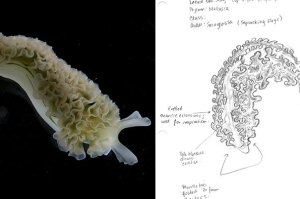
As part of Professor Gonzalo Giribet’s Biology of Invertebrates class, students make closely observed, highly detailed sketches of animals they study in the lab.
-
Health
One million species, and counting
Just weeks after adding its millionth Web page, the online biology clearinghouse called the Encyclopedia of Life (EOL) has received a grant from the Sloan Foundation that will allow it to continue its mission of documenting every living plant and animal species on the globe.
-
Science & Tech
Keeping creature company
Rosado enjoys managing museum’s massive collection of amphibians
-
Health
The way of the digital dodo
The National Science Foundation-funded, three-year effort aims to create 3-D digital models of each species represented in Harvard’s collection of 12,000 bird skeletons.
-
Health
Jamaican lizards mark their territory with shows of strength at dusk and dawn
What does ageless fitness guru Jack LaLanne have in common with a Jamaican lizard? Like LaLanne, the lizards greet each day with vigorous push-ups. That’s according to a new study showing that male Anolis lizards engage in impressive displays of reptilian strength – push-ups, head bobs, and threatening extension of a colorful neck flap called…
-
Health
Boning up on frogs’ defenses
Harvard biologists have determined that some African frogs carry concealed weapons: when threatened, these species puncture their own skin with sharp bones in their toes, using the bones as claws capable of wounding predators. The unusual defense mechanism is described by Harvard’s David C. Blackburn, James Hanken, and Farish A. Jenkins, Jr., in a forthcoming…
-
Health
Opossum genome shows ‘junk’ DNA source of genetic innovation
A tiny opossum’s genome has shed light on how evolution creates new creatures from old, showing that change primarily comes by finding new ways of turning existing genes on and off. The research, by an international consortium led by the Broad Institute of MIT and Harvard, revises our understanding of genetic evolution. Scientists previously thought…
-
Campus & Community
Students search for Thompson Island’s hoppers
Education met hands-on science on Boston Harbor’s Thompson Island on Oct. 9, 2006, as roughly 100 Harvard undergraduates fanned out from beach to beach collecting insects to be included in a new database of Harbor Island insect life. The students, part of biology professors Brian Farrell and Missy Holbrook’s OEB 10 class, “Foundations of Biological…
-
Campus & Community
Monkey see, monkey infer
Monkeys keep turning out to be smarter than people think they are. Researchers have shown that they can count to four and are aware of differences between languages like Dutch and Japanese, even though they don’t known what is being said. Now, Harvard psychologists find that monkeys can draw correct conclusions about novel situations. For…
-
Science & Tech
Researchers create pigs that produce omega-3 fatty acids
Researchers report they have created pigs that produce omega -3 fatty acids, which are known to improve heart function and help reduce the risks for heart disease, representing the first cloned transgenic livestock in the world that can make the beneficial compound. The research could be a boost to both farmers and health-conscious consumers seeking…
-
Health
Dog genome unleashed
An international research team led by scientists at the Broad Institute of MIT and Harvard has decoded the DNA of the domestic dog and pinpointed millions of genetic differences that distinguish dog breeds. The study also includes the first comparative analysis to encompass three distinct mammalian genomes, revealing important DNA elements common among them. Such…
-
Campus & Community
Wing color not just for looks
Harvard and Russian researchers have documented natural selection’s role in the creation of new species through a process called reinforcement, where butterfly wing colors differ enough to avoid confusion with other species at mating time, helping the butterflies avoid creating less-fit hybrid offspring. Though more distantly related species tend to be more physically distinct, researchers…
-
Health
Zoologist says in animal kingdom, less is more
Harvard researcher Piotr Naskrecki hopes his new book, “The Smaller Majority” (Harvard University Press, 2005), will win over some new advocates for the tiny creatures he has spent his life studying. It is a gorgeous book, featuring hundreds of photographs from Naskrecki’s expeditions in Latin America, Africa, Australia, and the South Pacific. Naskrecki has trained…
-
Health
Ivory-billed woodpecker: Ornithology’s holy grail
Tim Gallagher and Bobby Harrison almost flopped into the mud of Arkansas’ Bayou de View in their haste to get out of the canoe. They crashed through the undergrowth after the flashing black and white bird that was threatening to vanish among the huge cypresses. After dashing across the soggy ground, through brambles, and over…
-
Campus & Community
Chimp genome effort shines light on human evolution
A research effort, led by scientists at the Broad Institute of MIT and Harvard, the Washington University School of Medicine in St. Louis, and the University of Washington, Seattle, focused on the chimpanzee in hopes that genetic comparisons with humanity’s closest relative will lead to answers to both practical questions – such as the causes…
-
Campus & Community
The accidental ‘best friend’
Harvard researchers studying Siberian foxes have uncovered evidence that the ability to interpret human expressions and gestures that helped transform the wild wolf into humankind’s cooperative “best friend” may have occurred by accident. The research casts doubt onto a previous theory that domestic dogs’ ability to interpret human communication results from generations of selection for…
-
Health
Monkeys unable to master grammar crucial to human language
Grammar is essentially a system of rules for taking a finite set of discrete elements and combining them into a limitless range of novel expressions. For humans, grammar cobbles together words to create sentences. There is no evidence that animals have a similar system to produce sequences of calls with more expressive meaning. Together with…
-
Health
Scorpion venom blocks bone loss
Rats given kalitoxin, from scorpion venom, enjoyed 84 percent less jawbone loss than those that didn’t get the injections. “We are very excited because this is the first demonstration that this type of compound may be useful in treating periodontal disease,” says Martin Taubman, Harvard professor of oral and developmental biology who chairs the Department…
-
Campus & Community
Scientists show how fish save energy by swimming in schools
Researchers at Harvard University and the Massachusetts Institute of Technology have provided new insights into the hydrodynamic benefits fish reap by swimming in schools. “The annual upstream voyage of fish to spawn has long been viewed as one of the classic struggles of the natural world, but our work suggests that this journey may not…
-
Science & Tech
Researchers regenerate zebrafish heart muscle
A research team led by Mark T. Keating showed that zebrafish can regenerate heart muscle within two months after a severe injury. The team, from the Howard Hughes Medical Institute at Children’s Hospital Boston, also identified a possible genetic and molecular model for regeneration in zebrafish that could help direct further research in humans. The…
-
Science & Tech
Researchers debate origin of language
Birds sing, chimps grunt, and whales whistle, but those sounds fall far short of expressing the richness of their experiences. Their lack of language goes to the question of why humans have it but no other animals do. That question in turn leads to two major theories of the origin of language. One is the…
-
Science & Tech
Daddy longlegs have a global reach
Huge numbers of arachnid and insect species remain unknown. Arachnologists like Gonzalo Giribet, toiling in relative obscurity, routinely identify new species – and their work is far from over. Giribet, assistant professor of biology and assistant curator of invertebrates in the Museum of Comparative Zoology, has about 50 new species of daddy longlegs in his…
-
Health
The fruit fly fight club
Fruit flies fight. The males will go after each other, fighting to establish dominance. Edward Kravitz, the George Packer Berry professor of neurobiology at Harvard Medical School, is using the fighting fruit fly model system to explore the neurobiology of aggression. Previously Kravitz has used fighting lobsters to study changes in the brain that occur…
-
Science & Tech
Oldest mammal is found
When dinosaurs ruled the world, scampering around their feet were platoons of diminutive insect-eating animals, part reptile, part something new. When the giant reptiles and many other animals were wiped out some 65 million years ago, the shrewlike newcomers prospered. They began evolving into different types of mammals and eventually gave rise to everything from…
-
Science & Tech
Polar bear research shows global warming is real
Harvard Professor James McCarthy was among a handful of top scientists who coordinated a remarkable report by the world scientific community in 2001 that said global warming is real, it’s here, and it’s going to be worse than we thought. “We already see effects that [indicate] the change in climate has occurred,” said McCarthy, who…
-
Health
New gene found in fruit flies could impact human medicine
In one type of fruit fly, Drosophilia melanogaster, but not in others, researchers found a gene that carries instructions for making a motor that gives this species’ sperm extra horsepower. The researchers were not looking specifically for such a gene but came across it serendipitously during a general investigation of motor proteins. Various creatures boast…
-
Health
Birth of new brain cells induced in birds
Stem cells that are naturally present in the brains of finches were induced to replace lost cells and restore the birds’ ability to sing their distinctive song. “Our results represent the restoration of a brain circuit involved in a complex learned behavior,” says Jeffrey Macklis, associate professor of neurology in the Division of Neuroscience at…
-
Science & Tech
Charles Schaff brings knack for finding fossils to field — and Harvard
Charles Schaff ‘s official job description isn’t “fossil hunter.” He is a curatorial associate at the Museum of Comparative Zoology. Schaff, however, makes regular trips to look for fossils in places as far-flung as Africa, South America and Greenland. Though the trips provide high points of excitement, most of Schaff’s time is spent watching over…