
Tag: social psychology

  • Science & Tech

    What’s a little envy between friends?

    The feeling can eat you alive — but only if you let it
    2–4 minutes
    Two emoji characters, one smiling, one envious.
  • Nation & World

    Turning a light on our implicit biases

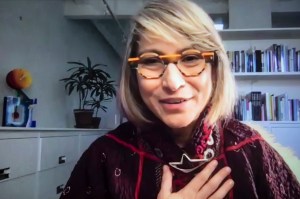
    Mahzarin Banaji, Cabot Professor of Social Ethics in the Department of Psychology, who studies implicit biases, was the featured speaker at an online seminar Tuesday, “Blindspot: Hidden Biases of Good People.”
    4–6 minutes
    Mahzarin Banaji
  • Science & Tech

    Not a popularity contest

    New research from faculty at Harvard Business School and Harvard Medical School finds that a majority of college freshmen believe others have more friends than they do, when they often don’t.
    4–5 minutes
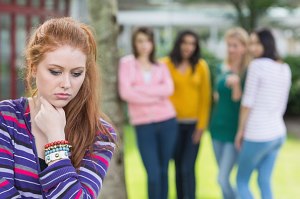
    Student being bullied by a group of students
  • Health

    How to be your best in 5 minutes

    Harvard Business School social psychologist Amy Cuddy explains how tapping into our inner strength can help us make the most of life’s big challenges.
    4–6 minutes
  • Campus & Community

    Daniel M. Wegner famous for ‘thought suppression’

    Daniel M. Wegner, a pioneering social psychologist who helped to reveal the mysteries of human experience through his work on thought suppression, conscious will, and mind perception, died July 5 at age 65.
    4–6 minutes
  • Science & Tech

    Of two minds

    We resolve to exercise more and eat healthy, and then reach for a cupcake at the office holiday party. We pledge to put money away for retirement, but end up maxing out credit cards that charge 14 percent interest. According to Professor David Laibson, the reason for these struggles is that human beings are of…

    4–7 minutes
  • Science & Tech

    What are the “Hard Problems” in the social sciences?

    Just over a century ago, one of the world’s leading mathematicians posed this question to a number of his colleagues: What are the most important unsolved questions in mathematics? The answers – which David Hilbert then ranked in what he believed to be their order of importance – produced a list of 23 mathematical problems…

    7–10 minutes
  • Science & Tech

    Face it:

    Gay men are most attracted to the most masculine-faced men, while straight men prefer the most feminine-faced women, according to the results of a new study by a Harvard researcher. The findings suggest that regardless of sexual orientation, men’s brains are wired for attraction to sexually dimorphic faces — those with facial features that are…

    2–3 minutes
  • Science & Tech

    Childhood adversity may affect processing in the brain’s reward pathways

    New research shows that childhood adversity is associated with diminished neural activity in certain regions of the brain. Harvard researchers used functional magnetic resonance imaging (fMRI) to monitor brain activity as participants played a game involving cues that predicted monetary re-wards and penalties. “We found that, in comparison to community controls, young adults who had…

    3–4 minutes
  • Science & Tech

    Neuroimaging suggests truthfulness requires no act of will for honest people

    A new study of the cognitive processes involved with honesty suggests that truthfulness depends more on absence of temptation than active resistance to temptation. Using neuroimaging, psychologists looked at the brain activity of people given the chance to gain money dishonestly by lying and found that honest people showed no additional neural activity when telling…

    3–5 minutes
  • Science & Tech

    Study: Women more likely than men to reject unattractive babies

    Women are more likely than men to reject unattractive-looking babies, according to a study by researchers at Harvard-affiliated McLean Hospital, possibly reflecting an evolutionary-derived need for diverting limited resources towards the nurturing of healthy offspring. The findings also challenge the idea of unconditional maternal love. “Our study shows how beauty can affect parental attitudes,” said…

    3–4 minutes
  • Science & Tech

    Invention of cooking drove evolution of the human species, new book argues

     “You are what you eat.” Can these pithy words explain the evolution of the human species? Yes, says Richard Wrangham of Harvard University, who argues in a new book that the invention of cooking — even more than agriculture, the eating of meat, or the advent of tools — is what led to the rise…

    2–4 minutes
  • Science & Tech

    New department reflects the evolution of human evolution

    Earlier this month, the Faculty of Arts and Sciences (FAS) made official what scientists worldwide have known for years: Harvard is a hotbed of research and teaching in the field of human evolutionary biology — the study of why we’re the way we are. “As the first university to create a graduate program in what…

    3–5 minutes
  • Health

    A mother’s criticism touches nerve in formerly depressed

    Formerly depressed women show patterns of brain activity when they are criticized by their mothers that are distinctly different from the patterns shown by never-depressed controls, according to a new study from Harvard University. The participants reported being completely well and fully recovered, yet their neural activity resembled that which has been observed in depressed…

    3–5 minutes
  • Science & Tech

    Do you know what makes you happy?

    Want to know what will make you happy? Then ask a total stranger — or so says a new study from Harvard University, which shows that another person’s experience is often more informative than your own best guess. The study, which appears in the current issue of Science, was led by Daniel Gilbert, professor of…

    2–4 minutes
  • Science & Tech

    “My genome, my self”

    One of the perks of being a psychologist is access to tools that allow you to carry out the injunction to know thyself. I have been tested for vocational interest (closest match: psychologist), intelligence (above average), personality (open, conscientious, agreeable, average in extraversion, not too neurotic) and political orientation (neither leftist nor rightist, more libertarian…

    1–2 minutes
  • Science & Tech

    Having happy friends can make you happy

    If you’re happy and you know it, thank your friends — and their friends. And while you’re at it, their friends’ friends. But if you’re sad, hold the blame. Researchers from Harvard Medical School and the University of California, San Diego, have found that “happiness” is not the result solely of a cloistered journey filled…
    4–6 minutes
  • Science & Tech

    New study outlines formula for effective community partnerships with a lens on mental health of students in urban schools

    Addressing and improving mental health outcomes for students is a particularly complex issue in urban public schools. Proposed solutions to critical situations are usually prepackaged suggestions from research conducted outside of the communities seeking help. A new study approaches community partnerships and their ability to problem-solve in-depth right in their own backyards. In an article…

    2–3 minutes
  • Health

    Smoking is addictive but quitting is contagious

    Over the last 30 years, the number of smokers in the U.S. has steadily decreased—a tribute to the efforts of public-health workers everywhere. And while this fact is unarguable, less obvious are the social and cultural forces that lead an individual to kick the habit. In fact, when someone crumbles that last empty pack of…

    4–6 minutes
  • Campus & Community

    Children are attracted to the fortunate more than the unfortunate

    Children as young as 5 prefer lucky individuals over the less fortunate, according to new research by psychologists at Harvard and Stanford University. This phenomenon, the researchers say, could clarify the origins of human attitudes toward differing social groups and help explain the persistence of social inequality. The work, by Kristina R. Olson and her…

    2–3 minutes
  • Science & Tech

    ‘Virginity pledges’ by adolescents may bias their reports of premarital sex

    Adolescents who sign a “virginity pledge” and then go on to have premarital sex are likely to disavow having signed such a pledge, according to an analysis of survey data by Harvard School of Public Health researcher Janet Rosenbaum published in the advance online edition of the American Journal of Public Health’s June 2006 issue.…

    1–2 minutes
  • Science & Tech

    Harvard studies Katrina survivors

    A new project, funded by a $1 million grant from the National Institute of Mental Health, will recruit Katrina survivors around the country to serve on the Hurricane Katrina Community Advisory Group. The group, numbering 2,000 survivors – half from New Orleans and half from other affected areas – will speak every three months by…

    1–2 minutes
  • Campus & Community

    Feelings are key to negotiation

    In any negotiation, says Roger Fisher, the Samuel Williston Professor Emeritus of Law and the director of the Harvard Negotiation Project, “there are a handful of things you can easily do, and you’d be dumb not to do them.” Expressing appreciation for one’s interlocutor is one of them. And appreciation is one of the five…

    1–2 minutes
  • Science & Tech

    Born to add

    In experiments, 5-year-olds, who had no real experience using number symbols, “added” two arrays of dots and compared them to a third array. When researchers replaced the third array of dots with beeps, the kids integrated the sight and sound quantities easily. The children performed all these tasks successfully, without actual counting or having any…

    1–2 minutes
  • Campus & Community

    Getting to fear you

    Researchers showed some 20 young black and white women and men pictures of a snake and a spider, followed by pictures of a bird and a butterfly. Humans, apes, and monkeys have a harder time shaking off a learned fear of snakes than of butterflies. Would humans demonstrate the same difference of feeling for people…

    1–2 minutes
  • Science & Tech

    Intimate partner violence

    The study’s lead author, Megan Gerber, a practicing physician at Cambridge Health Alliance and instructor of medicine at Harvard Medical School, notes: “Our study hopes to raise physician awareness of how common domestic violence is in practice, especially among women who exhibit adverse health behaviors. Physicians regularly screen for tobacco and alcohol use in their…

    1–2 minutes
  • Campus & Community

    Changing behavior: Easier than we thought?

    At a Harvard-convened social science research conference on Nov. 14, 2003, research from the fields of economics, social psychology, and public health showed how psychological changes could affect sexual health, retirement savings, marketing, and sustainable public health in developing nations. “These interventions are by and large noncoercive and tend to be very effective,” said David…

    1–2 minutes
  • Science & Tech

    ESL children not at a reading disadvantage

    Harvard researcher Nonie Lesaux’s study, published in the journal “Developmental Psychology” in November 2003, tracked 1,000 children speaking native English and English as a second language (ESL) in mainstream English classrooms from kindergarten through second grade. With participants from across an entire school district in North Vancouver, Canada, the research is the first-ever longitudinal study…

    1–2 minutes
  • Science & Tech

    Dictionary collects American regional expressions

    Besides shedding light on mind-teasing and sense-pleasing expressions, the Dictionary of Regional English (DARE) is a fun book to browse through – all four volumes. Hundreds of maps show where the expressions originate, and the words are used in sentences. For example, you are most likely to hear “Martha ate her toast and dropped egg”…

    1–2 minutes
  • Health

    Brain shows unconscious prejudices

    A brain area involved with fear flashes more actively when white college students are exposed to subliminal views of black versus white faces. The students didn’t actually “see” the faces, which were sandwiched between two patterns they viewed while undergoing brain scans. But they had a clear, deep-brain reaction to them. The same type of…

    1–2 minutes