Featured series
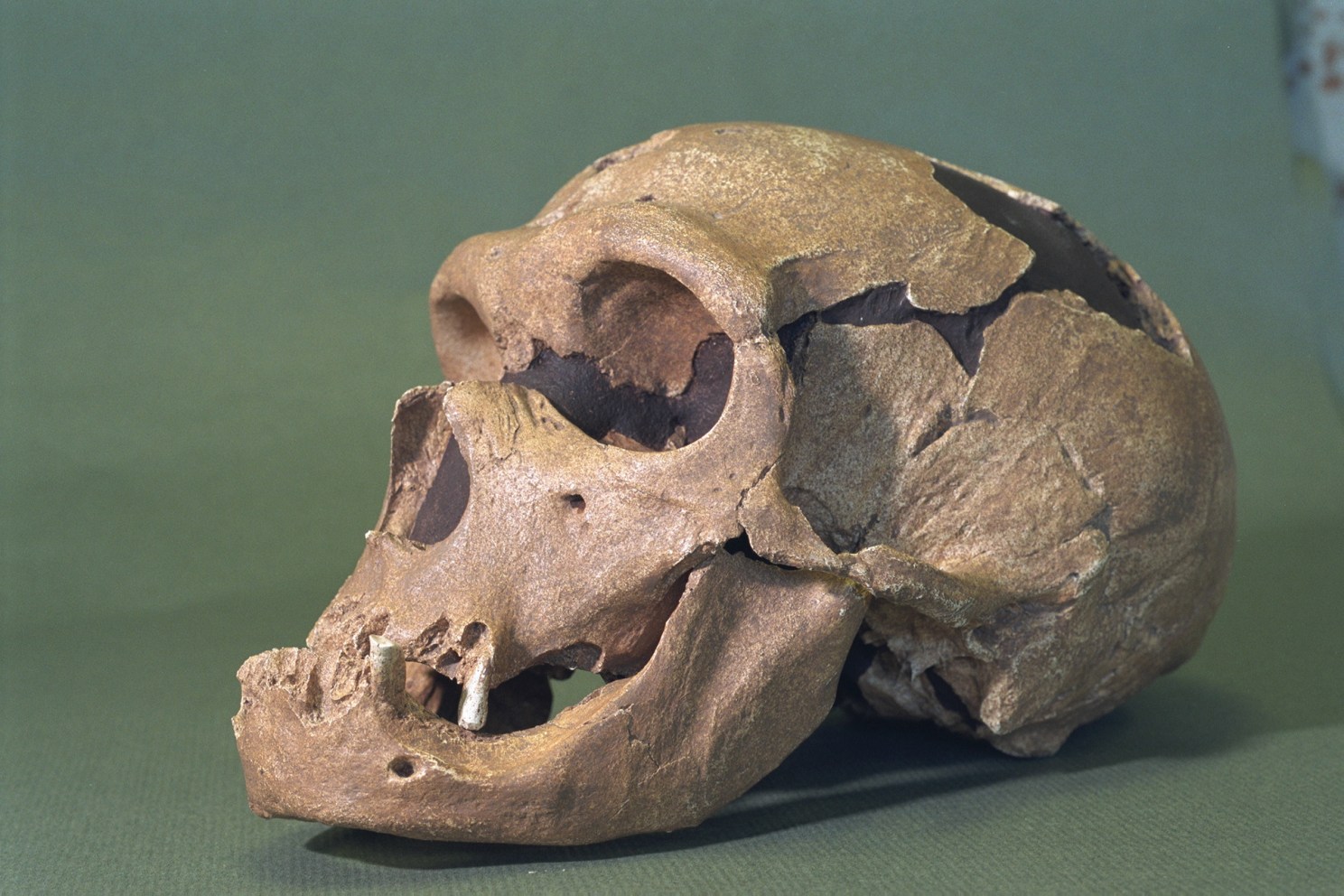
Neanderthal skull.
Marc Charuel/Sygma/Sygma via Getty Images
Part of the Wondering series
A series of random questions answered by Harvard experts.
Neanderthal DNA makes up about 2 percent of the genome of most non-Africans. When and how did that mixing take place, and what does it mean for modern humans?
We put these questions to David Reich, professor of genetics at the Blavatnik Institute at Harvard Medical School and professor of human evolutionary biology in the Faculty of Arts and Sciences.
Almost everyone, and certainly almost all non-Africans, has a little bit of Neanderthal DNA.
Neanderthals mostly lived in Europe and a little bit in the Middle East and in Central Asia, and it is very clear that modern humans mixed with Neanderthals in the Middle East as they were spreading out of Africa. When those modern humans got to Europe, they also encountered more Neanderthals.
But Neanderthal ancestry is just as common in East Asia as it is in Europe, if not more so. We think that’s because as modern humans moved out of Africa and the Middle East, after about 50,000 years ago, they moved into an area that was inhabited by Neanderthals and other humans called Denisovans — and that those three groups formed mixed populations that were the ancestors of East Asians, Native Americans, and Australians.
What would have happened is that a small band of humans with no Neanderthal ancestry would encounter a few Neanderthals, and there would be a first generation that was half-Neanderthal, half-modern human — and that person’s children would be one-quarter Neanderthal, and maybe someone else would be three-eighths Neanderthal, but very quickly it would settle down at an average proportion of Neanderthal DNA.

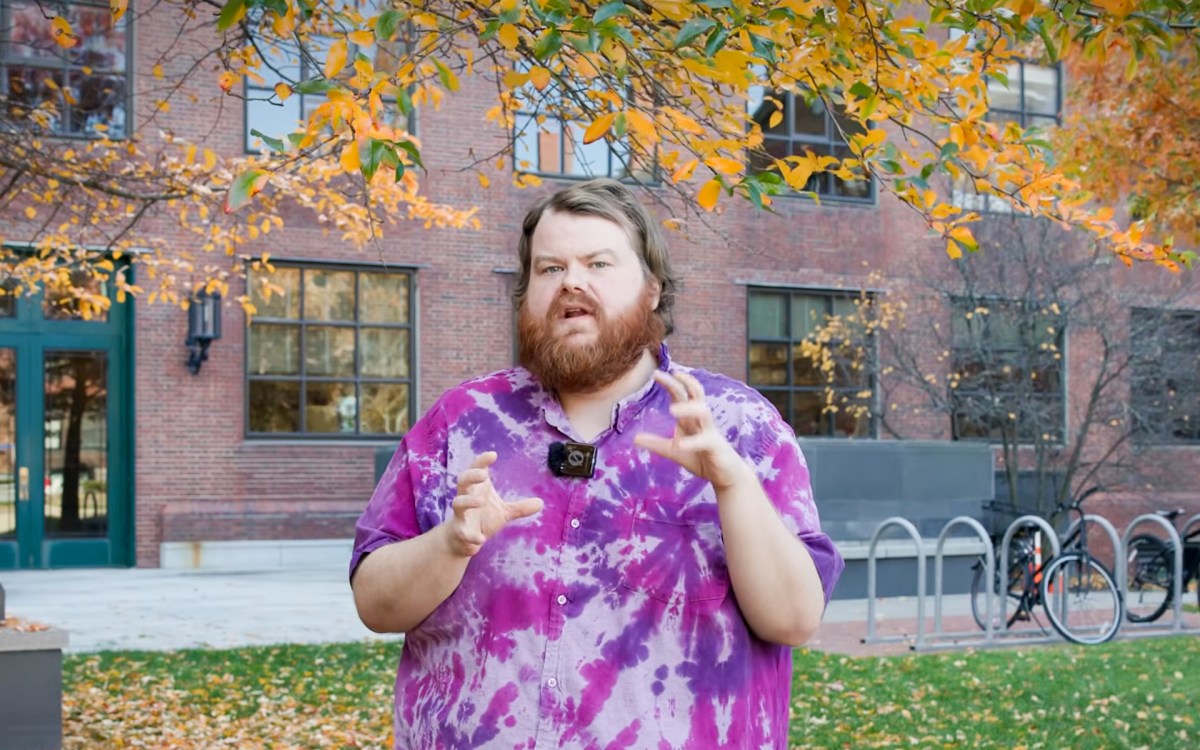
David Reich.
File photo by Stephanie Mitchell/Harvard Staff Photographer
Our genome has about 20,000 genes, so if you’re non-African, about 400 of those would have been in a Neanderthal. But which genes any person inherited varies. And we do know the biological function of some of these genetic variants. For example, a strong risk factor for clinically severe COVID-19 is a Neanderthal-derived variant that happens to be most common in South Asians. There’s a common pigmentation-related variant that comes from Neanderthals. There’s also a high-altitude variant in Tibetans that comes from those other archaic humans, the Denisovans. Maybe these were variants that were pre-adapted to non-African environments, or maybe people just got them by random chance.
We also don’t know whether these encounters between modern humans, Neanderthals, and Denisovans were voluntary or involuntary. But we see them everywhere. We have a sample from Romania about 40,000 years ago from a person who had a Neanderthal back four to six generations in their family tree. There’s a girl from Denisova Cave in central Siberia who had one parent who was a Neanderthal and one who was a Denisovan. It just seems that whenever these humans encountered one another, they mixed with one another.
The lesson from ancient DNA is that everybody is mixed. Even in Africa, where we don’t have Neanderthal DNA, we have evidence that there was mixing among different archaic African groups.
So the idea of a homogeneous, “pure” ancestral population: That never existed. We’re all the result of a braid or a trellis going back in time. We all come from many places, and the stories we tell ourselves about our lineage are probably wrong — in some ways we know, and in some ways we don’t.
— As told to Sy Boles, Harvard Staff Writer
This question was posed by former Harvard Business School Professor Jane Linder. You can ask your question below.
What’s your ‘Wondering’?
Why do we cringe at our past selves? What makes a movie timeless? How long have humans been brushing our teeth? You have questions, and Harvard professors have answers. Submit your question here and you may see it answered in the Gazette.
Share this article


Also in this series:
-

Does it matter when you work out?
Yes, but it’s not the only factor to consider when establishing a routine, says cardiologist
-
How to know if you’re wrong
Acknowledging your vast ignorance is a good first step — but don’t stop there
-
Which grade is most important to a child’s development?
Stats suggest high stakes for one year in particular
-

Is cursive worth learning?
Pencil-and-paper asks more of a student than a keyboard. Maybe that’s the point.
-

Does having a bad dream make you a bad person?
Psychologist breaks down what those negative night narratives might be trying to tell you
-

Why is yogurt good for us?
Genghis Khan supposedly fed it to his troops for strength and bravery. He might have been onto something.