Featured series


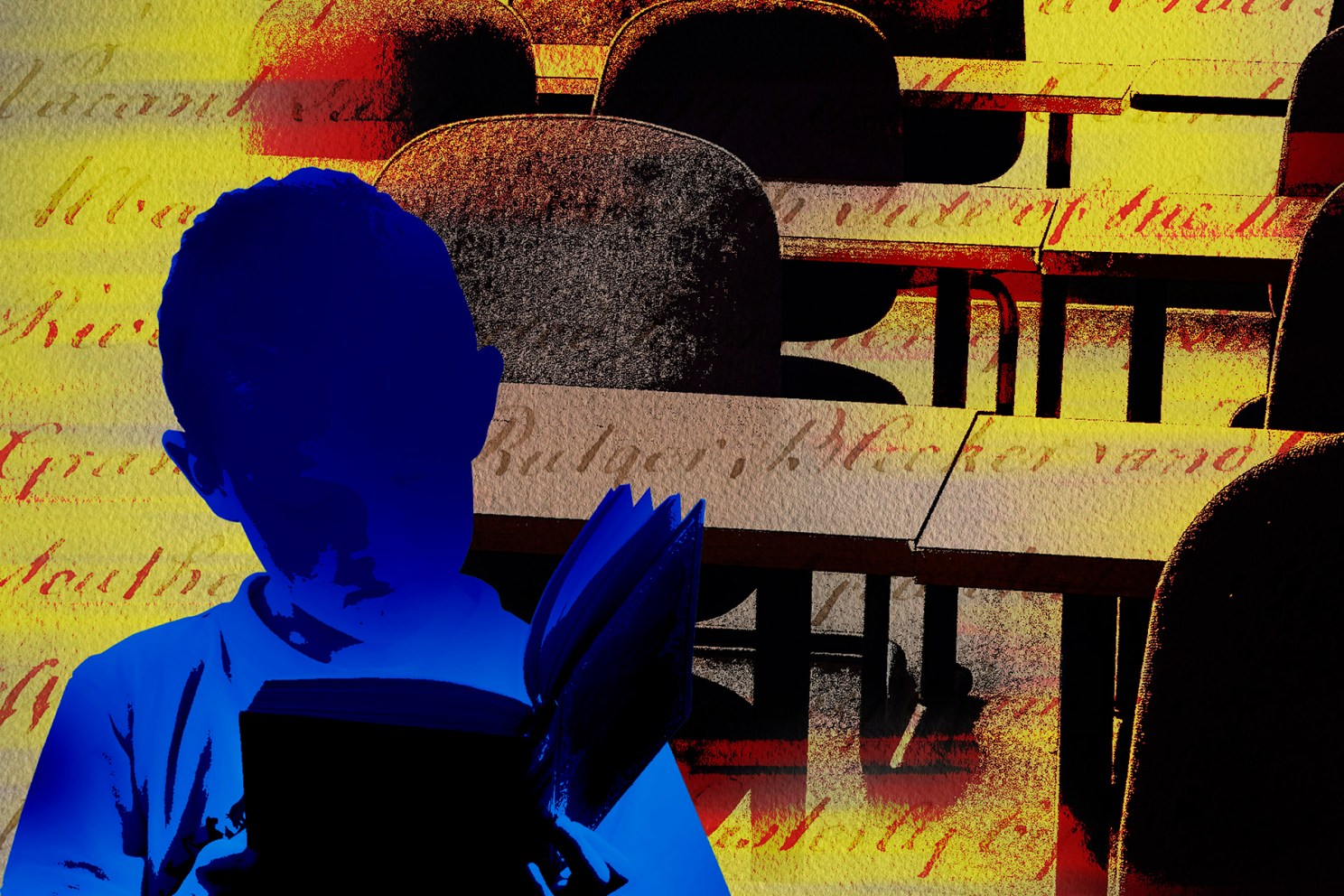
Illustration by Roy Scott/Ikon Images
Nation & World
Is cursive worth learning?
Pencil-and-paper asks more of a student than a keyboard. Maybe that’s the point.
Part of the Wondering series
A series of random questions answered by Harvard experts.
Catherine Snow is the John H. and Elisabeth A. Hobbs Research Professor of Cognition and Education at the Harvard Graduate School of Education.
Perhaps cursive went out of style because there was a sense that it was just a technical skill, and one that was becoming less and less necessary with the universal availability of keyboards. There’s this sense that there’s a “problem” of putting stuff on paper, and the technical solution is that you type it and it looks neat and it’s well spelled and we’re not wasting time doing something that kids always hated — namely, practicing cursive. I could see that as an argument that could be convincing.
The problem is, in the process you are losing something that’s really of value: important cognitive challenges.
It’s quite a challenge for very young children to understand how letters are formed and how they are sequenced in words. If you’re not really concentrating, you might end up spelling “cat” C T, for example, because those are the salient sounds in cat. If you type words wrong, you’ll get spellchecked and you might never realize that you were wrong.
Take a slightly more complicated word — let’s say “moderate.” Well, there’s no way of inherently knowing what’s in the middle of moderate, right? It could be M O D A R A T E, or it could be M O D I R A T E, and if it just gets spellchecked, then you never actually come to make the connection. Having to spell it yourself, letter by letter as you write the word, draws your attention to the appropriate sequence of letters.
There are a number of studies which show that there are more areas of neural involvement in handwriting than in typing. There’s more visual cortex involvement, as well as all the differentiated motor skills that go into forming letters. I think it’s really the increased attention to the sequence of symbols that generates automaticity, and automaticity is a key element in good reading.
But this advantage of facilitating learning to read from handwriting comes both with cursive and with printing. It doesn’t really matter. I’ve never encountered anything that would suggest that proper cursive with all the letters connected is better than printing.
I had the proper eight years of elementary school Palmer Method training: The first 15 minutes of every school day were copying sentences 28 times on lined paper. But now I never read cursive, and I find that I really have to work hard if I’m in an archive or a museum and I’m trying to read letters exchanged between people in 1945. It’s a skill that kind of declines without practice. That’s one of the big advantages of learning to write cursive: In the process of learning to write it, you’re learning to read it. It’s learning to access history and literature and shared culture.
Should we keep cursive? I think we should. I’m not deeply dedicated to cursive, but I think we should spend more time in schools having kids write. There are kids who never learn cursive who can function with a pen in their hands perfectly well. They should be writing with pencil or pen on paper, and we should be focusing much more on the content of what they write than correcting errors. You could learn cursive later, if you really wanted to. There is not a critical period after which you can’t.
— As told to Sarah Lamodi, Harvard Correspondent
Share this article


Also in this series:
-
How to know if you’re wrong
Acknowledging your vast ignorance is a good first step — but don’t stop there
-
Which grade is most important to a child’s development?
Stats suggest high stakes for one year in particular
-

Does having a bad dream make you a bad person?
Psychologist breaks down what those negative night narratives might be trying to tell you
-

Why is yogurt good for us?
Genghis Khan supposedly fed it to his troops for strength and bravery. He might have been onto something.
-
Does vinyl sound better?
You don’t have to be a purist to say yes. You might just be ‘album oriented.’
-
How to get stronger
If you’re not failing all the time, you’re doing it wrong, says fitness expert
-

How to pay attention
Constantly distracted by devices? Experts share strategies on reclaiming focus.
-

How to read a poem
Ideally over a lifetime, says New Yorker’s Kevin Young
-

How do you make a game-winning field goal?
It’s all in the preparation, Crimson kicker says. And don’t worry. Either way, you’re only as good (or bad) as your last kick.
-

How children learn to be good
One tip for parents: Tell them about your mistakes
-

Why are you cursing?
Steven Pinker breaks down the history of taboo words, different categories of swearing, and the meaning conveyed by a bleep
-

How to dance like somebody’s watching
Choreographer offers tips on finding release: ‘Ain’t nobody concerned if you look good’