
 Featured series


Tag: Massachusetts General Hospital Cancer Center
-
Health
Cancer cells’ survival kit
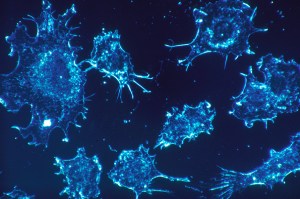
Harvard-affiliated scientists at Dana-Farber Cancer Institute have discovered new details of how cancer cells escape from tumor suppression mechanisms that normally prevent these damaged cells from multiplying.
-
Health
Targeting lung cancer
An initial study of a new treatment for a form of lung cancer seems so promising it has been jumped from Phase 1 to Phase 3 clinical trials.

-
Health
Rare variants in gene coding may up risk of autoimmune disorders
Rare variants in the gene coding of an enzyme that controls the activity of a key immune cell occur more often in people with autoimmune disorders like rheumatoid arthritis and type 1 diabetes, Harvard researchers at Massachusetts General Hospital found in a multi-institutional study. The researchers’ report, published in the journal Nature, identifies a pathway…
-
Health
With fasting, enzyme turns off body’s production of fats, cholesterol
Fasting helps cause an enzyme with several important roles in energy metabolism to turn off the body’s generation of fats and cholesterol, Harvard researchers at Massachusetts General Hospital have found. The findings could lead to new approaches to treating elevated cholesterol and lipid levels. The researchers’ report, published today in Genes & Development, describes how…
-
Health
Gene silencing may cause limitations of induced pluripotent stem cells
Scientists may be one step closer to being able to generate any type of cells and tissues from a patient’s own cells, according to the results of a new study by Harvard stem cell researchers at Massachusetts General Hospital (MGH). Konrad Hochedlinger, PhD, an associate professor in Harvard’s inter-school department of stem cell and regenerative biology (SCRB),…
-
Health
Treatment resistance in some cancer cells may be reversible
The ability of cancer cells to resist treatment with either targeted drug therapies or traditional chemotherapy may, in some cases, result from a transient state of reversible drug “tolerance.” In a paper that will appear in the journal Cell and is being released early online, Harvard researchers at the Massachusetts General Hospital (MGH) Cancer Center…
-
Health
First molecular steps to childhood leukemia identified
A Harvard research based at Massachusetts General Hospital has identified how a chromosomal abnormality known to be associated with acute lymphoblastic leukemia (ALL) – the most common cancer in children – initiates the disease process. In the July issue of Cell Stem Cell, they describe how expression of this mutation in hematopoietic stem cells (HSCs),…
-
Health
Angiogenesis inhibitor improves brain tumor survival by reducing swelling
The beneficial effects of anti-angiogenesis drugs in the treatment of the deadly brain tumors called glioblastomas appear to result primarily from reduction of edema – the swelling of brain tissue – and not from any direct anti-tumor effect, according to a study from Harvard researchers at Massachusetts General Hospital (MGH). Their report, to be published…
-
Health
Hormone therapy for prostate cancer does not appear to increase cardiac deaths
Treating prostate cancer patients with drugs that block hormonal activity does not appear to increase the risk of death from cardiovascular disease, according to a study led by Harvard Medical School researchers at Massachusetts General Hospital. While a 2006 report from members of the same study team found that treatment with gonadotropin-releasing hormone (GnRH) agonists…
-
Health
New strategy identified for improving effectiveness of cancer therapies
Manipulating levels of nitric oxide, a gas involved in many biological processes, may improve the disorganized network of blood vessels supplying tumors, potentially improving the effectiveness of radiation and chemotherapy. In advance on-line publication by the journal Nature Medicine, researchers from the Steele Laboratory of Radiation Oncology at Massachusetts General Hospital (MGH) report an experiment…
-
Health
Major step forward in understanding cell reprogramming
Harvard Stem Cell Institute (HSCI) and Massachusetts General Hospital (MGH) researchers have taken a major step toward eventually being able to reprogram adult cells to an embryonic stem cell-like state without the use of viruses or cancer-causing genes. In a paper released online today by the journal Cell Stem Cell, Konrad Hochedlinger and colleagues report…
-
Health
Drug based on MGH discovery may significantly improve treatment of dangerous blood disorder
Two clinical trials of the novel drug romiplostim (Nplate) show that it significantly improved platelet levels in patients with chronic immune thrombocytopenic purpura (ITP), a hematologic disorder that can cause uncontrolled bleeding. An international research team reports Phase 3 trial results for the drug, which duplicates the action of a natural hormone discovered by a Massachusetts…
-
Health
Gene variation may elevate risk of liver tumor in patients with cirrhosis
A genetic variation appears to significantly increase the risk that individuals with cirrhosis of the liver will develop hepatocellular carcinoma (HCC), a liver tumor that is the third leading cause of cancer death. Researchers from Massachusetts General Hospital (MGH) Cancer Center and colleagues in France describe in the January 2 edition of the Journal of…
-
Health
Microchip-based device can detect rare tumor cells in bloodstream
A team of investigators from the Massachusetts General Hospital (MGH) BioMicroElectroMechanical Systems (BioMEMS) Resource Center and the MGH Cancer Center has developed a microchip-based device that can isolate, enumerate and analyze circulating tumor cells (CTCs) from a blood sample. CTCs are viable cells from solid tumors carried in the bloodstream at a level of one…