
 Featured series


Tag: Biochemistry
-
Science & Tech
Why there might be life out there unlike any on Earth
Researchers create synthetic species without biochemistry, find they operate according to Darwinian evolutionary principles.
-
Science & Tech
To clean up the mine, let fungus reproduce
Harvard-led researchers have discovered that an Ascomycete fungus that is common in polluted water produces environmentally important minerals during asexual reproduction.

-
Health
New hope for the cure
For the 20 percent of patients with so-called triple-negative breast cancer, the outcome is bleak. Now, however, researchers from Harvard Medical School (HMS) and Baylor College of Medicine have identified a critical molecular component to the disease, one that suggests potential therapies involving combinations of FDA-approved, readily available drugs.
-
Health
A man of endless curiosity
Emre Basar seeks to understand how small interfering RNA (siRNA) can be harnessed and integrated into cells with the goal of silencing the expression of certain proteins that allow diseases like breast cancer and HIV to proliferate inside the body.
-
Health
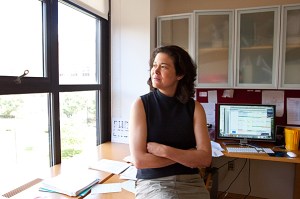
The art of science
Susan Mango, professor of molecular and cellular biology and MacArthur award winner, brings her unorthodox approach to research.
-
Campus & Community
Jack Strominger receives AAI mentoring award
Jack Strominger, the Higgins Professor of Biochemistry in the Department of Molecular and Cellular Biology, was recently honored with the AAI Excellence in Mentoring Award “in recognition of exemplary career contributions to a future generation of scientists,” by the American Association of Immunologists.
-
Health
How growing cells move together
Our cells are more than inert bags of proteins and genes whose complex signaling networks confound the world’s most powerful computers. They also have a physical side whose brawny feats may guide our basic good health. For the first time, researchers at Harvard School of Public Health (HSPH) have directly measured the physical forces at…
-
Campus & Community
Knowles memorial set for May 30
A memorial service for former dean of the Faculty of Arts and Sciences Jeremy R. Knowles will be held May 30 at 11 a.m. at the Memorial Church. The Amory Houghton Professor of Chemistry and Biochemistry, Knowles died April 3.
-
Science & Tech
Rajan Sonik hopes to cure bodies while energizing hearts and souls
Rajan Sonik arrived at Harvard four years ago aspiring to a career in science or maybe law, but a 14-year-old boy with sickle cell disease Sonik met in his sophomore year through a hospital mentoring program changed everything.
-
Campus & Community
Comprehensive model first to map protein folding at atomic level
Scientists at Harvard University have developed a computer model that, for the first time, can fully map and predict how small proteins fold into three-dimensional, biologically active shapes. The work could help researchers better understand the abnormal protein aggregation underlying some devastating diseases, as well as how natural proteins evolved and how proteins recognize correct…
-
Health
Snaring secrets of the Venus flytrap
While “speed” is not a word most people associate with the plant kingdom, the Venus flytrap closes its v-shaped leaves in just one-tenth of a second – fast enough to accomplish a feat thousands if not millions of backyard barbecuers fail at each summer: snaring a fly. So how can a plant pull this off?…
-
Health
Disparate proteins structurally identical
Gerhard Wagner, the Elkan Blout professor of biological chemistry and molecular pharmacology, and Tucker Collins, the S. Burt Wolbach professor of pathology at Harvard Medical School and Children’s Hospital, made a crucial connection between two unrelated proteins. They were studying a particular type of protein when a database search for proteins with similar structures turned…
-
Health
RNA-making apparatus seen to uncoil and recoil DNA
Eukaryotic cells like to keep their DNA under wraps, winding the long strands of nucleic acid around millions of little protein complexes. This bead-on-a-string structure, called chromatin, ensures that the DNA is protected and also helps to condense the long strands of nucleic acid so they more easily are accommodated in the nucleus. Chromatin also…
-
Health
Matrix-buster inhibitor has second way to throttle angiogenesis
Matrix metalloproteinases (MMPs) and their regulators, the tissue inhibitors of metalloproteinases (TIMPs), form an intriguing partnership. MMPs work by breaking down the dense matrix surrounding cells, freeing them to wander the body during processes like metastasis and angiogenesis. TIMPs rein in the MMPs, essentially cutting off the supply of migrating cancer or endothelial cells. Given…
-
Science & Tech
Researchers make new compounds from protein
Over the years, scientists have repeatedly sought to use a cell’s protein-making process to create new drugs and other compounds. They have had some dramatic successes, such as inducing bacteria to produce human insulin by splicing human insulin-producing genes into the bacteria’s DNA. They have been limited, however, to creating only natural substances like insulin…
-
Health
New multiple sclerosis drugs are found
Five years ago, scientists at Harvard University began to take a close look at Copolymer 1, a treatment for multiple sclerosis, that is put together from a string of amino acids, or protein pieces, assembled in random order. “We wanted to determine if there are one or two active compounds within the random Copolymer 1…
-
Health
Protein may play double role in issuing genetic gag order
So cells can differentiate and maintain their specialized identities, large sections of unneeded genes must be turned off. During cell division, the stability of every chromosome depends upon sections of chromosomes remaining silent. Cancer is believed to be due, in part, to the loss of cell identity and unstable chromosomes. Aging also may be linked…