Featured series


Photos by Stephanie Mitchell/Harvard Staff Photographer
Arts & Culture
Helping us make our way ‘through a world that can feel broken’
Maria Tatar has spent her career tracing evolution of folk, fairy tales, explaining why they still matter
Part of the Experience series
Scholars at Harvard tell their stories in the Experience series.
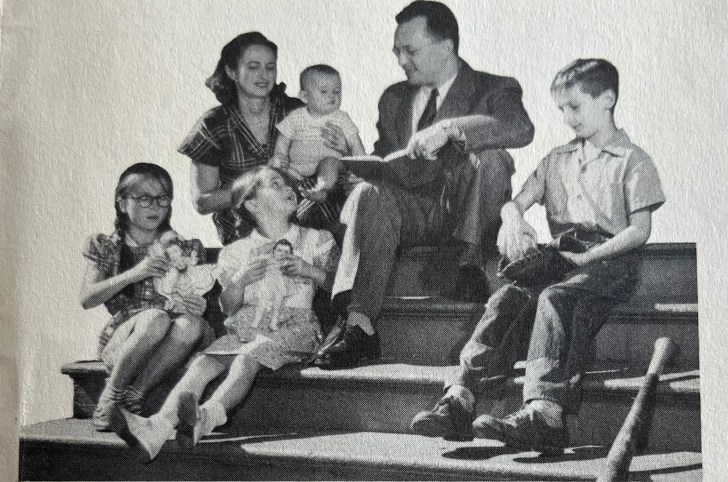
Maria Tatar’s love for fairy tales and German literature took root in the cluttered attic of a rambling mansion donated to a church in Highland Park, Illinois. Her family was housed there after immigrating from postwar Europe and settling in the US as “displaced persons.”
Tatar, one of the world’s foremost scholars on children’s literature, folklore, and fairy tales, recalls the attic as a space “filled with treasures and haunted by ghosts.” Among those relics was a German helmet from World War I, as well as an edition of the Grimms’ fairy tales printed in German — one of the three languages she spoke as a child.
After completing her undergraduate studies at Denison University and the University of Munich, she earned her doctorate from Princeton University and joined the Harvard faculty in 1971. Today, she is the John L. Loeb Professor of Germanic Languages and Literatures and Folklore and Mythology, Emerita, and continues her work as a Senior Fellow in Harvard’s Society of Fellows.
In this edited conversation, Tatar spoke with the Gazette about her life, career, and the appeal of fairy tales — stories that continue to shapeshift, captivating both children and adults with their “mix of beauty and horror.”
Gazette: You and your family arrived in the U.S. as World War II refugees. How did that experience affect you?
Maria Tatar: My parents arrived in New York City with three children (a fourth on the way) and $200 in their pockets. Categorized as “displaced persons,” they had secured visas and the promise of a job for my father in Seattle.
The job offer fell through, with no explanation, but a church in Highland Park, Illinois, came to the rescue and sponsored our family.
My father worked, first as a chauffeur, then as a carpenter, while preparing for U.S. medical board exams and establishing residency to become a licensed ophthalmologist.
I received a laminated card in the mail that described me as a displaced person and resident alien, and the fine print threatened me with imprisonment in case I didn’t report a change of address. I was 5 years old and anxiously monitored every move we made, always making sure that my parents notified the authorities.
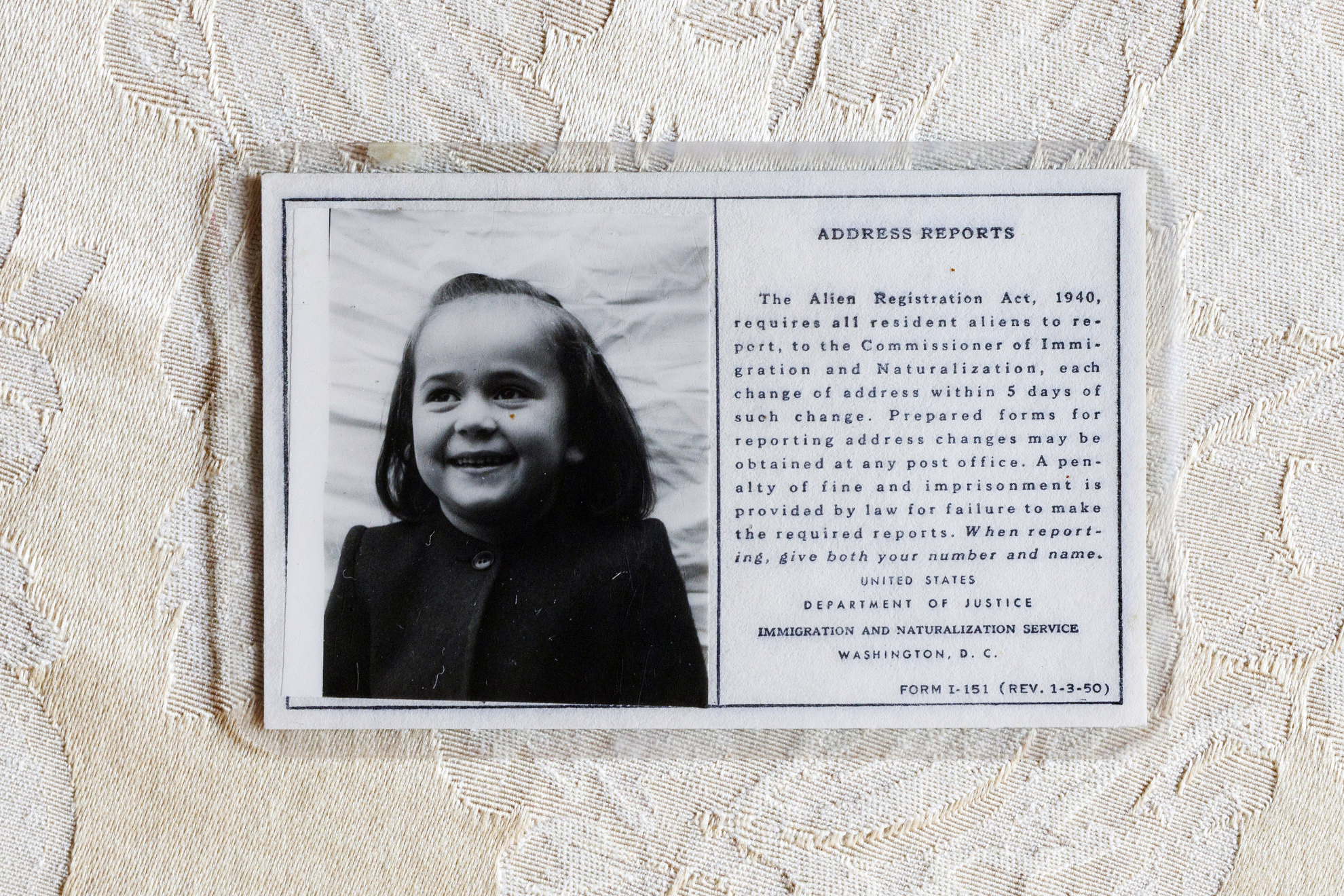
Tatar’s childhood immigration identification card.
Stephanie Mitchell/Harvard Staff Photographer
“Displaced” is a weighty word for a child, bewilderingly vague, suggesting a random piece of cargo that has landed in the wrong warehouse. But it was the term “resident alien” that made me cringe, turning me into a creature from another planet who had planted herself where she did not belong.
The experience of being an “alien” left me feeling vulnerable at first, but over time it fostered a streak of fierce independence.
What was growing up in Chicago like at that time?
We were the only immigrant family we knew in Highland Park, a town of 30,000. My first memory is the smell of waffles in the kitchen of the family that sponsored us, and my first real Christmas present — a beautiful doll — proved to be the perfect gift to accompany the birth of my baby brother.
I found my second home in the Highland Park Public Library.
Within its walls, I shed my shyness to become a nomadic chatterbox. Through books, I crossed frozen wastes to Irkutsk alongside Jules Verne’s Michael Strogoff, visited Charles Dickens’s Micawbers in debtors’ prison, and comforted Charlotte Brontë’s Jane Eyre through her trials at Lowood School. My library card was a magical passport — a portal into an education.
We lived in a rambling mansion left to the church by a childless couple. It was a cavernous labyrinth of empty rooms with a cluttered attic that, to four children with powerful imaginations, was filled with treasures and haunted by ghosts.
Among the relics in the attic, was, if you can believe it, a German copy of the Grimms’ fairy tales with beautiful illustrations.
Was that the origin of your interest in German literature and fairy tales?
There are 1,001 reasons why I came to study fairy tales and German literature, but maybe the real reason, the primum movens, was the magnetic pull of those attic treasures.
Alongside the illustrated Grimms’ volume, that dusty space held another relic: a World War I German helmet, an extravagant piece of military history. It was a Pickelhaube, crafted from leather and polished metal — a design the German Army retired in 1916 after learning the hard way that its gleaming point made a target of the soldier wearing it.
Those things must have been whispering in my ear.
I often wonder if it was some kind of mysterious sensory overload from the images in that book of Grimms’ fairy tales that led me to study the stories in them later in life. The book had a talismanic significance for me. “Snow White” still haunts me.
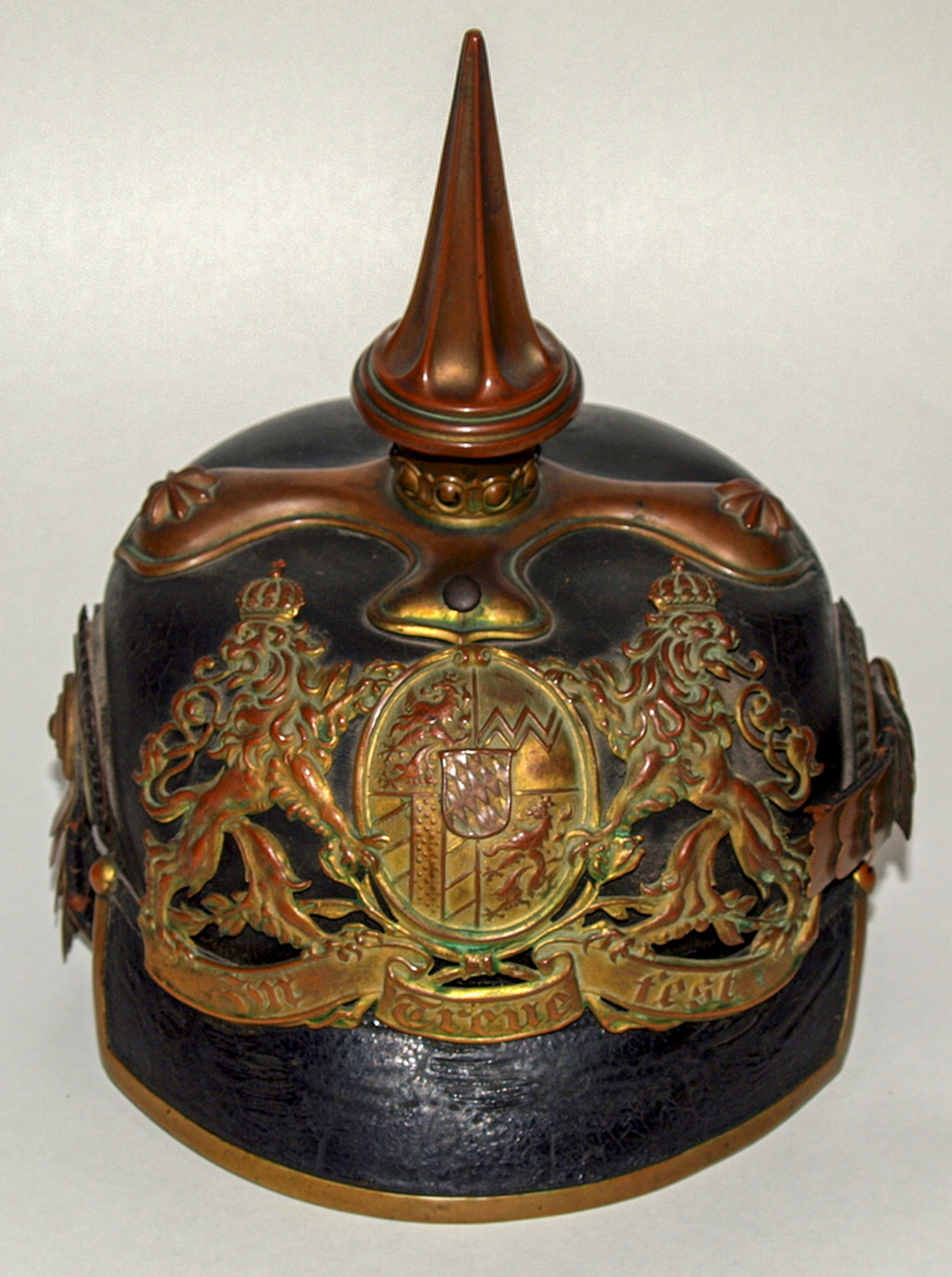
And the ghost of the soldier who once wore that war helmet has made himself at home in my imagination. Was it the helmet’s tragic, decorative lunacy that led me, later in life, to translate Erich Maria Remarque’s famous novel about the First World War — “All Quiet on the Western Front”?
Did you see a hint of who you would become in college or graduate school?
Growing up, I imagined becoming a doctor, inspired by my father’s quiet, awe-inspiring stories of restoring sight to patients. But I was also a voracious omnivore, a girl who wanted to live inside the world of books.
I did my undergraduate work at Denison University, studying with historian William Preston Jr., who wrote “Aliens and Dissenters,” a book about the federal suppression of left-wing radicals; and scholar of German language and literature Guy Stern, a Holocaust survivor who enlisted in World War II and became one of the heroic Ritchie Boys [a secret U.S. intelligence unit, several thousand of whom were Jewish refugees who fled Europe to escape the Nazis].
Growing up in America in the shadow of the Holocaust, I felt a deep need to return to my Hungarian roots and also to understand Germany’s path to National Socialism. That’s what took me abroad to study in Munich, and subsequently at the Free University in Berlin.
At Princeton, where I did my graduate work, I felt immediately at home with other bookish souls. We all wore black robes in the Gothic Revival dining hall.
It wasn’t until the cold wind of a hiring freeze rattled the windows in my final year of studies that I looked up from my books and asked, “Now what?” That was the same year we all began routinely papering our bathroom walls with rejection letters.
Back then, German Departments in this country operated under a strict code of silence. They talked around the Holocaust, and they certainly didn’t take fairy tales seriously. The fairy tales of the Brothers Grimm? They were dismissed as children’s stories. Weimar Germany was studied for its modernist cultural triumphs, neatly divorced from the catastrophe that followed.
“We lived in a rambling mansion … with a cluttered attic that, to four children with powerful imaginations, was filled with treasures and haunted by ghosts. Among the relics in the attic, was, if you can believe it, a German copy of the Grimms’ fairy tales with beautiful illustrations.”
How did you become one of the leading experts on fairy tales?
My personal eureka moment came in 1976 while sitting on a modern language association panel with Bruno Bettelheim, who had published a book called “The Uses of Enchantment.”
That landmark volume single-handedly legitimized fairy tales as an academic field. It declared that fairy tales are not just enchanting, but psychologically complex, with a therapeutic value for children.
Suddenly, the nursery door blew off its hinges. Fairy tales were no longer just for children. They were the “television and pornography of an earlier age,” as John Updike so perfectly put it. They were the raw, unfiltered entertainment of the masses, told in the flickering light of communal hearths to the rhythmic hum of spinning wheels and the sounds of repetitive domestic chores carried out on long dark nights.
At Harvard, you introduced fairy tales into a course. Can you talk about that?
The course carried a dignified title: “The History, Philosophy, and Literary Culture of Childhood.” Beneath its formal banner, the curriculum was a thrill ride — we were digging into the very soul of human storytelling. Myth, fairy tale, story — they are all triumphs of the human imagination.
My students were passionate readers. They knew Grimm, Hans Christian Andersen, and D’Aulaires inside and out. They didn’t want to just reread the classics of children’s literature; they wanted to unpack their hidden meanings and understand their enduring appeal.
Still tethered to the wonder of their own childhood reading, they were now ready to do some heavy lifting, tackling John Locke and Jean-Jacques Rousseau for a cultural understanding of childhood, navigating Michel Foucault’s heterotopias, and applying Vladimir Propp’s structural morphology to fairy tales, all while traveling through Wonderland, Neverland, Oz, and even Panem or Hogwarts.
How did fairy tales, which emerged from oral tradition, enter print culture?
Since the invention of printing, writers have been collecting stories from oral traditions, adding their own spin to them and turning them into popular anthologies.
Charles Perrault published his tales of Mother Goose using the name of his son, and the Grimms claimed to have taken what they called “children’s stories and domestic tales” from the German volk, clear signals that fairy tales belonged in the nursery rather than at the communal hearth.
A second transformation came in the 19th century with literary fairy tales, when Andersen, Oscar Wilde, and many others took us inside the minds of characters and explored the psychological effects of trauma. Presto, we have suffering, salvation, and new forms of social justice.
In “Hansel and Gretel,” when something bad happens, the children burst into tears, but they quickly swing into action, and you don’t find out how they’re feeling. Andersen tells us everything that is going on inside the head of his little match girl, and readers commiserate with her and weep for her. In Oscar Wilde’s “The Happy Prince,” our attention is also drawn to poverty, human misery, and the often-futile efforts to alleviate it.
“Fairy tales exist to banish the darkness. They are larger than life and magnify all the toxic emotions in the spectrum of the human condition.”
The 20th century gave us a new portal to fairy tales — Disney took “Cinderella” and “Snow White” and created global master narratives that drove out local variants. Persecuted girls move from rags to riches in folktales from all over the world. There are thousands of stories about mother-daughter rivalry, but their heroines aren’t called Snow White, and their skin is not “white as snow,” as Disney tells us.
Nowadays, fairy-tale tropes can be found in virtually every entertainment medium. Look at Hollywood blockbusters: “The Housemaid” and “Get Out” reinvent the story of “Bluebeard”; “The Substance” is a Snow White story; and “The Shape of Water” reimagines “Beauty and the Beast.”
Why do fairy tales endure to this day? How have they shaped our cultural imagination?
Fairy tales exist to banish the darkness. They are larger than life and magnify all the toxic emotions in the spectrum of the human condition: rage, envy, greed, and so on. A fairy tale captures our attention with melodrama and magic, and it gives us a symbolic world that helps us process real-world pain. And it offers a measure of comfort in emphasizing the triumph of virtue over vice, beauty and justice over evil.
Your landmark book “The Hard Facts of The Grimms’ Fairy Tales” highlighted the dark side of fairy tales. How do you think that book changed our understanding of fairy tales?
Once fairy tales migrated into the nursery, they were bowdlerized and made child-friendly, with many not making the cut into print collections.
Oddly, the Grimms’ “The Juniper Tree” survived the purge. In that tale, a stepmother decapitates her stepson, cooks him up in a stew, and serves him to his unsuspecting father. Fear not — there is a happy ending: The boy returns as a bird and crushes the stepmother with a millstone. A story like that belongs not so much in the nursery as in the great “Ocean of the Streams of Story” [the 11th-century collection of Indian legends and folk tales].
“The Hard Facts” looked at stories like “The Juniper Tree” and tried to make sense of the cultural work they did in their own time and place. My mission was to historicize fairy tales and show that they were constantly shapeshifting because they were not set in stone or fixed in print.
“These heroic women, both fictional and real, were neither warriors nor spiritual leaders, but they were on vital missions of their own.”
On “The Heroine with 1,001 Faces”
Tell us how your book “The Heroine with 1,001 Faces” explores a neglected archetype.
Joseph Campbell’s “The Hero with a Thousand Faces” tells us only half the story when it comes to heroic action.
Often unable to leave the house, women rarely wielded swords or carried shields. They did not embark on the hero’s journey, slaying monsters and searching for glory and immortality. Instead, like the storyteller Scheherazade, they fought for their own survival and the survival of others, seeking to heal at home rather than inflict injuries on the battlefield.
These heroic women, both fictional and real, were neither warriors nor spiritual leaders, but they were on vital missions of their own. Curious, caring, and crafty, they used the domestic arts —weaving, sewing, mending, and storytelling — to bring beauty and justice into the world.
When Scheherazade finished her stories, she saved her neck and changed the culture in which she was living.
In 2017, you published “The Annotated African American Folktales” with Henry Louis Gates Jr. What is the cultural significance of this collection?
Folklore is ancestral wisdom, a kind of education without a classroom. African American folktales encapsulated knowledge, sent encrypted messages, and taught lessons in the form of “golden nuggets” that entertained as they instructed. They taught enslaved peoples, who did not have access to the instruments of writing, how to navigate a world designed to break them.
Henry Louis Gates Jr. once observed that African American folklore stands at the intersection of death, freedom, and slavery, and that is a powerful way of capturing the soul of these stories.

Tatar published “The Annotated African American Folktales” with Henry Louis Gates Jr. in 2017.
File photo by Stephanie Mitchell/Harvard Staff Photographer
For a long time, African American folktales were not taken seriously in many circles, certainly not by the priests of high culture who celebrated the “literature of the frontier” rather than the “poetry of the cabins.” But they were part of a vast network of oral storytelling that transmitted lessons in an encoded form about how to endure suffering, as well as how to survive and find ways out.
These stories migrated briefly into the formal American literary imagination when they were appropriated by Joel Chandler Harris and published as “Uncle Remus: His Songs and Sayings.” Then came Walt Disney’s “Song of the South,” which further diluted the power of the tales, with a good-natured storyteller invested in little more than teaching children lessons.
Tales like “The Talking Skull,” which advocated the value of deception, performed a vanishing act. In that story, a man finds a skull in the forest that warns him, “Keep your mouth shut or you’ll end up like me.” The man is a show-off and summons witnesses to the wonder. When the skull refuses to speak on command, the man is executed. The tale gives us a brilliant, self-referential paradox — a story about the dangers of storytelling that only exists because someone told it.
Then there is “The People Could Fly,” a neglected story about a group of defiant fieldworkers who choose flight and death over life under the whip.
Tell us about other recent work.
Studying the craft of storytelling led me, almost inevitably, to spiders and to write a book called “Arachnomania.” Claude Lévi-Strauss famously told us that animals are good to think with, and spiders do a good deal of cultural work for us, providing lessons in weaving, spinning, and engineering.
What surprised me was how these noiseless, patient creatures (as Walt Whitman called them) turn up all over the place, as Shelob in “The Lord of the Rings,” as Anansi in West African belief systems, as “little aeronauts” in Darwin’s diary, or as Louise Bourgeois’s magnificent sculpture, “Maman.” We may recoil from spiders and the death traps they weave, but these are creatures that not only protect our ecosystem but also model determination and artistic genius.
While thinking about spiders, I was also at work on translating “All Quiet on the Western Front.” I had taught the novel so many times in a course on Weimar culture that I felt as if I knew it almost by heart.
Here was a narrative stripped of all happily ever afters. It was not about healing or creating things of beauty, but about death, destruction, and tragic loss. When we read a realistic account of what the poet Wilfred Owen called “the pity of war,” it’s hard to feel anything but rage at the senselessness of it all.
What lessons can we all learn from fairy tales?
We don’t want to shiver in the dark. We want to dance and sing as well, and that’s part of what stories do for us. Myths, epics, films, songs, fairy tales, novels, everything simmering in what Tolkien called the “Cauldron of Story”: They all help us make our way through a world that can at times feel broken.
Share this article


Also in this series:
-

Wonder served him well
Curiosity ignited Alan Garber’s sense of purpose. Classmates, mentors, and patients helped deepen it.
-

‘This is it. This is exactly what I want to do.’
Michael VanRooyen started running toward trouble more than 30 years ago. He’s still going.
-

‘If you’re boring, you’re not going to educate.’
Randall Kennedy has blazed a path as an open-minded, nuanced, and independent thinker
-

‘I wanted to make a difference in America’
Robert Putnam’s ‘Bowling Alone’ sounded an alarm we still haven’t answered
-

‘The scientist is not in the business of following instructions.’
George Whitesides became a giant of chemistry by keeping it simple
-

Studying ‘why women are interesting, and men are boring’
Nobel laureate Claudia Goldin recounts pioneering career spent tracing major part of U.S. workforce, economy hidden in plain sight