Featured series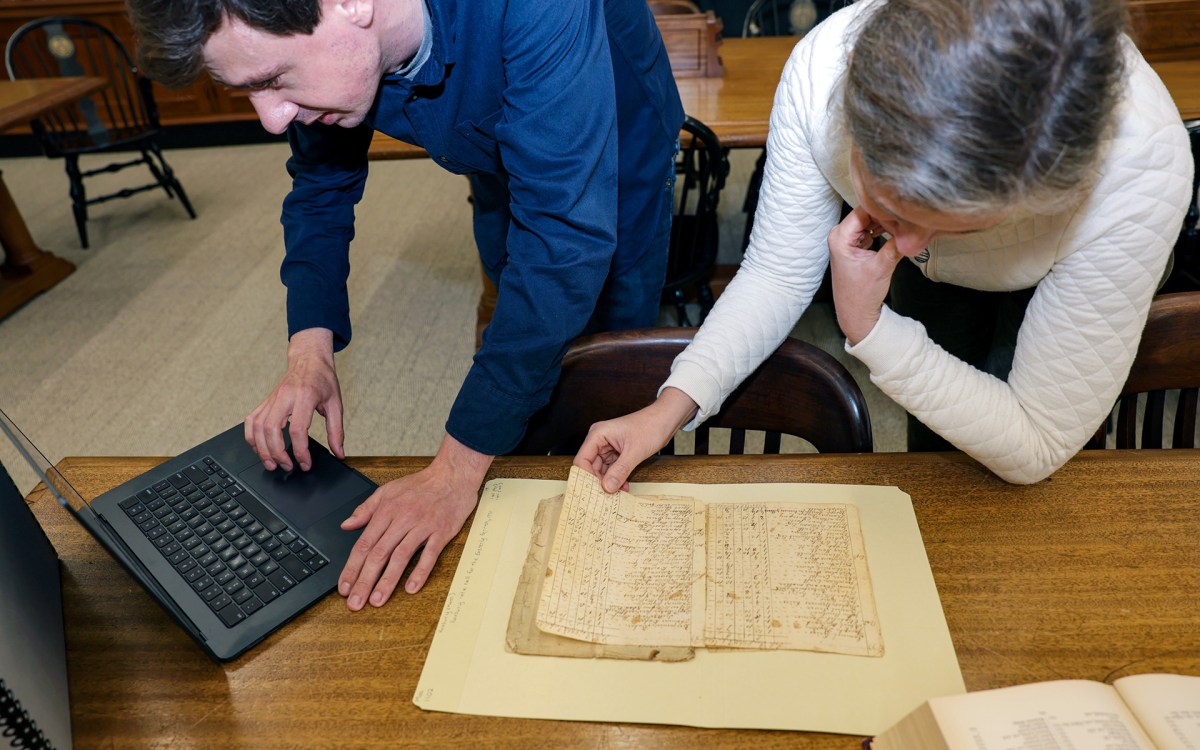

Tag: A.I.
-
Nation & World
Why China has edge on AI, what ancient emperors tell us about Xi Jinping
Recent event examines what social sciences can tell us about rising economic, geopolitical power.

-
Campus & Community
Risk rewarded
Harvard researchers will share nearly $1 million in funding to pursue high-risk, high-reward projects from using zircons to explore the earliest life on Earth to creating next-generation painkillers.

-
Health
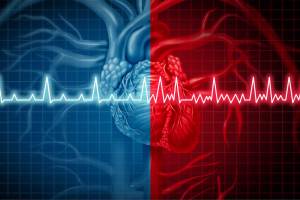
Using AI to prevent blood clots, strokes
Researchers have developed an artificial intelligence-based method to predict the risk of atrial fibrillation within the next five years based on results from electrocardiograms.
-
Science & Tech
Deploying AI against colon cancer
Harvard-led research signals life-saving potential for artificial intelligence in fight against colon cancer.
-
Science & Tech
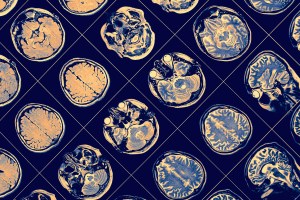
Engaging AI in the battle against Alzheimer’s
A team of researchers has developed an artificial intelligence-based method to screen currently available medications as possible treatments for Alzheimer’s disease. The method could represent a rapid and inexpensive way to repurpose existing therapies.
-
Science & Tech
AI can help reduce the risk of HIV in high-risk communities
Researchers have developed an AI system that can identify the people within a social network who can most effectively promote information about HIV prevention to their peers.

-
Science & Tech
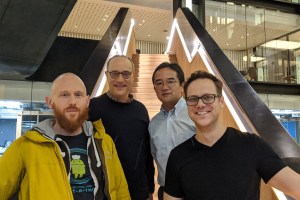
Beyond Pavlov
Artificial intelligence researchers and neurobiologists share data on how options are sorted in decision-making.
-
Science & Tech
Easy on the eyes
New computer program uses artificial intelligence to determine what visual neurons like to see. The approach could shed light on learning disabilities, autism spectrum disorders, and other neurologic conditions.

-
Science & Tech
Containing the sun
Scientists from Harvard and Princeton have teamed up to create an artificial intelligence algorithm that can predict destructive disruptions in nuclear fusion experiments

-
Science & Tech
Building a better med student
Researchers at Harvard Medical School’s Blavatnik Institute are developing an algorithm with information that is so complex, it will understand everything a first-year medical student knows.
-
Science & Tech
Tapping the collective mind
Machine learning is an adaptive form of artificial intelligence that could allow physicians to use the collective wisdom of billions of medical decisions, patient cases, and outcomes to inform diagnosis and treatment.
-
Science & Tech
Examining aftershocks with AI
Sparked by a suggestion from researchers at Google, Harvard scientists are using artificial intelligence technology to analyze a database of earthquakes from around the world in an effort to predict where aftershocks might occur. Using deep-learning algorithms, they developed a system that, while still imprecise, was able to forecast aftershocks significantly better than random assignment.
-
Science & Tech
Movement monitor
A team of researchers from the Rowland Institute at Harvard, Harvard University, and the University of Tübingen is turning to artificial intelligence technology to make it far easier than ever before to track animals’ movements in the lab.

-
Science & Tech
Deep into the wild
Researchers used “deep learning” to identify images captured by motion-sensing cameras.

-
Arts & Culture
Take a seat … and the city’s pulse
A Harvard professor’s sculpture translates real-time data into soundscapes.

-
Science & Tech
The robots are coming, but relax
As artificial intelligence takes hold in more fields, you’ll likely have a job, analysts say, but it may be a different one.
-
Science & Tech
What artificial intelligence will look like in 2030
“Artificial Intelligence and Life in 2030” is the first product of the One Hundred Year Study on Artificial Intelligence (AI100).