Featured series



Part of the Wondering series
A series of random questions answered by Harvard experts.
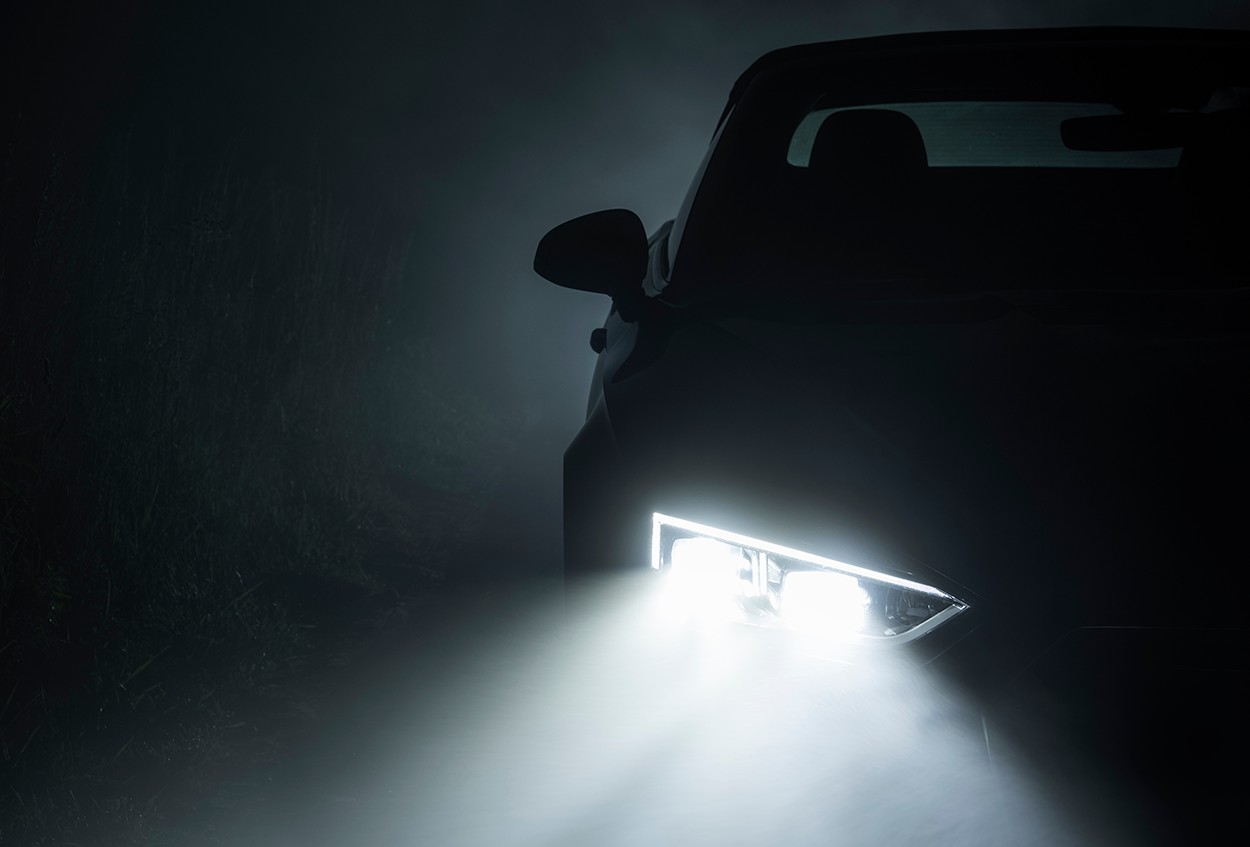
Americans are fed up with headlight glare, insisting it’s gotten worse over the past decade. We put their concerns to Eliezer Peli, a Harvard Medical School professor of ophthalmology at Schepens Eye Research Institute of Mass Eye and Ear.
Headlight glare is when an oncoming car has its lights on, and the light scatters inside your eye and creates a veil over other parts of the scene. Objects on the road — cars, pedestrians, whatever — form an image on the retina, and when oncoming headlights are introduced, they spread bright light across the retina, and that lowers the contrast of the scene.
There is no way to present a bright light and not cause glare. The bright light shrinks your pupils, and that effect can cause actual discomfort because there are nerves in the iris. If you’re driving at night and another car comes toward you, you may try to avert your eyes from the bright light, from the direction you should be looking. So, glare may negatively affect your performance, but of course, headlights are necessary. Without them, your performance is worse.
The question is whether the new headlight glare is worse than the older one, and that is almost always not the case. New headlights are better by any measure that counts.
For example, it used to be that both headlights were pointing straight ahead. Maybe 50 or 60 years ago, they started to aim the left one — in America, the one that is closer to the oncoming car — to the right, so it points away from the oncoming car and illuminates the road to the right, reducing the glare impact on that oncoming car. Even though they were made brighter to improve visibility, they were made to be less glare-y.
When new technology is widespread, it generates a wide set of complaints. Everybody “knows” that it’s causing problems, and to some degree, they do cause problems, but they just say, “This new one is worse.” Well, how do you know that it’s worse? How can you tell?
The glare is affecting you. It’s causing discomfort. It’s reducing your performance. Headlight glare does all those bad things, except the new ones do less of that than the previous ones. The scientific and engineering community is dealing specifically with the assumption that discomfort is not the main issue — the main issue is whether you’re seeing worse, and there’s no question that you see better with headlight glare than without, and you do not see worse with the new ones (so far).
The main desired effect of headlights is the detection of pedestrians (and animals), not other road users (cars are very visible by their own lights). We as a society need to decide whether the relief of complaints about glare is worth the risk for pedestrians.
— As told to Sarah Lamodi, Harvard Correspondent
What’s your ‘Wondering’?
Why do we cringe at our past selves? What makes a movie timeless? How long have humans been brushing our teeth? You have questions, and Harvard professors have answers. Submit your question here and you may see it answered in the Gazette.
Share this article


Also in this series:
-

Why do so many people have Neanderthal DNA?
You asked. David Reich answered.
-

Does it matter when you work out?
Yes, but it’s not the only factor to consider when establishing a routine, says cardiologist
-

How to know if you’re wrong
Acknowledging your vast ignorance is a good first step — but don’t stop there
-
Which grade is most important to a child’s development?
Stats suggest high stakes for one year in particular
-

Is cursive worth learning?
Pencil-and-paper asks more of a student than a keyboard. Maybe that’s the point.
-

Does having a bad dream make you a bad person?
Psychologist breaks down what those negative night narratives might be trying to tell you